
Oral reading fluency timer
One minute, one child, one tap
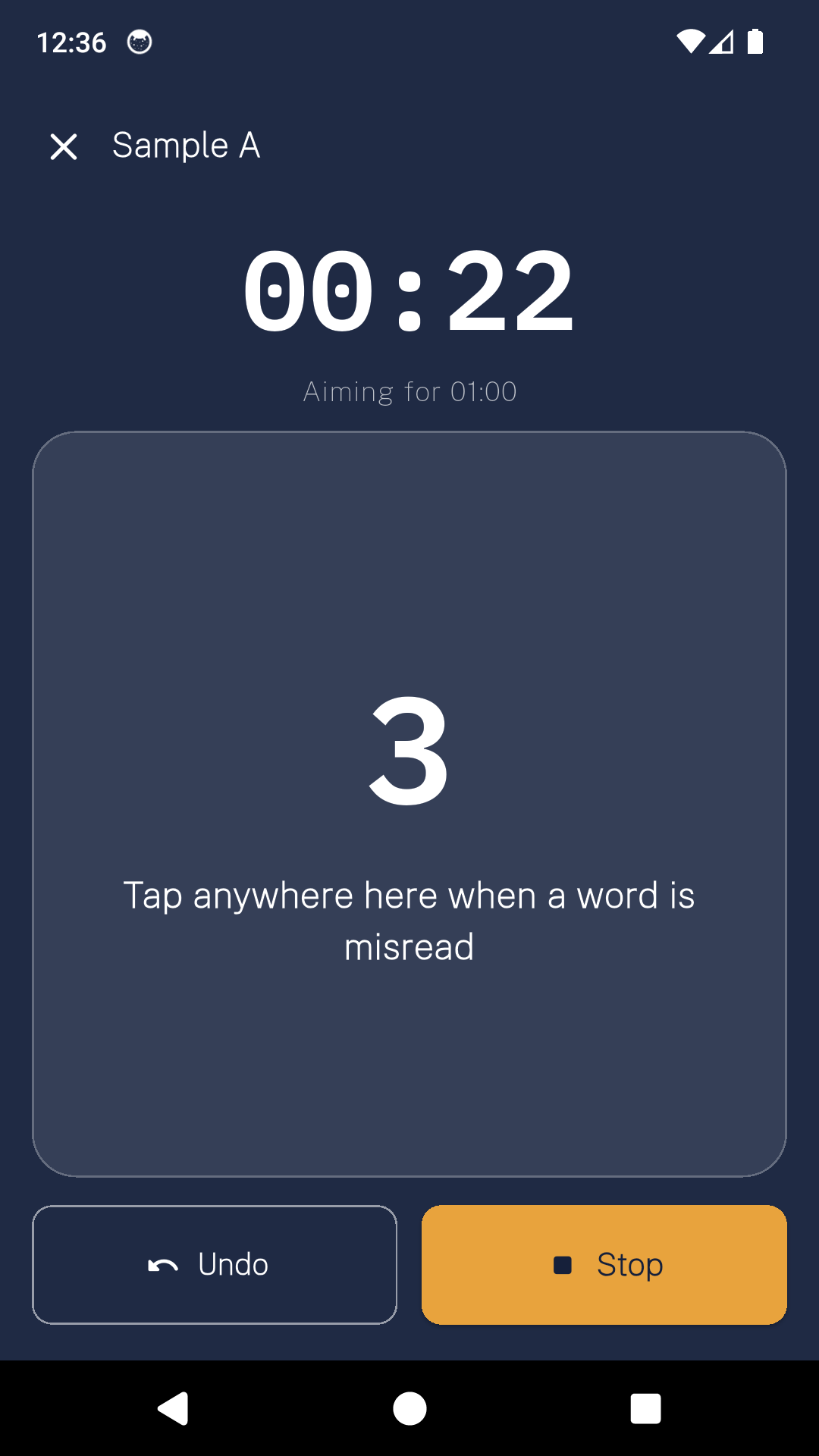
The child reads aloud. You listen, and tap once for every word that goes wrong. ReadFluent keeps the clock, keeps the count, and works out words correct per minute when you stop.
- One tap target, so you can watch the child instead of the phone
- Words correct per minute and accuracy, both explained on screen
- No benchmark table, no percentile, no grade band
One person, three jobs
A stopwatch in one hand, the passage in the other, and a tally in the margin. Then the arithmetic afterwards, from marks made while you were trying to listen. Something gets dropped, and it is usually the listening.
ReadFluent takes the clock and the tally, so the only thing left for you to do is the thing you are there for.
During the reading
Tap, do not classify
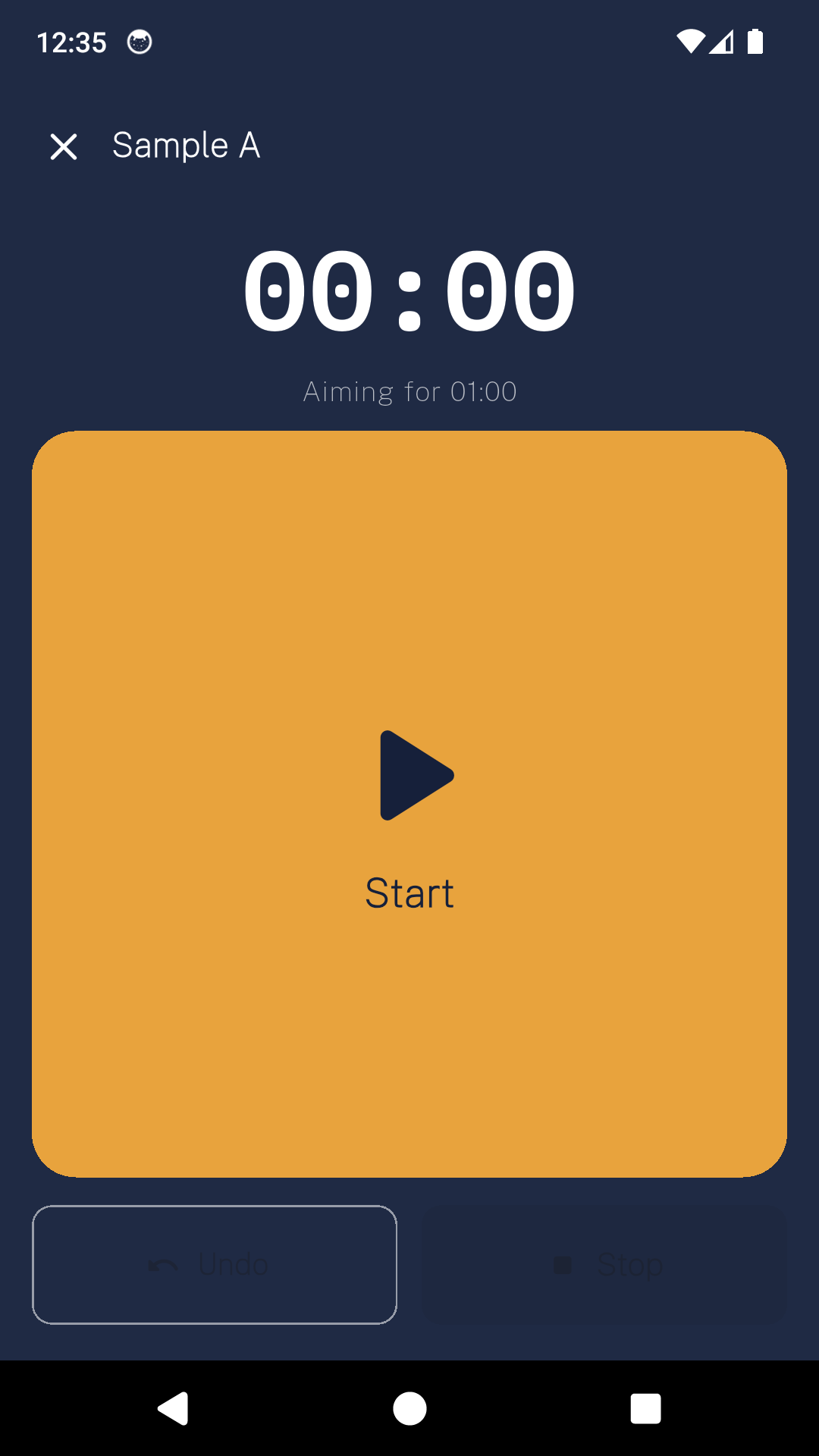
While the child is reading there is one control on the screen and it fills most of it. Tapping it means that word was not right. Nothing else competes for the tap, and Undo sits beside it, because a mis-tap while listening is certain rather than likely.
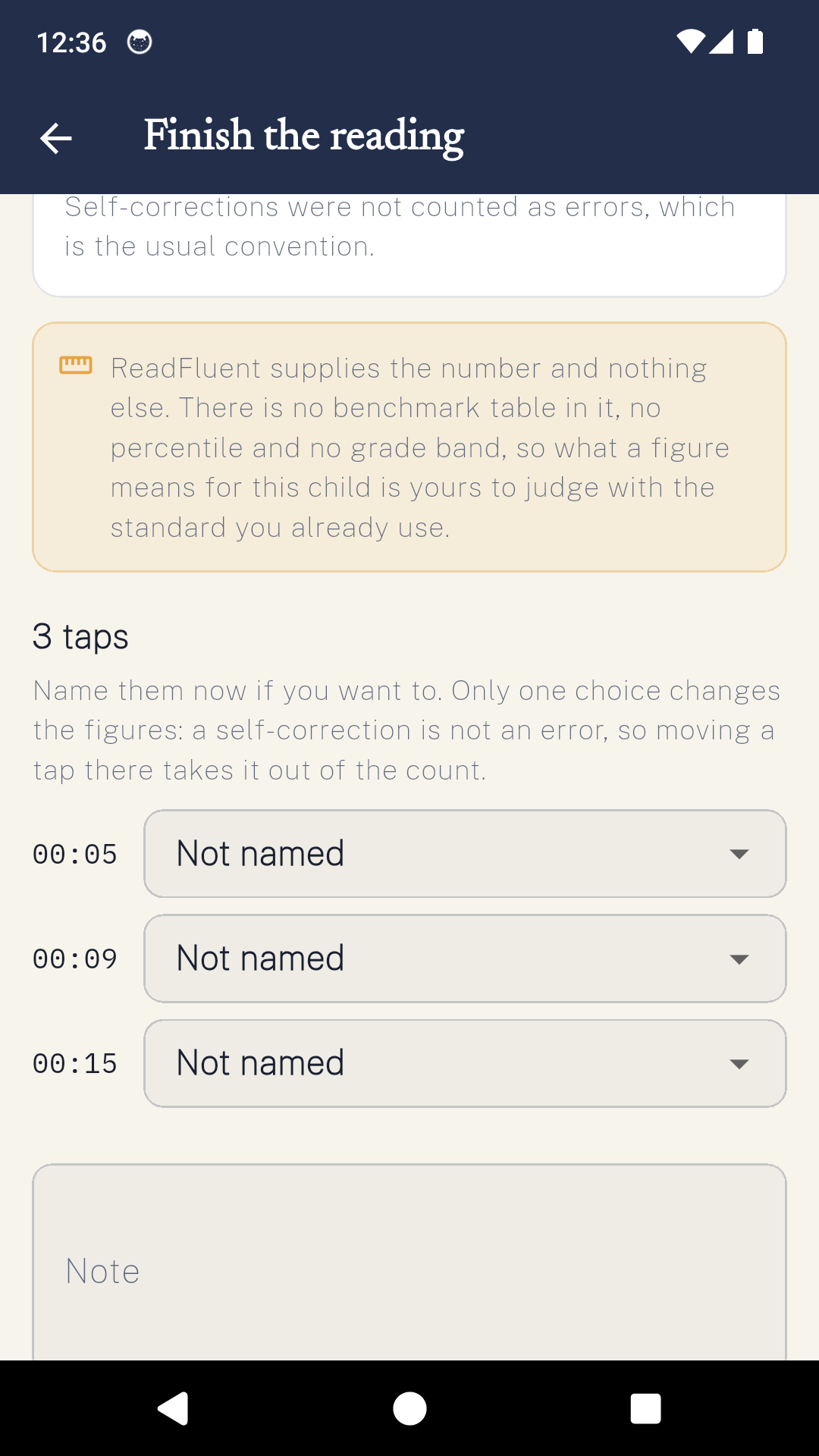
Naming what each one was comes afterwards, from the tap list, and most of the time it can wait forever. Asking a listener to run a coding scheme in real time is what makes paper tallies unreliable.
Each tap is stamped with the second of the reading it happened at, so the list you classify from is in order rather than from memory.
The two figures
What each one is divided by
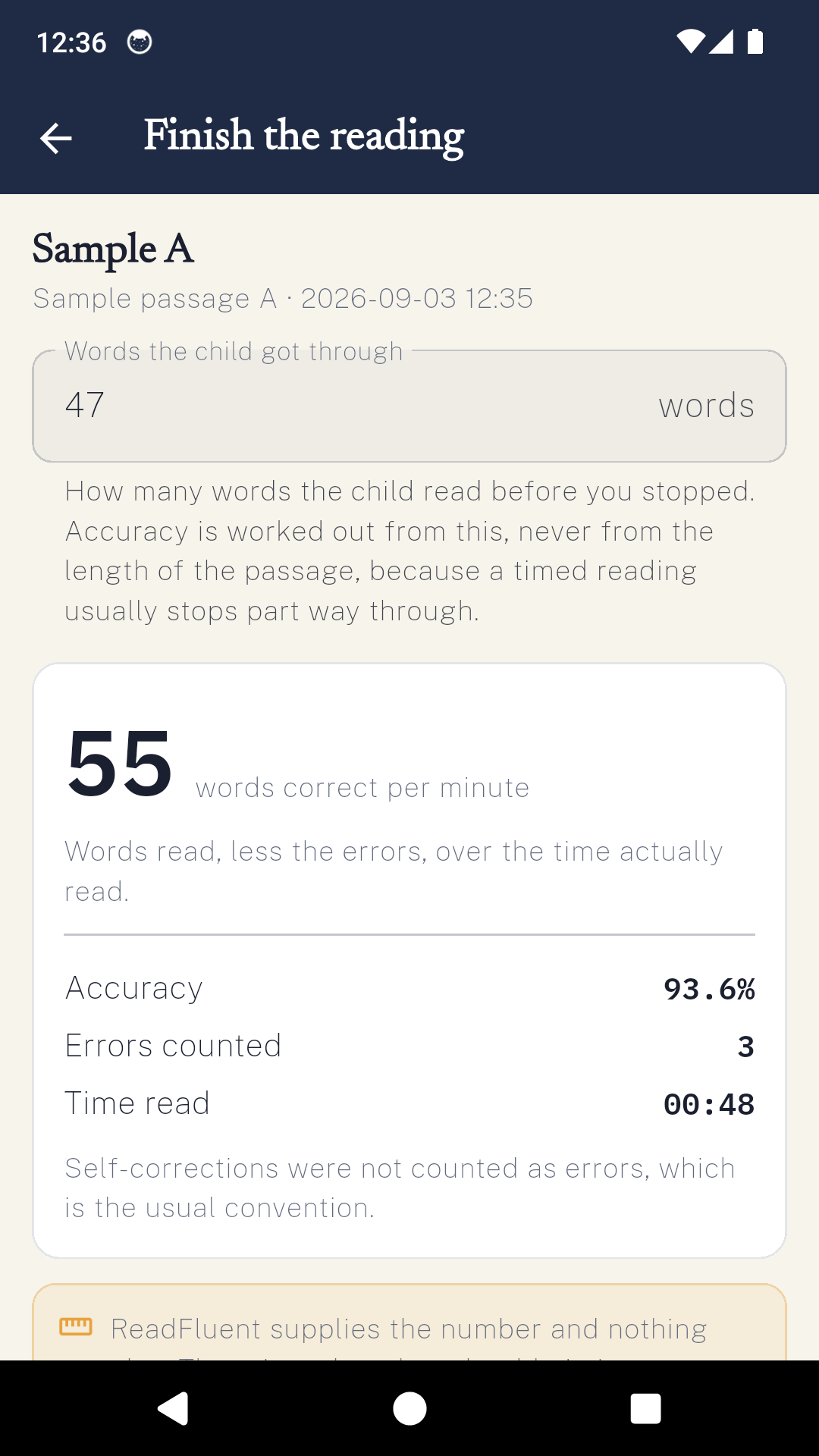
Words correct per minute is the words read less the counted errors, over the time actually read. Accuracy is the words read less the counted errors, over the words read.
The denominator that gets confused
Accuracy divides by the words the child got through before you stopped, never by the length of the passage. A timed reading usually stops part way through, so dividing by the passage would report a false low accuracy on nearly every read. The passage word count is not an input to the calculation at all.
The count of errors that produced the figure is printed beside it, so the number never appears without the working behind it.
The convention
A self-correction is not an error
A word the child puts right themselves is scored as accurate. ReadFluent stores errors and self-corrections as two separate counts and leaves self-corrections out of the arithmetic, which is the standard convention. If your own scheme counts them, one switch changes it.
Every reading stores the rule that was in force when it was measured. Changing the setting later moves nothing you have already handed to a parent, and the report prints the rule beside the figure so a number can never be read without knowing which convention produced it.
Reclassifying a tap as a self-correction is the only choice that changes a figure. Substitution, omission, insertion and reversal describe the error without moving the count.
Three readings
One reading is a probe, not a score
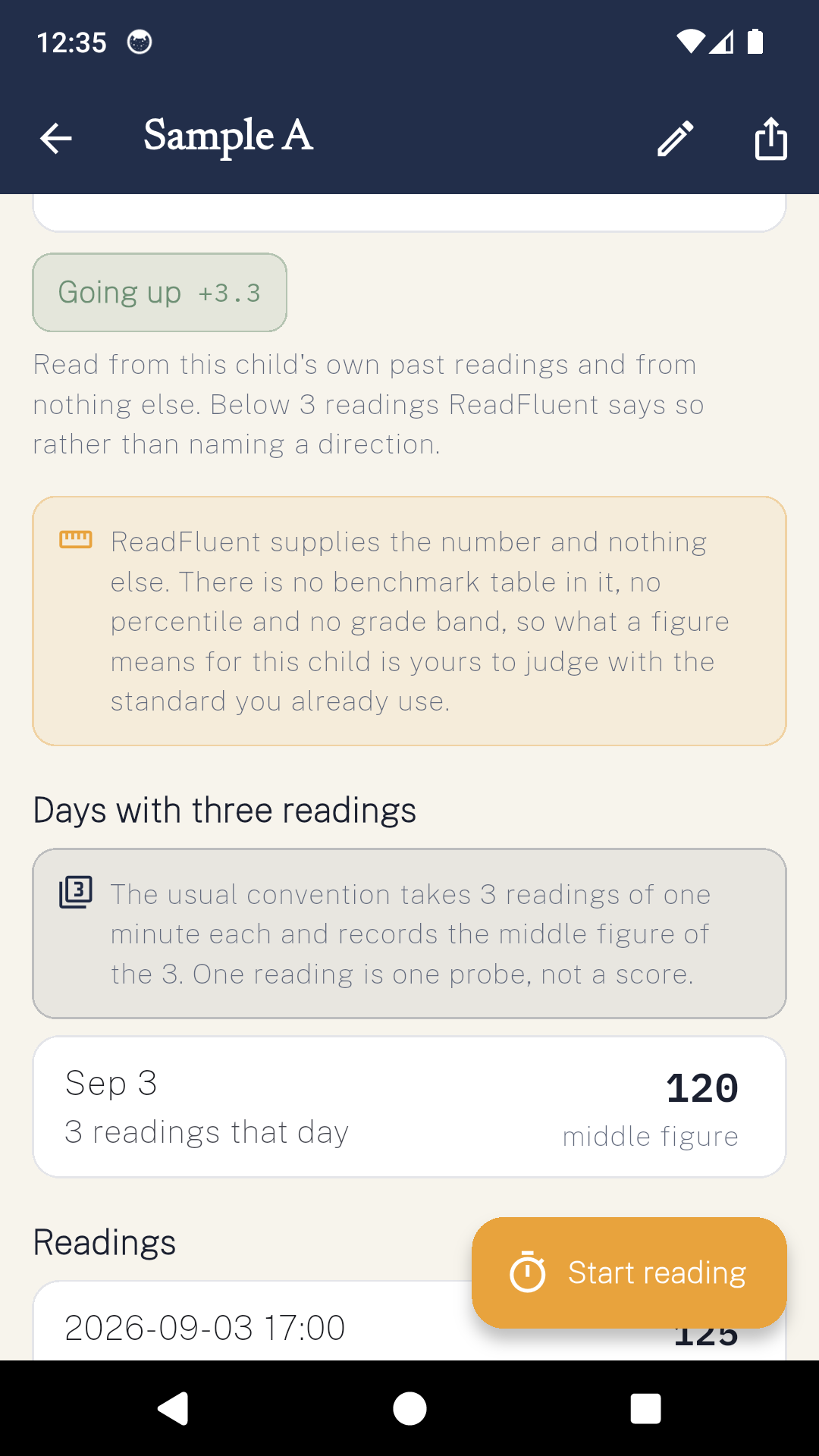
The usual convention administers three one minute passages and records the middle figure of the three, on the grounds that one passage is one sample of a particular text and a particular subject.
ReadFluent stores each reading on its own and shows the middle figure for any day carrying three or more, beside the individual readings. It does not take that middle figure quietly behind you: which figure you want is your decision, so both are on the screen.
When there is no figure
It says so, and says why
Three things stop the arithmetic, and each one reports its own reason. "No figure" and "no figure because the sample was nine seconds long" are different things to the person holding the phone.
Under fifteen seconds
Ten seconds and four hundred words is not a fluency measure, it is a spectacular number that looks like one. Below fifteen seconds ReadFluent returns no figure and says why.
No words recorded
The stopwatch ran and the words-read box is empty, so there is nothing to divide. The reading is kept, the figure is not invented.
More errors than words
More things went wrong than words went by, which is a slip in the words-read box rather than a reading. A negative figure on a document about a child is not a defensible way to report it.
Across readings
Four things the chart is allowed to say
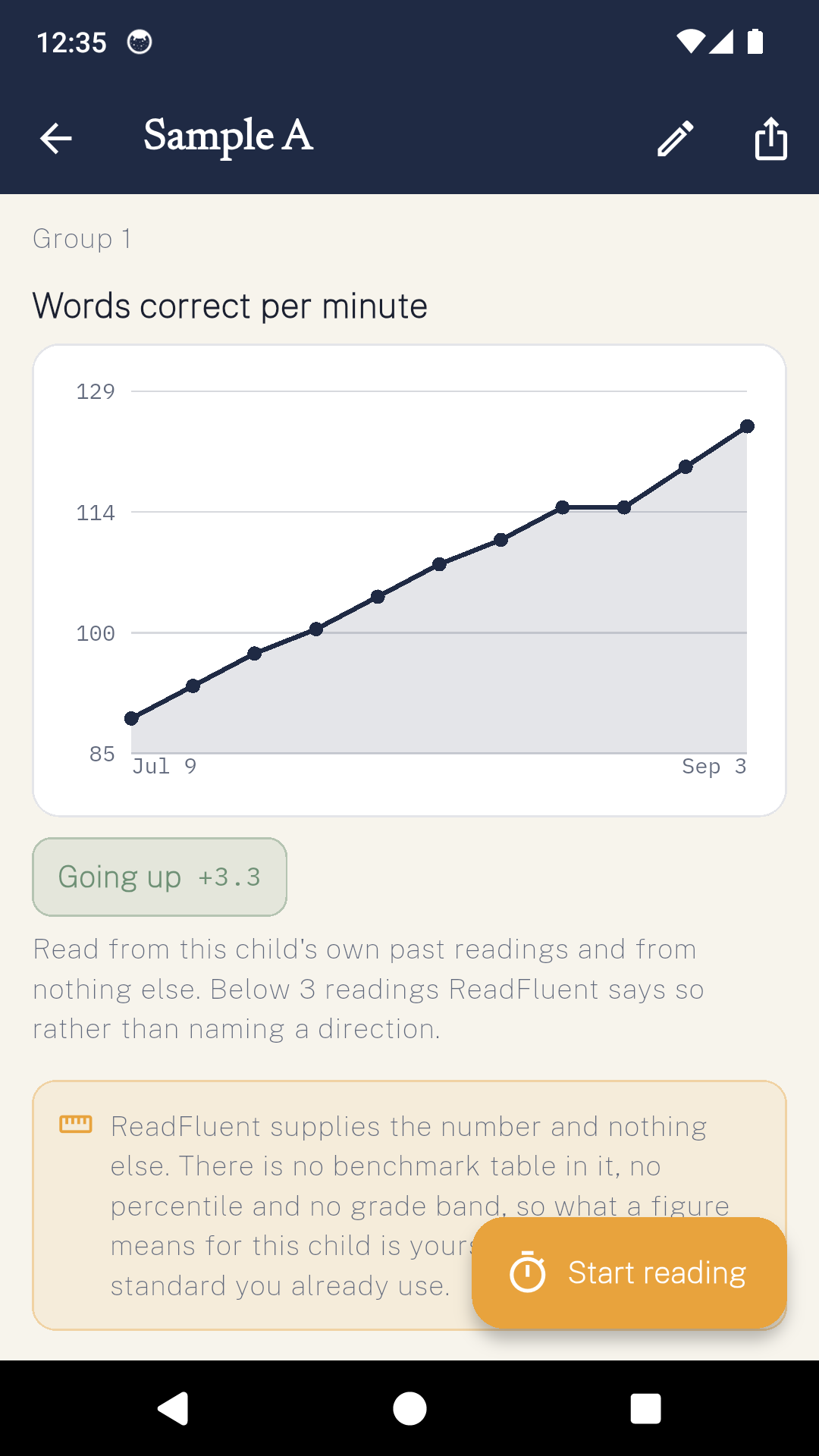
The direction is read from this child's own last few readings and from nothing else, and the average change per reading is printed beside the word so the classification is never the only thing you see.
Under three readings there is no direction to name. Two points is not a trend, and this state is never reported as flat.
The figures are rising across this child’s own recent readings.
Neither rising nor falling by more than the band ReadFluent names on screen as its own display setting.
They are falling. The average change per reading is printed beside the word.
The band that counts as level is ReadFluent's own display setting, not a figure from the literature, and the app says so where it uses it.
The part that is deliberate
What ReadFluent will never say
There is no benchmark table in the app. No percentile, no grade band, no reading age, no comparison with any other child, and no recommended figure for any age.
Two reasons, and the second is the one that matters. The compiled fluency norms most often reproduced are published with all rights reserved, so a paid app cannot print them or a derivative of them. And a table inside the app turns a stopwatch into a diagnostic instrument, used against a benchmark the person holding it did not choose. The practitioner brings the benchmark. ReadFluent supplies the number.
The report says the same thing on its cover: it is not an assessment, not a diagnosis and not a determination about a child's reading ability, and it carries no benchmark, norm or percentile to compare the figures with.
The app
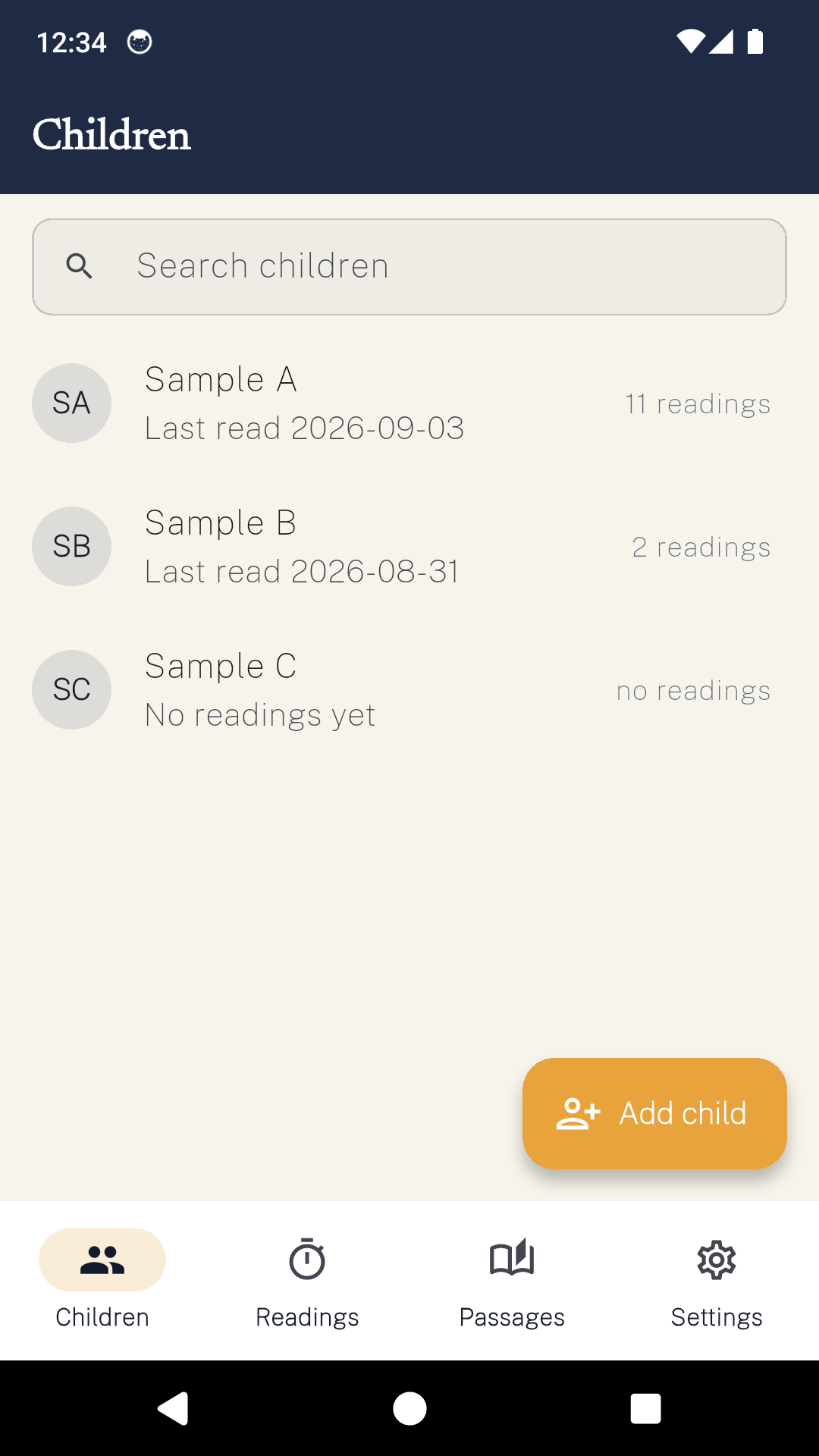
The real screens
What it will not do
- It does not listen. It times, and it counts what you tap, which is also why it cannot judge whether a correction landed inside the three second window the convention allows.
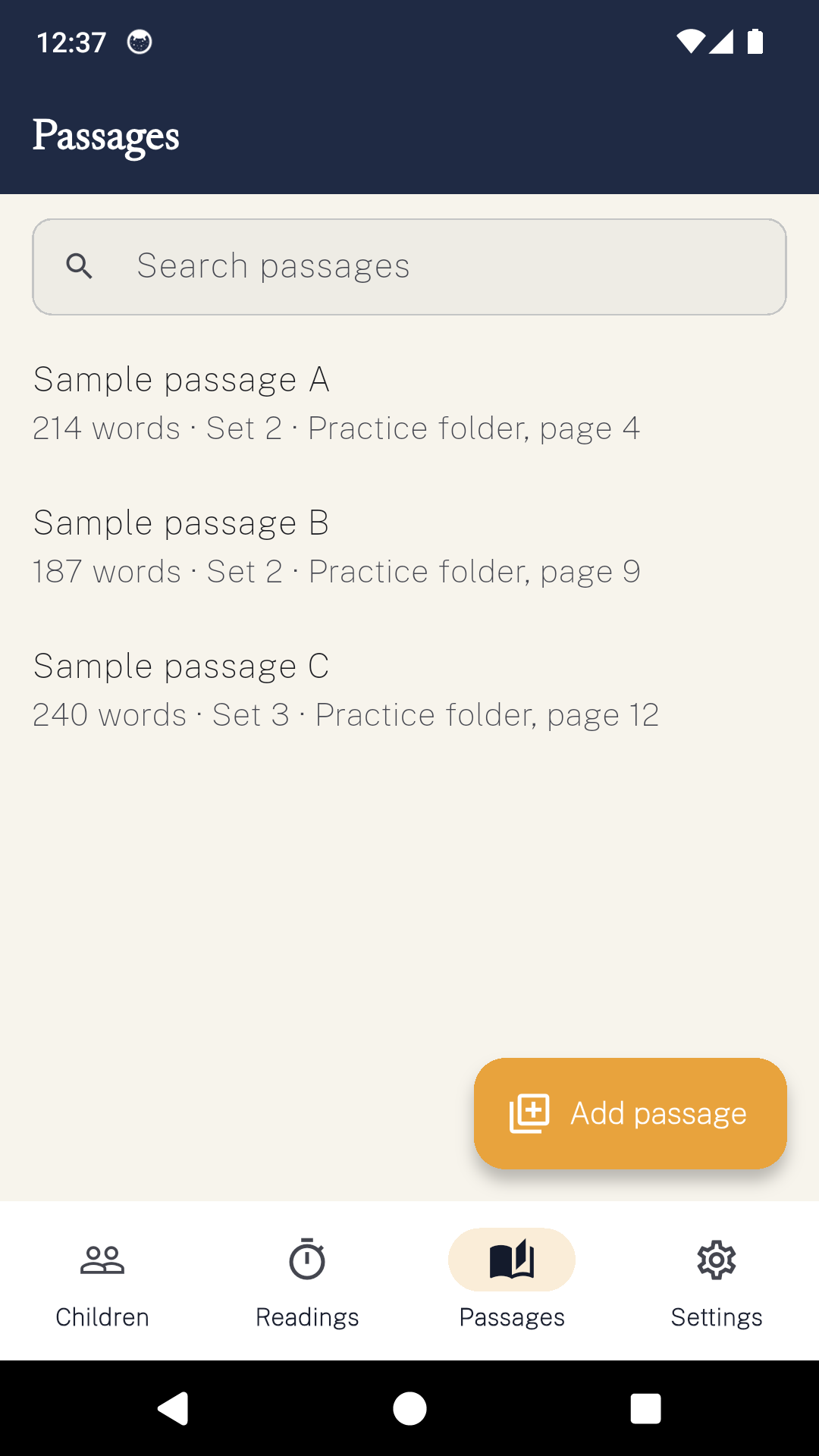
- It does not ship passages. Published reading texts are copyrighted, and levelled text is the product other companies sell.
- It does not measure comprehension. It times an oral reading, and fluency is not comprehension.
- It does not upload your records. There is no account and no sign-in. The app carries crash reporting and analytics, so "nothing leaves the device" would be the wrong claim to make, but children's names and readings are not part of that and stay on the phone.
- The session report is written in English whatever language the app is set to.
Price
Priced for one person, not a school
A 14-day trial you start yourself, with no card. Without paying you keep one child and five readings, and the cap applies only to adding: nothing already recorded is ever hidden, locked or deleted, whatever plan you are on.
Backup and restore is not behind the paywall either. A child's reading record is the reason you installed it.
Questions
Before you download it
Does ReadFluent tell me whether a child is behind?
No, and it holds nothing to say it with. There is no benchmark table in the app, no percentile, no grade band and no reading age. The compiled norms most often reproduced are published all rights reserved, so a paid app cannot print them, and a table inside the app would turn a stopwatch into a diagnostic instrument used against a benchmark nobody in the room chose.
Does a self-correction count as an error?
Not by default, which is the usual convention. You can switch it on if your own scheme differs. Either way each reading stores the rule that was in force when it was taken, so changing the setting never restates a figure you have already given somebody.
What is accuracy divided by?
The words the child actually got through before you stopped, never the length of the passage. A timed reading usually stops part way through, so dividing by the passage would report a false low accuracy on nearly every read. The passage word count is not part of the calculation at all.
Is one reading the score?
No. The usual convention takes three one minute readings and records the middle figure of the three, because one passage is one sample of a range of text. ReadFluent stores each reading on its own and shows the middle figure for any day carrying three or more. It never takes that middle figure quietly: both are on the screen.
Does the app listen to the child?
No. It times and it counts what you tap. That is also why it cannot tell you whether a correction landed inside the three second window the convention allows: the person listening decides, and the app records the decision.
Does it come with passages?
No. You enter your own texts with a title and a word count, because published reading passages are copyrighted and levelled text is the product other companies sell.
Time the next reading
Add the child, start the clock, and tap when a word goes wrong. The figure is on the screen the moment you stop.
Get it on Google Play