Part 107 flight and airframe log
Nobody makes you keep this
Part 107 creates no duty to log a flight. Your client wants hours against an invoice, your insurer wants airframe and battery history, and the manufacturer wants to know what was done and when. That is who this is for.
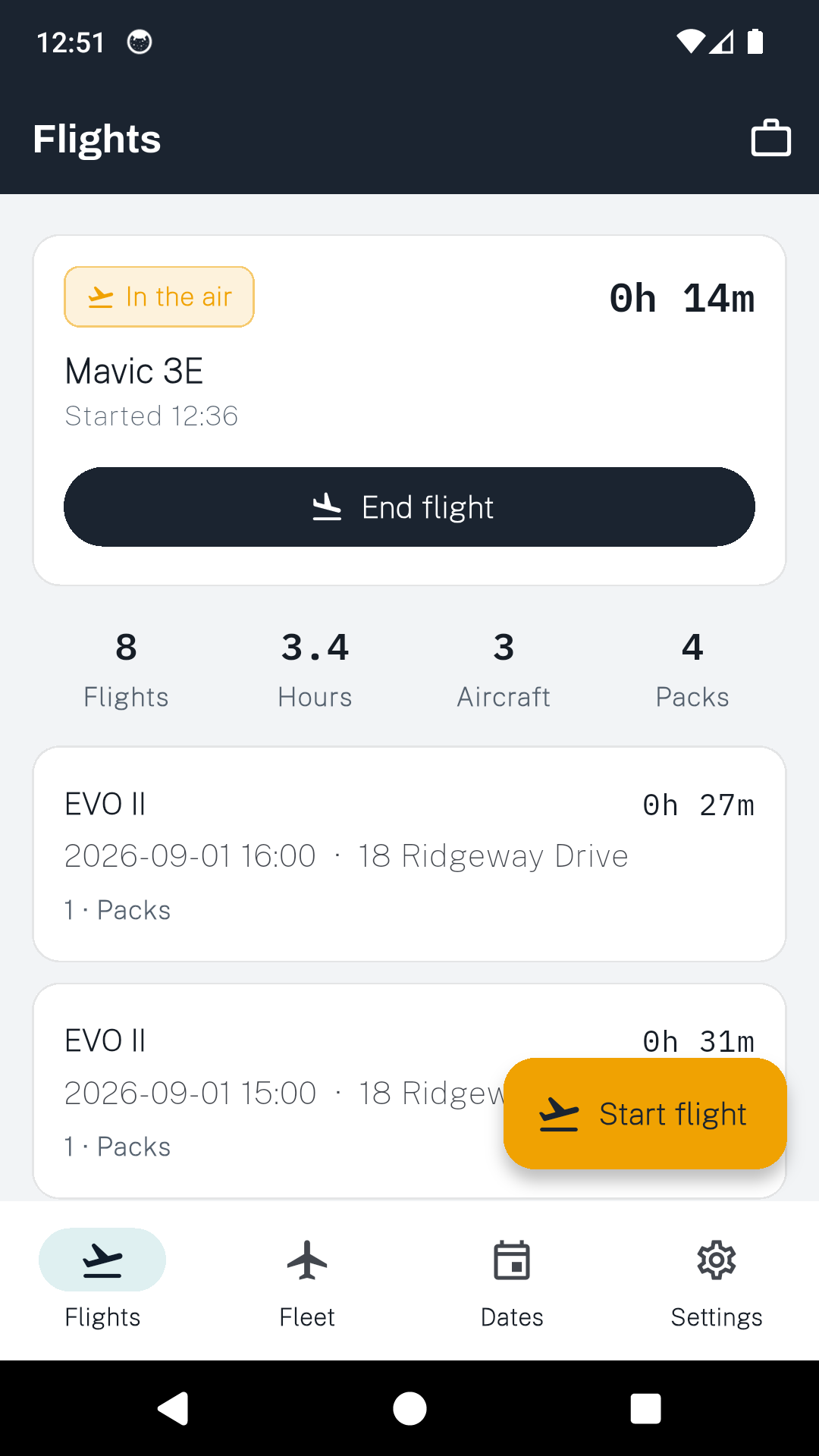
- Start and end a flight, or enter one when you land
- Hours, service intervals and registration, per aircraft
- Recurrent training counted the way 107.65 counts it
Three people want the record, and none of them is the FAA
The client
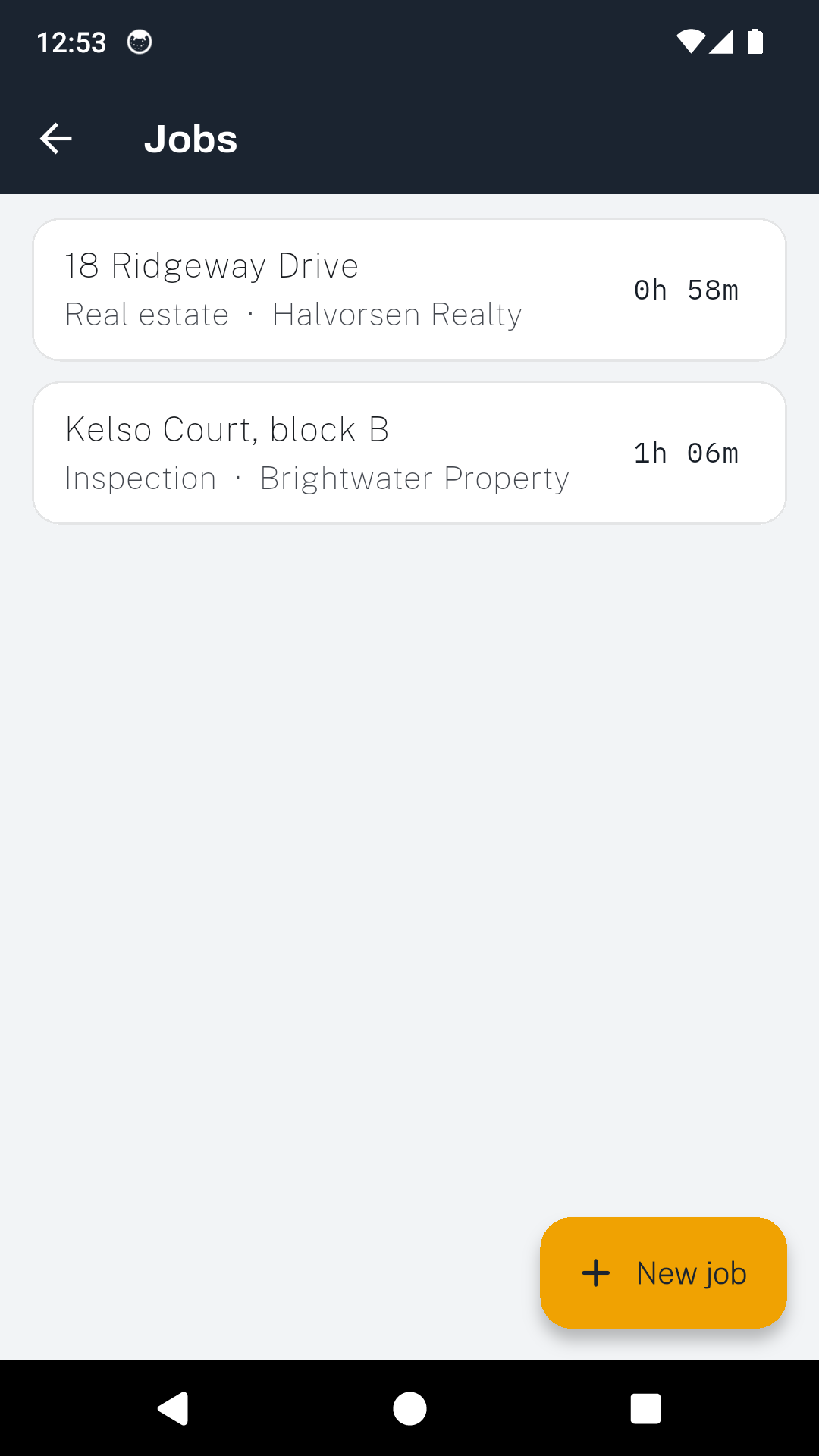
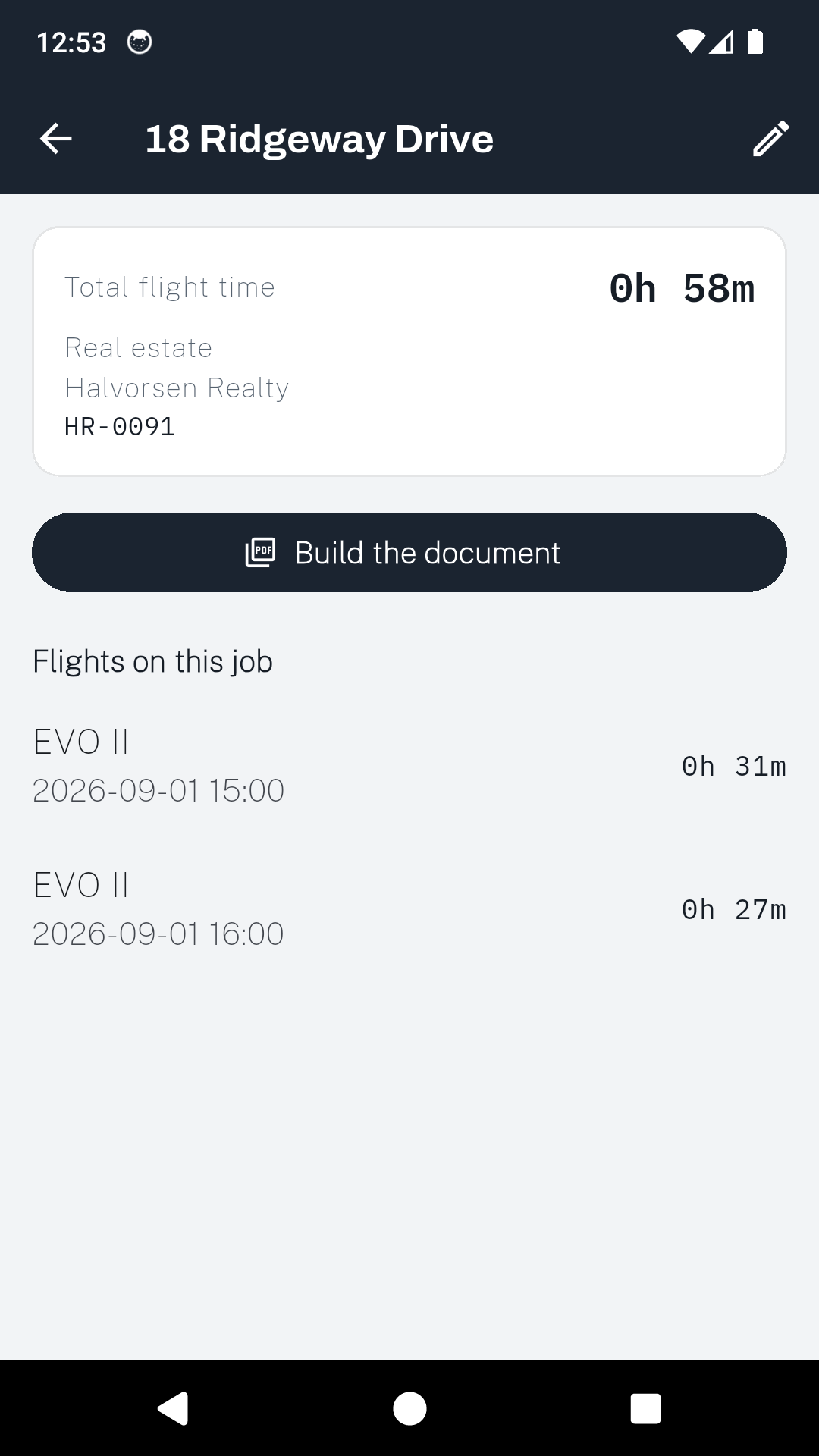
Hours against a job, per site, with the aircraft that flew them. That is the line on the invoice nobody argues with.
The insurer
Airframe history and what was replaced when. Asked for after the incident, which is the worst possible time to start keeping it.
You
Which pack is on its sixty-fifth cycle, which airframe is due, and whether your recency runs out before the job in March.
The two clocks
They are not the same kind of clock
Recurrent training runs in calendar months. Twenty four of them, and the currency runs to the last day of the month, not to the day of the month. Training completed on 5 July stays current through 31 July two years later.
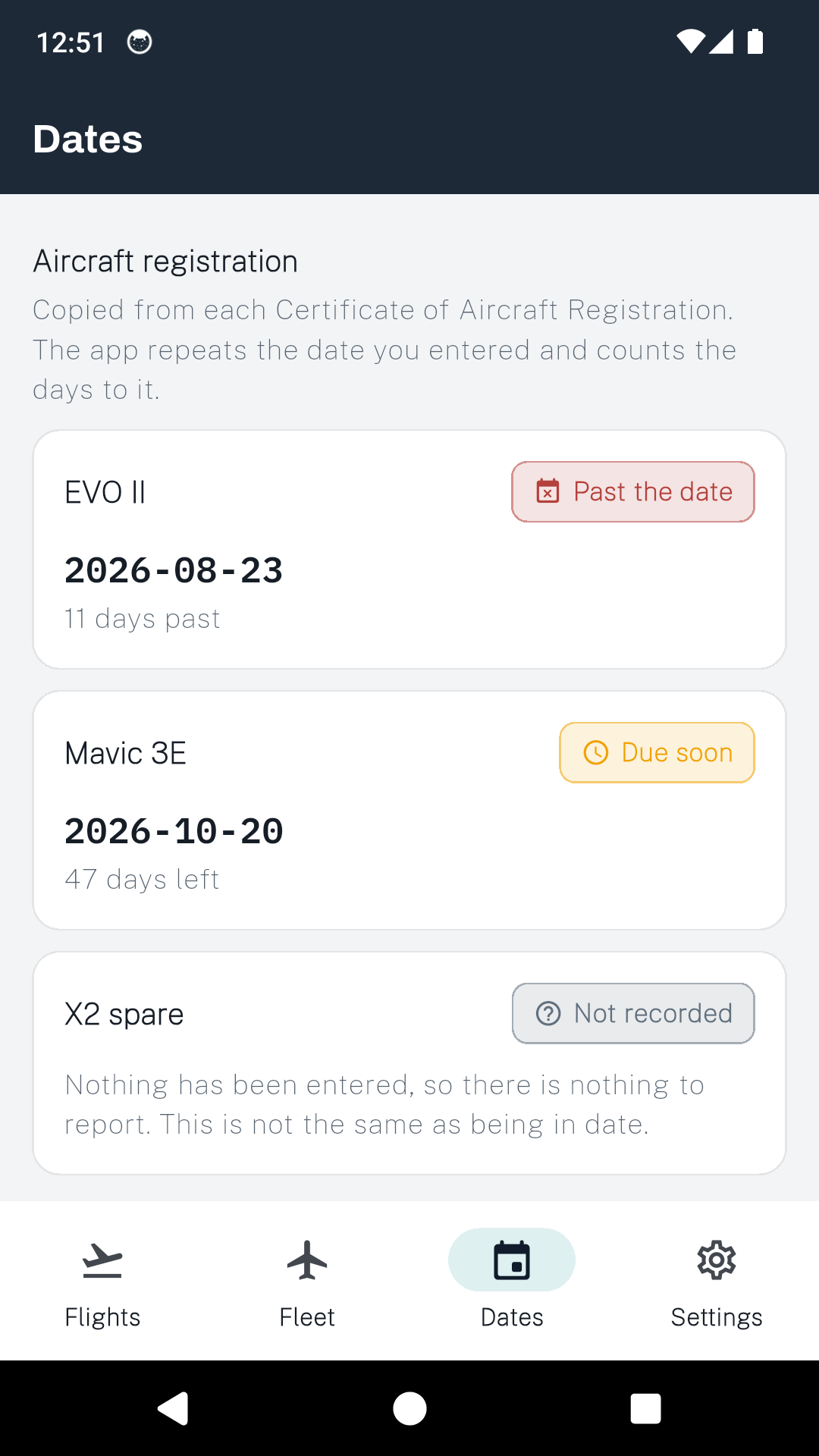
Aircraft registration runs on an exact date anniversary, three years from the date of issue. DroneLog 107 runs both, and never uses one arithmetic for the other, because doing so is wrong in both directions.
Recurrent is training, not a test
Since April 2021 the recurrent requirement is a free online training course rather than a knowledge test at a testing centre. The app says recurrent training, never recurrent test and never renewal, and it does not offer to renew anything.
Four states
And a blank is one of them
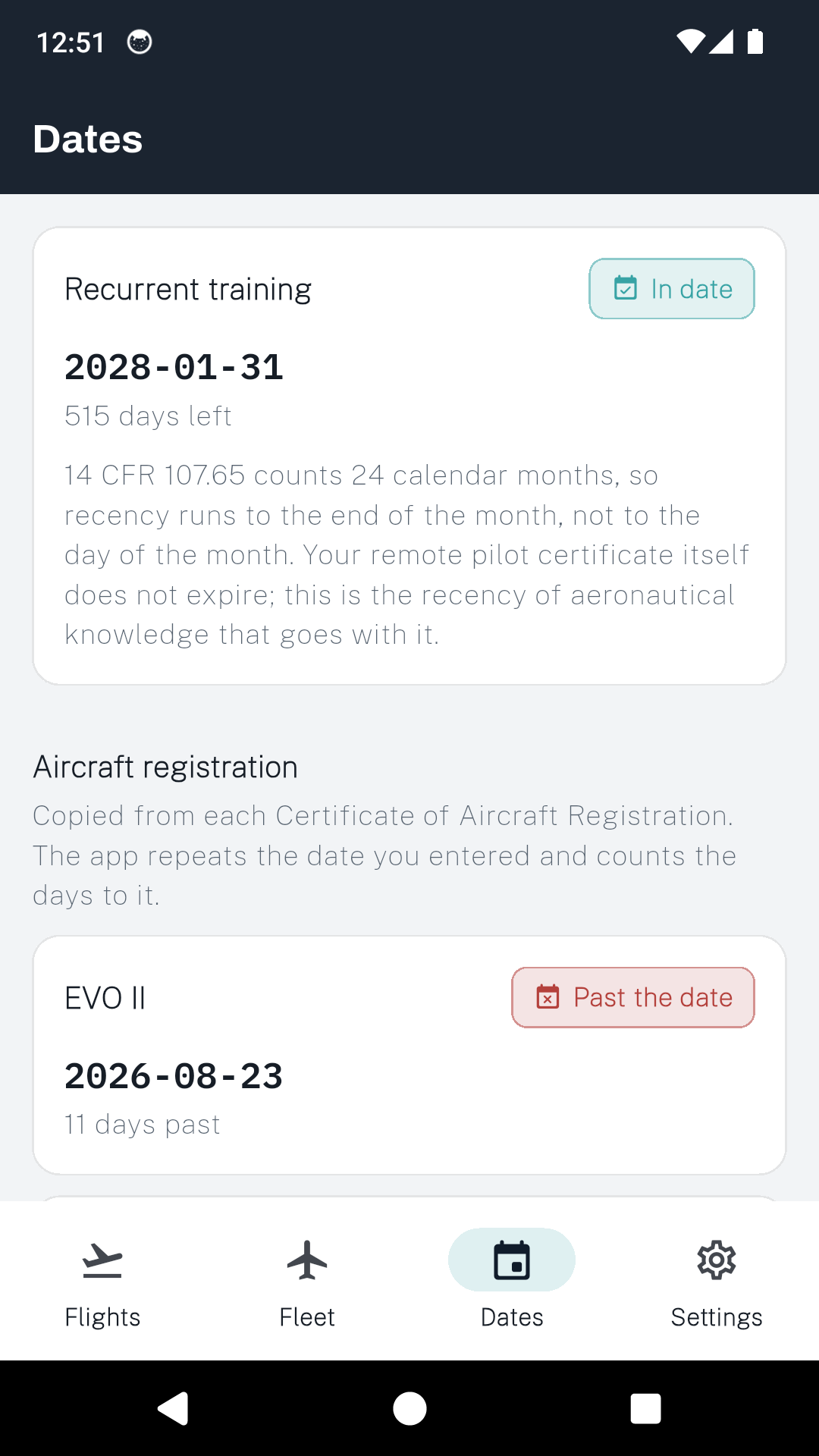
Every date the app watches reports one of four things about itself. The one that matters most is the first, because an empty field looking calm is how a lapsed registration goes unnoticed.
Nothing has been entered, so there is nothing to report. That is not the same as being in date, and the app says so rather than showing a reassuring blank.
The date you entered has not passed, and the app counts the days to it.
Close enough that it belongs on this week’s list rather than next quarter’s.
The date has gone by, and the app says how long ago.
The airframe
Hours that start where you actually are
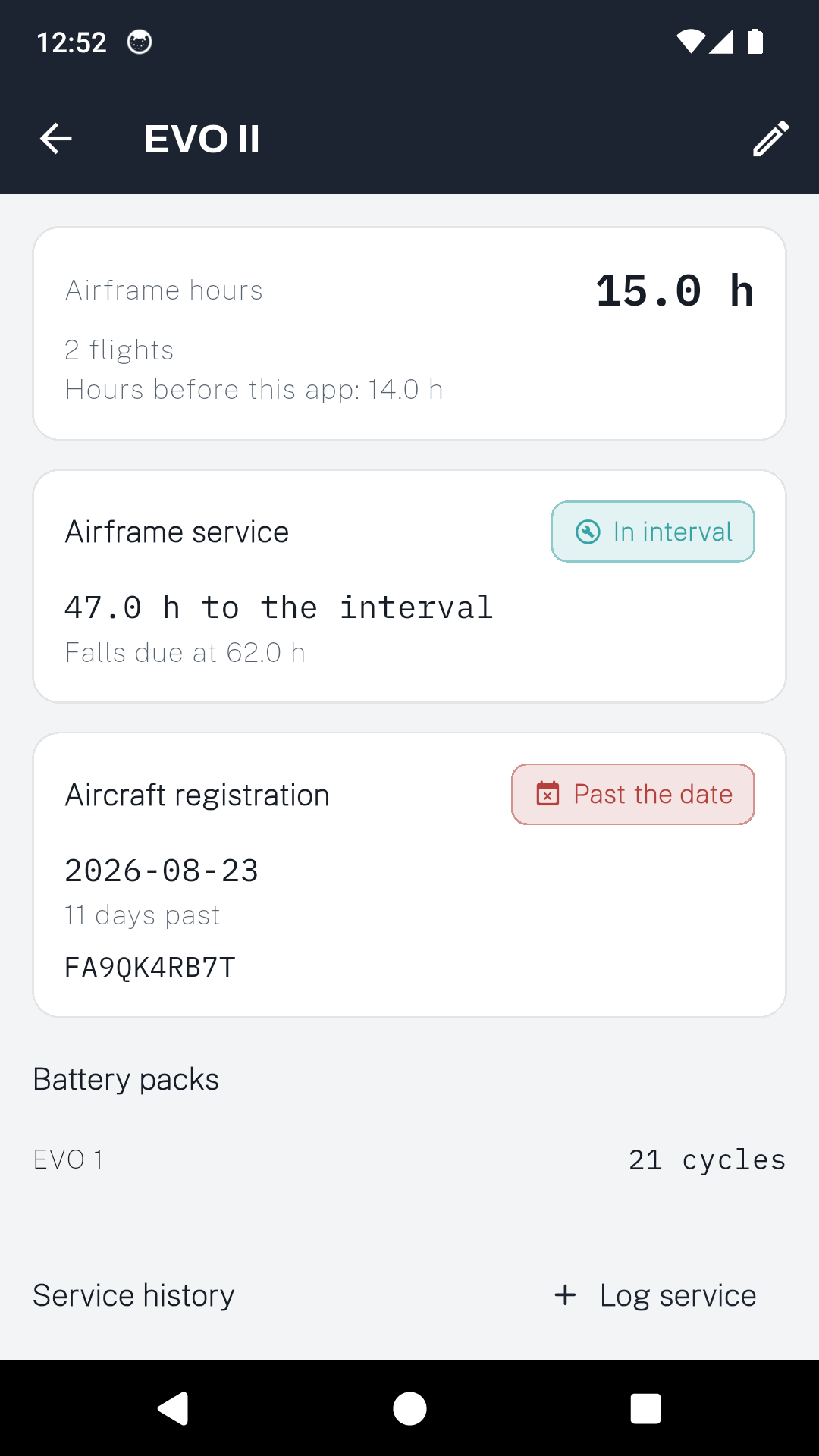
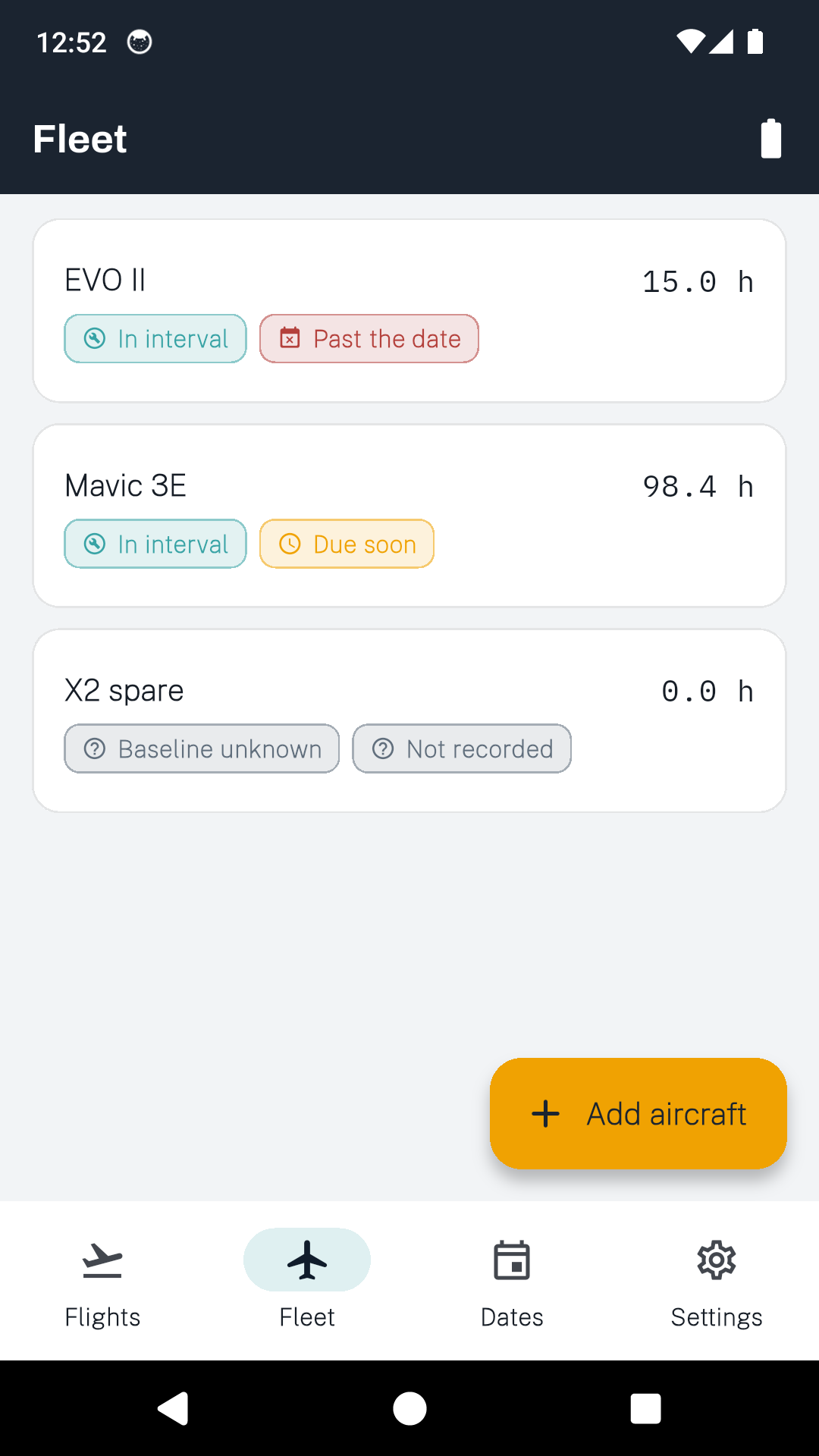
An aircraft you have owned for two years does not have zero hours, so each one carries a baseline: the hours it flew before this app existed. Everything logged after that adds to it, and the service interval counts from the total rather than from the day you installed something.
An airframe with no baseline entered says so rather than pretending it is new. Maintenance is recorded as events against the aircraft, so what was replaced and when is on the same screen as the hours it has flown since.
Packs
Cycles counted from the flights they flew
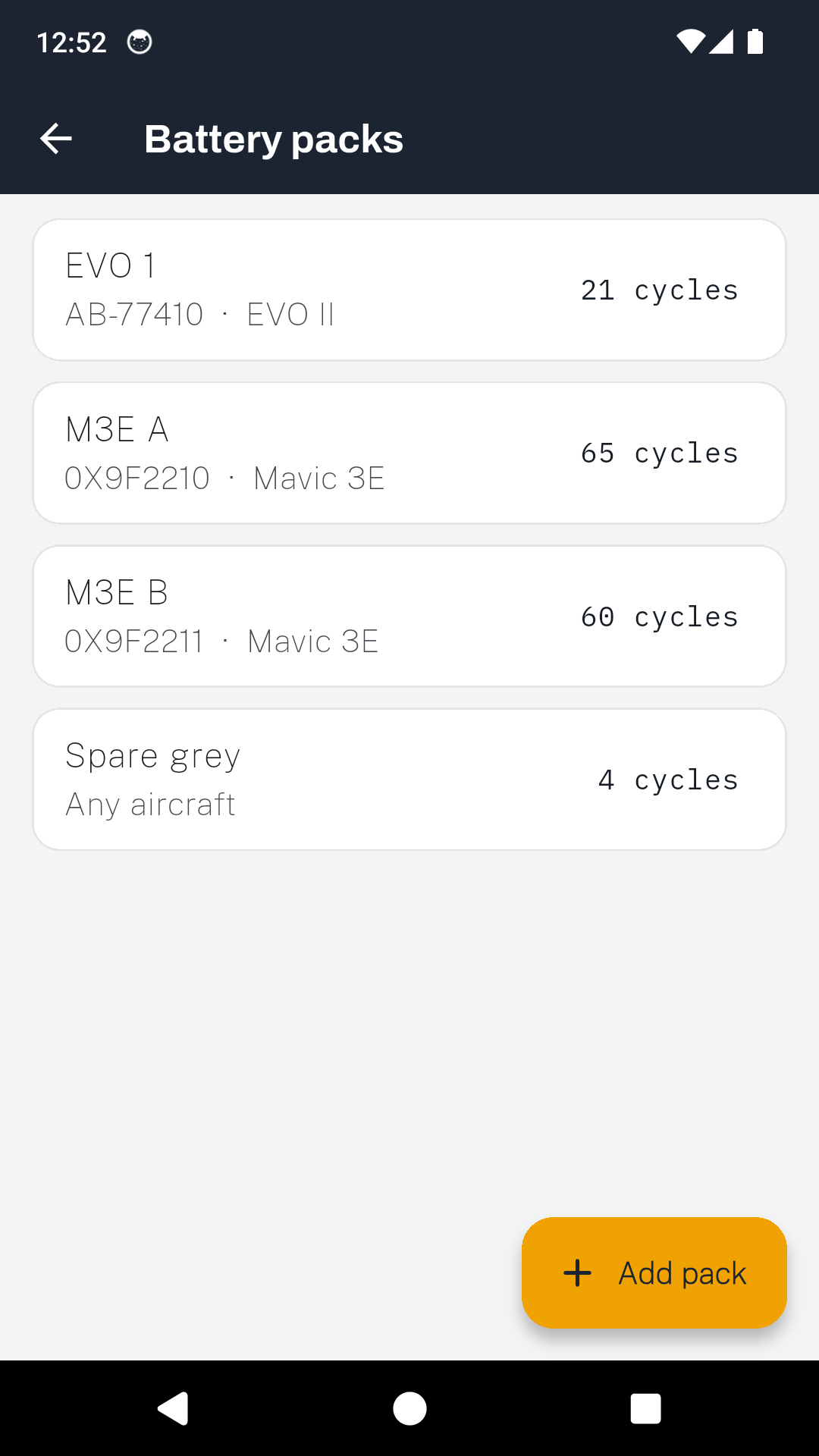
Every pack has a serial and a cycle count, and the count comes from the flights it was used on rather than from a number you remember to update. A pack is tied to an aircraft or marked as fitting anything, which is how a spare actually behaves.
A flight can carry more than one pack, so a job flown on three batteries counts three cycles and one flight.
The judgement it leaves alone
It never says a flight was lawful
DroneLog 107 does not decide whether an operation was legal, whether an event is reportable, or whether you were current on a particular day. It records what you entered and counts the days.
Where an incident is recorded, the field carries a neutral note naming 107.9 and its ten day window for a serious injury, a loss of consciousness, or property damage over five hundred dollars, and it states plainly that the app does not decide whether a given event is reportable. That judgement stays with the pilot in command, which is where the regulation puts it.
The app
The real screens
Price
One pilot, one certificate, one price
A 14-day trial you start yourself, with no card. Without paying you keep fifteen flights, which is a couple of real jobs for a roof inspector.
The cap applies only to starting a new flight. Nothing already recorded is hidden, locked or deleted: these are the hours behind an invoice and the history an insurer may ask for a year later.
Questions
Before you download it
Does Part 107 require me to keep a flight log?
No. None of the five subparts creates a duty to log a flight, a flight hour or a flight history. The section that comes closest, 107.7, requires you to make available any record required to be kept under the regulations, which is conditional on some other rule creating one. DroneLog 107 exists because clients, insurers and manufacturers want the record, not because the FAA does.
Why does recurrent training expire at the end of a month?
Because 107.65 says within the previous 24 calendar months, and that is a term of art. Training completed on 5 July 2018 stays current through 31 July 2020, not 5 July 2020. An app that used a date anniversary would report a current pilot as lapsed for up to a month and send them to redo training they do not owe.
Does my remote pilot certificate expire?
No, and the app never says it does. The certificate is permanent unless surrendered, suspended or revoked. What lapses is the recency of aeronautical knowledge under 107.65, and that is the thing the currency screen names.
Does it work out my registration expiry?
No, deliberately. You type the date off the Certificate of Aircraft Registration and the app counts the days to it. A renewal runs three years from the previous certificate’s expiry rather than from the day you renewed, so an app that calculated it would be wrong by up to six months, in the direction that says the aircraft is registered for longer than it is.
Will it check my certificate number?
No. There is no published, stable format for a remote pilot certificate number, so it is a free text field with no mask and no length rule. A validator built on the wrong format would reject real numbers, which is worse than accepting a typo.
Does it handle a mixed fleet?
That is the point of it. Every aircraft carries its own hours, its own service interval and its own registration date, whoever built it, and battery packs are recorded against an aircraft or as spares that fit anything.
Log the next one before you fold the props
Add the aircraft and its hours to date, then every flight after that lands in the right place on its own.
Get it on Google Play