Water damage drying log
The drying record, made on the job
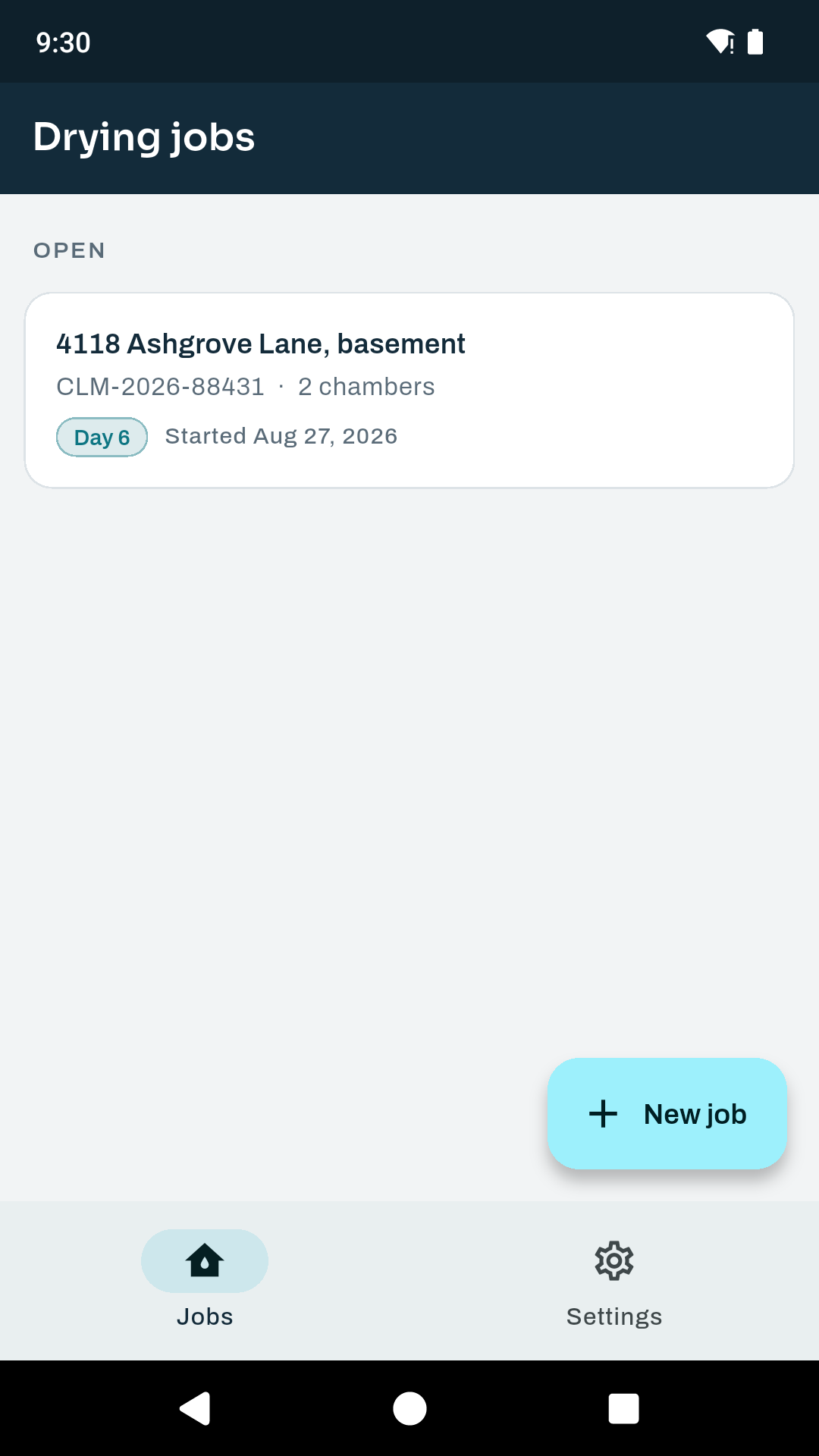
You set the air movers and come back every day until it is dry. DryProof is where those readings go, so the equipment line on the invoice has a record behind it instead of a memory of it.
- Four air readings a chamber, with grains per pound worked out for each
- Material moisture measured against an unaffected control, never a fixed number
- Equipment days counted as you place and pull
The record is the part that does not get made
The drying is the straightforward half. The record is what nobody has time for at five o'clock, and it is the half that outlives the job. When the adjuster asks why six air movers ran in a basement for eight days, the answer is either a daily log or an argument.
A record written from memory at the end of the week is worth less than one written on the day, and everybody in the conversation knows it.
The drying goal
The goal is the control reading, not a number
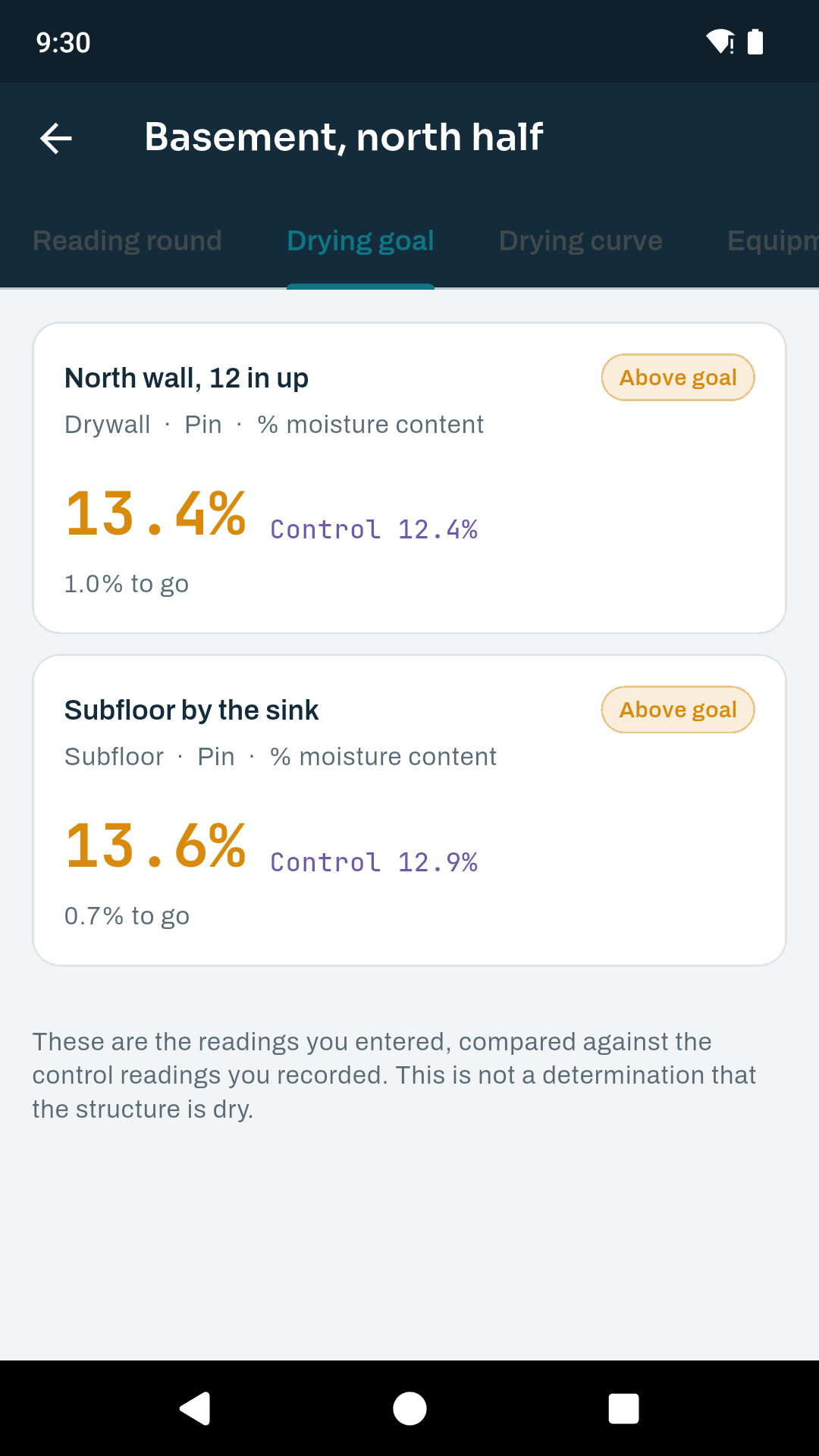
There is no universal dry number. IICRC S500 sets the drying goal against an unaffected control: the same material, in the same building, that the water never reached. So DryProof does not print a target of its own. You record the control, and every affected reading of that material is measured against it.
The affected reading is still above the control for that material, by more than the tolerance you set. Keep drying.
The affected reading has reached the control reading, taken on the same material with the same kind of meter in the same unit.
Nothing here can be compared with this reading, so there is no goal to be at. The app says that rather than passing the chamber.
A chamber with no usable control reports Not established. That is a state of its own, and it is never quietly treated as a pass.
Meters
A pin reading is not a pinless reading
A pin meter reads between two probes driven into the material. A pinless meter reads a field a short depth below the surface, on a scale of its own. The two do not share a scale, so 12 beside 28 across them is not a comparison, however much it looks like one.
DryProof matches a control on material family, meter type and unit together. If any of the three differs, it reports that the goal is not established rather than comparing the two anyway.
The reading round
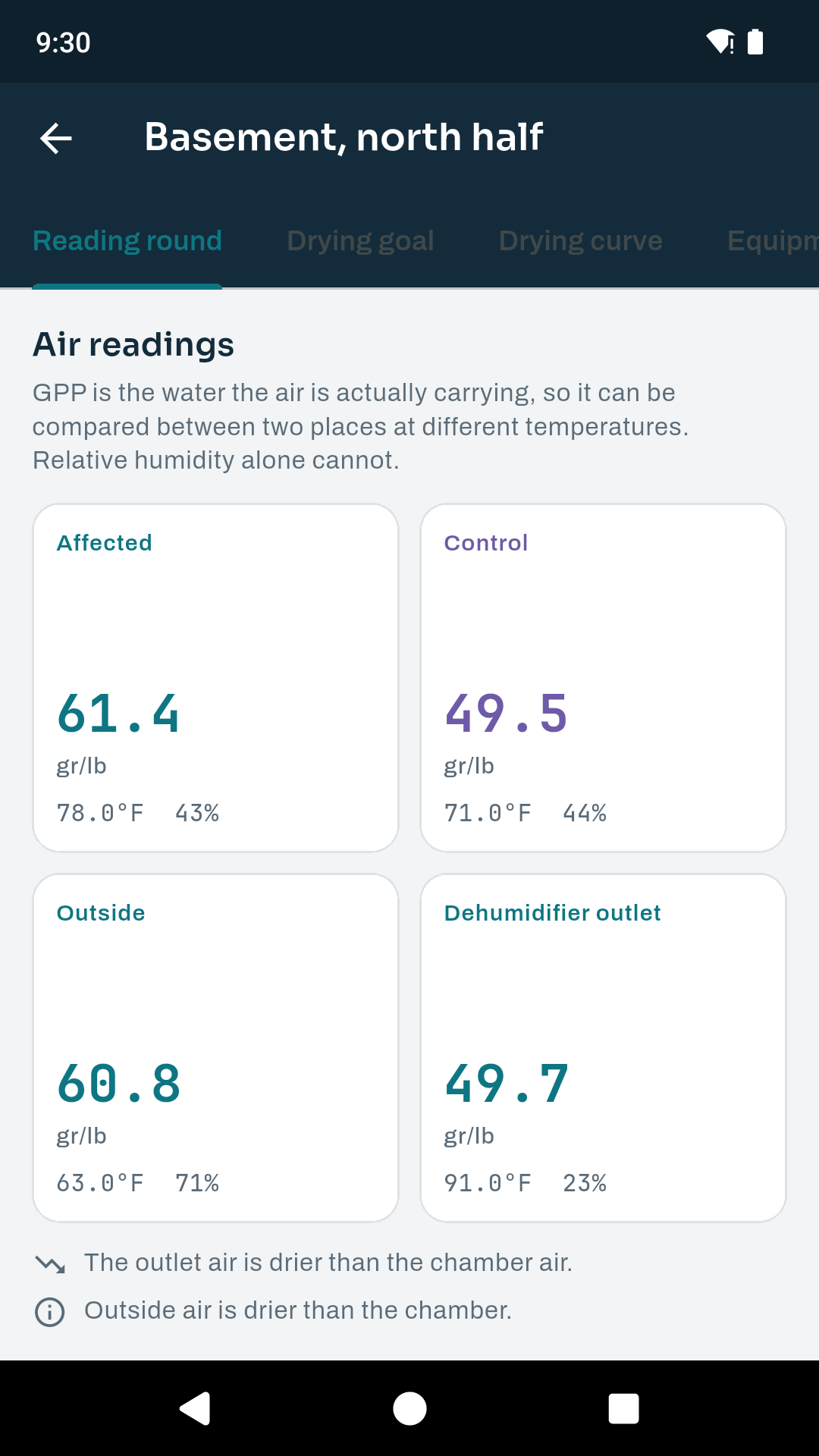
Four air readings, one screen
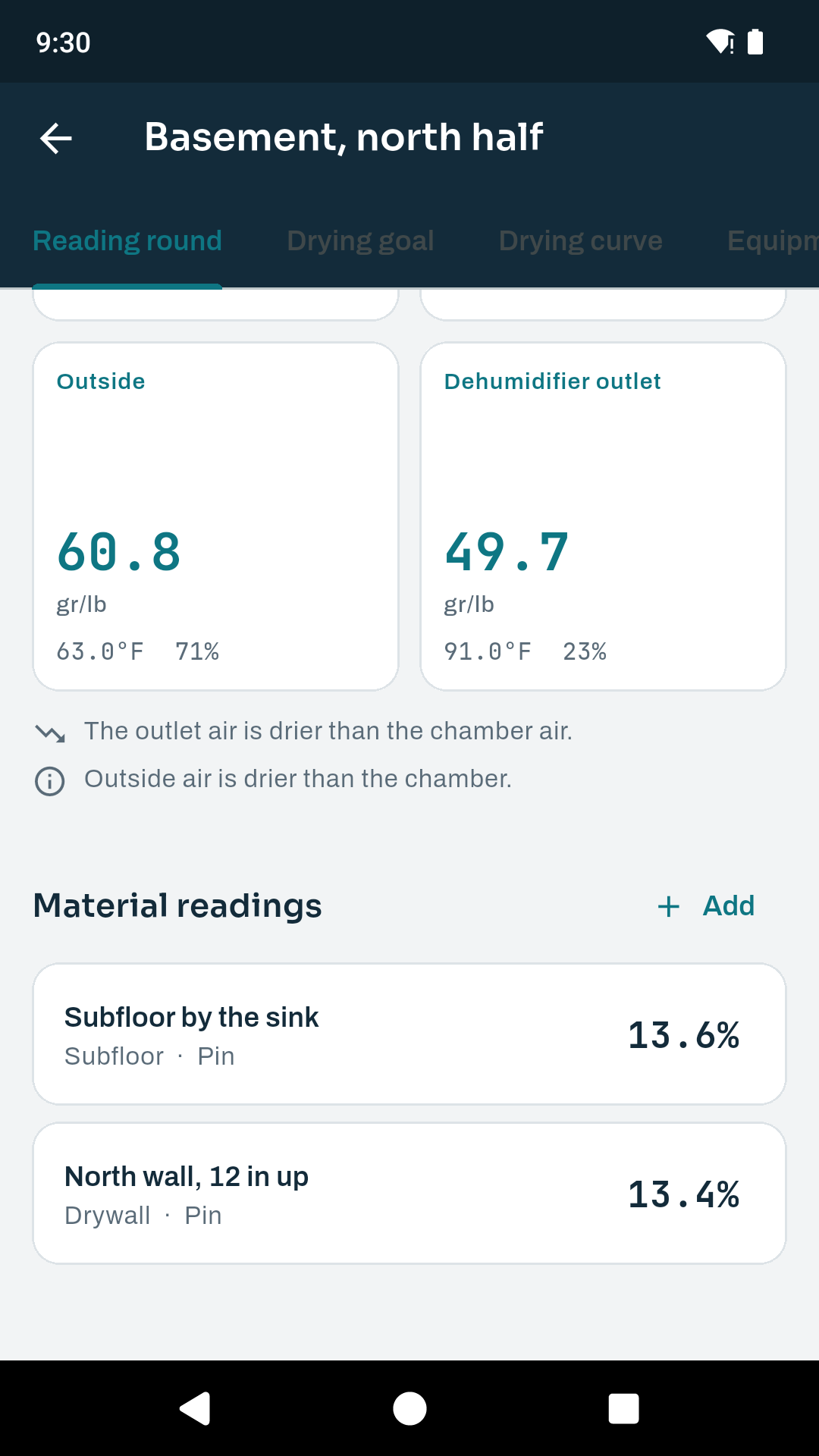
DryProof works out grains per pound for each of the four and puts them side by side, so you can see whether the dehumidifier is pulling water rather than inferring it from relative humidity. Two places at different temperatures hold different amounts of water at the same RH, so RH cannot be compared between them. GPP can.
Affected
The air in the chamber you are drying. The number that has to come down.
Control
Air somewhere the water never reached, in the same building. What the affected air is measured against.
Outside
What you would be bringing in if you opened up. Sometimes the outside air is drier than the chamber and sometimes it is a great deal wetter.
Dehumidifier outlet
The air leaving the machine. Put it beside the air going in and you can see whether the dehumidifier is pulling water or just making noise.
The arithmetic is the ASHRAE Hyland-Wexler formulation, checked against nine published saturation-pressure values and a published worked example before any of the app was built.
Equipment days
Counted as you work, with the rule attached
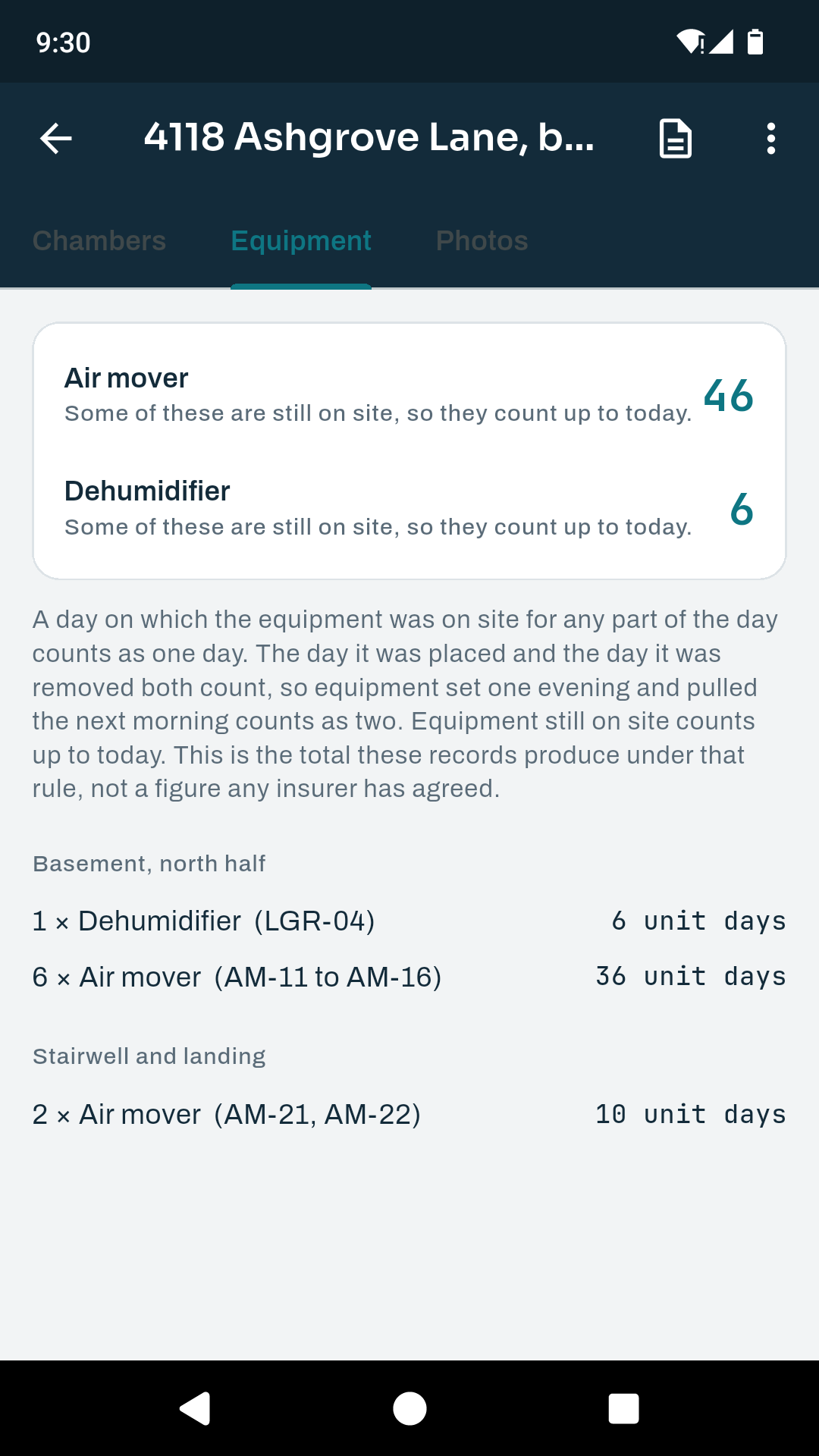
Record what you place and when you pull it. DryProof counts the unit days per chamber and per job from those records, so the total is built while you work rather than reconstructed afterwards.
The counting rule, in full
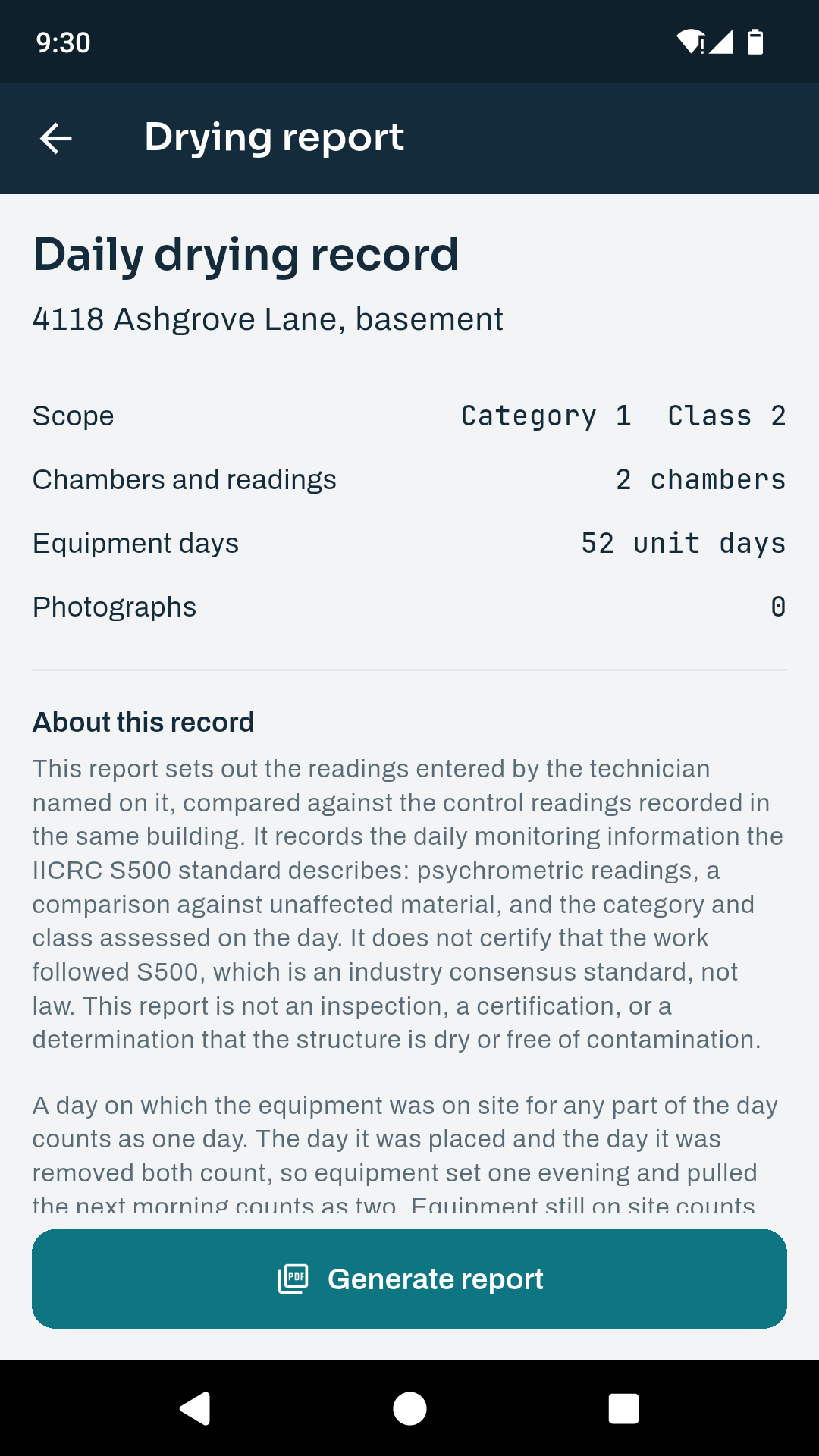
A day on which the equipment was on site for any part of the day counts as one day. The day it was placed and the day it was removed both count, so a unit set one evening and pulled the next morning counts as two. Equipment still on site counts up to today.
The report prints that rule beside the total instead of a bare number, because the total is what these records produce under that rule and not a figure any insurer has agreed.
The drying curve
The picture that ends the argument about pulling
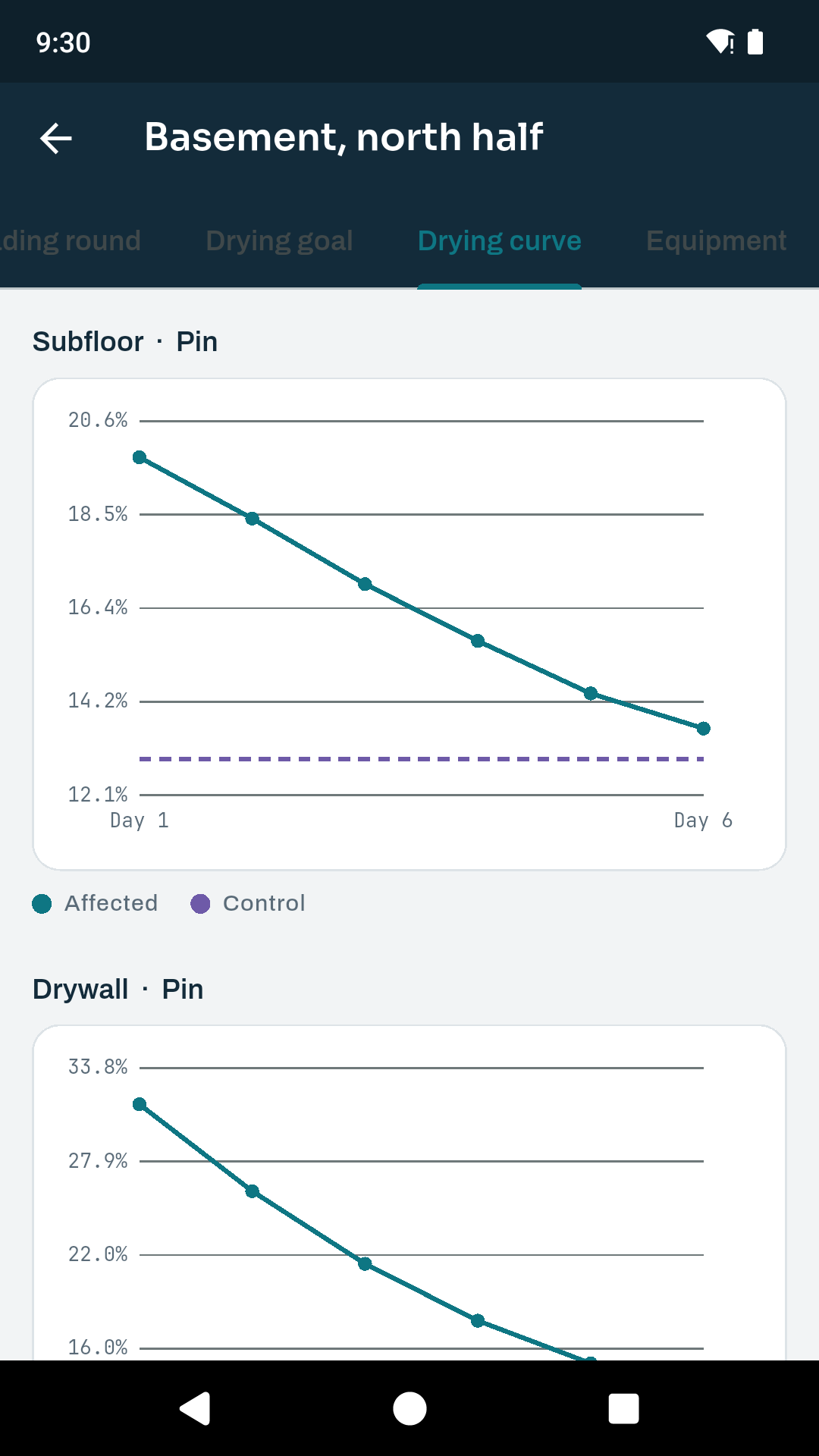
Moisture content against day for each material, with the control line drawn across it. A line flattening out next to the control is easier to show than to describe, and it is the same evidence whether you are explaining the decision to a customer or to an adjuster.
Each material keeps its own series, so a subfloor that is still coming down is not hidden by drywall that dried in three days.
The report
What the PDF holds
Scope, with the date you assessed it
IICRC water category 1 to 3 and intrusion class 1 to 4. Category can worsen while a job runs, so a new assessment is added with its own date instead of overwriting the last one, and the report shows the sequence.
The daily reading tables
Every air reading and every material reading, by day and by chamber, with the control alongside and the grains per pound worked out.
Equipment days and the rule
Unit days per chamber and per job, printed beside the counting rule in full rather than as a bare number.
The curve, your photos, your signature
Moisture against day for each material with the control drawn across it, the photos you took, and the technician signature.
What the report does not say
It records the daily monitoring information the IICRC S500 standard describes: psychrometric readings, a comparison against unaffected material, and the category and class assessed on the day. It does not certify that the work followed S500, which is an industry consensus standard rather than law, and it does not declare a structure dry, safe or free of contamination.
The app
The real screens
What it will not do
- It does not connect to remote sensors or dataloggers. Every reading in the record is one a person took.
- It does not upload your jobs. There is no account and no sign-in, and the jobs, readings and photos stay on the phone. The app itself carries ads and crash reporting, so "nothing leaves the device" would be the wrong claim to make.
- It does not grade a photo, judge a meter, or decide that a job is finished. Those are yours.
- The PDF is written in English whatever language the app is set to.
Price
Pick the one that suits how you work
A 14-day trial you start yourself, with no card. One open job at a time without paying, for as long as you want it. Nothing you have already recorded is ever locked away or deleted.
Questions
Before you download it
Does DryProof tell me when the structure is dry?
No. It tells you whether a material reading has reached the control reading you took for the same material in the same building, which is what a drying goal is measured against. Deciding a structure is dry is a judgement the person on site makes, and the report says so in as many words.
Why will it not compare a pin reading with a pinless reading?
Because they are not the same measurement. A pin meter reads between two probes driven into the material; a pinless meter reads a field a short depth below the surface, on a scale of its own. Putting 12 beside 28 across those two looks like a real comparison, so DryProof matches a control on material family, meter type and unit together and reports that the goal is not established if any of the three differs.
Does it work with no signal in a basement?
Yes. The readings, the photos and the report are all produced on the phone, and none of it needs a connection.
How does it count equipment days?
By calendar day. Any day the unit was on site for any part of the day counts as one, and the placement day and the removal day both count, so a unit set one evening and pulled the next morning counts as two. The report states that rule in full beside the total, because the total is what your own records produce under it and not a figure any insurer has agreed.
Can I move a job to a new phone?
Yes. One backup file holds every job, reading, equipment placement and photo, and restores on another device.
Imperial or metric?
Both, and you can switch. Imperial is the default, because grains per pound is the figure the trade works in.
Start the record on the next job
Set up the chambers, take the control readings, and the drying report writes itself from what you entered.
Get it on Google Play