ClearStack Apps
14-DAY TRIAL Get FarrierDesk

For the working farrier · Android · offline
The barn round,
in shoeing order.
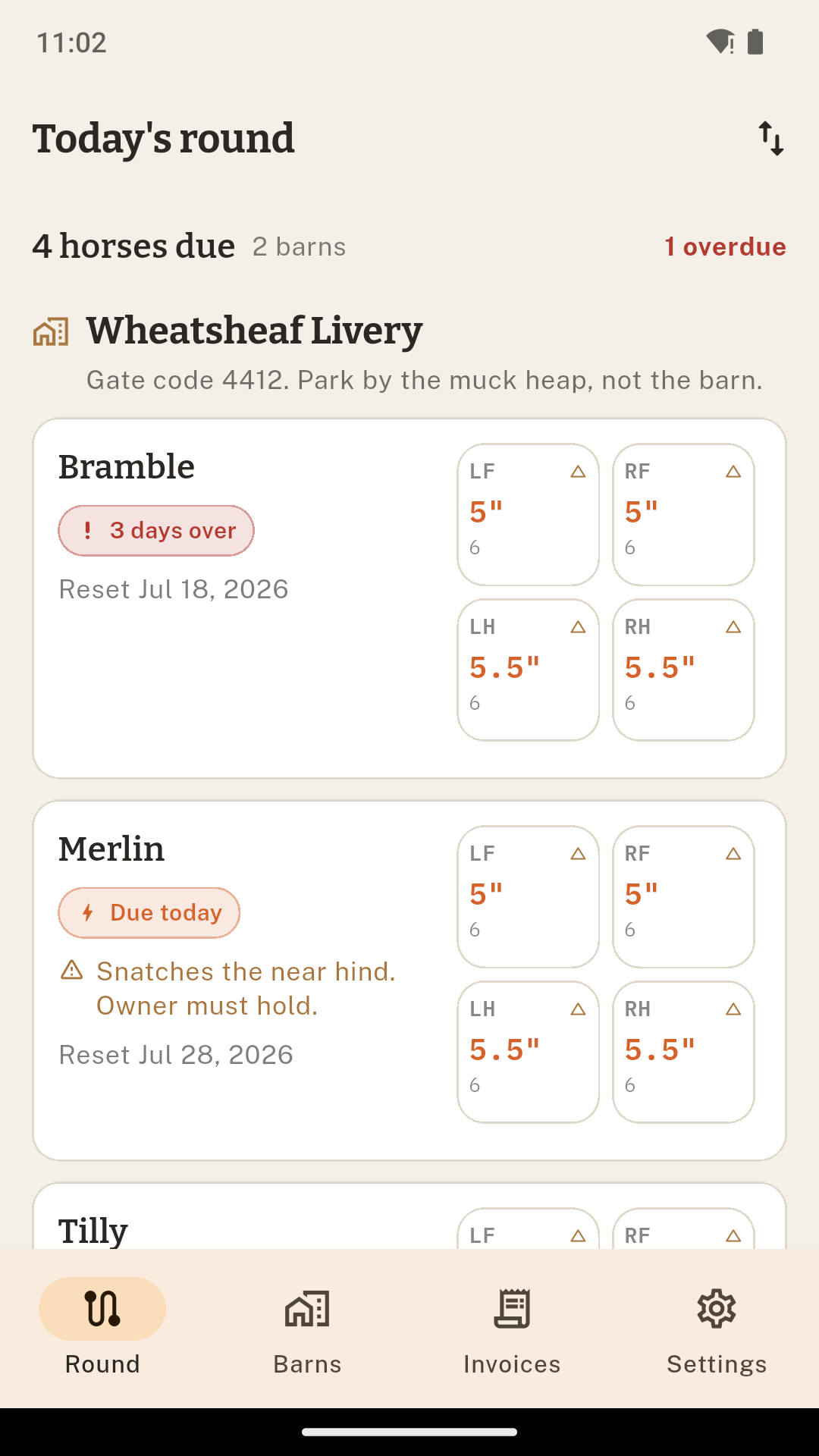
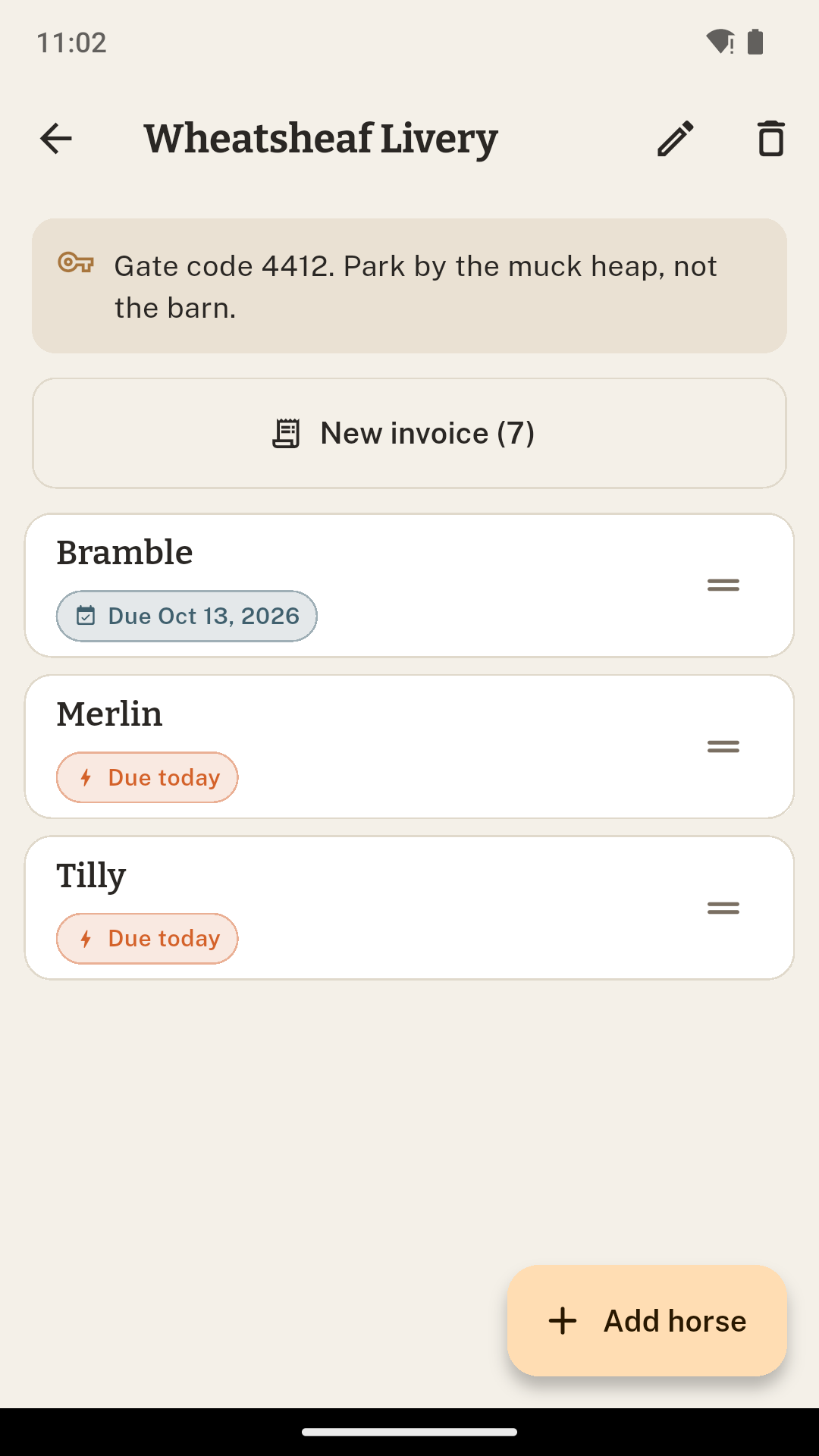
Open the app and today’s barns are already in the round order you set yourself. Each horse shows its last shoe size and nail count on all four feet without a tap, and the gate code sits under the barn name, so you read it before you get out of the truck.

The record itself
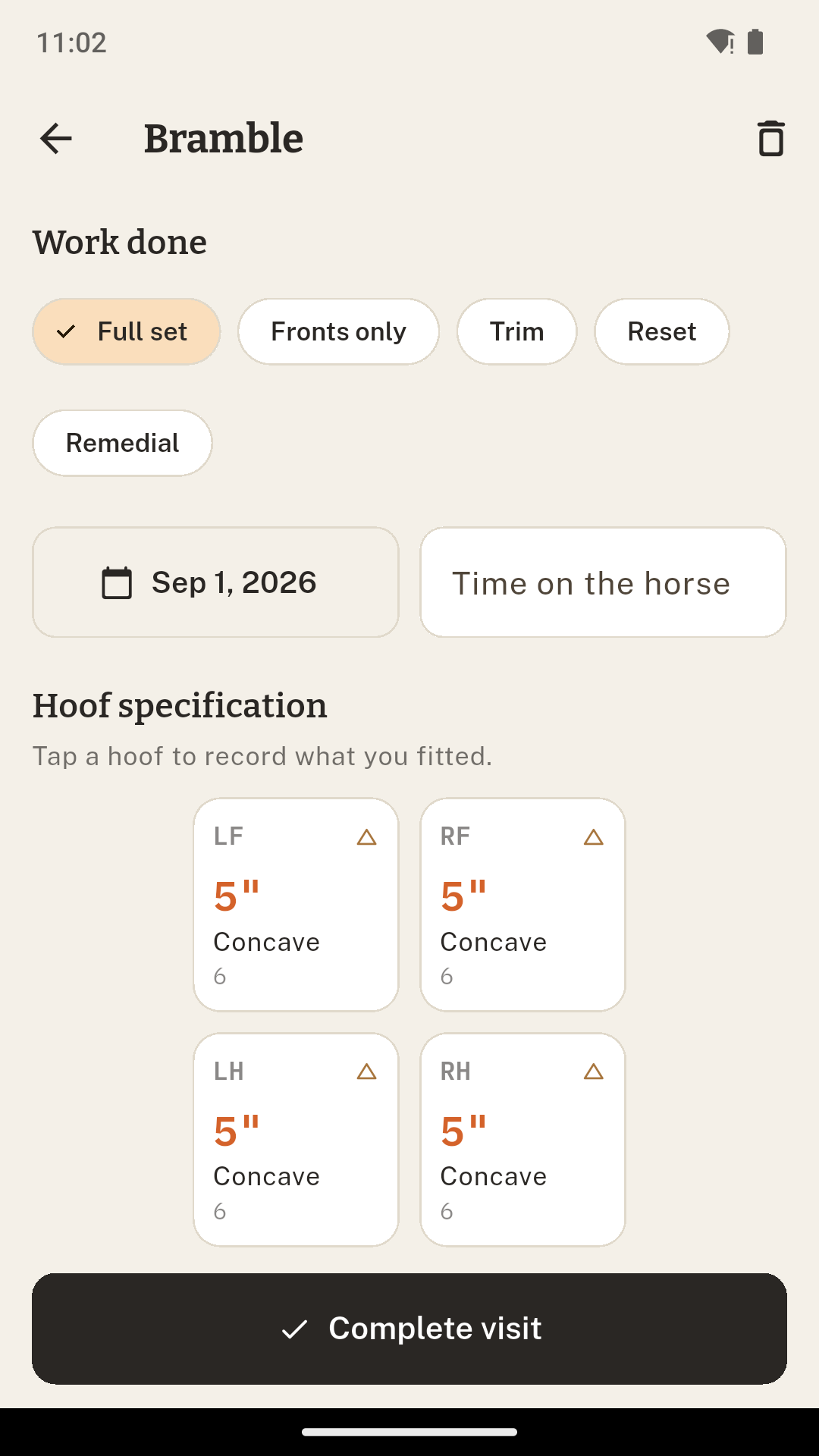
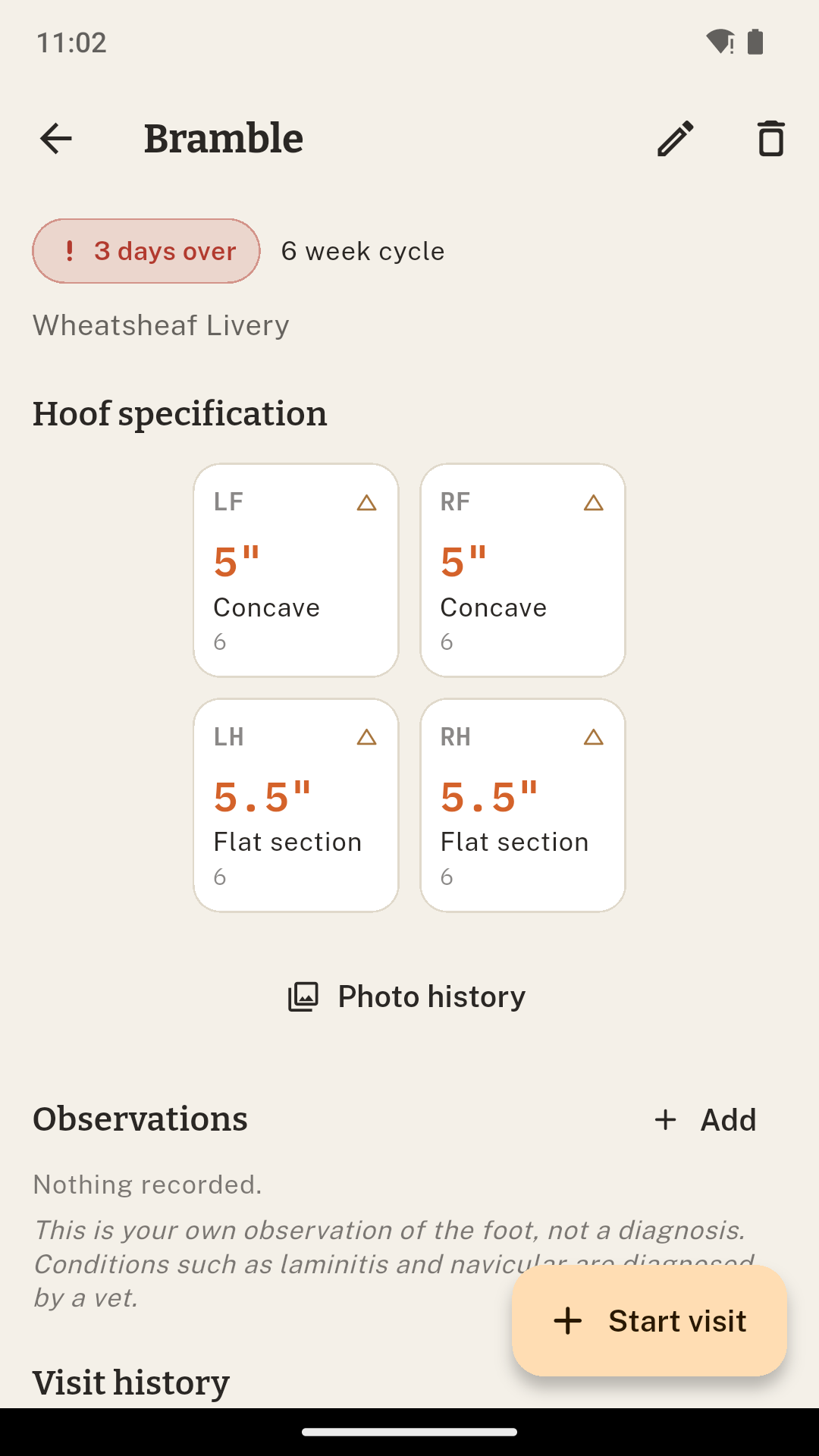
Four feet, laid out the way you stand
The diagram is a four-quadrant map with the near side on the left, matching the view from in front of the horse. Record each foot on its own, copy the last visit forward when it is a reset, or apply one specification to all four.
Right fore
Left hind
Right hind
What you did
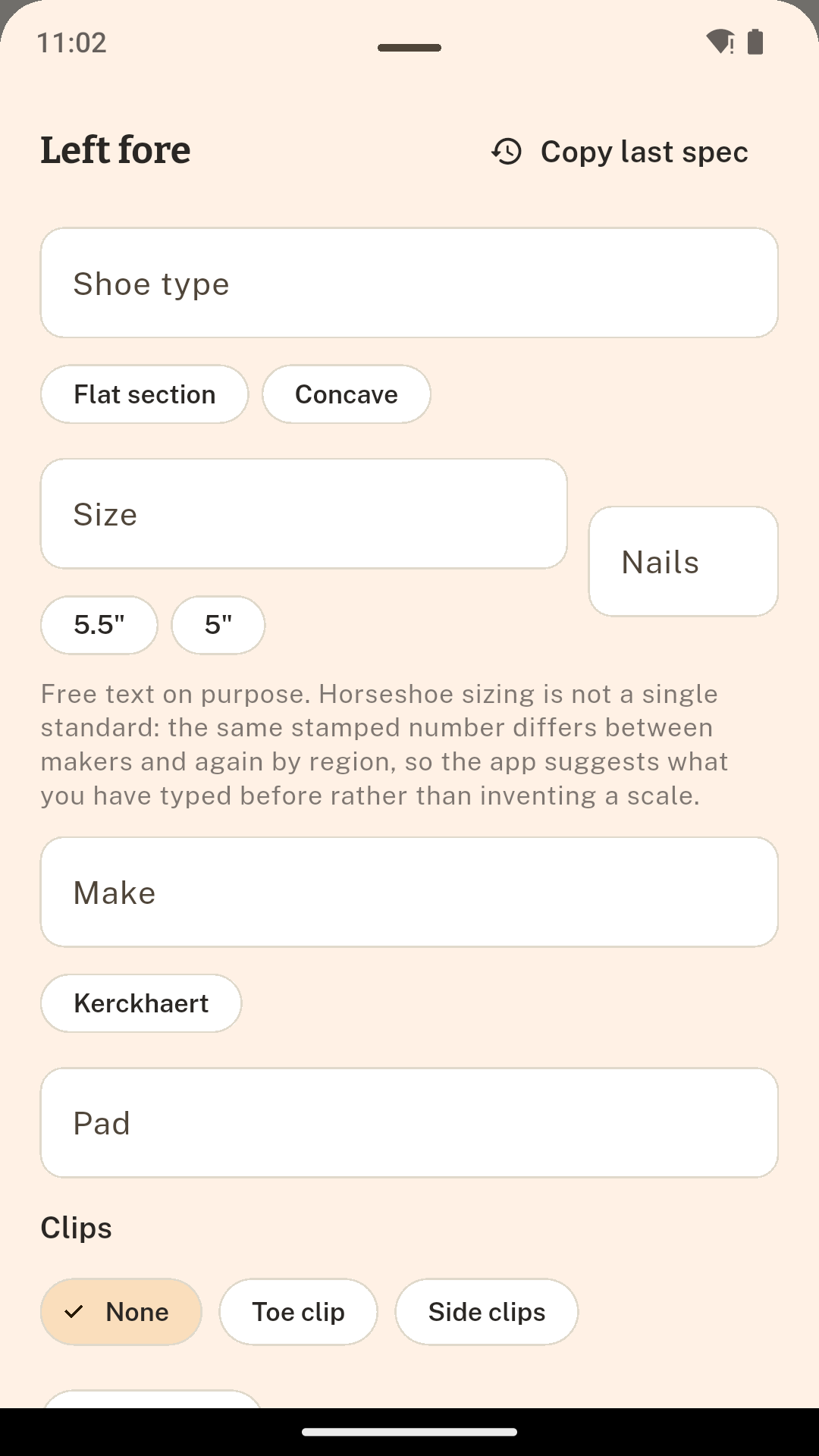
Clips
The diagram keeps its left-to-right layout in every language the app ships, including the right-to-left ones. It is an anatomical map, not a paragraph, and mirroring it would put the near fore where the off fore belongs.
One field, on purpose
Shoe size is free text, and that is the feature
Horseshoe sizing is not a single standard. The same stamped number differs between makers, and differs again by region. Any picker would have to choose somebody’s scale and impose it on everyone else.
What a dropdown does
Offers a list built from one maker’s stamps and asks you to find the nearest match to what you actually nailed on.
What FarrierDesk does
Takes what you type and suggests it back next time. Your own sizes, in your own notation, spelled the way you spell them.
Rebooking
Every horse on its own cycle
Anywhere from two to sixteen weeks. A new horse starts on six because that is the common reset interval, but nothing here calls a number correct: published guidance runs about four to fourteen weeks, a native pony in light work genuinely goes longer, and a remedial case genuinely comes back sooner. The cycle belongs to the horse, and you set it.
-
Never visited
A horse you have just added has no history, so it has no due date. It is listed as never visited rather than overdue by its whole life.
-
Scheduled
Booked from that horse’s own cycle, counted forward from the last visit.
-
Due soon
Inside seven days. Wide enough to plan a round, narrow enough that it still means something.
-
Due today
On the day. The round screen opens on these.
-
Overdue
Past the date, with the number of days shown rather than a colour on its own.
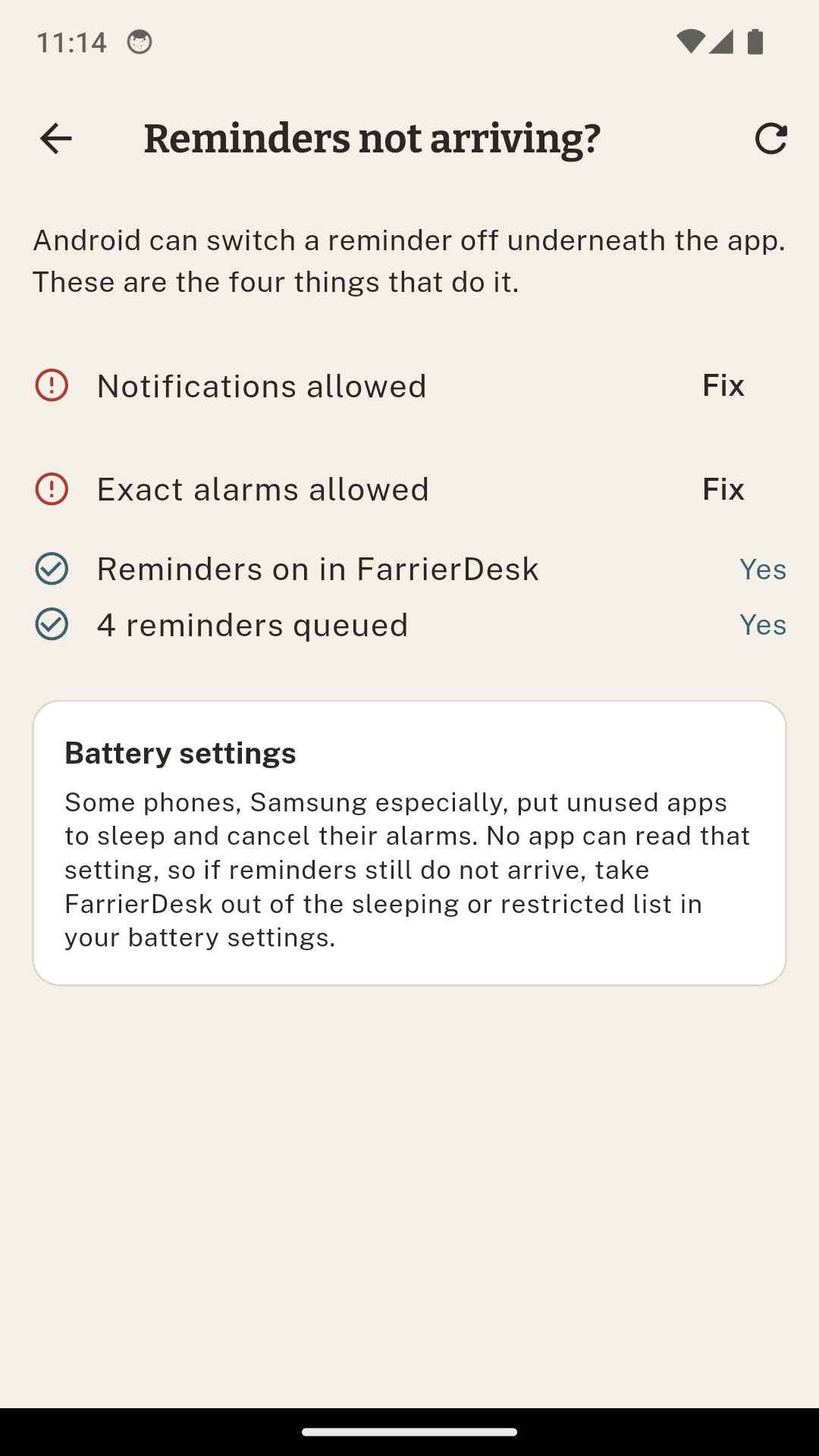
Finish a visit and the next is booked from that horse’s cycle, with a reminder on the day and a summary the evening before telling you how many are on tomorrow’s round. Android can defer an alarm through battery settings, so the app carries a screen that shows the permissions, the battery setting and how many reminders are queued.
Hoof photos
One foot, in order, over time
Before and after, per foot, per visit. The history filters to a single hoof and lays its photos out oldest first, so you can show an owner or a vet a change instead of describing it. A shot of the whole horse is stored as exactly that, and does not get filed under a foot it was not taken of.
At the truck
The invoice before you drive off
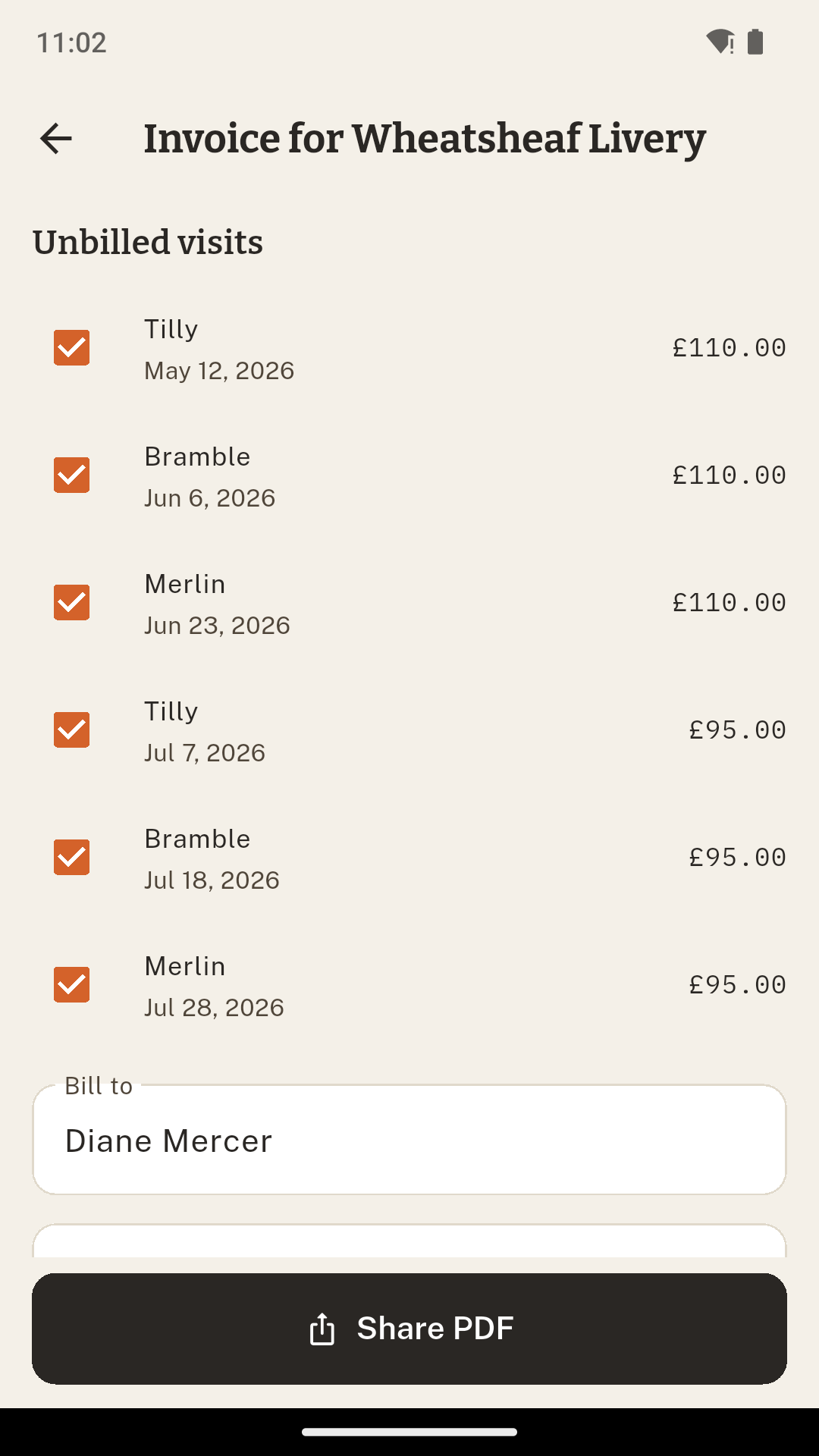
Build it from the visits you just did. Set your rates once and each visit is priced from them; a visit with its own price keeps that price. Share the PDF from the yard.
Nothing is quietly billed at zero
A visit with no rate is not the same as a visit worth nothing. Anything unpriced is counted and flagged for you to price by hand, rather than dropped into the total as a zero you would never notice.
One currency per invoice
Mixing currencies in a single total produces a number that means nothing, so an invoice holds one currency and refuses to be built from visits that disagree.
The boundary
Observations, not diagnoses
You can note what you can see on a foot and follow it across visits. Those are your observations. Conditions such as laminitis and navicular are diagnosed by a vet, and the app says so in every language it ships.
FarrierDesk records the work you do and what you fitted. It does not diagnose, and it does not replace a vet.
Handling notes sit in the same place: which horse kicks, which one will not give you a hind foot, which one needs the owner holding. Written where you read it, before you walk up.
The real screens
What it looks like in the barn
Price
Start the trial yourself
The trial does not arm itself on install, so what you see on first run is the tier the app actually ships. Start the 14 days when you want them, with no card.
$4.99 a month
$19.99 a year
$29.99 once, lifetime
The standard tier keeps up to five horses and shows a banner ad. Records you have already made stay readable whatever tier you are on.
Questions
Before you download it
Does it work with no signal?
Yes. Everything is stored on the phone. Steel barns and back fields do not have signal, so nothing in the app waits on a connection. There is no account and no sign-in.
Why can I type any shoe size instead of picking one?
Because horseshoe sizing is not a single standard. The same stamped number differs between makers, and differs again by region. A picker would have to impose one maker’s scale on everyone, so the field is free text and the app suggests what you have typed before.
What shoeing cycle does it assume?
None. A new horse starts on six weeks because that is the common reset interval, and you can set anything from two to sixteen. Published guidance puts real intervals across four to fourteen weeks, so the app supports a wider range than that and calls none of them correct. The cycle is set per horse.
Will the reminder always arrive?
The app schedules an exact alarm and falls back to an inexact one if Android refuses. Android can still defer or cancel an alarm through battery settings, so FarrierDesk ships a screen that shows you the notification permission, the exact-alarm permission, battery optimisation and how many reminders are queued.
Can it tell me what is wrong with a hoof?
No, and it does not try. You can note what you can see and follow it across visits, but those are your observations. Conditions such as laminitis and navicular are diagnosed by a vet. FarrierDesk records the work you do and what you fitted; it does not diagnose and it does not replace a vet.
What happens to a visit I have not priced?
It is flagged for you to price by hand rather than billed at nothing. Set your rates once and each visit is priced from them; anything without a rate is called out on the invoice instead of quietly totalling zero.
Can I move everything to a new phone?
Yes. One file holds every barn, horse, visit, specification and photo. Move it across and restore.
What does it cost?
A 14-day trial you start yourself, with no card. After that it is $4.99 a month, $19.99 a year, or $29.99 once for lifetime access. The standard tier keeps up to five horses and shows a banner ad.
Your book, in your pocket, in the barn.
Self-employed farriers running their own round across several barns. A handful of horses a week or a few dozen, the record and the invoice in one place.