
HerdCard
For the small beef herd
Every animal on its own card
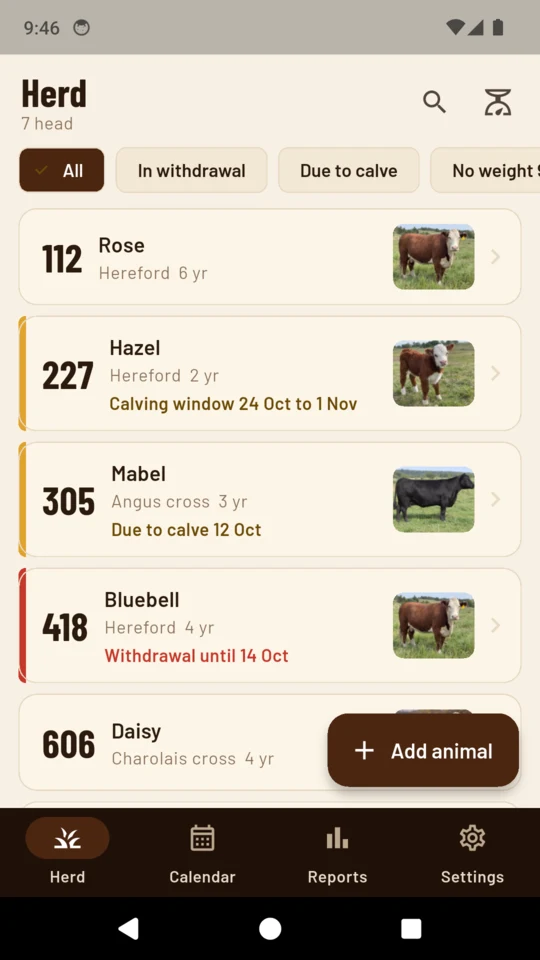
HerdCard keeps a record for every animal in a small beef herd: the calving window from the dates the bull was in, the treatment with its withdrawal date in red until it passes, the last weight and the gain, and the sale. It works offline, because a pasture rarely has a signal.

Up to 30 active animals on the standard tier.
Full version: $2.99/mo, $14.99/yr
or $34.99 once.
FROM THE LABEL, NEVER FROM US
Meat and milk, kept apart
Meat and milk withdrawal are entered separately, and a milk period can be entered in hours or in days. HerdCard keeps them apart all the way through: two fields, two end dates, two states on the card. It supplies no withdrawal period of its own, because labels are revised and they differ by country.
- Meat and milk entered separately, milk in hours or days
- An hours figure rounds up to the next whole day, never down
- A blank reads as not recorded, never as clear
- A reminder scheduled for the withdrawal end date
Product, lot or serial number, dose, route, injection site, reason and who gave it are all on the same record.
WHAT IT KEEPS
The whole herd, one animal at a time
A card per ear tag
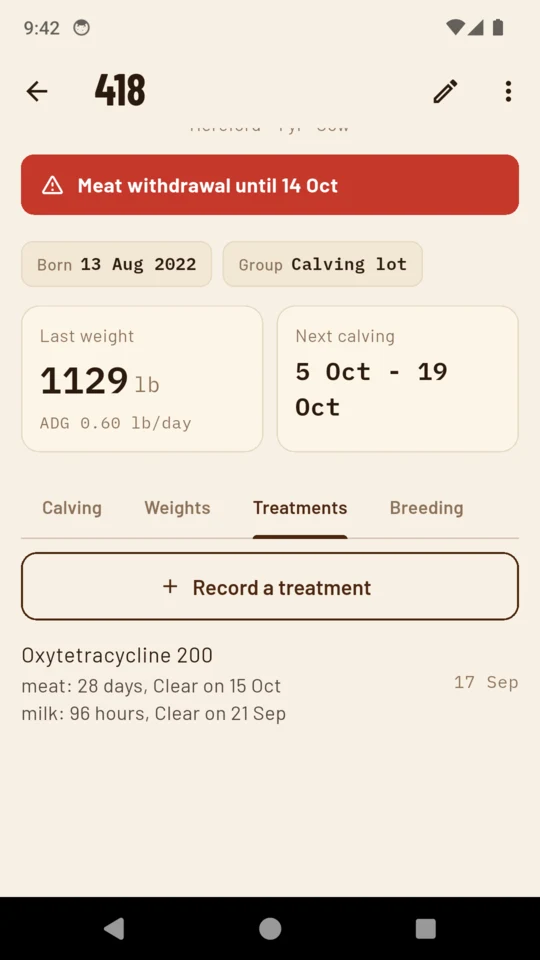
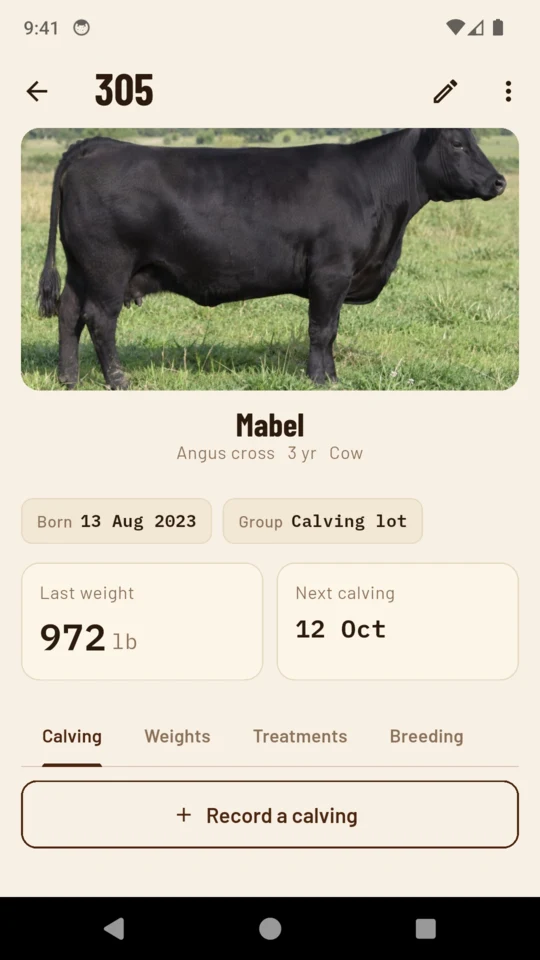
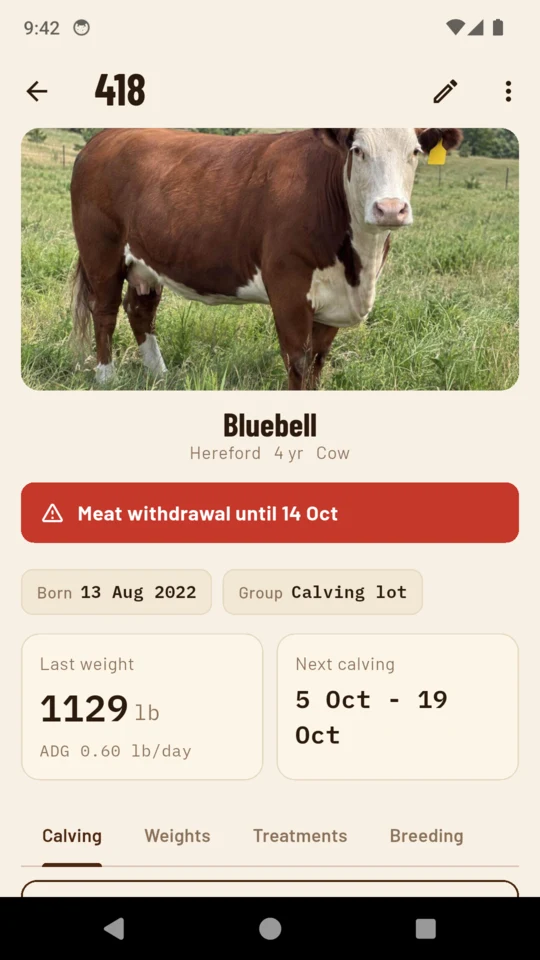
Tag number in large type, with a photograph, breed, sex, age, dam and sire. The last weight, the gain since the weigh-in before it and the next expected calving are on the card, so the answer is there before you tap anything. Groups for pastures, lots and pens.
Calving as a window, not a day
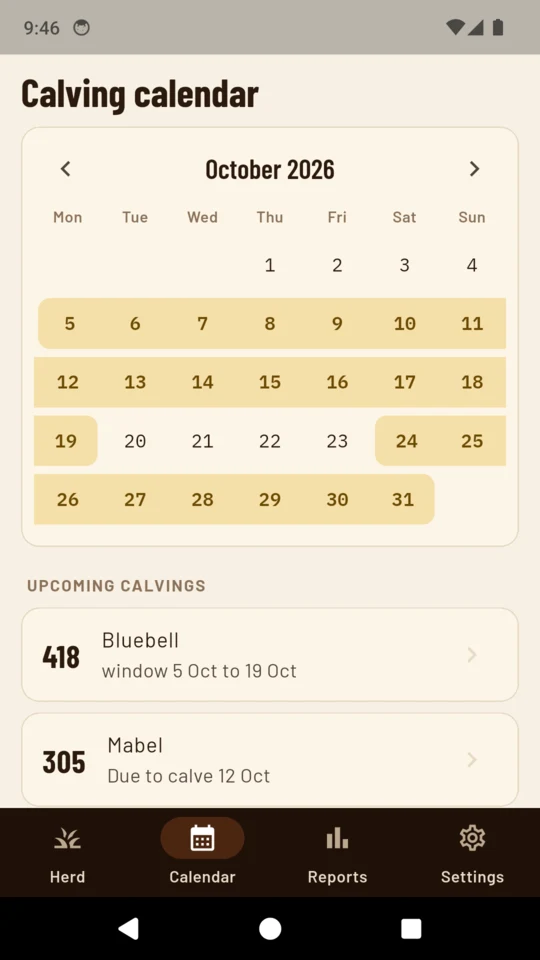
A bull turned in on one date and out on another gives a range, and the app shows a range. A single insemination date gives a single estimate. You set the gestation length used for the estimate; it starts at 283 days.
The treatment, written down at the chute
Product, lot or serial number, dose, route, injection site, reason and who gave it, on one record, filled in while the animal is in front of you rather than reconstructed later.
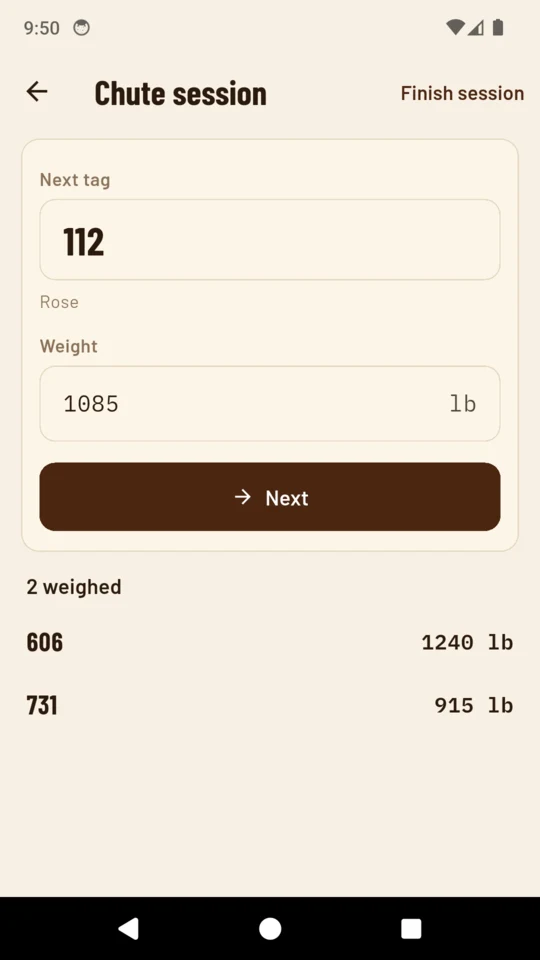
The chute session
Enter a tag and a weight, then move to the next animal. Weighing a run of cattle does not mean going back to a list between each one.
Gain, and the weaning weight
Average daily gain between the last two weigh-ins, and a weaning weight adjusted to 205 days from birth weight and age. It is calculated only for a weigh-in taken between 160 and 250 days of age, and it is not adjusted for age of dam.
Sales, and allocated costs
Sale, death or cull, with buyer, weight and price. A cost per head over any date range from the expenses you record, worked out over the days each animal was actually in the herd.
Reminders from what you recorded
Three kinds: the withdrawal end date the app worked out from your entry, a booster at the interval you set, and the opening of an estimated calving window. Whether a notification reaches you is up to Android and your own settings.
Reports and one backup file
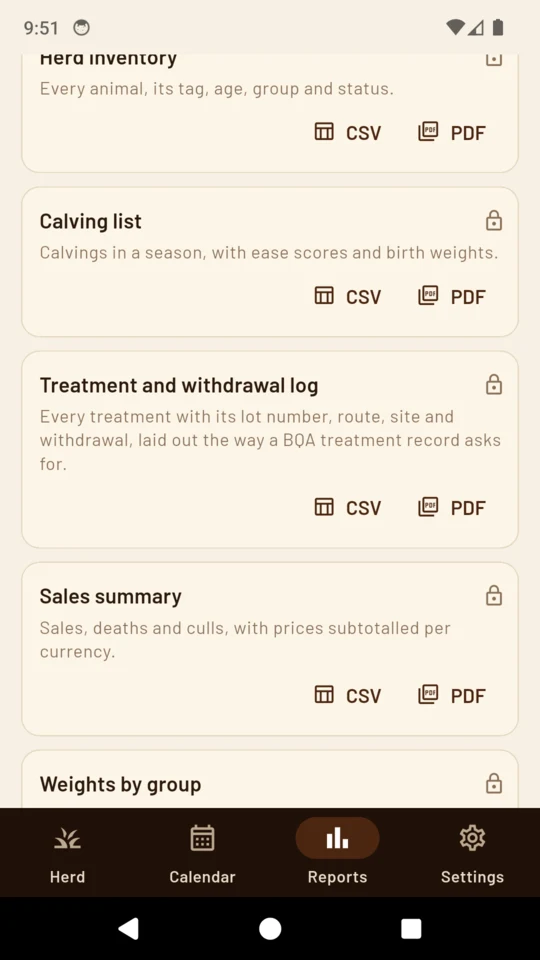
Herd, calving, treatment, weight and sales reports as a PDF, and a CSV for the accountant. One backup file holds every record and every photograph and restores on another phone.
The screens
Scroll sideways, or use the arrow keys
WHY IT WORKS THIS WAY
Built to be honest about what it knows
HerdCard supplies no withdrawal period
Labels are revised and they differ by country, so there is no built-in table to fall behind them. You type what the label in your hand says, and the arithmetic and the reminding are ours.
Meat and milk are two answers
They are entered separately, stored apart, computed apart and shown apart, and a milk period can be given in hours. An hours figure is rounded up to the next whole day rather than down.
Not recorded is not the same as clear
A treatment saved without a withdrawal reads as not recorded, and meat and milk carry that state separately. Treating a blank as a zero would be easy to do and easy to regret, because the two look identical on a list and mean opposite things.
A calving window, not a calving day
A bull in with the cows for three weeks cannot give a date, only a range. The window runs from his turn-in and turn-out dates and the gestation length you chose, so an animal can calve outside it. The app shows the range it can work out rather than a day it cannot.
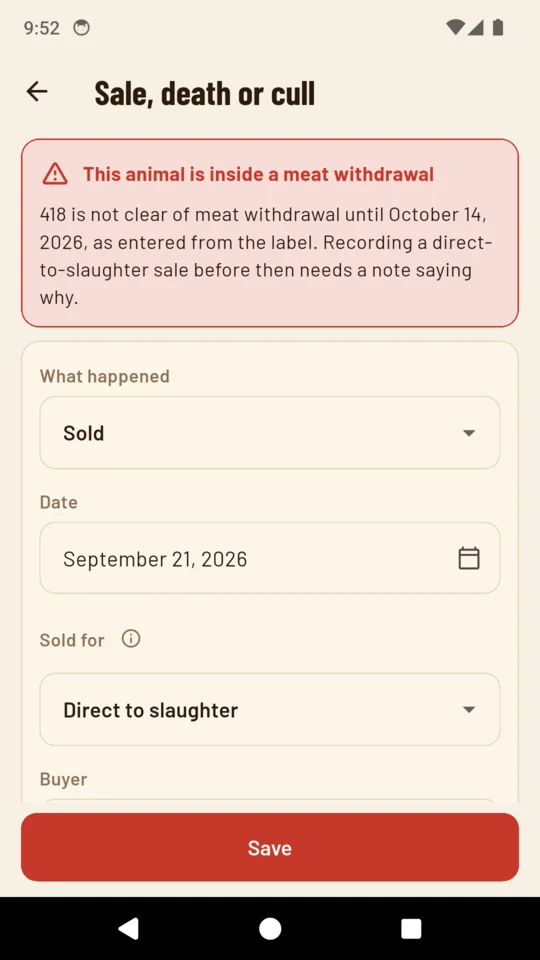
The check applies to one kind of sale
The hold is on a sale recorded as direct to slaughter. The app does not hold a feeder or store sale, and recording any sale leaves the withdrawal end date it worked out exactly as it was.
The cap counts animals, not cards
The standard tier holds 30 active head, so selling or losing one frees a slot. Counting cards would turn a standard tier into a timer, and records you have already made are never hidden or deleted whatever tier you are on.
No account and no ads
The herd record is on your phone. There is no sign-up and no advertising anywhere in the app. It sends crash reports and usage statistics so problems can be found and fixed.
Moving phones
Back up to one file, photographs included, and restore it on the new phone. There is no cloud copy.
PRICE
Standard, or the full version
STANDARD
Up to 30active animals
- Cards, photographs and groups
- Calving windows and the calendar
- Treatments, withdrawal dates and the red band
- Weights, gain and the chute session
- Reminders
- Backup and restore
FULL VERSION
$2.99/month
or $14.99 a year, or $34.99 once
- No limit on animals
- Herd, calving, treatment, weight and sales reports as PDFs
- CSV export
- The sale check on a direct-to-slaughter sale inside a withdrawal
You can start a 14-day trial from inside the app when you choose. If you never upgrade, every animal and every record you already have stays open and editable.
QUESTIONS
Before you install it
Does HerdCard tell me the withdrawal period for a product?
No, and it never will. Labels are revised and they differ by country, so you type what the label in your hand says and the app does the arithmetic and the reminding. Meat and milk are entered separately, because they are usually different figures, and milk is often stated in hours.
What happens if I leave a withdrawal blank?
The animal reads as not recorded, never as clear. A blank is an absence of information, so the app says so rather than treating it as a zero.
Will it stop me selling an animal?
On the full version, a sale recorded as direct to slaughter inside the meat withdrawal you entered asks you to write down why before it will save. The app does not hold a feeder or store sale, and recording a sale never changes the withdrawal end date it worked out. On the standard tier you still see the red band and the end date; what the full version adds is the hold and the written reason.
Does it work with no signal?
Yes. Everything is on the phone and there is no account to make. It sends crash reports and usage statistics so problems can be found and fixed.
What does the standard tier hold?
30 active animals. Recording a sale, a death or a cull frees a slot. Everything you have already recorded stays readable and editable whatever tier you are on: the limit is on adding another animal, and nothing is ever hidden or deleted.
Is the 205-day weight adjusted for age of dam?
No. The figure is adjusted to 205 days and not for age of dam, and the app says so where it prints it. It is calculated only for a weigh-in taken between 160 and 250 days of age.
Can I move it to a new phone?
Back up to one file with every record and every photograph in it, and restore that on the new phone. There is no cloud copy.
Is this veterinary advice?
No. It is a record. It does not diagnose, does not recommend a product or a dose, and does not decide whether an animal is fit to sell.
The herd record, in your pocket at the chute
Android only. $2.99 a month, $14.99 a year or $34.99 once.