NFPA 96
Accumulated grease depth
Grease depth gauge comb
- Cleaning required at
- 0.078 in · 2,000 µmmeasured on a surface
- In a fan housing
- 0.125 in · 3,175 µmjudged on its own figure
- Cleaned down to
- 0.002 in · 50 µmmaximum after the clean
Kitchen exhaust cleaning · NFPA 96 · TR19 Grease
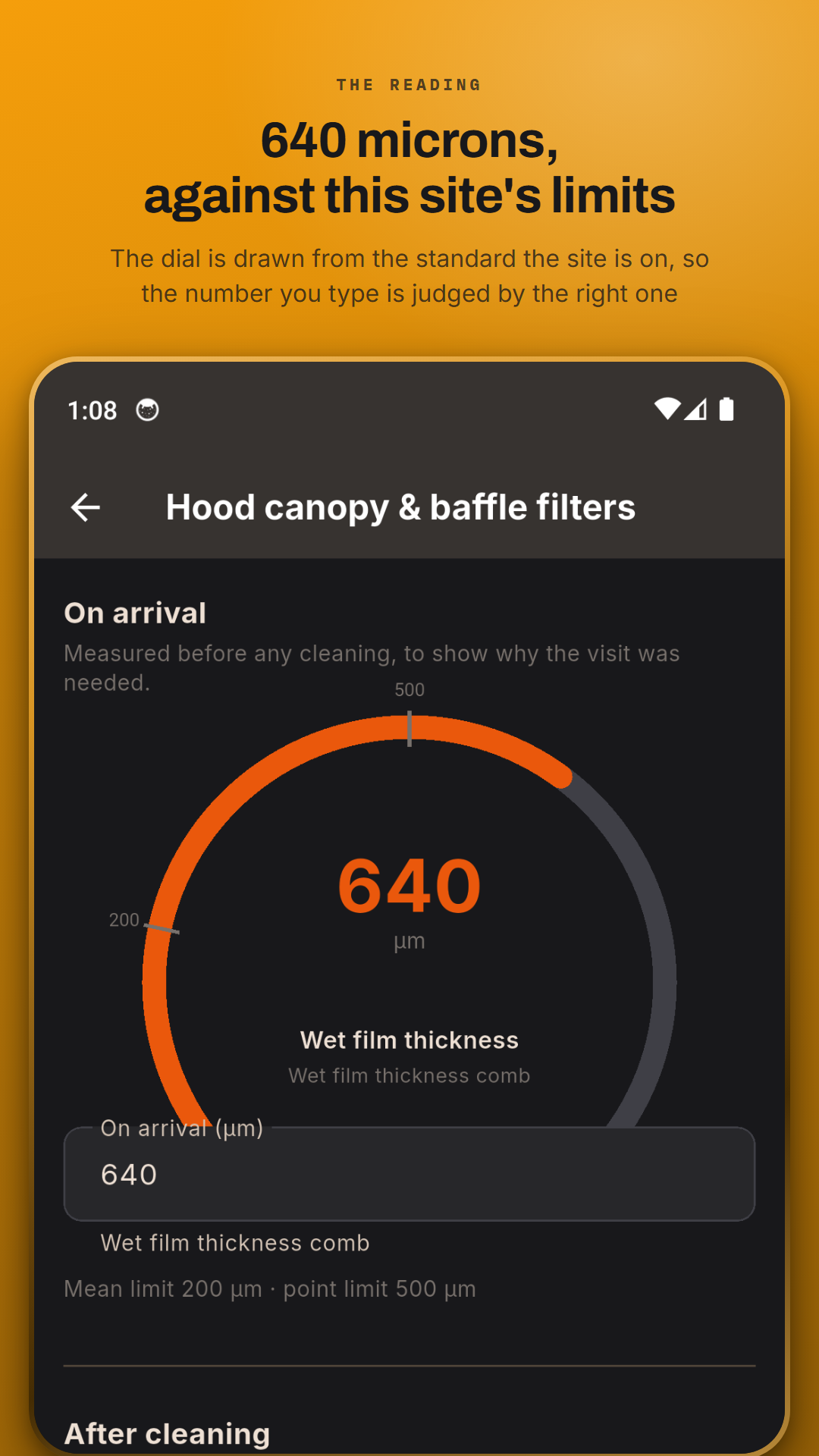
NFPA 96 reads accumulated grease depth with a comb. TR19 Grease reads wet film thickness. They are different quantities, and a number that means “clean this” on one scale can mean “fine” on the other. HoodProof shows one scale at a time, labelled with its instrument, so you always know which comb you are holding.

The figures it works to
These are the constants the app judges a reading against, not a summary of them. A site is set to one standard and every visit is stamped with it.
Accumulated grease depth
Grease depth gauge comb
Wet film thickness
Wet film thickness comb
Neither standard defines a pass or fail for a whole system, so the summary HoodProof shows is its own, taken from the most severe surface, and it says so on screen and on the report.
How a visit is recorded
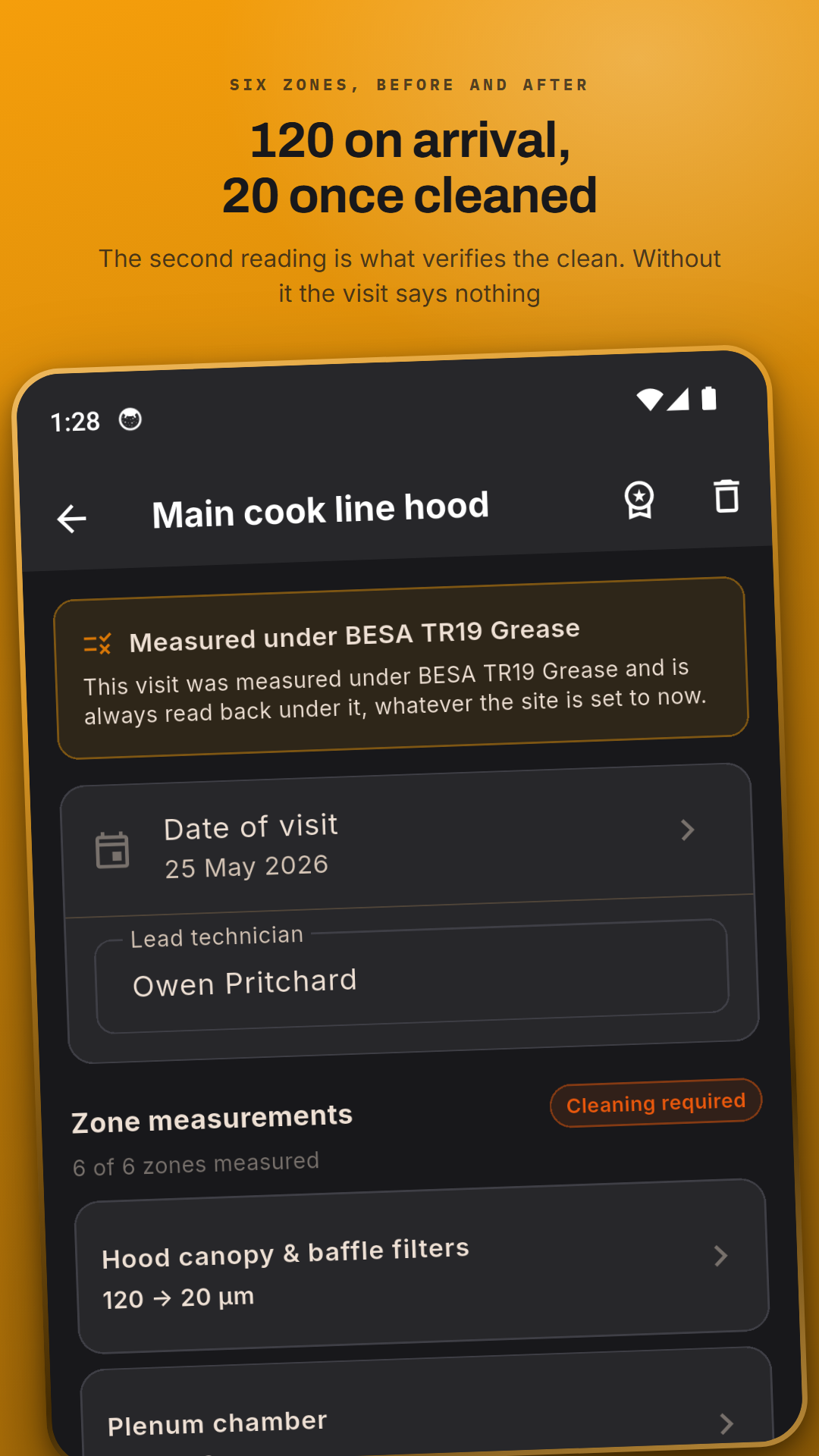
Once on arrival, to show why the visit was needed. Once after cleaning, because that is the reading that verifies the clean. Six zones is HoodProof’s workflow, not a division either standard prescribes.
Where the grease starts, and the part a client can see for themselves.
Behind the filters. Usually the first place a reading jumps.
The climb out of the canopy, and the run that holds heat.
The longest section and the one most likely to have no access panel.
The turn before the fan, where deposits carbonise.
Judged against the fan housing figure, not the surface one.
The second reading
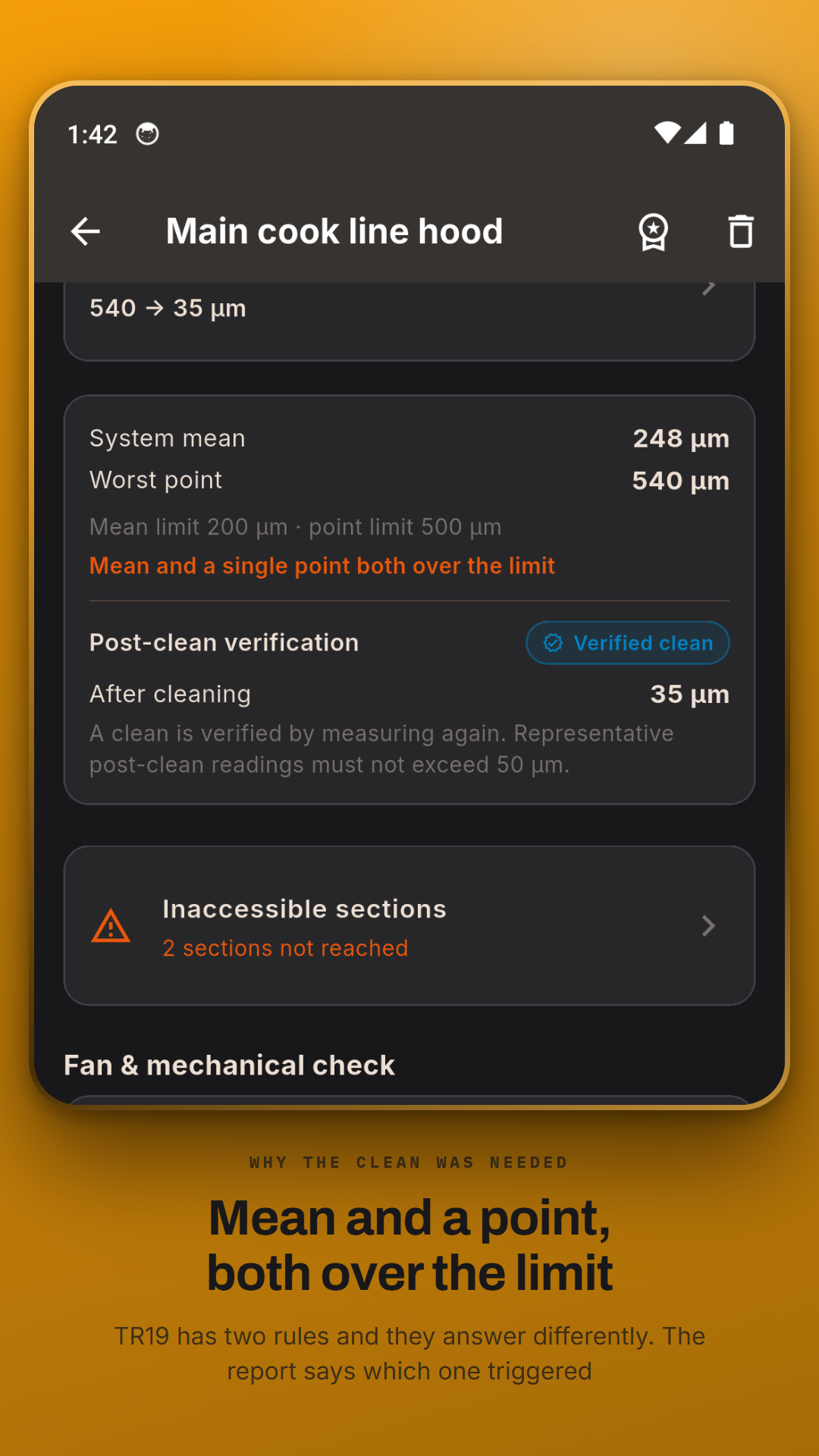
Both standards care about the number you leave behind, not only the one you arrived to. Representative post-clean readings must not exceed 50 µm. HoodProof reports the worst of them against that level.
Every post-clean reading came back under 50 µm, and the report prints the worst of them.
A post-clean reading is at or over 50 µm. The record says so rather than closing the visit.
No second reading was taken, so there is nothing to verify the clean with, and the report does not claim one.
What you could not reach
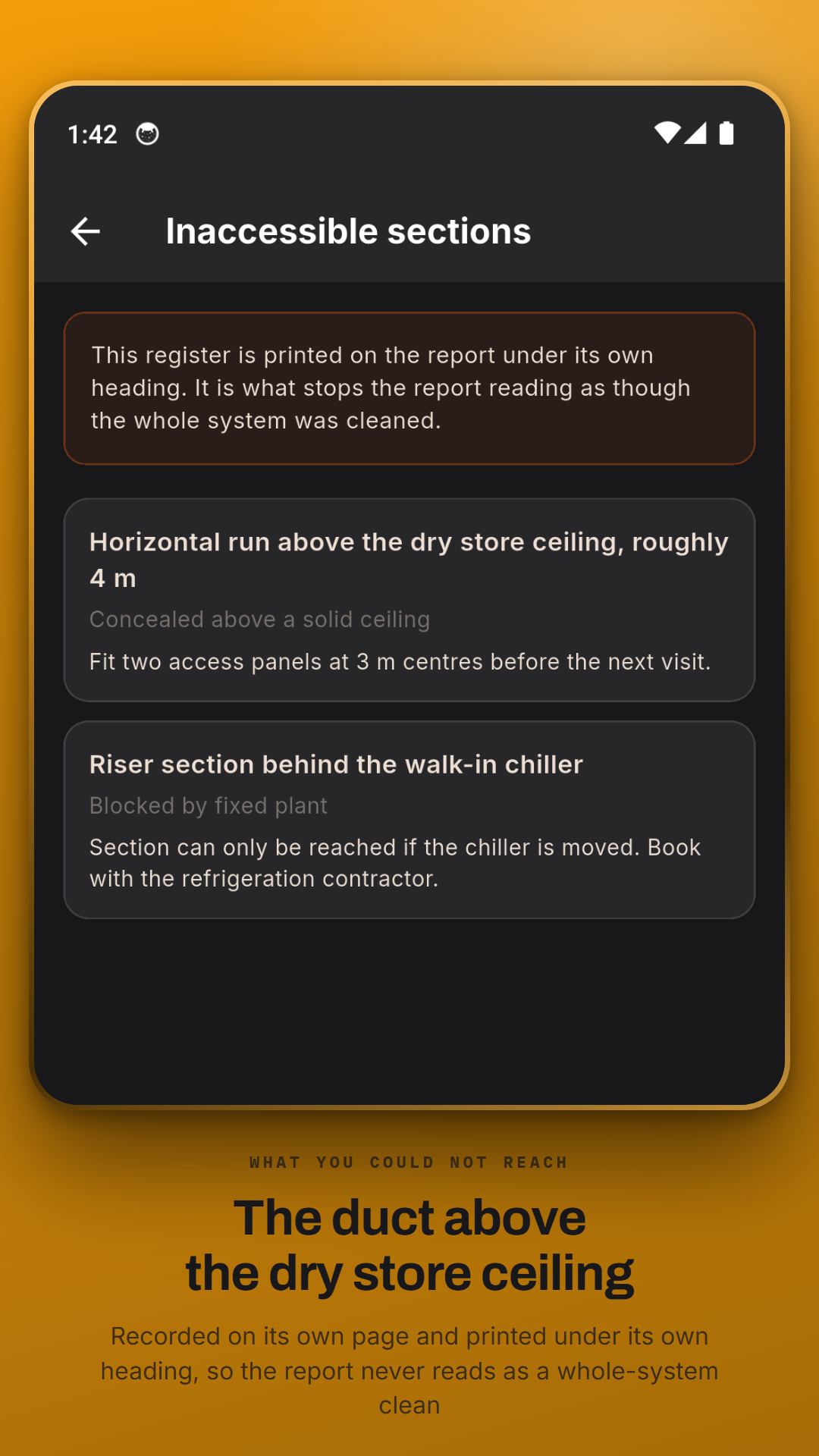
Most systems have a run nobody can get to. Log it with a reason, a photograph and what it would take to reach it, and it is reproduced on the report under its own heading.
The sections listed below were not reached during this visit. They were not inspected, not measured and not cleaned, and nothing in this report states otherwise.
Printed above the register on every report
What the customer gets
One PDF carrying your company details, the standard applied, the zone reading table with arrival and post-clean side by side, the photo pairs, the inaccessible register and the technician signature. Every figure on the cover is computed from the table beneath it, so a number on the summary cannot differ from the readings that produced it.
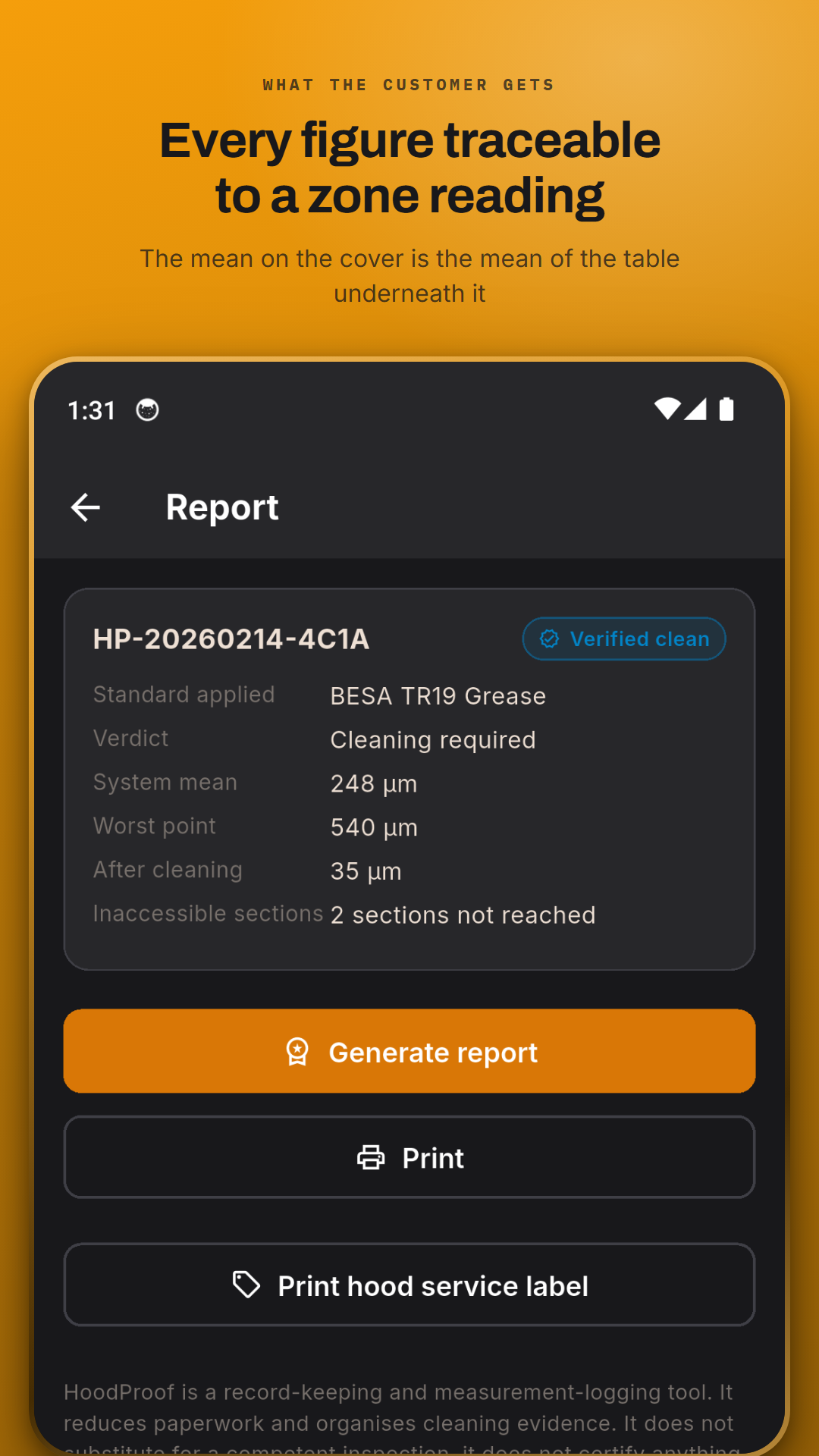
Under TR19 a Post Clean Verification Report is issued through the Vent Hygiene Register by a member. HoodProof does not issue one.
The clock it keeps
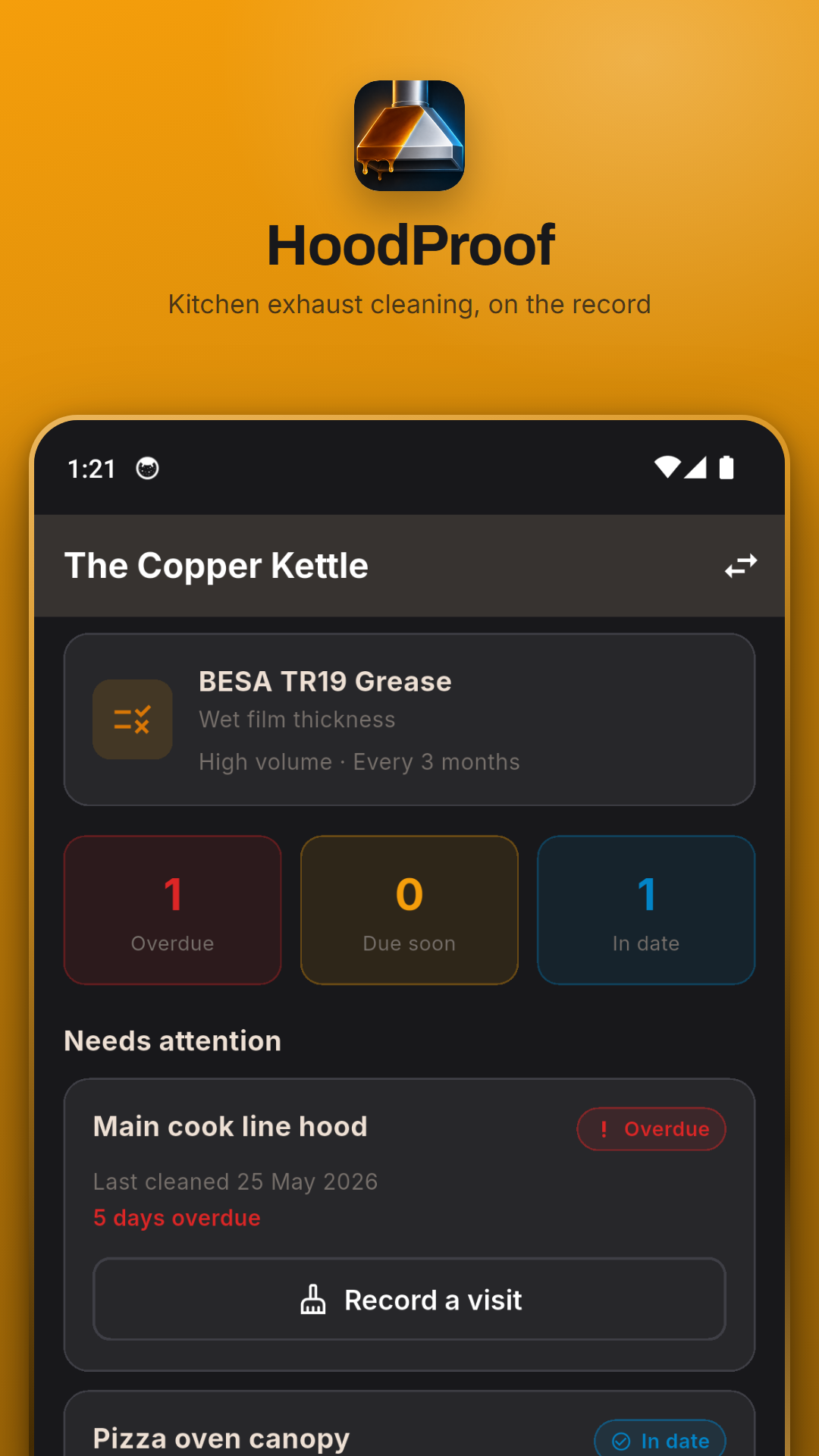
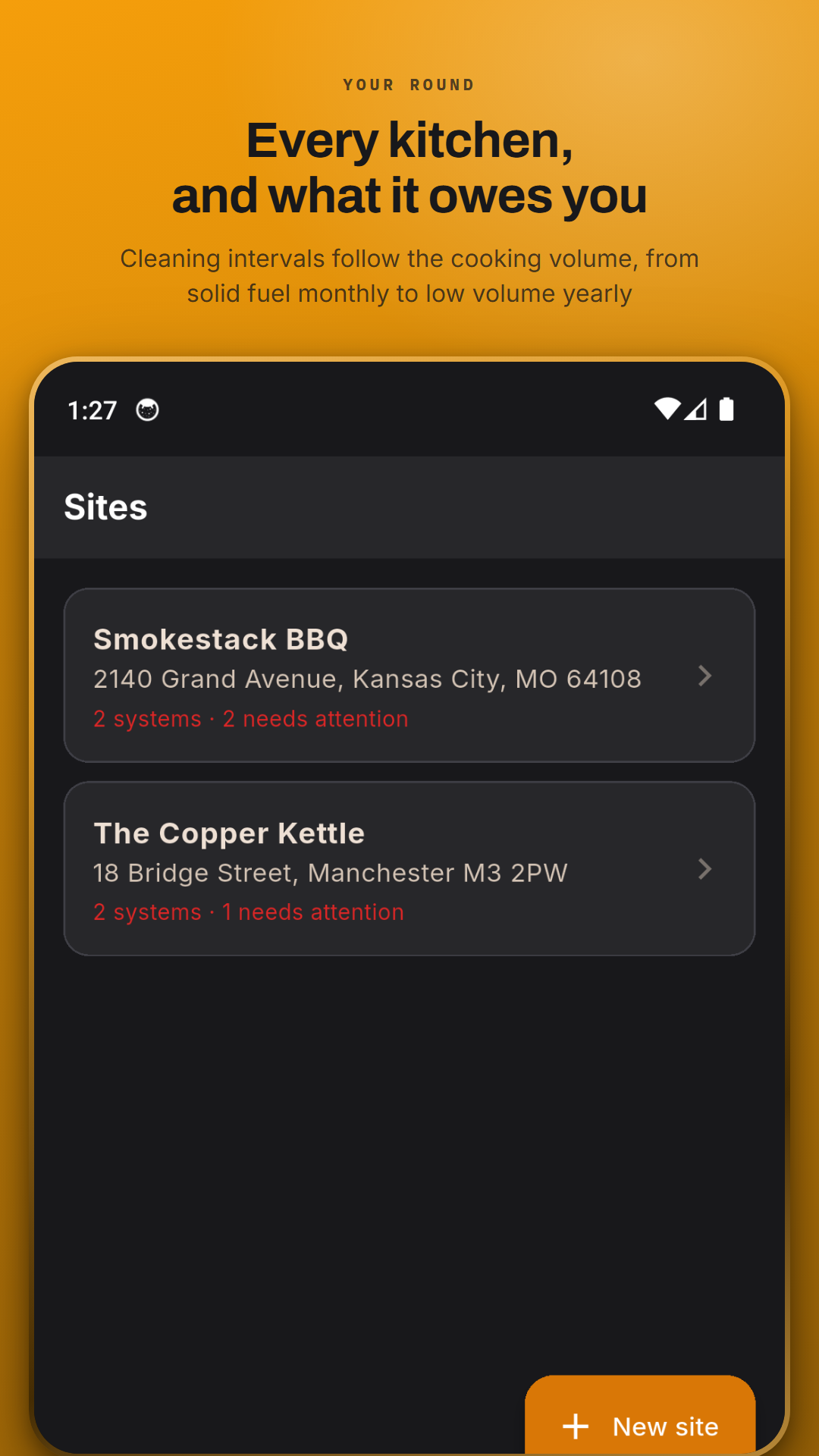
NFPA schedules the inspection; the clean follows from what the inspection finds. So HoodProof tracks the inspection due date per system and records the clean as its own event. Reminders land at 30, 14 and 3 days.
| Cooking operation | Inspected | Typically |
|---|---|---|
| Solid fuel | Monthly | Wood or charcoal cooking |
| High volume | Quarterly | Twenty-four hour or heavy fried |
| Moderate volume | Semi-annually | Most sit-down restaurants |
| Low volume | Annually | Churches, day camps, seasonal |
That is HoodProof’s service checklist, not a complete NFPA 96 inspection.
The real screens
Price
Monthly
$4.99/mo
Yearly
$34.99/yr
Lifetime
$89.99once
The standard tier covers one site with one exhaust system and three cleaning visits, and shows ads. Records you have already made stay readable on any tier.
Questions
Because they are not the same measurement. NFPA 96 reads accumulated grease depth with a depth gauge comb. TR19 Grease reads wet film thickness with a wet film comb. A number that means “needs cleaning” on one scale can mean “fine” on the other, so HoodProof stores them in separate fields and shows one scale at a time, labelled with its instrument.
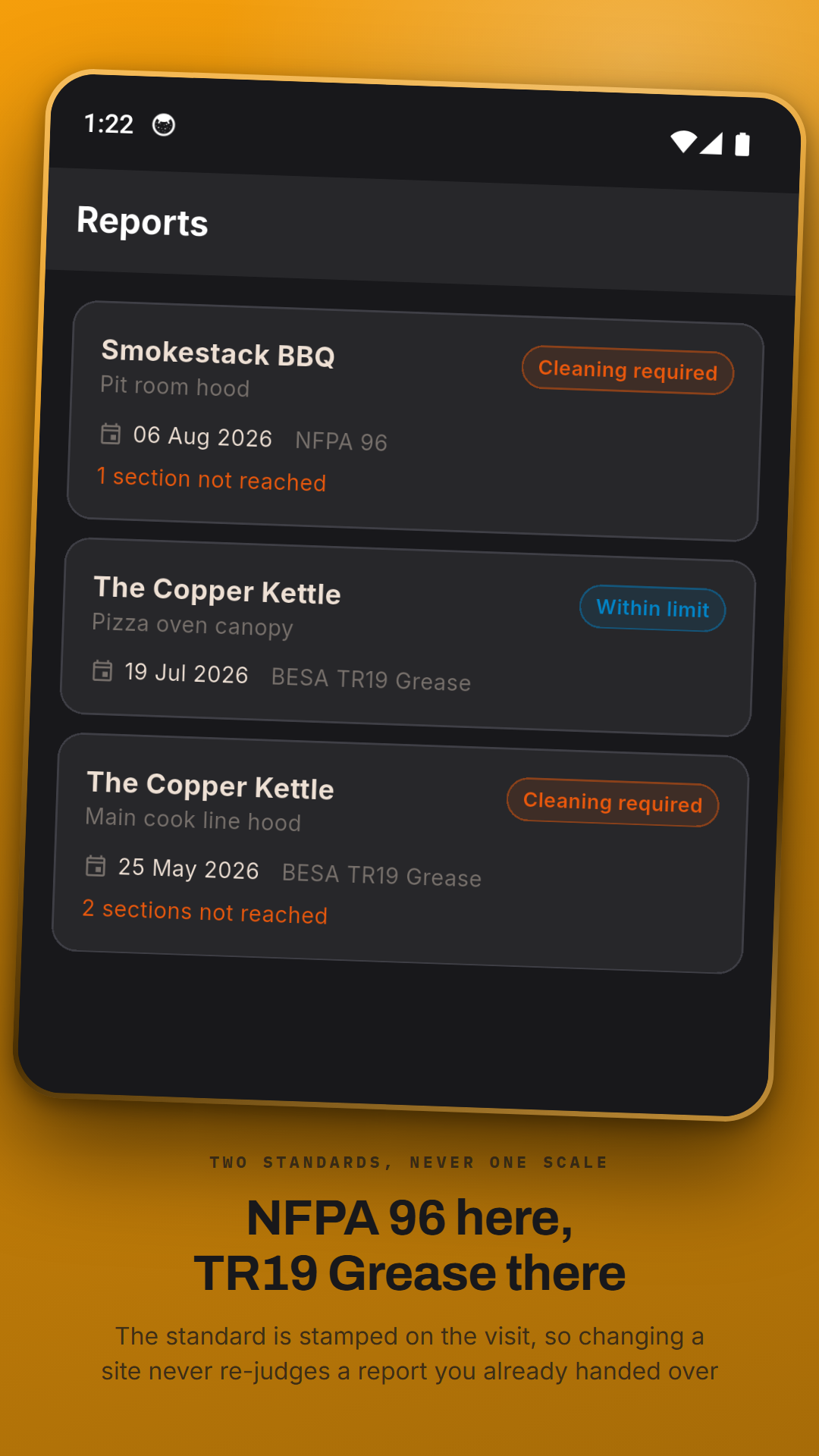
Nothing happens to the visits already recorded. Every visit stamps the standard it was measured under and is always read back under that one. Changing the site setting only affects the next visit.
No. It produces a cleaning report: your company details, the zone reading table, the photo pairs, the register of sections you could not reach, and the technician signature. Under TR19 a Post Clean Verification Report is issued through the Vent Hygiene Register by a member, and HoodProof is not that.
Because the post-clean reading is what shows the clean worked. Without it there is an arrival number and nothing else, so the app records the visit as not verified rather than passed. When there is one, the report shows the worst post-clean reading against the 50 µm level.
The section, why it could not be reached, a photograph, and your corrective recommendation. It is reproduced on the report under its own heading, above the line that says those sections were not inspected, not measured and not cleaned.
Yes. Logging, photographs and the PDF all run on the device with no account and no connection. Ads on the standard tier are the only part that needs one.
It is an inspection schedule. NFPA 96 sets how often the system is inspected for grease build-up, and cleaning follows when that inspection finds contamination that calls for it. HoodProof tracks the inspection due date and records the clean as a separate event.
One site with one exhaust system and three cleaning visits, with ads. Records you have already made stay readable whatever tier you are on.
HoodProof is a record-keeping and measurement-logging tool. It reduces paperwork and organises cleaning evidence. It does not substitute for a competent inspection, it does not certify anything, and a report it produces covers only the sections actually accessed and recorded.
Not affiliated with NFPA or BESA.