01
The walk.
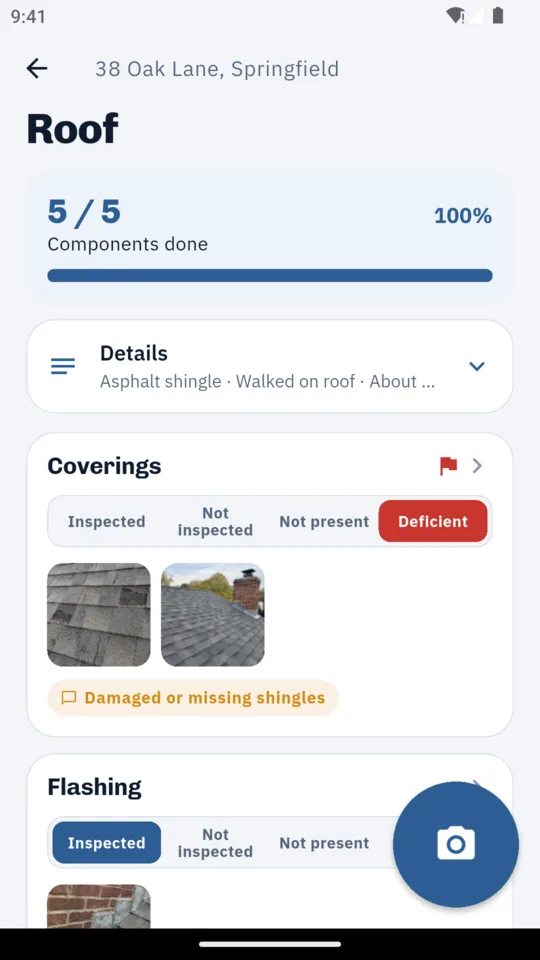
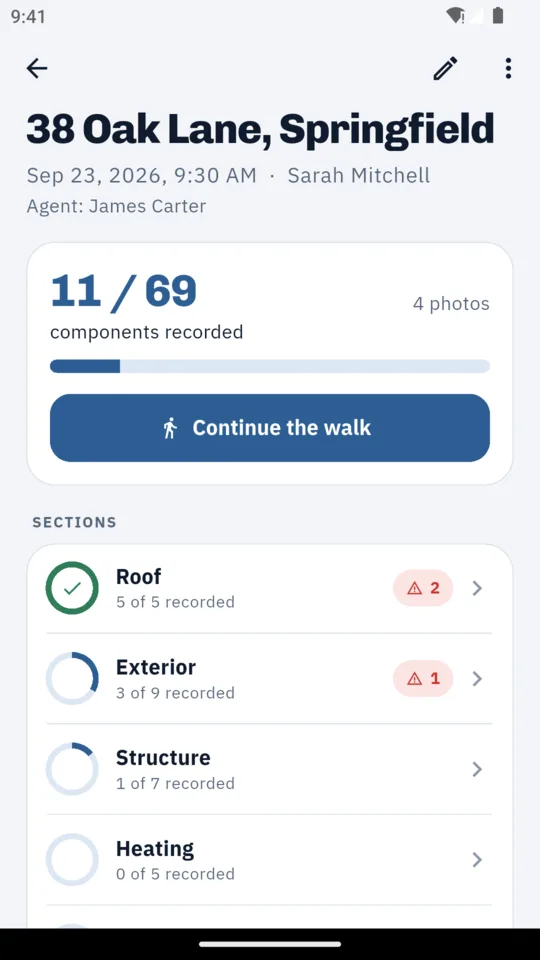
Twelve sections and 69 components, from roof and exterior to electrical, the attic and built-in appliances. Each component takes one tap: inspected, not inspected, not present or deficient. Every section shows how much is recorded, so you can see what is still unrecorded before you leave.
02
Photos where they belong.
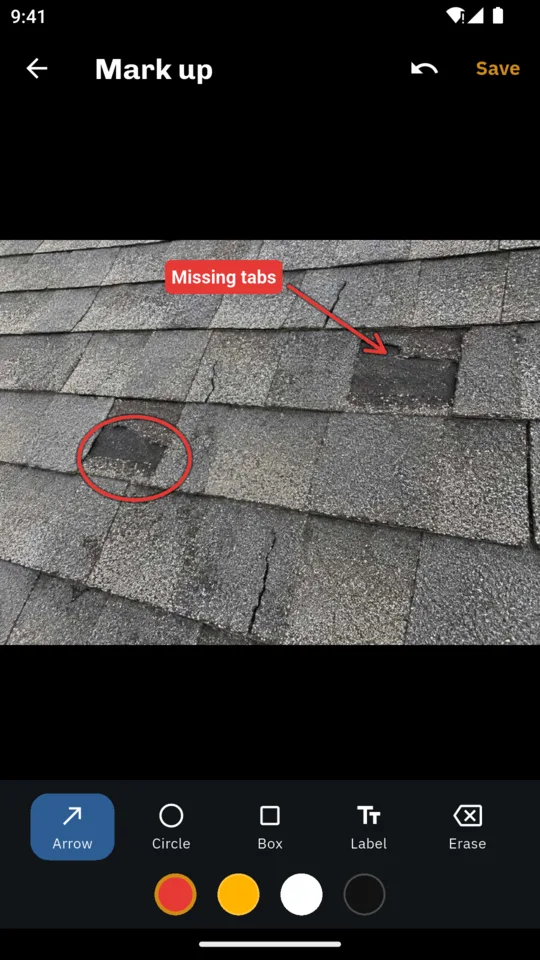
The camera button stays on screen and files each photo against the component you last touched. Draw an arrow, a circle or a box, or add a label. The original is kept and the marked-up copy goes in the report.
03
A comment library you edit.
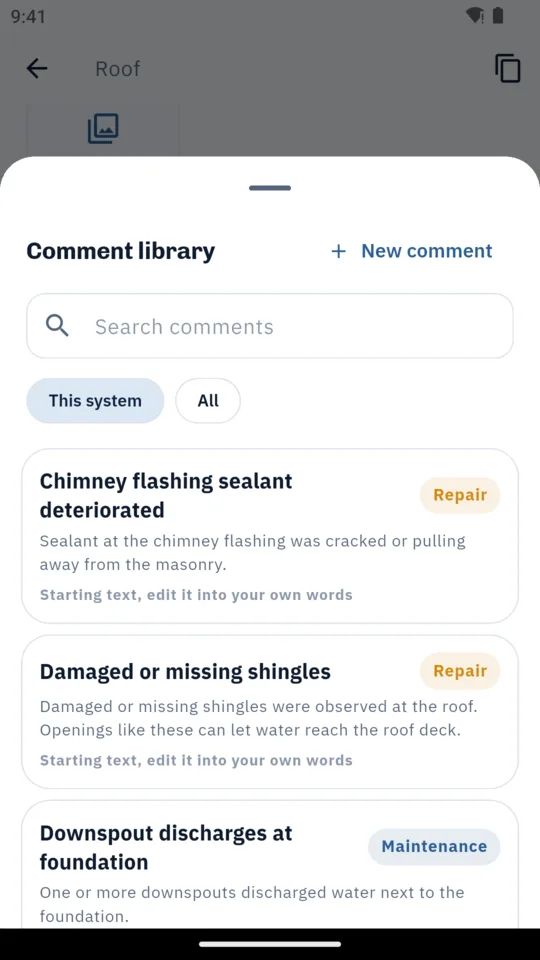
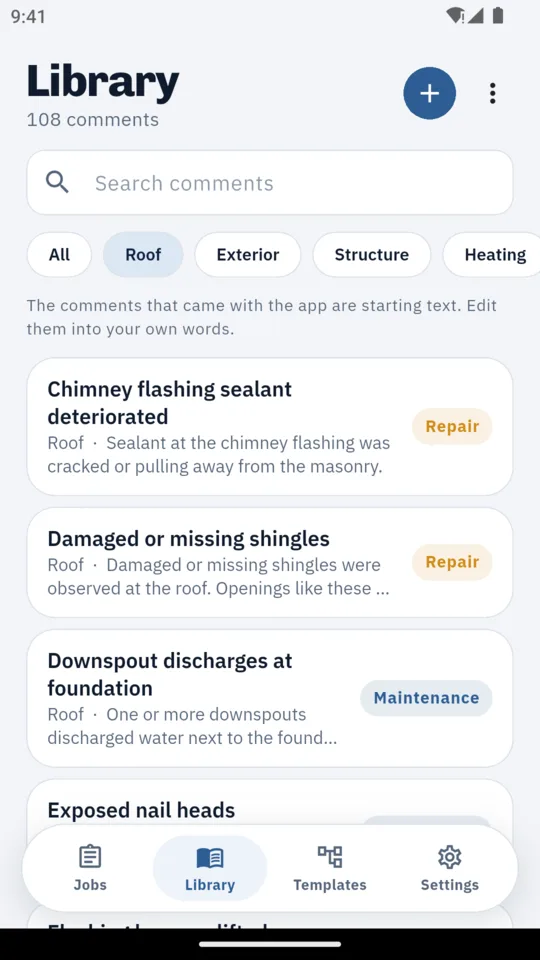
108 starting comments grouped by system, each with a title, a paragraph, a recommendation and a severity: maintenance, repair or safety. Rewrite them in your own words, add your own, or import a library you already have from a spreadsheet (CSV). A comment added to a finding is copied into the job, so editing the library later does not change it.
04
The report.
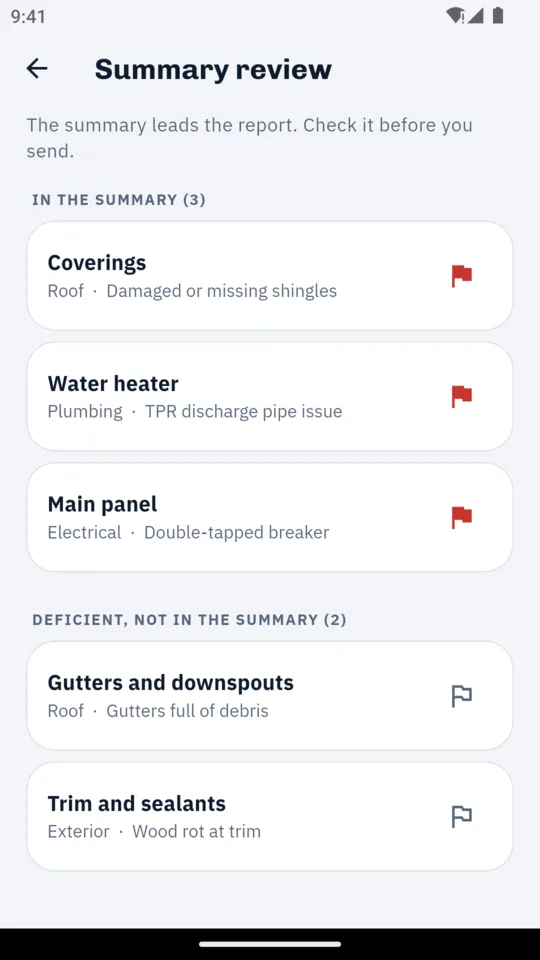
A cover with the property, client, agent, your license number and a cover photo. A summary of the items you flagged, then every section with its photos, two or three to a row, then your scope and limitations text and your signature. Components with no condition print as not inspected rather than disappearing. Letter or A4.
05
After the report.
A repair request list with only the flagged items. A reinspection started from the issued report, where each item is marked resolved, not resolved or not verified, with new photos. Every issued PDF is kept, and issuing again makes a new revision.
06
The rest of the job.
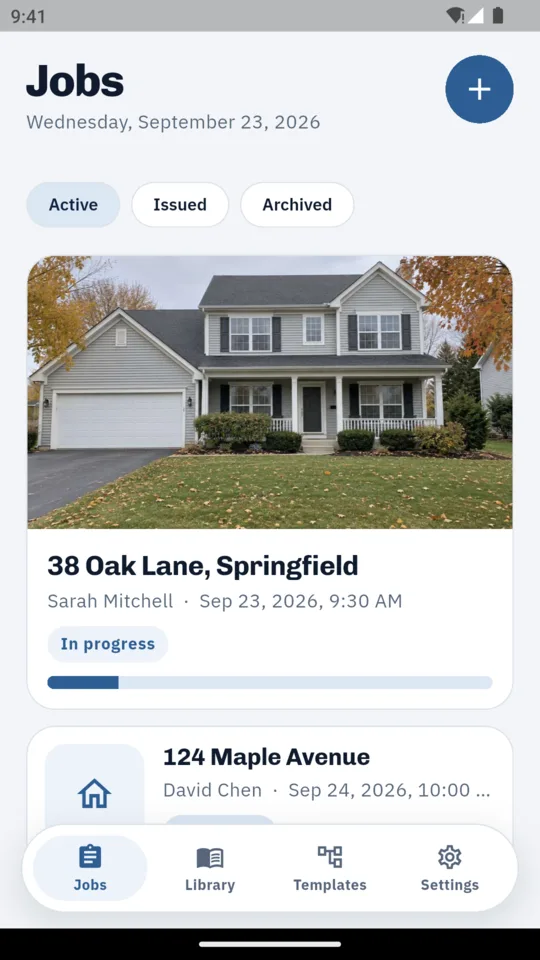
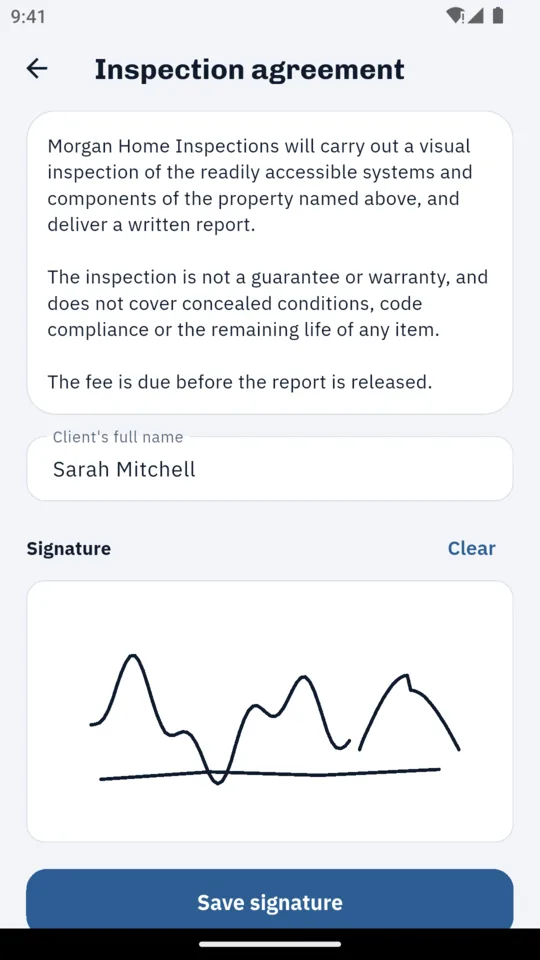
Your pre-inspection agreement, signed by the client on your phone and stored with the job. The fee and whether it is paid. Reminders the evening before a job, when a report is still unsent a day after the inspection, and when a fee is open two weeks after the report.