Landlord
Landlord contact details · Every joint landlord
LANDLORD COMPLIANCE, ENGLAND

LetProof
Certificates, deposits and deadlines
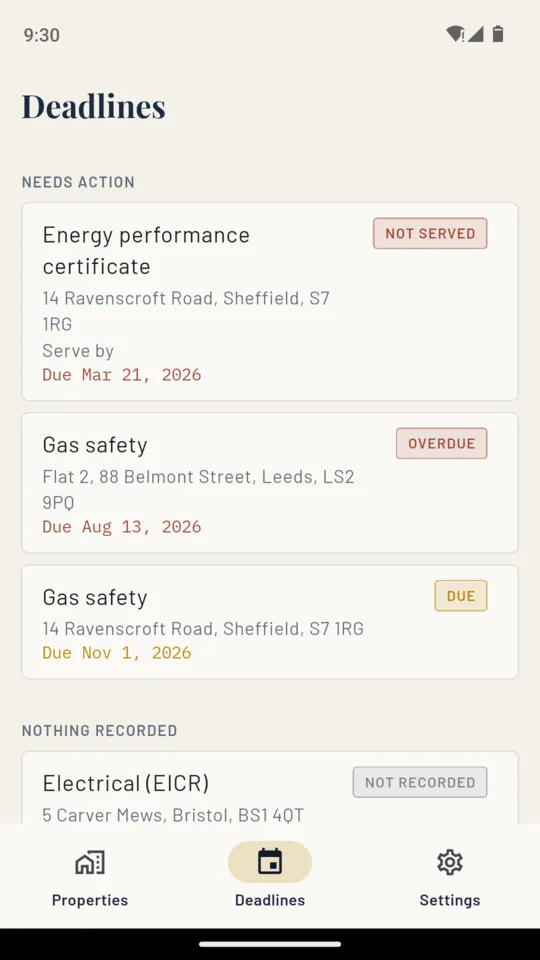
A gas safety record is valid for twelve months. It also has to reach an existing tenant within 28 days of the inspection, or a tenant moving in before they occupy. Those are two different duties, and only one of them shows on an expiry tracker. LetProof tracks both deadlines, per property, on the phone.

Android · England only · one property included, then £5.99 a month or £49.99 once
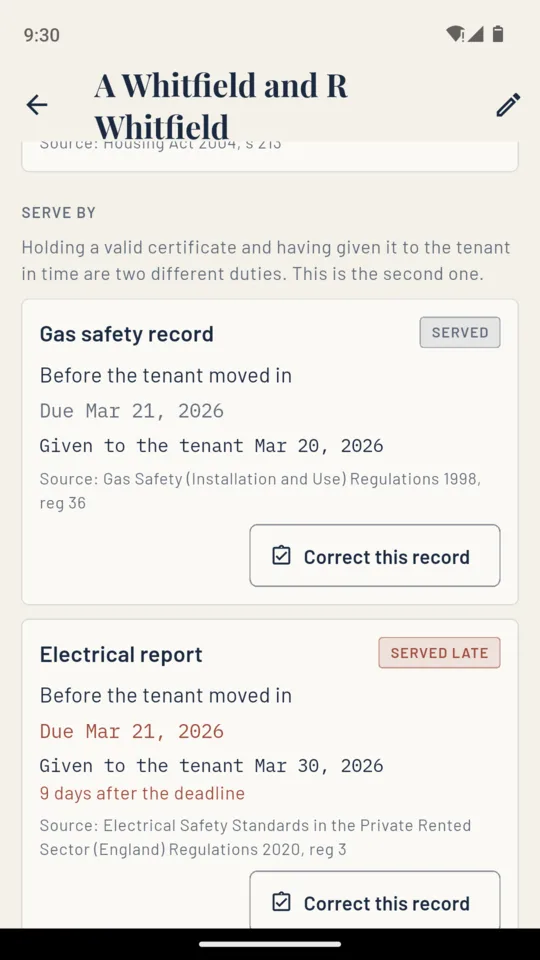
Compliance trackers centre on the expiry date. LetProof also keeps the day each document was given to the tenant and measures it against the deadline that applies, which is 28 days from the inspection for a tenant already there, and before occupation for one moving in. Each card names the rule that produced its deadline, so it can be checked rather than believed.
THE THREE STATES A DOCUMENT CAN BE IN
WHY LATE IS ITS OWN STATE
A document that reached the tenant nine days after the deadline is not missing, so it is not outstanding. It is also not done. Folding the two together would erase the only record that it was late, on the one screen a landlord would go to if anyone ever asked.
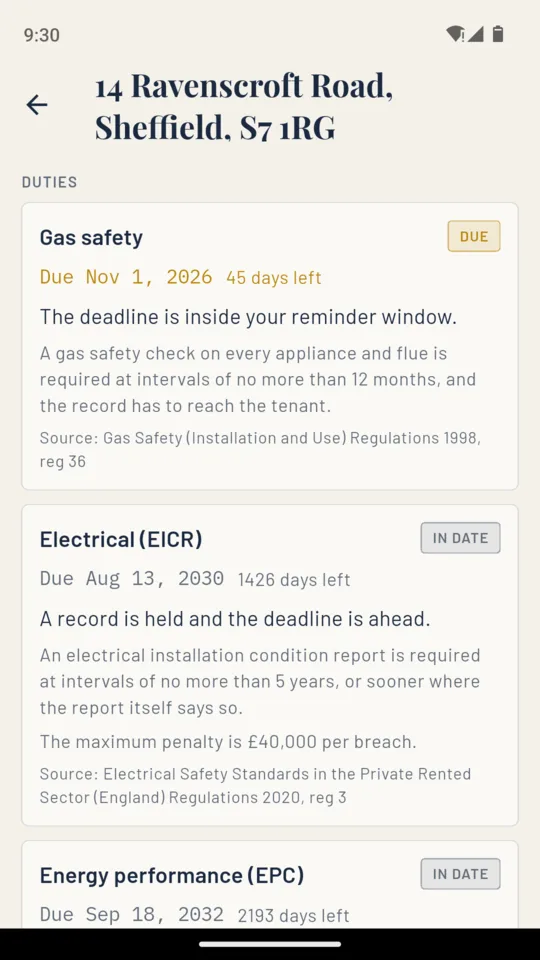
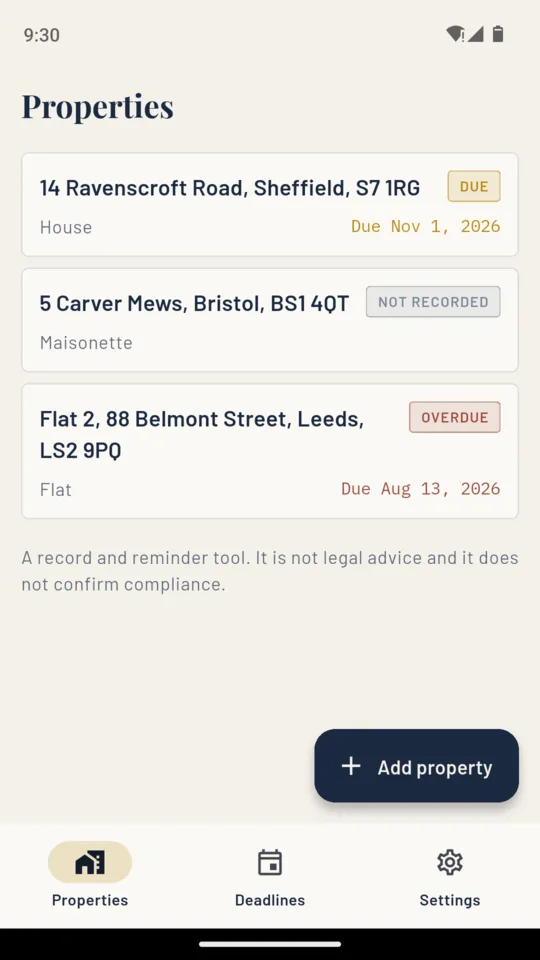
One screen per property. Each duty carries a status, the date it turns on and the instrument it comes from. Nothing recorded is never shown as a pass, and a duty that does not apply says so rather than failing.
Gas safety record
12 months Given to the tenant: 28 days, or before occupation Gas Safety (Installation and Use) Regulations 1998, reg 36
Electrical (EICR)
5 years, or sooner if the report says so Given to the tenant: 28 days, or before occupation Electrical Safety Standards in the Private Rented Sector (England) Regulations 2020, reg 3
Energy performance (EPC)
10 years Given to the tenant: Before the tenancy starts Energy Efficiency (Private Rented Property) (England and Wales) Regulations 2015
Deposit protection
30 days from the money arriving Given to the tenant: Prescribed information in the same period Housing Act 2004, s 213
Smoke and CO alarms
Tested on the first day of a tenancy Given to the tenant: Repaired when a tenant reports a fault Smoke and Carbon Monoxide Alarm (England) Regulations 2015, as amended 2022
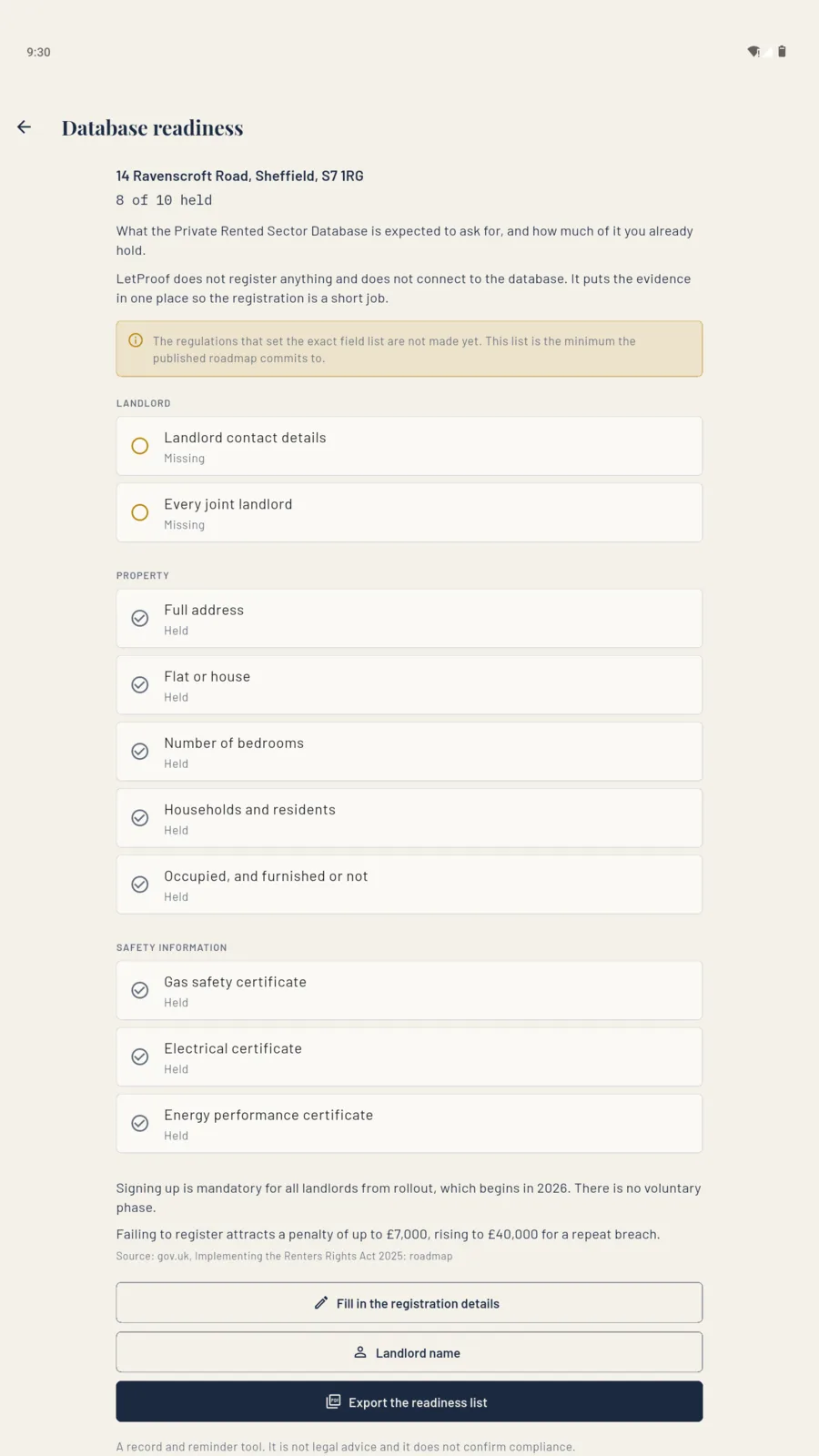
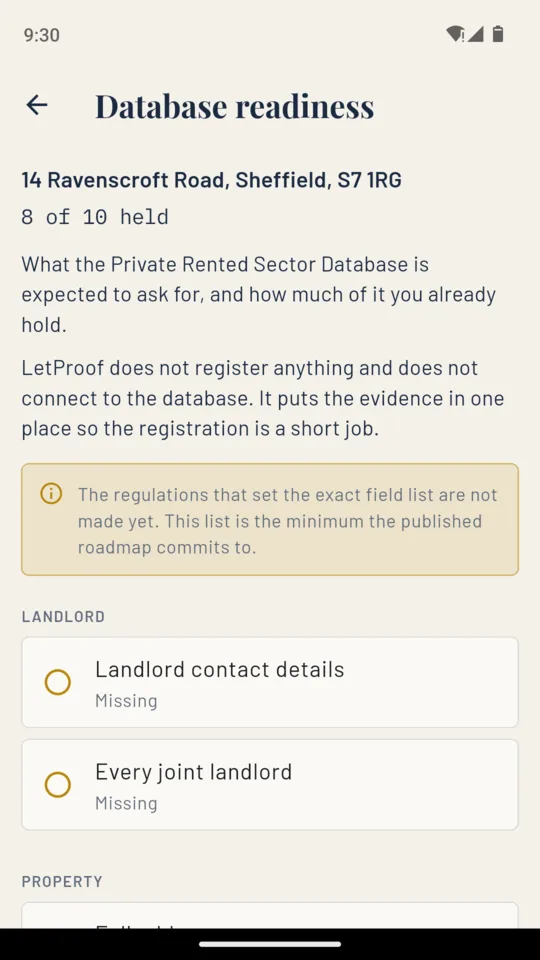
The Private Rented Sector Database rolls out from 2026 and signing up is mandatory from rollout, with no voluntary phase. LetProof lists what registration is expected to ask for and shows which of those records you already hold, property by property.
Landlord
Landlord contact details · Every joint landlord
Property
Full address · Flat or house · Number of bedrooms · Households and residents · Occupied, and furnished or not
Safety information
Gas safety certificate · Electrical certificate · Energy performance certificate
Verbatim from the app: "LetProof does not register anything and does not connect to the database. It puts the evidence in one place so the registration is a short job." And: "The regulations that set the exact field list are not made yet. This list is the minimum the published roadmap commits to."
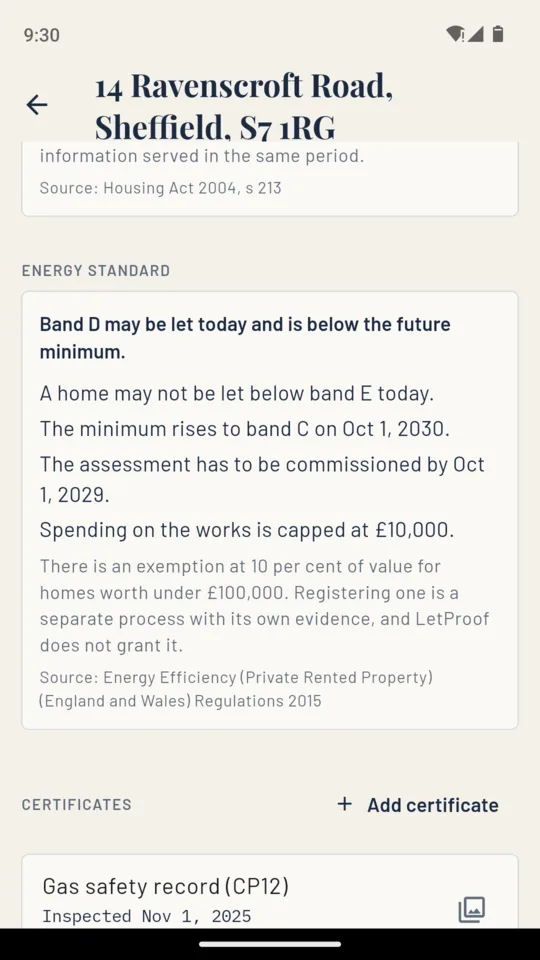
A property at band D or E gets the countdown and a plain statement of what changes and when. A property with no band recorded is not placed against the standard at all, and says so, because unknown is not a pass.
THE FIGURES, AS THE APP STATES THEM
Registering the low-value exemption is a separate process with its own evidence, and LetProof does not grant it.
Android can hold a reminder back or switch it off underneath an app, so LetProof shows you what it has scheduled and what is blocking it rather than promising delivery.
Compliance pack
The current position of one property: every duty, its status, the date it turns on, and the instrument it comes from. The energy standard and the alarm rule are printed with it.
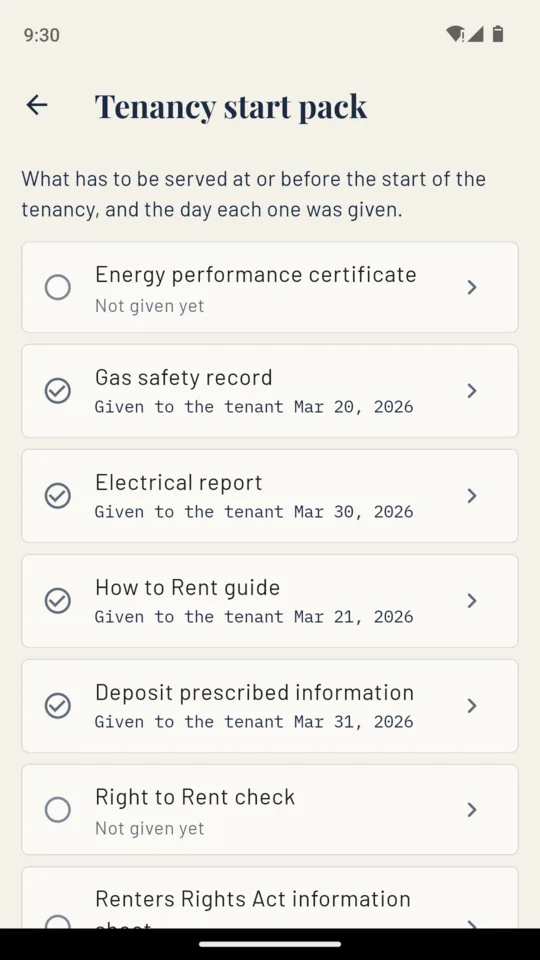
Tenancy start pack
What had to be served at or before the start of the tenancy, and the day each one was given. The EPC, the gas record, the EICR, How to Rent, the deposit prescribed information, Right to Rent and the Renters Rights Act information sheet.
THE LINE EVERY PACK CARRIES
A record of what the landlord entered, and nothing more. It does not confirm compliance with any duty, it is not legal advice, and it says nothing about possession. Every rule it refers to is an England rule.
Both packs are written in English whatever language the app is set to, because the documents they evidence are English-language legal documents.
LetProof holds your own records and states the duty each one relates to, with the law it comes from. It is not legal advice. It does not confirm that a property is compliant, it cannot tell you whether a notice is valid, and it says nothing at all about possession. Section 21 was abolished and grounds for possession are a matter for a solicitor. Every rule in this build is an England rule.
Property, tenant and document records are stored on your phone and are not uploaded. There is no account and no sign-in, and the app works with no signal, which is what a cellar or a new build usually gives you. The standard tier shows adverts, and the app reports crashes and basic usage so faults can be found and fixed. That is what the Play Data safety section covers, and it is the only thing that leaves the device.
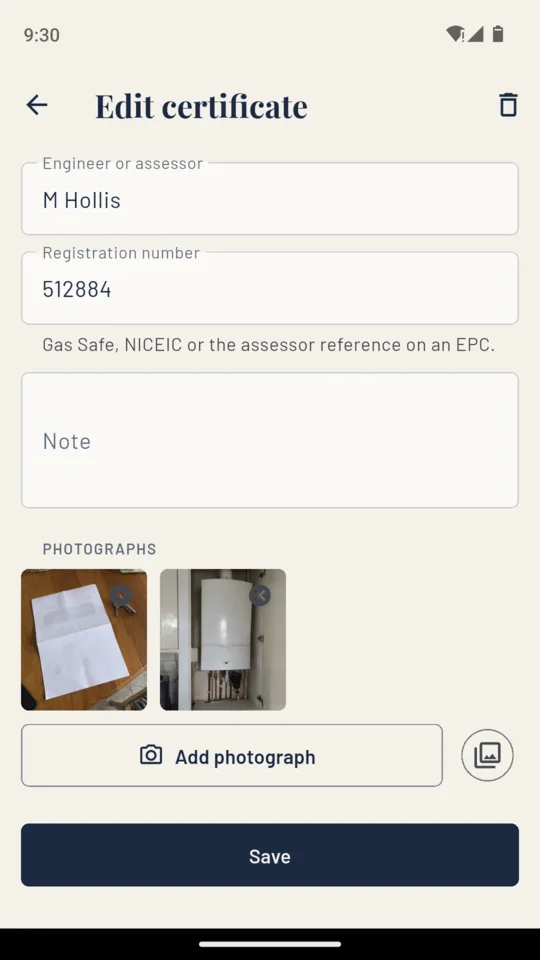
Screens from the shipped build, filled with sample records.
STANDARD
One property
One whole property, not a crippled one: every duty, every reminder, the serve-by clock, the tenancy start checklist and the readiness list. Nothing you have already entered is ever hidden or locked.
FULL VERSION
£49.99 once
or £5.99 a month, or £24.99 a year
Every other property you let, plus the compliance pack and the tenancy start pack as PDFs, and no adverts. A 14-day trial is there if you want it, and it starts only when you tap it.
No. It lists what the registration is expected to ask for and shows which of those records you already hold. It does not connect to the database.
No. Wales runs on the Renting Homes (Wales) Act, Scotland uses private residential tenancies and Northern Ireland differs again. Do not rely on it outside England.
No. It states the duty and names the law it comes from. It does not confirm that a property is compliant and it says nothing about possession.
Nothing you have already entered is hidden or locked. What stops is adding another property.
Property, tenant and document records do not. There is no account and no sign-in. The standard tier serves adverts, and the app reports crashes and basic usage.
Every figure sits in one file with the day it was checked and the law it came from, and is reviewed against those sources every six months.
Android · England only · works offline · no account