Plant light meter for Android
Find the right light for every plant.
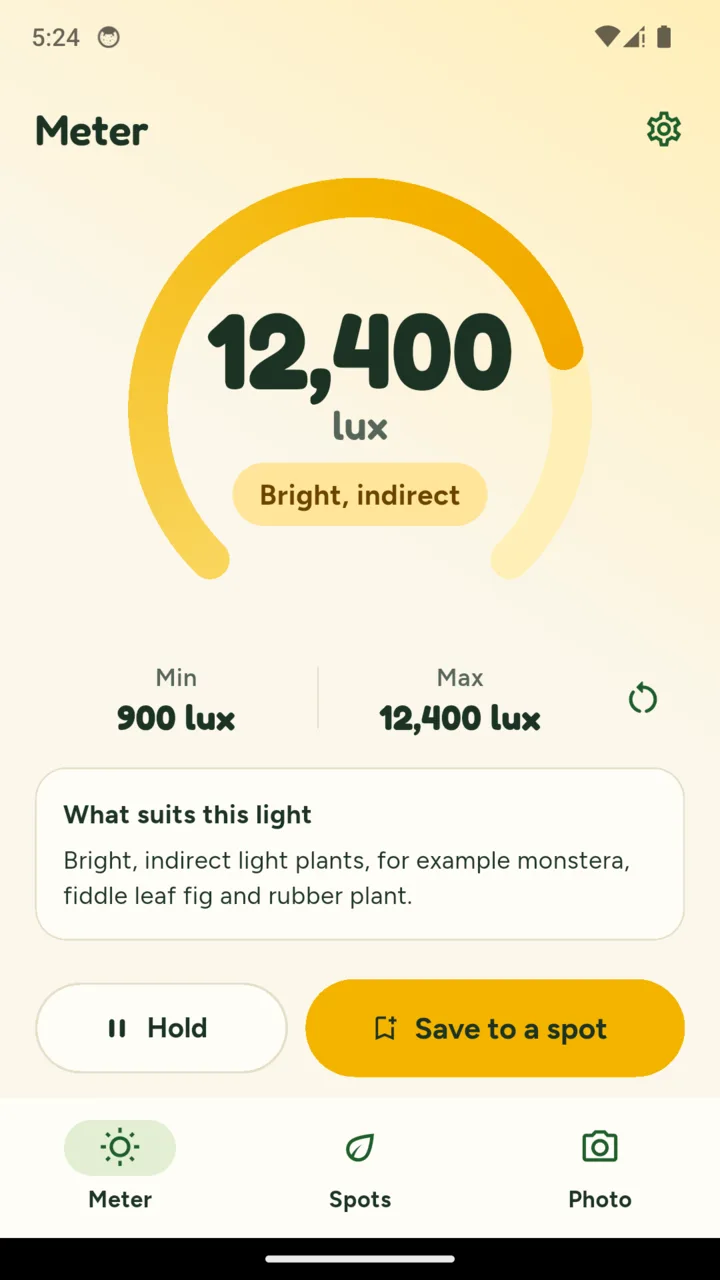
Hold your phone where a plant will sit and LuxPatch measures the light in lux or foot-candles. Save the place as a named Light Spot and see its light level, with examples of plants that may suit it.

Try the light bands here
The same bands and daily light estimate the app uses. Type a reading and the daylight hours.
An estimate for daylight. Grow lights convert differently.
What it does
A meter you can read.
A big live number from your phone's light sensor, with its band: too dark, low light, medium light, bright indirect, or direct sun. Hold freezes it, and min and max show the range as you move around the room.
Light Spots.
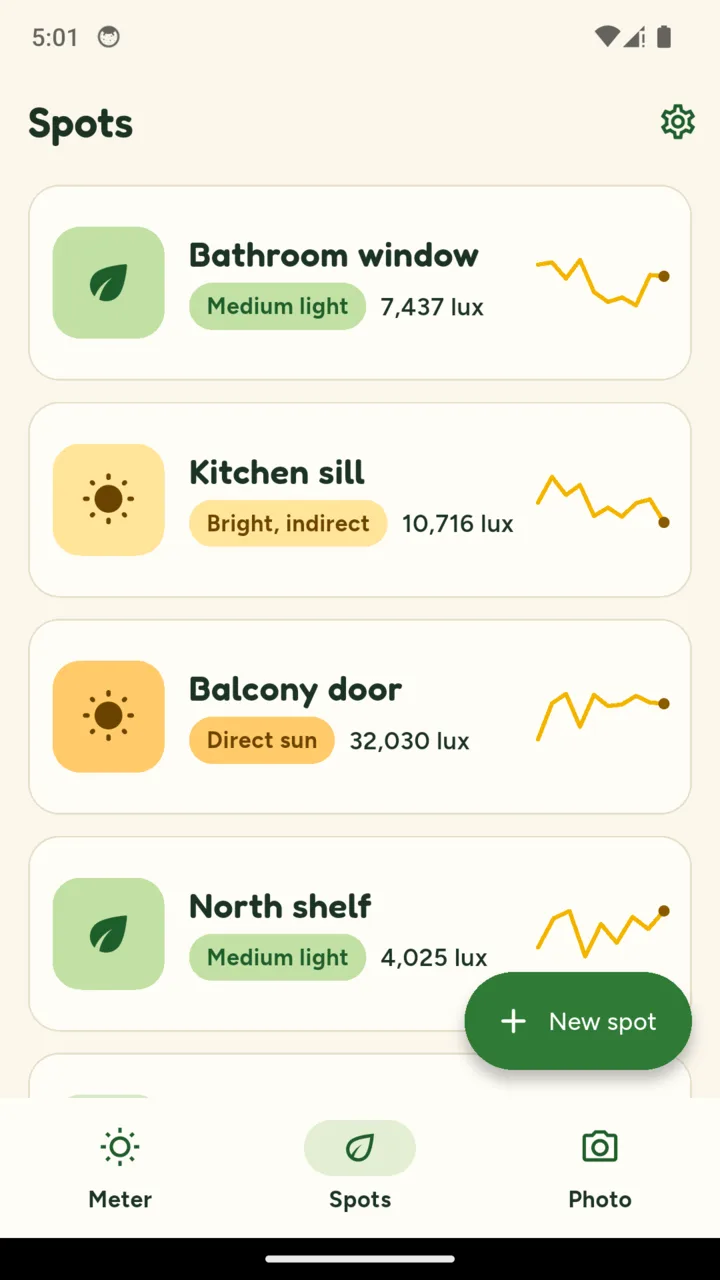
Name every sill and shelf. Each spot keeps its latest reading and band, with a short note on the kind of plant that likes that light.
History for each spot.
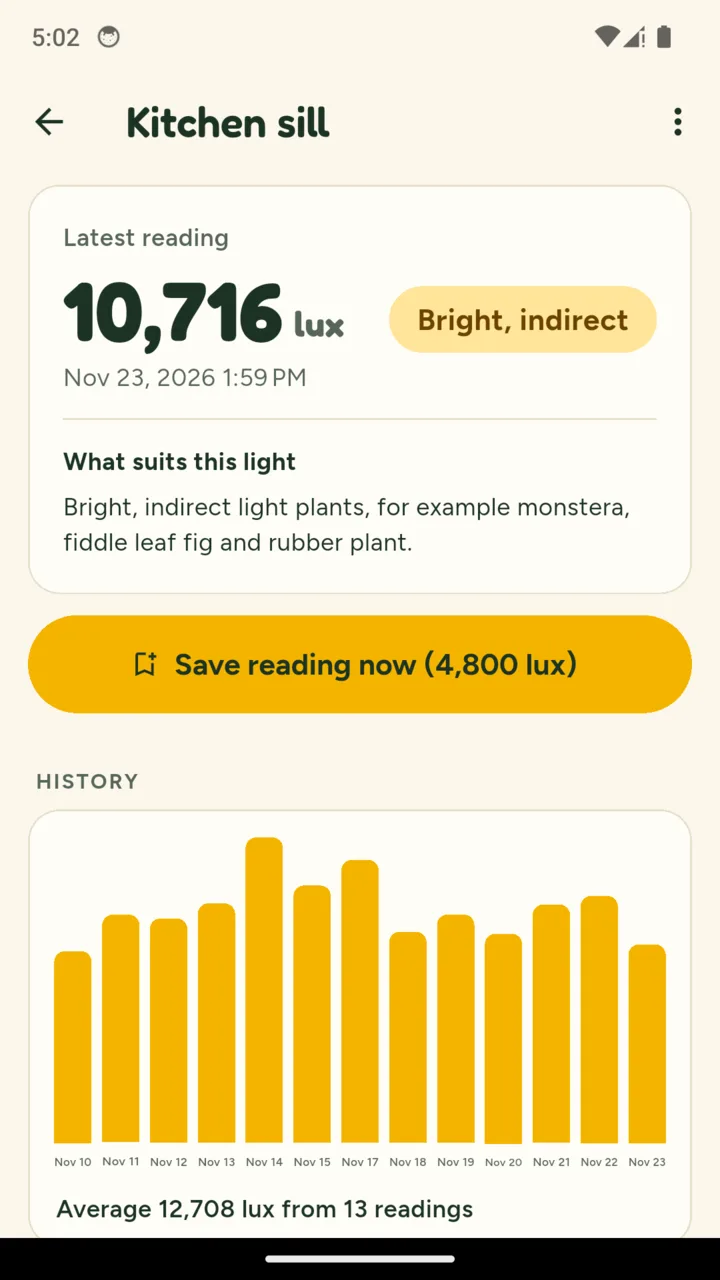
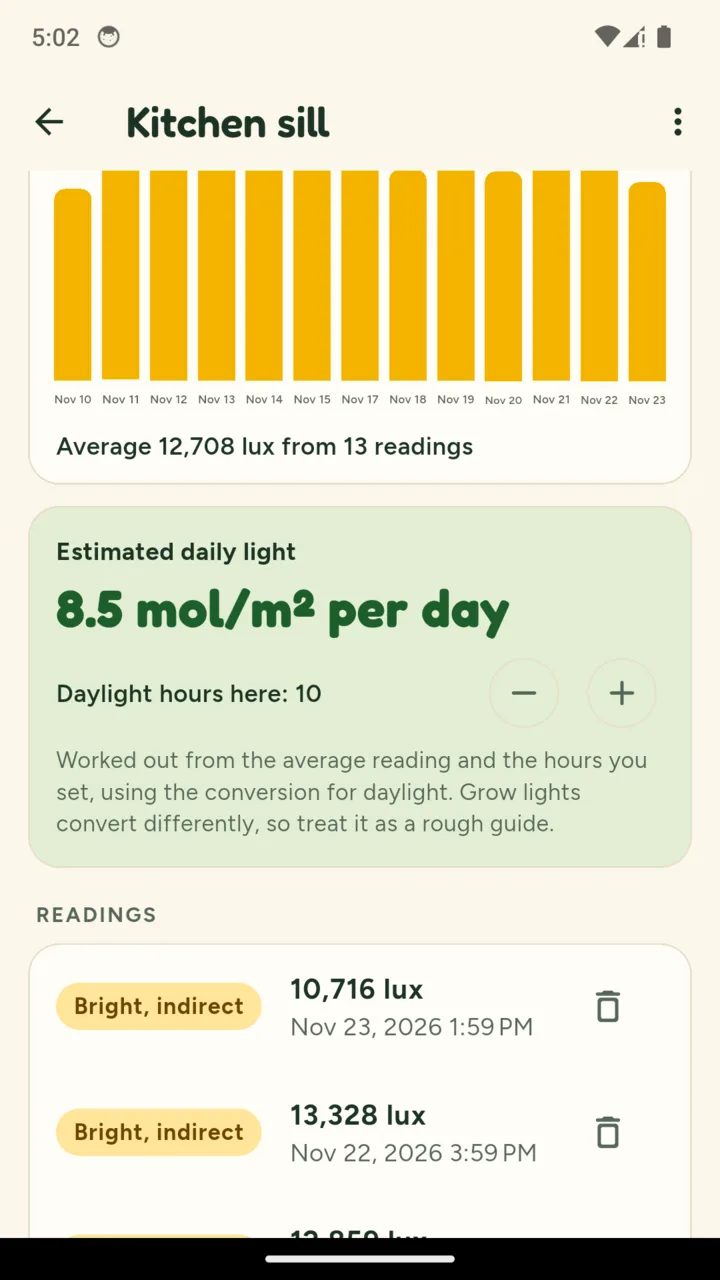
Every reading as bars over time, with the average, so you can see which window really is the bright one.
Daily light estimate.
Part of the unlock: enter the daylight hours and LuxPatch estimates the daily light integral (DLI) in mol/m² per day, using the conversion for daylight.
For photographers.
The Photo tab turns the same reading into an exposure value at ISO 100 to 3200, with the shutter speed for every aperture from f/1.4 to f/22.
Calibration.
Phone sensors differ. If you own a light meter, set LuxPatch against it once and every reading follows.
What it cannot do
Readings are estimates from your phone's sensor, not a lab meter. On most phones the sensor sits near the top of the screen, so point that side towards the light. The light bands are a general guide and cannot promise how a plant will grow. Grow lights have a different spectrum, so the daylight-based daily light estimate may be off for them. A phone without a light sensor cannot measure, and the app says so.
One price, once
Standard
No charge
- The meter, with hold, min and max
- The Photo tab
- Three Light Spots, with every reading
- A banner ad
Unlock
$4.99 once
- As many Light Spots as you like
- The daily light estimate
- No ads
- No subscription, no account
Questions
How accurate is a phone light meter?
It is an estimate. Phone light sensors are there to set screen brightness, so two phones can read the same window differently. Calibrating against a real light meter brings LuxPatch in line with it.
What light do my plants need?
LuxPatch sorts readings into bands from too dark to direct sun and names example plants for each, such as snake plant and pothos in low light or monstera in bright, indirect light. Actual needs vary by species, so treat it as a guide.
Lux or foot-candles?
Both. It follows your phone's region at first and you can switch in Settings. One foot-candle is about 10.76 lux.
What is DLI?
The daily light integral is the amount of light plants can use that a spot gets over a day, in mol/m². LuxPatch estimates it from your average reading and the daylight hours you enter. Grow lights convert differently, so for them treat it as a rough guide.
Is it on iPhone?
No. LuxPatch is for Android only.
What does the unlock cost?
$4.99 once in the US, with no subscription. It adds unlimited spots and the daily light estimate, and removes ads. The meter, the Photo tab, reading history and three spots do not need it, and your saved readings are never locked.
Measure your windowsills tonight
LuxPatch for Android. No account, and your spots stay on your phone.