Mold assessment field record
There is no number that means wet
No standards body sets a moisture pass or fail for a mold assessment. What the trade does is read unaffected material of the same kind and compare. MoldProof records that comparison, room by room, and says so when it cannot make one.
- Every reading measured against a control you took yourself
- Pin and pinless readings are never compared with each other
- Samples carry the flow rate the laboratory needs to check the volume
The record, not the verdict
The assessment is the paid work and the report is what the client keeps. Between them sits a set of readings taken in rooms, on materials, with a particular meter, at a particular time, and every one of those qualifiers matters when somebody reads the document six months later.
MoldProof carries all of them. It never says mold is present, what it is, or whether a building is safe. That is your judgement and the laboratory's result.
The comparison
Three answers, and the first is not a pass
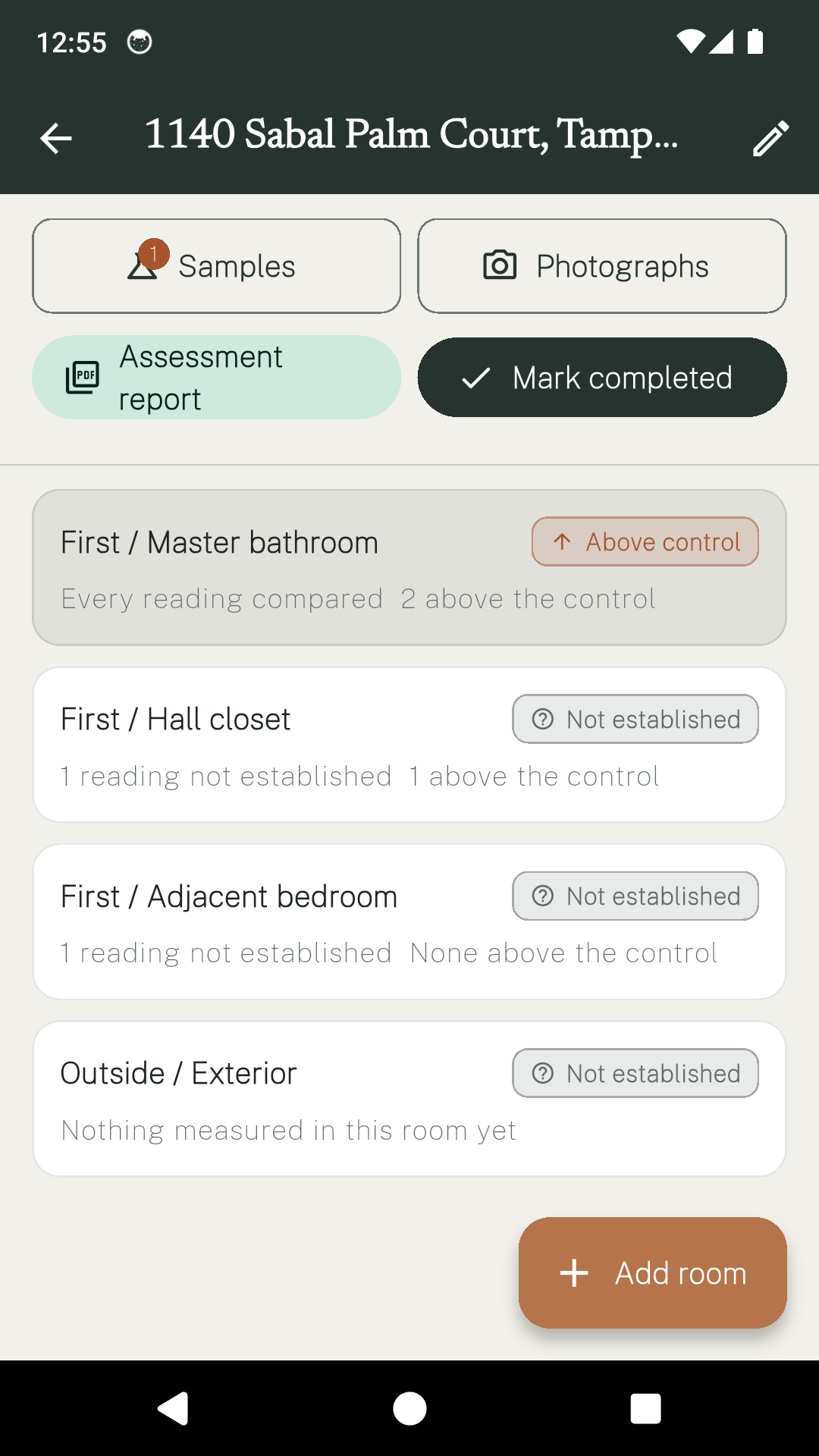
A control is a reading you took on unaffected material of the same kind, in the same building. Every affected reading of that material is measured against it, and the control and the difference are printed beside the figure rather than behind it.
Nothing here can be compared with this reading, so there is no standard to be under. The app says that instead of quietly passing the room.
The reading sits at or under the control you took on the same material, within whatever tolerance you set.
It is higher, and by how much. The control and the difference are both printed beside it.
The tolerance is yours and it defaults to zero. A pin meter is typically quoted at about plus or minus one percent, so a strict comparison reports above control on measurement noise, and inventing a tolerance would be inventing a number. Whatever you set is printed on the report.
Why a comparison fails
Nothing established, and which thing was missing
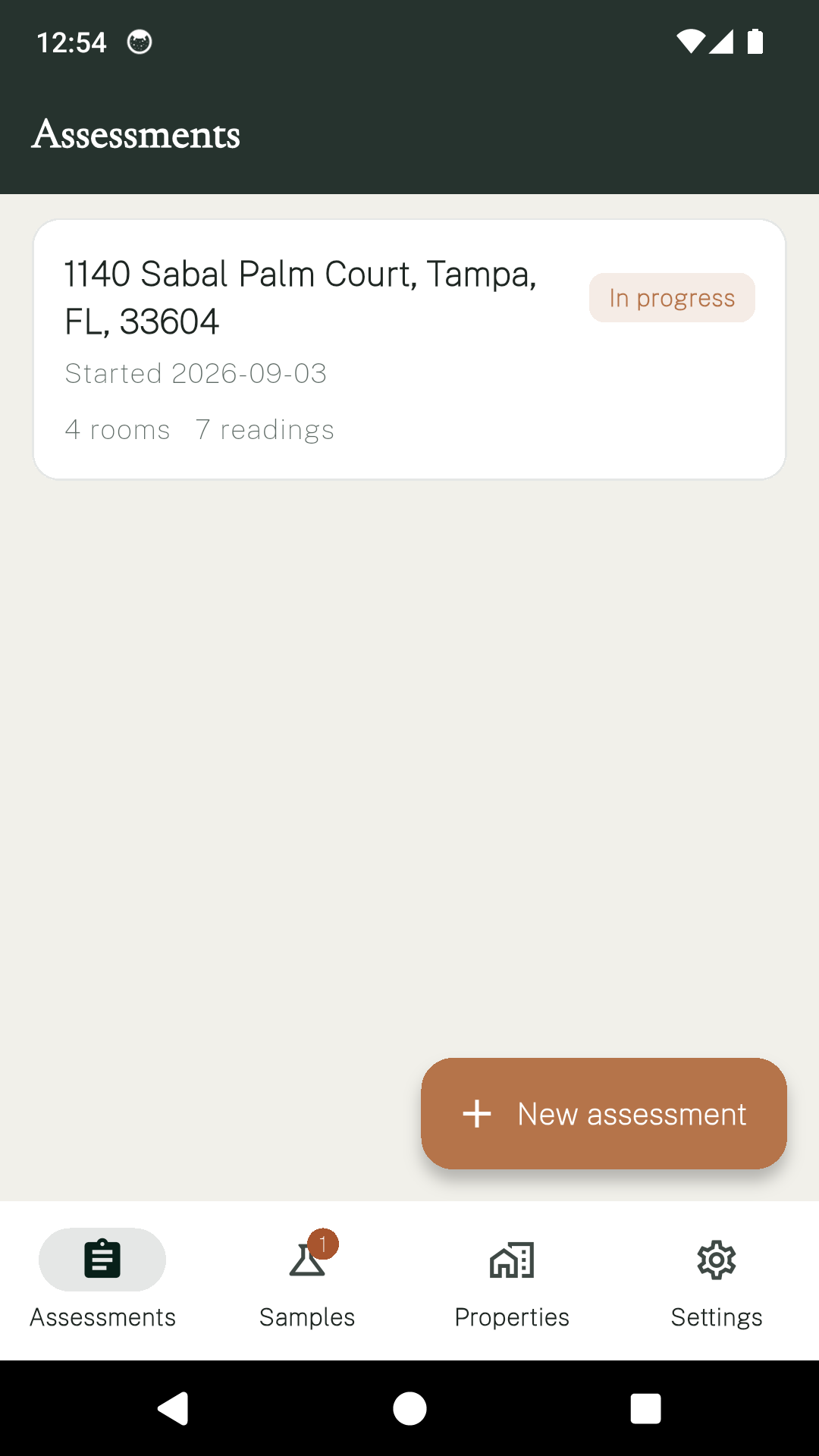
A reading with no usable control is reported as not established, and the app names what was missing rather than leaving a silent gap. Three reasons, and two of them are about the instrument rather than the building.
No control reading
Nothing unaffected of that material has been read in this assessment.
Meter type mismatch
The only control of that material was taken with the other kind of meter.
Unit mismatch
The control is on a different scale, so the two figures are not the same measurement.
Two meters, two scales
A pinless 70 does not mean 70 percent of anything
A pin meter set to the correct species reports true moisture content as a percentage of dry weight, which is the figure the flooring and lumber standards reference. A pinless meter reads a signal from a volume of material and reports a relative scale.
Putting 28 beside 70 across those two looks like a comparison and is not one. So the match is on material family, meter type and unit together, all three, and a mismatch on any of them reports that nothing was established rather than comparing anyway.
Samples
The volume, and the arithmetic behind it
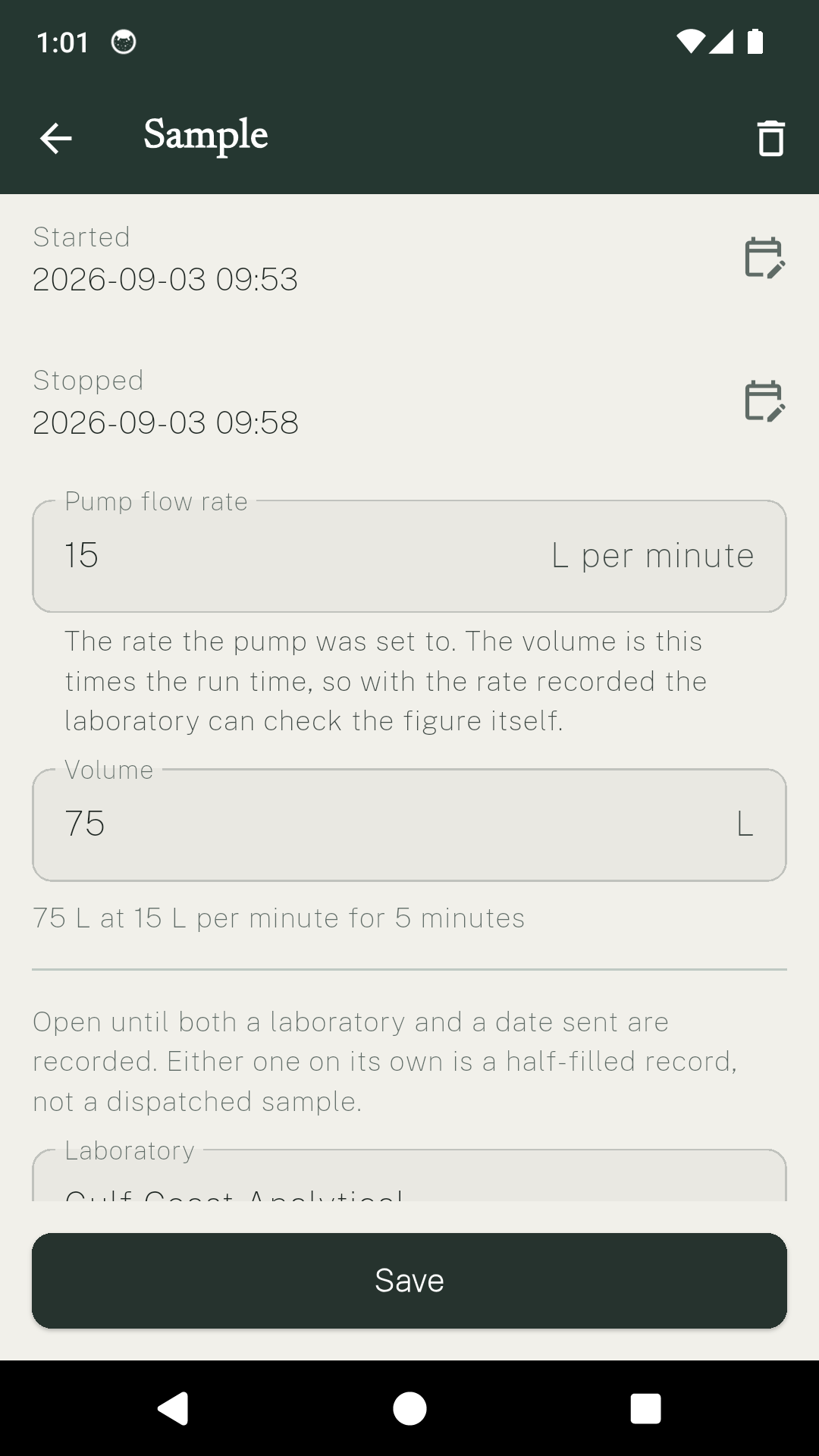
An air cassette's volume is the flow rate times the run time, and it is a figure the laboratory needs rather than a detail: too large a volume overloads the slide and causes spores to be under-reported, which is a failure in the reassuring direction.
MoldProof stores the rate as well as the volume and derives one from the other, so fifteen litres a minute over five minutes reads back as seventy five litres with the working shown. Override the figure and the report prints both, so the laboratory can check it.
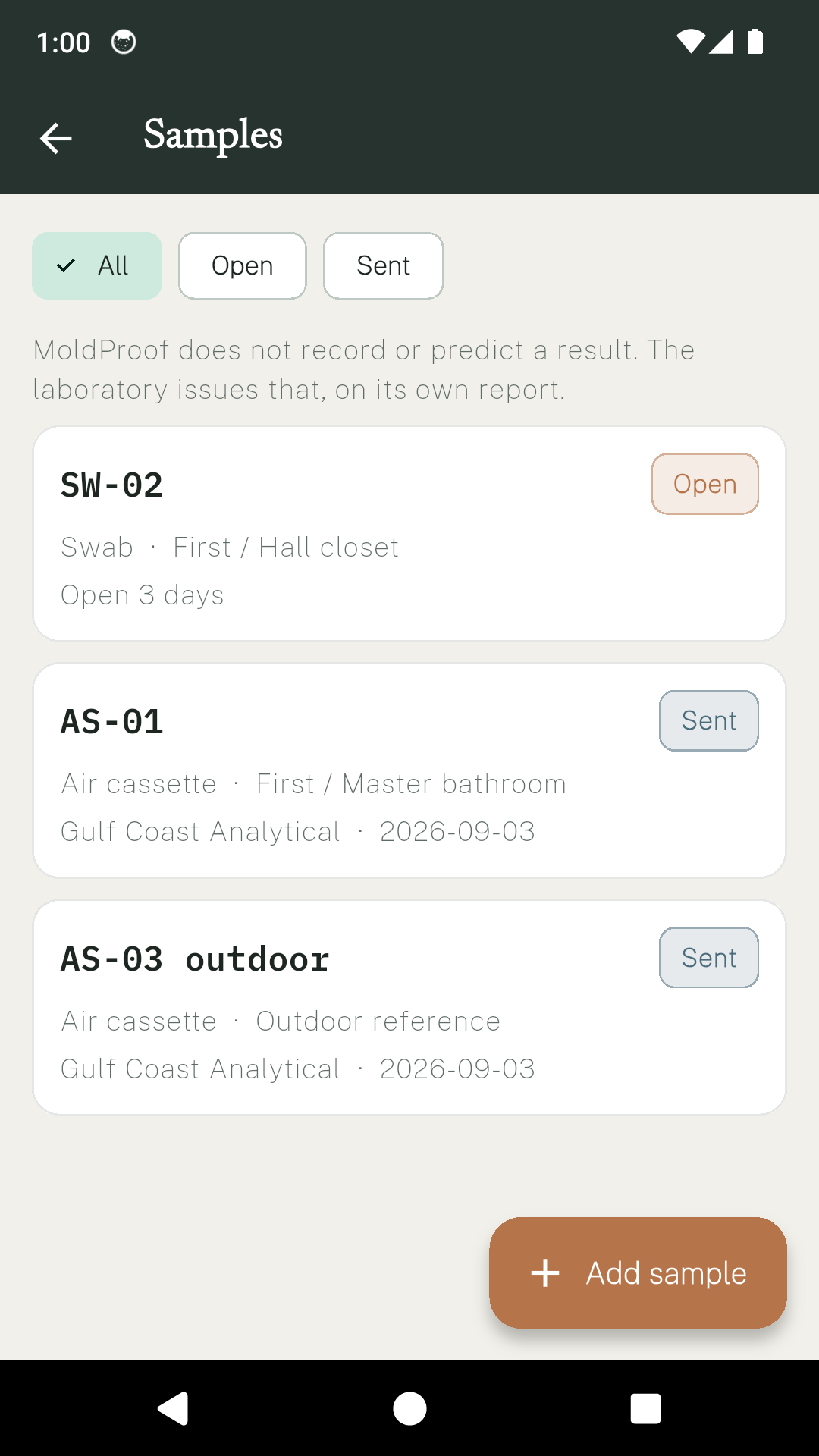
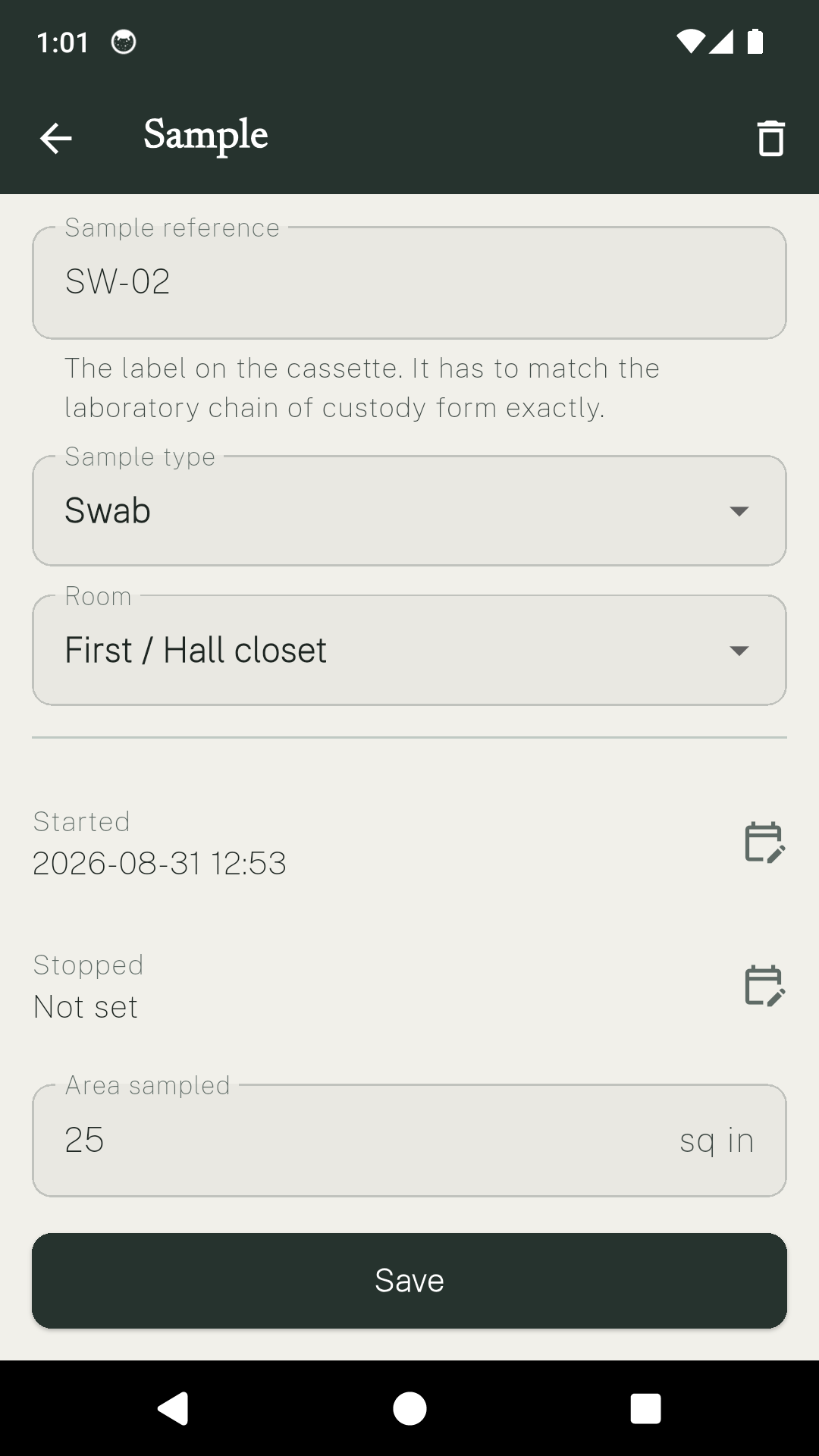
A sample stays open until both a laboratory and a date sent are recorded. Either one on its own is a half-filled record, not a dispatched sample.
The air
Dew point, worked out rather than guessed
Temperature and relative humidity go in and the dew point comes out, from the ASHRAE Hyland and Wexler formulation rather than a simplified approximation, because a figure printed on a report a client acts on should be the one a published psychrometric table carries.
It is the number an assessor can actually use on site: a surface colder than the dew point of the air touching it will collect condensation, and that is a condition you can observe and record.
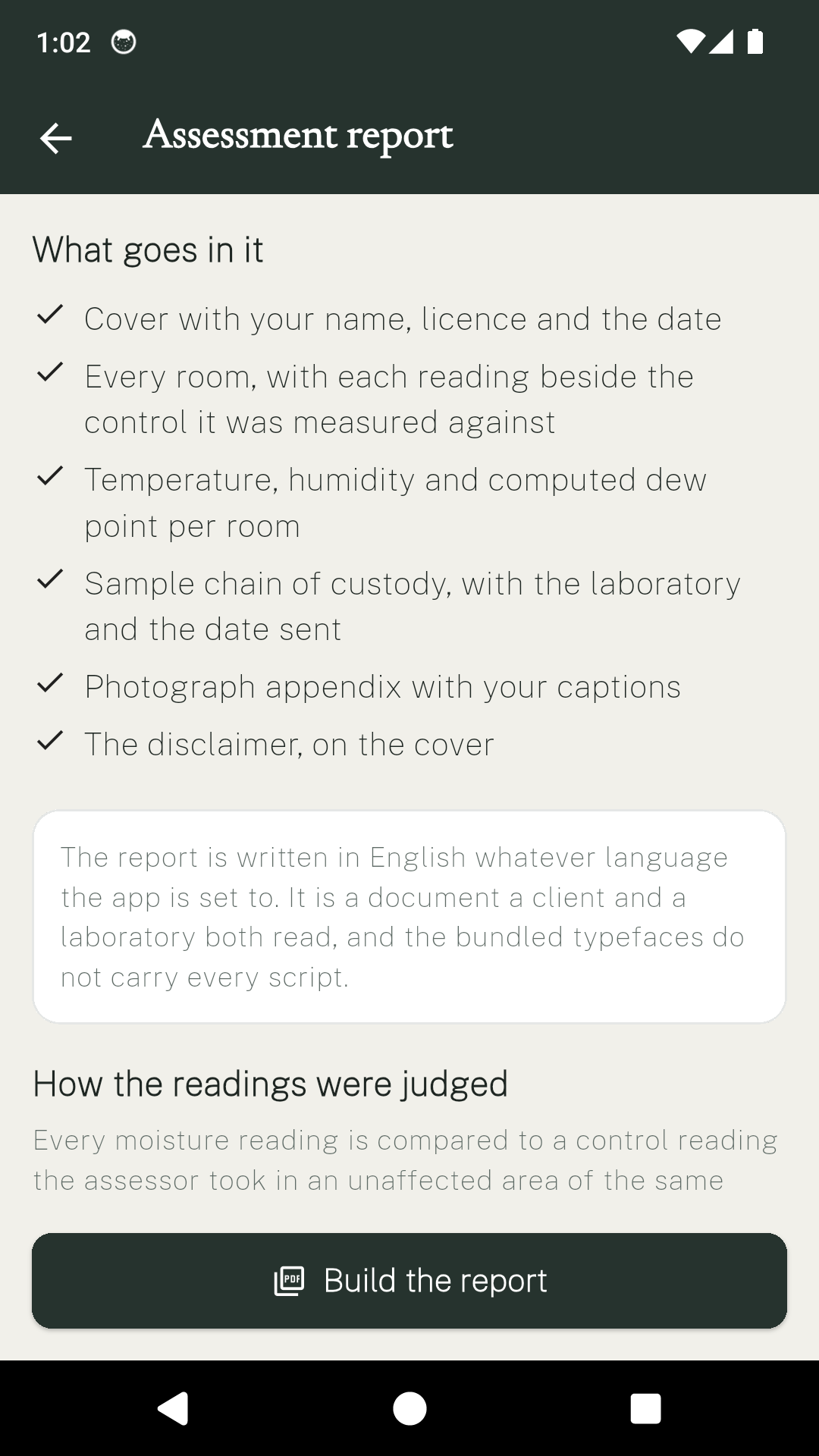
Your licence, your words
It never calls you the licensed assessor
Four US jurisdictions licence mold assessors: Florida, Texas, New York and Washington DC. The picker offers those and an explicit not a licensing state, rather than a fifty state list implying every state issues one.
Texas is the reason the licence type is its own field. It splits the licence into technician, consultant and company, and a technician works under supervision and may not issue an assessment report on his own. A single number printed under the words licensed assessor would have the app asserting on his behalf something he is not licensed to assert. So the cover prints the licence type and number exactly as you entered them, and no string in the app describes you as anything.
The app
The real screens
What it will not do
- It does not identify mold, predict a laboratory result, or record one it invented.
- It does not print a moisture threshold, because no standards body sets one.
- It does not say a building is safe, clean or clear.
- It does not upload your assessments. There is no account and no sign-in. The app carries ads on the standard tier, plus crash reporting and analytics, so "nothing leaves the device" would be the wrong claim to make.
- The report is written in English whatever language the app is set to.
Price
The licence is yours, so is the tool
A 14-day trial you start yourself, with no card. Without paying you keep two completed assessments, and the cap applies only to completing a new one.
Nothing already recorded is hidden, locked or deleted. An assessment is evidence a client paid for, and a report that stops opening when a subscription lapses would be indefensible.
Questions
Before you download it
What moisture number does MoldProof treat as a problem?
None, because none exists. No standards body sets a numeric moisture pass or fail for a mold assessment, and no US agency sets an enforceable airborne limit. What the trade does instead is read an unaffected area of the same material and compare against that, and that is exactly what the app records.
Why will it not compare a pin reading with a pinless reading?
Because they are not the same measurement. A pin meter set to the right species reports moisture content as a percentage of dry weight. A pinless meter reads a signal from a volume of material and reports a relative scale, usually zero to a hundred. A pinless 70 does not mean 70 percent of anything. MoldProof matches a control on material family, meter type and unit together, and reports that nothing was established if any of the three differs.
Does it identify the mold, or say whether a building is safe?
No. It records what you measured, what you photographed and what you sampled. What the growth is, and whether a building is safe, are your judgement and the laboratory’s result. The app never predicts or records a laboratory outcome of its own.
How does it handle the air sample volume?
It stores the flow rate the pump was set to as well as the volume, and derives one from the other and the run time. Fifteen litres a minute for five minutes is seventy five litres, and with the rate on the record the laboratory can check the arithmetic itself. If you override the derived figure the report prints both.
Does it print my licence number on the report?
It prints exactly the licence type and number you entered, and nothing else. Texas splits the assessor licence into technician, consultant and company, and a technician may not issue an assessment report on his own, so the app never calls you the licensed assessor on your behalf.
Which states licence mold assessors?
Four jurisdictions: Florida, Texas, New York and Washington DC. The picker offers those four and an explicit not a licensing state option, rather than a fifty state list that implies every state issues one.
Take the controls on the next job
Set up the property and its rooms, read the unaffected material first, and the rest of the assessment has something to be measured against.
Get it on Google Play