EPA 608 refrigerant service log
The refrigerant decides first, the charge decides second
A service book per appliance, with the fields the record has to carry. RefrigLog works out the leak rate against the threshold for that appliance's class, and counts the days to every deadline that follows.
- A record per appliance, not per visit
- Leak rate by rolling average or by annualizing, your choice
- Repair, initial and follow-up verification dates, counted for you
A flat fifty pound rule is the wrong rule
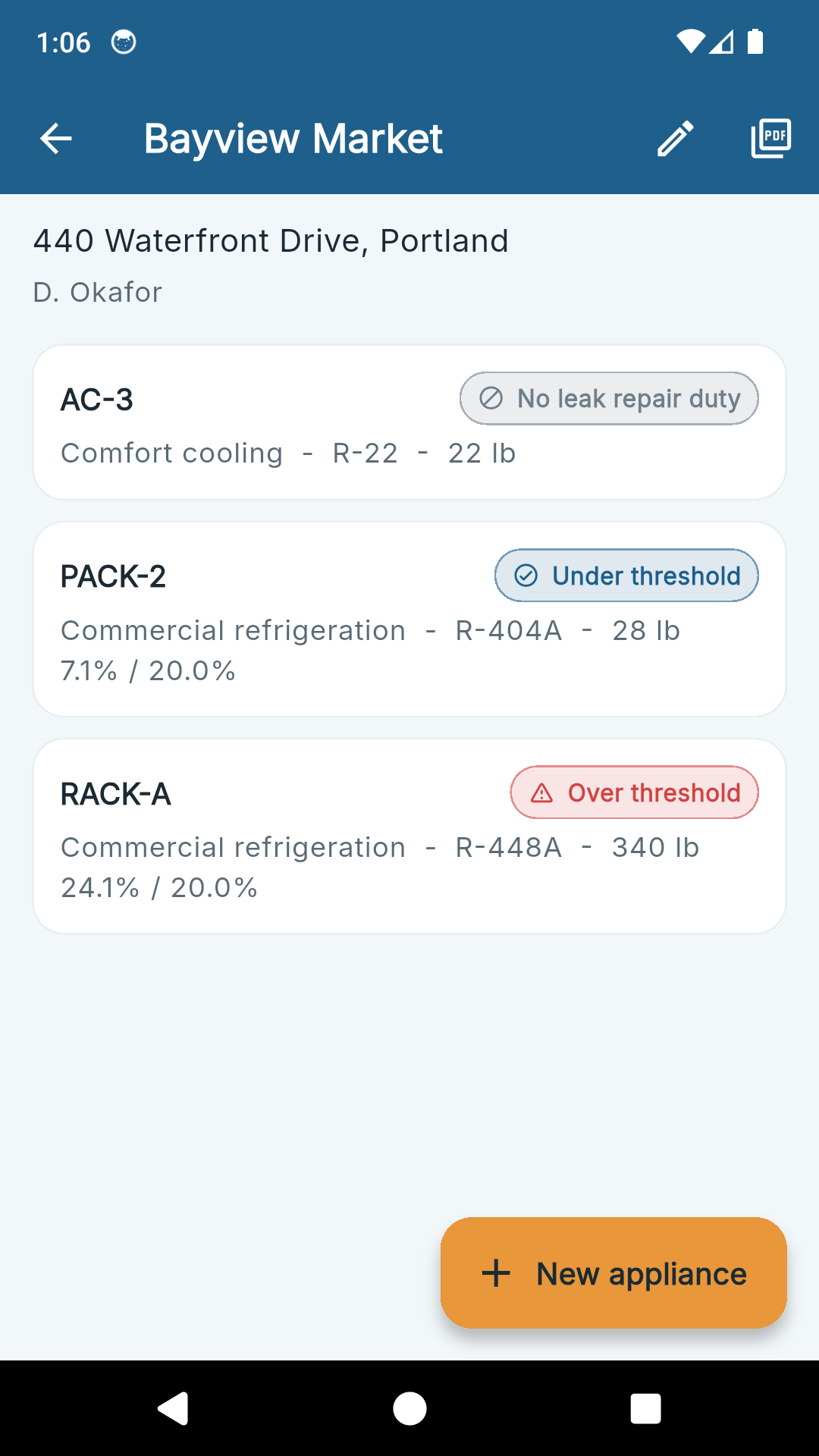
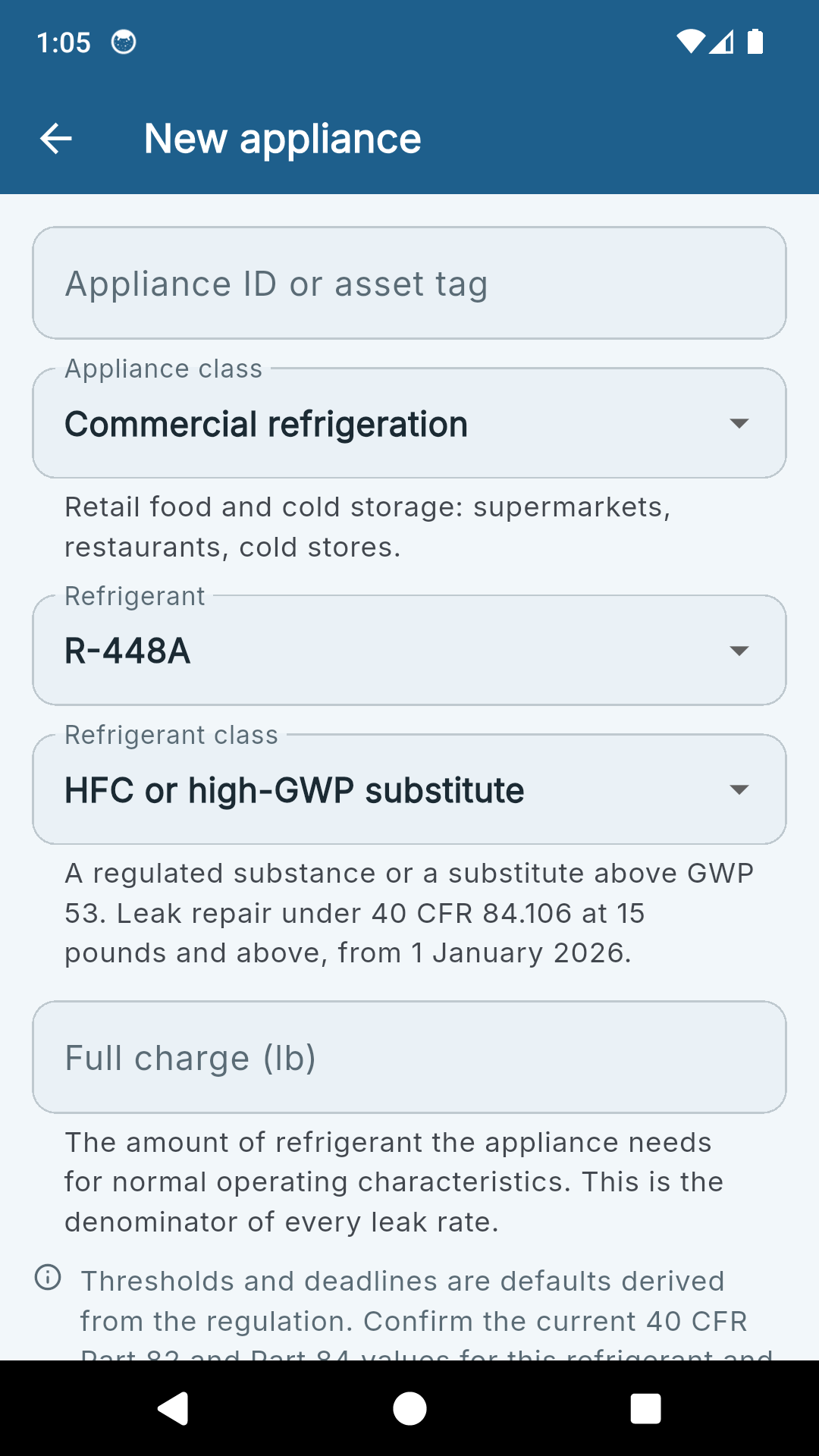
Fifty pounds is the figure for an ozone-depleting refrigerant. For a regulated substance or a high-GWP substitute the figure is fifteen, and it has been since January 2026. So a thirty pound R-448A rack has a leak repair duty, and an app that applied one rule to everything would tell a technician that it does not.
That is a false all-clear on a compliance screen, which is the failure direction that actually costs somebody something. RefrigLog decides applicability from the refrigerant class first, names which rule it applied, and shows the charge figure it used.
Thresholds
Three, by appliance class
The rule is written as exceeding the applicable leak rate, so exactly 20.0 percent on a 20 percent threshold has not exceeded it. Flagging the boundary would raise corrective work against an appliance that is complying.
Comfort cooling
And everything that is not one of the other two.
Commercial refrigeration
Retail food and cold storage: supermarkets, restaurants, cold stores.
Industrial process refrigeration
The only class that can claim the longer repair period, and only where a process shutdown is required.
Deadlines
Three dates, and the third does not exist yet
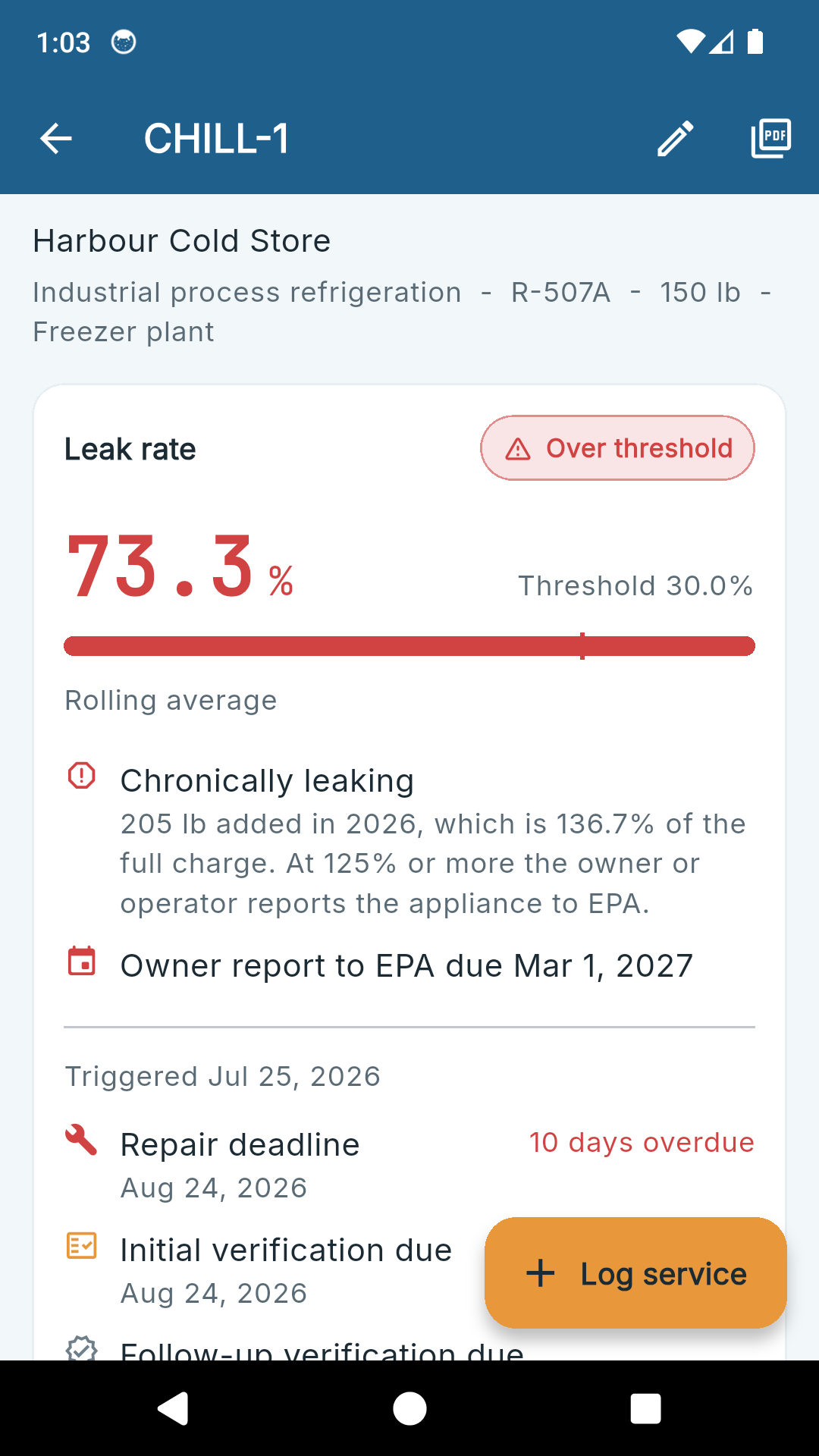
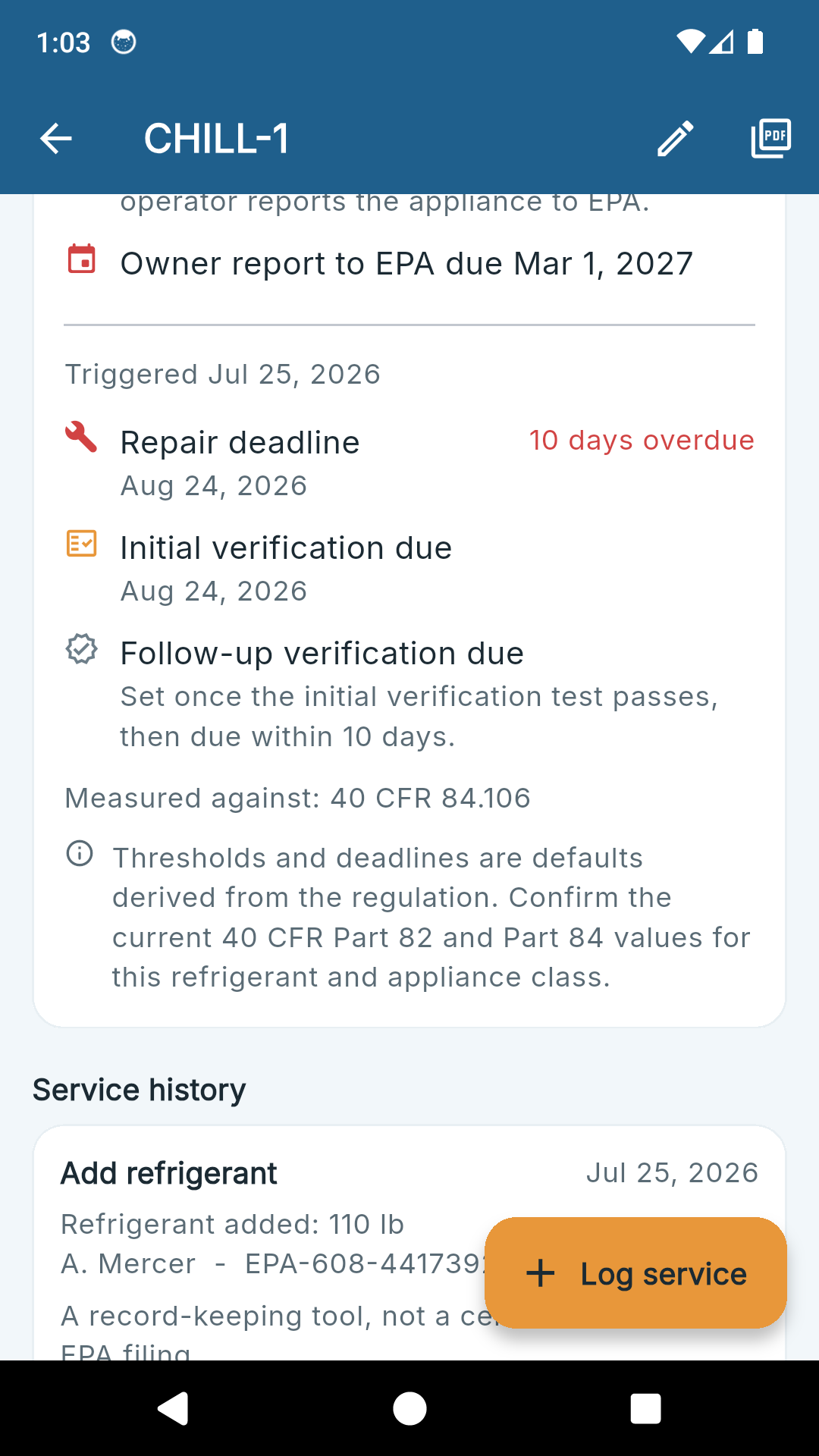
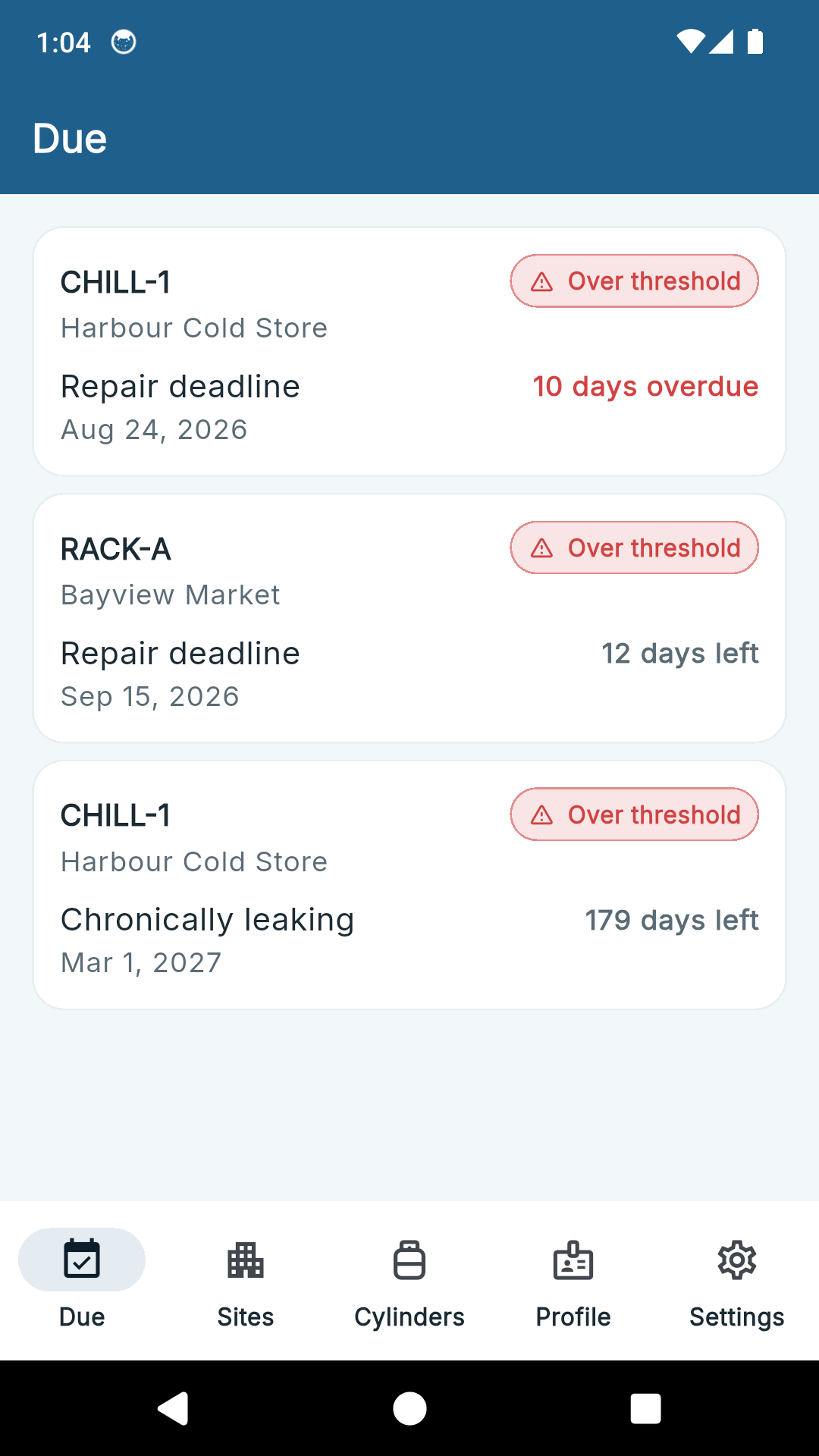
Once an addition takes an appliance over its threshold, the clock starts. RefrigLog puts the dates on the appliance and on a due list, and the due list is the first thing the app opens on.
From the addition that exceeded the threshold. A hundred and twenty days where an industrial process shutdown is required, which belongs to the shutdown rather than to a checkbox: the app only offers it on that class.
The initial verification test falls inside the repair period, so it shares the date.
From the successful initial test. No follow-up date exists until an initial test has actually passed, because a failed test leaves nothing to follow up.
Two formulas
And the reset that keeps a repaired appliance off your list
The rolling average sums what was added over the past 365 days, or since the last successful follow-up verification test, whichever is more recent. That reset is in the definition, and without it a repaired appliance carries the leak it no longer has for a full year.
The annualizing method scales a single addition by 365 over the days since refrigerant was last added, capped at 365 so a two year gap cannot divide a real rate down to nothing. The choice is per appliance, because the regulation leaves it with the owner or operator.
Additions that immediately follow a retrofit or a new installation, and those that qualify as a seasonal variance, are recorded and left out of both formulas.
Chronically leaking
A calendar year, not a trailing twelve months
An appliance leaking 125 percent or more of its full charge in a calendar year is reported to EPA by the owner or operator, by the first of March of the following year. RefrigLog assesses the calendar year, and before the first of March it assesses the previous one, because that is the year still reportable.
The difference is not academic. A hundred pounds added in December and another hundred in January is two hundred on a trailing twelve month view, and is not chronic on the test the regulation actually applies.
The record
The fields, and the cylinder they came out of
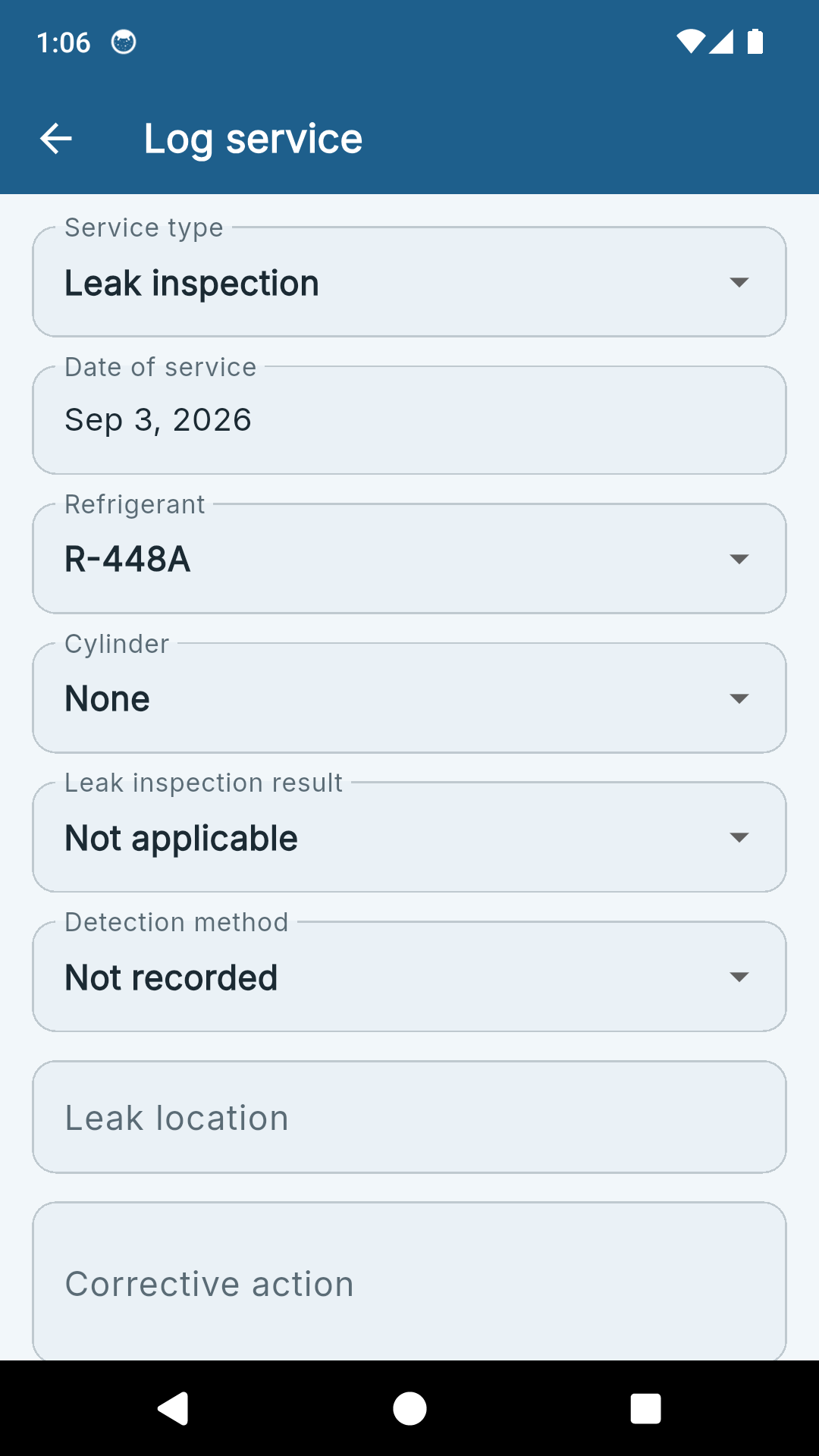
Every service entry carries the date, your name and EPA certification number, the appliance, the refrigerant, the amounts added and recovered, and the leak inspection result and method where there was one.
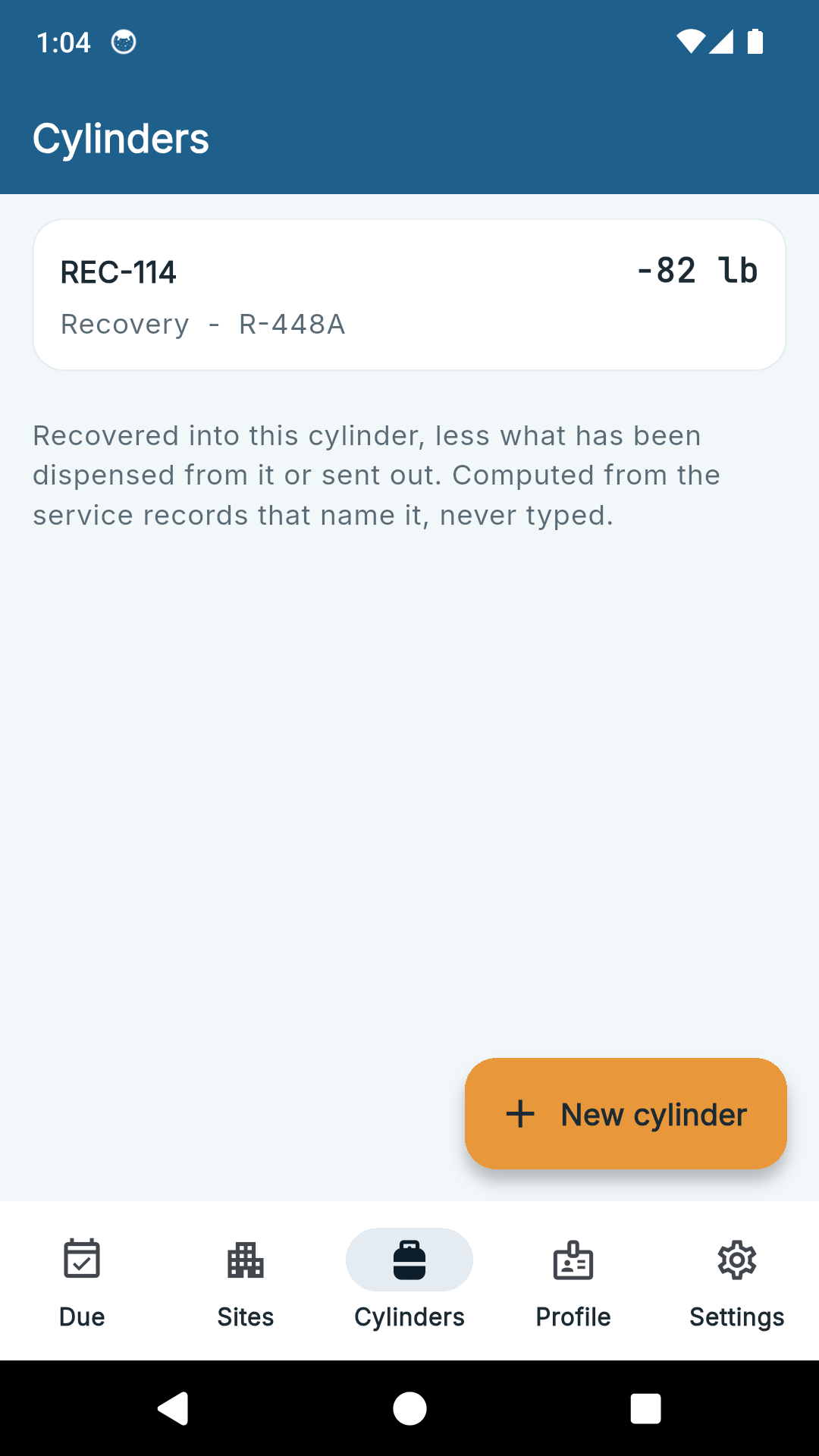
Recovery cylinders keep a running balance: what went into this cylinder, less what has been dispensed from it or sent out. It is computed from the service records that name it rather than typed, so it cannot drift away from the entries behind it.
The app
The real screens
What it will not do
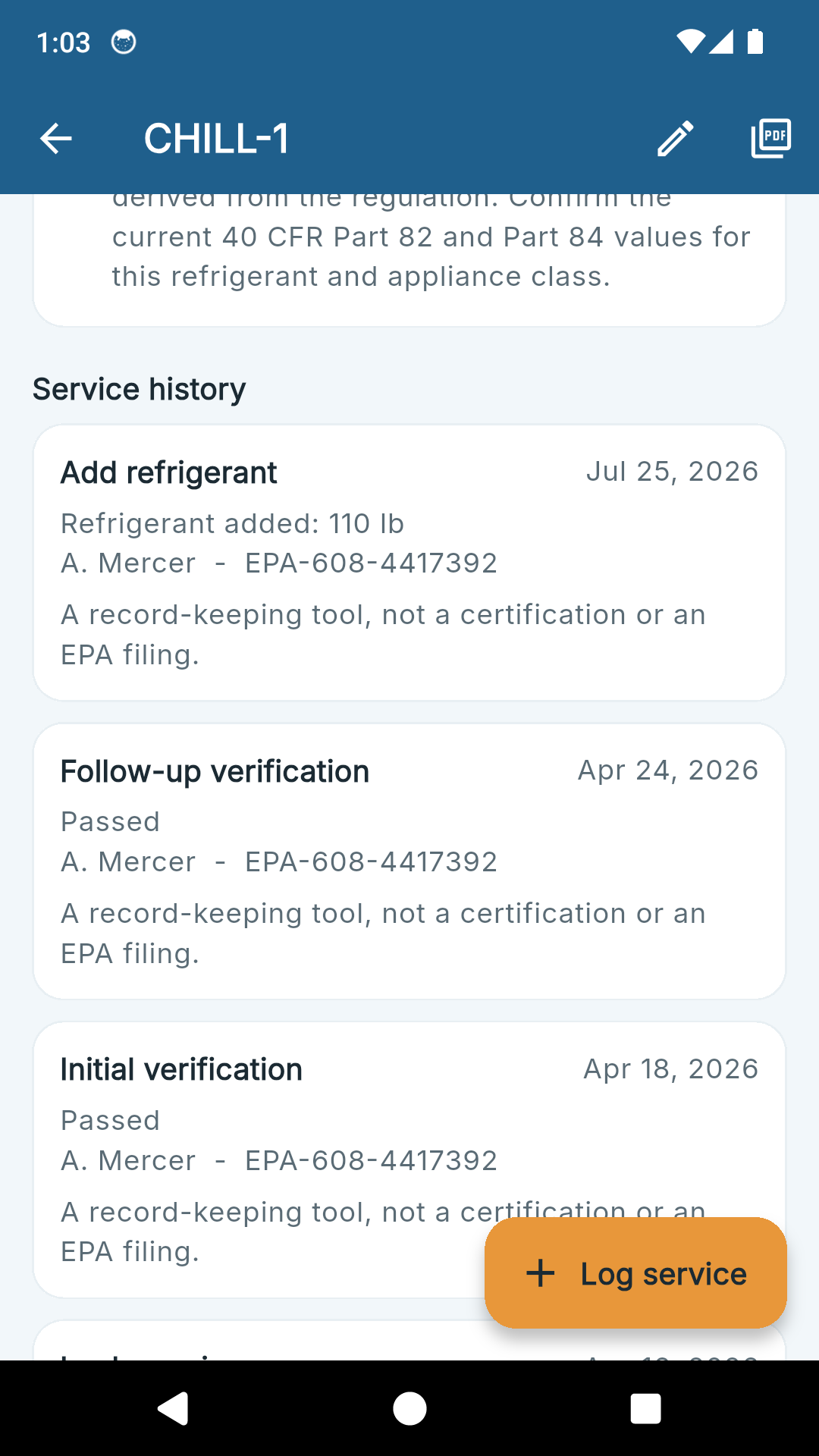
- It is not an EPA filing and not a certification. Every service entry says so on its face.
- It does not state its figures as settled. Thresholds and deadlines are shown as defaults derived from the regulation, with a note asking you to confirm the current Part 82 and Part 84 values, because these rules have moved twice in six years.
- It shows no leak rate at all for an appliance with no leak repair duty, and it separates that from an appliance whose full charge has not been recorded.
- It prints no GWP figure, because that number is a claim this decision does not need.
- It does not upload your records. There is no account and no sign-in. The app carries ads on the standard tier, plus crash reporting and analytics, so "nothing leaves the device" would be the wrong claim to make.
Price
Priced for the technician, not the fleet
A 14-day trial you start yourself, with no card. Without paying you run one site with ten appliances on it, which is a single account worked end to end. The second customer is where the paid tier starts to matter.
Nothing already recorded is hidden, locked or deleted. These records are kept for three years and the appliance owner is entitled to them.
Questions
Before you download it
Is an appliance under 50 pounds exempt?
Not necessarily, and that is the assumption worth checking. Applicability is decided by the refrigerant first and the charge second. Fifty pounds is the figure for an ozone-depleting refrigerant under subpart F. For a regulated substance or a high-GWP substitute the figure is fifteen pounds, from 1 January 2026. A thirty pound R-448A rack has a leak repair duty, and an app applying a flat fifty pound rule would tell you it does not.
Which leak rate formula does it use?
Whichever you choose, per appliance, because the choice belongs to the owner or operator. The rolling average sums what was added over the past 365 days, or since the last successful follow-up verification test if that is more recent. The annualizing method scales a single addition by 365 over the days since refrigerant was last added, capped at 365.
Why does the rate drop after a verification test passes?
Because the rolling average resets at the last successful follow-up test, which is in the definition. Without that reset a repaired appliance keeps reporting a leak it no longer has for a full year and sits permanently on your worklist.
What counts as chronically leaking?
A hundred and twenty five percent or more of the full charge in a calendar year, which the owner or operator reports to EPA by the first of March of the following year. A calendar year is not a trailing twelve months: a hundred pounds added in December and a hundred in January is two hundred on a trailing view and is not chronic on the test the regulation actually applies.
Does it show a leak rate for every appliance?
No. An appliance with no leak repair duty shows no percentage at all, because a number printed under a threshold the appliance is not held to is a verdict nobody asked for. It also distinguishes no duty attaches from the full charge is not recorded, since the second is missing information rather than an exemption.
Is this an EPA filing?
No. It is a record-keeping tool, and every service entry says so on its face. RefrigLog produces the service record the appliance owner keeps. It does not certify anything, it does not submit anything, and it is not a substitute for reading the current rule.
Start the book on the next appliance
Enter the appliance, its refrigerant and its full charge. Everything after that is a service entry, and the dates take care of themselves.
Get it on Google Play