PUNCH PACKS

PackDesk
Punch packs
Sell ten days up front, and let the desk count them down.
Prepaid packs are how most daycares actually get paid, and a paper punch card is how most of them lose track. PackDesk keeps the count on the pet, takes one credit when you press drop off, and shows the balance on the roster so nobody has to ask.

$29 a month per business, after a 30-day trial.
Android.
From a price on a whiteboard to a credit on a dog
- 1
Write the pack down as a plan
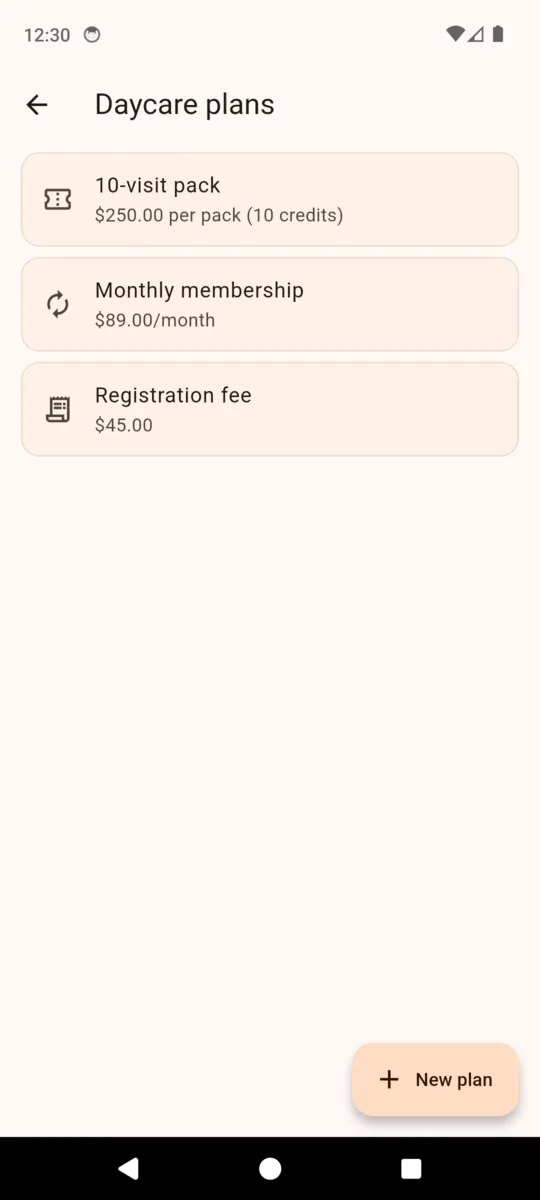
Open your plans, add a new one, and choose Credit pack instead of a billing interval. Name it the way you say it — Ten-day pack, Twenty days, Half-term bundle. Set the price and the number of credits it buys. The credits field starts at ten because that is what most daycares sell, and it is only a starting value.
- 2
Sell it from the pet's record
Open the pet, collect a payment, pick the pack. PackDesk mints a Stripe card link and hands it to your phone's share sheet, so it goes out by text, WhatsApp or email — whatever you already use with that owner. They tap it and pay in their own browser. There is no PackDesk account for owners and nothing for them to install.
- 3
Credits land when the money does
Not when you send the link, and not when the owner says they have paid. Stripe tells the app the payment completed, and only then are the credits added to that pet. The grant is guarded, so a message arriving twice cannot hand out two packs.
- 4
Drop off spends one
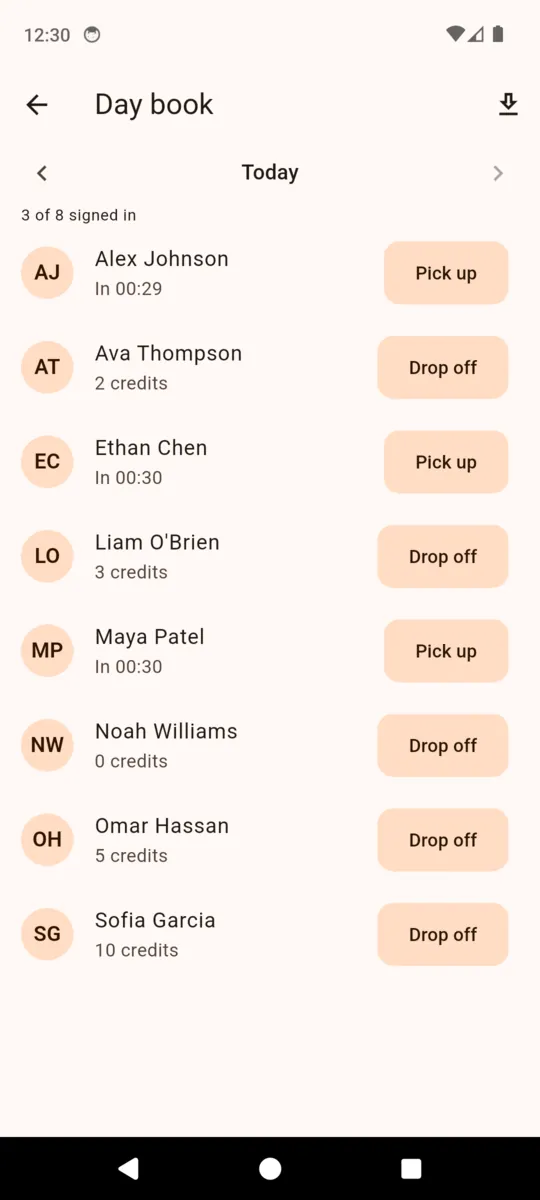
On the day book, a pet with credits shows its balance next to a Drop off button. Pressing it stamps the time and takes one credit in a single operation — never one without the other. The button stays disabled until the save comes back, so a double tap at a busy front desk cannot take two.
What happens at zero
Nothing blocks. A pet with no credits left still shows a Drop off button, the time is still stamped, and the balance simply stays at zero rather than going negative. That is deliberate. A dog standing in your reception at half past seven is a fact, and software that refuses to record it because a pack has run out just means the day is missing from your records and you argue about it later.
What you get instead is a visible zero on the roster and on the day book row, which is the prompt to sell the next pack while the owner is standing in front of you.
Correcting a count by hand
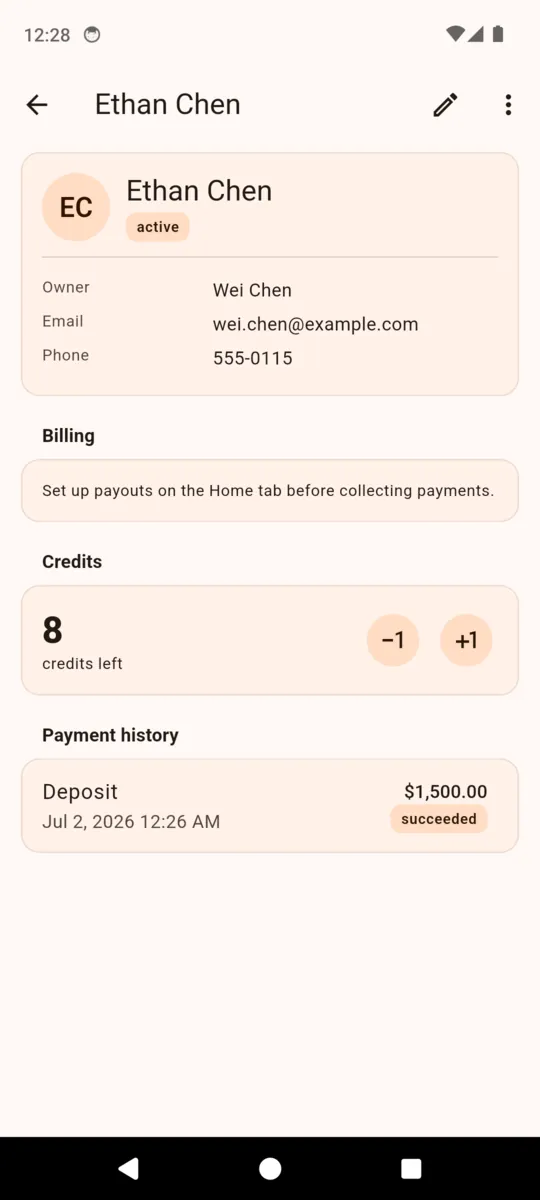
The pet record carries the balance in large type with a plus one and a minus one beside it. Use them for the pack somebody bought in cash at the desk, the morning nobody pressed drop off, or the day you comped a visit. The minus button switches off at zero so a balance cannot be driven below it by accident.
Packs do not expire
A pack in PackDesk holds a price and a credit count, and that is the whole of it. There is no expiry date on the plan, nothing runs on a clock, and no credit is ever removed except by a drop-off or by you pressing minus. If your own terms say a ten-day pack lapses after six months, that is a conversation you have with the owner — the app will not do it for you, and it will not quietly do it behind your back either.
A pack is not a subscription
It is a single payment that buys a fixed number of days. Nothing renews and nothing is charged again. If you want a monthly membership as well, that is a separate plan on the same screen, and plenty of daycares run both — packs for the occasional dogs, a subscription for the four-days-a-week regulars.
| Interval | What it does |
|---|---|
| Credit pack | A price and a number of credits. Bought once, spent on drop-offs. |
| Monthly | A recurring Stripe subscription. Renews until somebody cancels it. |
| Weekly | The same thing on a seven-day cycle. |
| Yearly | The same thing annually. |
| One-off | A single charge for anything that is not a pack — a grooming add-on, a late fee. |
What a pack costs to sell
The platform fee is 1% of the payment plus 30 cents, charged once on the pack rather than once per day used. On a $250.00 ten-day pack that works out like this.
- Ten-day pack, your price
- $250.00
- Platform fee, 1% + $0.30
- $2.80
- Owner pays, pass-through on
- $252.80
- Cost per day, to the owner
- $25.28
By default the fee is added to the owner's total as its own Service fee line, so you bank the full $250.00. Switch the pass-through off in Settings and the same amount comes out of your share instead. Stripe's card processing fee is separate and set by Stripe, under your own agreement with them.
Whose money it is
Your business gets its own Stripe account, created in your name during setup. Pack payments are charged on that account, so the balance and the bank details are yours. ClearStack takes its platform fee out of each payment and never holds a balance on your behalf. Refunds and disputes are handled in your own Stripe dashboard, on Stripe's terms.
Two things worth knowing first
Pets cannot be grouped into rooms or runs in this version. The roster is one searchable list and the day book covers everyone booked that day, rather than a room at a time.
PackDesk also needs a connection. Records live in the cloud so every phone at the desk sees the same balance the moment it changes, which is the right trade for a shared front desk but does mean the day book is not usable offline.
The two screens a pack lives on
Questions
How does a prepaid daycare pack work in PackDesk?
You save a plan with a price and a number of credits. The owner pays for it once on a Stripe page, the credits land on the pet when that payment clears, and each drop-off on the day book takes one.
What happens when a pet runs out of credits?
Nothing blocks. The drop-off is still recorded and the balance stays at zero, because a dog on your floor is a fact whether or not the pack is paid up. You settle it after.
Do the credits expire?
Not in the app. A pack holds a price and a credit count and nothing else, so nothing ever removes a credit on a clock. If your own terms say a pack lapses, you enforce that yourself.
Can I add or remove a credit by hand?
Yes. The pet record has plus one and minus one buttons for a pack sold in cash at the desk, or the morning somebody forgot to press drop-off.
Can a double tap take two credits?
No. The drop-off button is disabled until the write comes back from the server, and the check-in and the decrement are saved together as one operation rather than two.
What does it cost to sell a pack?
$29 a month for the business after a 30-day trial with no card, plus 1% and 30 cents on each payment collected. A $250.00 pack carries $2.80.
Elsewhere
Retire the punch card this month
Connect the business to Stripe, save your pack as a plan, and sell the first one from a pet's record. The trial runs 30 days and asks for no card.