





















































































































































How Much Paint Do I Need? A Room-by-Room Guide
The quick way to work out how much paint to buy, why you should plan for two coats, and the handful of situations that quietly need more than the math suggests.
Calculator
Paint calculator
Room size in feet, answer in US gallons. Doors and windows are deducted at standard sizes.
Buy this much
—
The two ways people get this wrong are opposite mistakes. Either they eyeball it, run out with a wall and a half to go, and spend twenty minutes hoping the new tin matches the old one. Or they over-buy so badly that the garage collects half-used cans for years. Five minutes with a tape measure lands you in the middle, where you should be.
Start with the walls. Add up the length of every wall in the room to get the perimeter, then multiply by the ceiling height. A room that’s 12 by 10 with 8-foot ceilings has a perimeter of 44 feet, and 44 times 8 is 352 square feet of wall. If you’re doing the ceiling as well, that’s just length times width, so 120 square feet here.
Irregular rooms are less trouble than they look. An L-shaped room is still just the perimeter walked around the floor, alcoves and all. A sloped ceiling splits into a rectangle plus a triangle, and the triangle is half its base times its height. Nobody needs precision to the square inch here. You are buying paint in whole tins.
Take out the doors and windows
You’re not painting the glass or the door itself, so subtract them. A standard door is about 21 square feet and an average window about 15. Our example room with one of each drops from 352 to 316 square feet of actual wall.
On one room that’s a rounding error. The reason to bother is scale. Do it across a house with a dozen doors and windows and you’ve quietly removed a whole gallon from the shopping list.
Divide by coverage, then double it
A gallon covers somewhere between 350 and 400 square feet per coat. Use the low end unless the wall is smooth and already close to the colour you’re going over. So 316 square feet is a shade under a gallon for one coat.
Then double it, because you’re doing two coats. That’s not me being cautious. A single coat almost never lands evenly over filler, a colour change or an older patchy surface, and the second pass is what makes the finish look like a professional did it. Two coats here is about 1.8 gallons, so you buy 2 and keep the rest for touch-ups.
Coverage is not one number for every surface, though, and the difference is bigger than most people expect:
| Surface | Realistic coverage per gallon |
|---|---|
| Smooth, previously painted drywall | 380-400 sq ft |
| Lightly textured wall | 330-360 sq ft |
| Fresh plaster or bare drywall (first coat) | 250-300 sq ft |
| Heavy texture, render or brick | 200-250 sq ft |
The situations that eat more than the math says
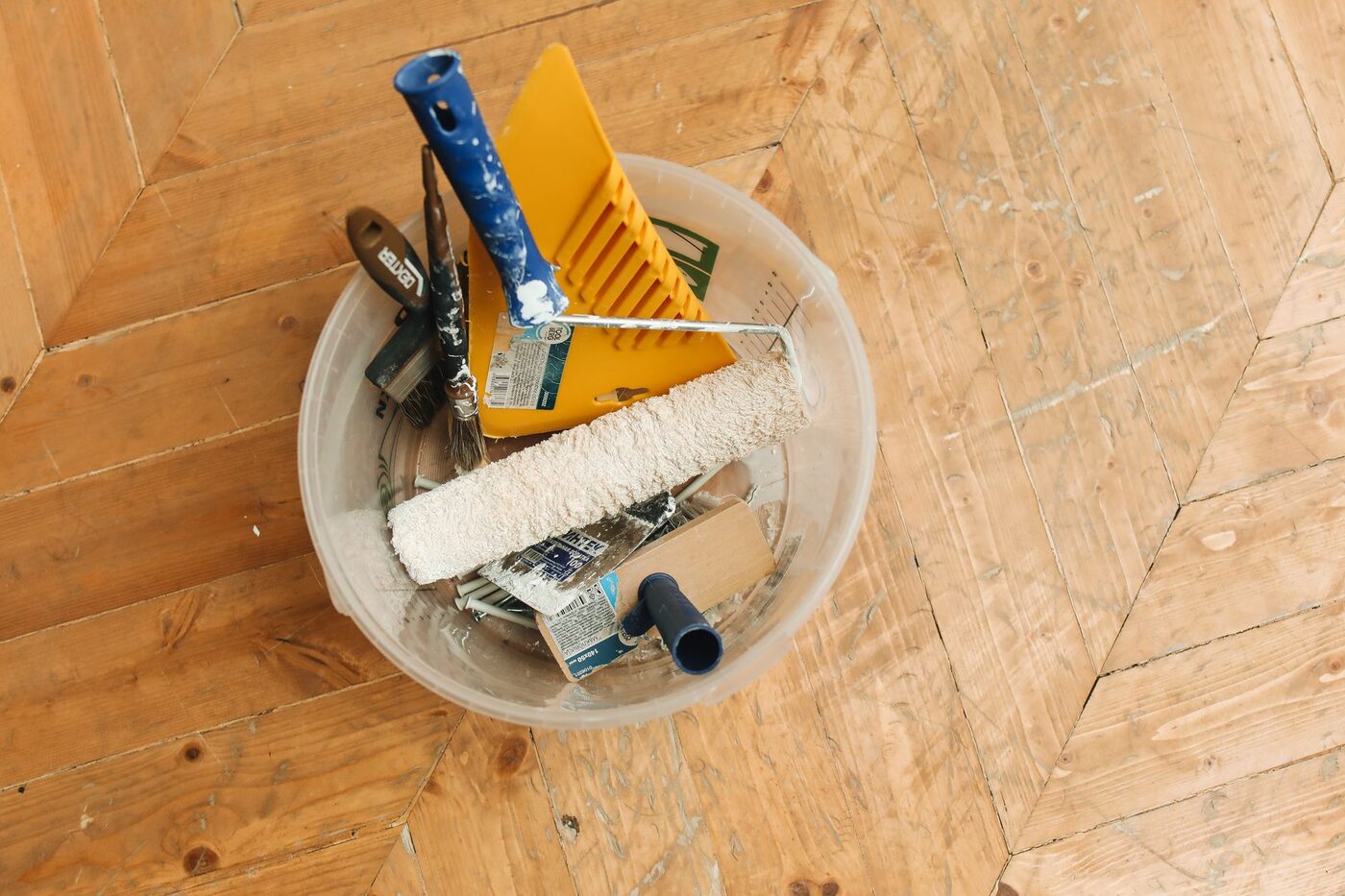
A few jobs quietly need extra, and none of them show up in the wall-area sum.
Bare drywall, fresh plaster or filler drinks the first coat. Prime it first. Primer is cheaper than burning a third coat of colour to get there, and it also stops patched areas flashing, which is that dull, uneven look where filler shows through the sheen.
Going from a dark wall to a light one, or into a bold shade, can want a third coat or a tinted primer underneath. Strong reds and yellows are the worst offenders because their pigments simply have less hiding power. If you are going dark to light, a grey-tinted primer does more work than another coat of the finish colour.
Textured walls, brick and render have more real surface than the flat measurement suggests. Add ten to twenty percent.
Spraying instead of rolling loses more to overspray, so buy a little over.
Ceilings and trim are their own jobs
Fold them in at your peril. They are different paints, different coverage and different quantities.
Ceilings are the easy one: length times width, and usually two coats of a flat ceiling paint. The 12 by 10 room above needs 120 square feet per coat, so 240 for two, which is well under a gallon.
Trim is where estimates go strange, because you are painting a long thin thing and area is a bad way to think about it. A rule that works: a gallon of trim paint covers roughly 350 to 400 linear feet of standard baseboard or casing per coat. Most rooms need a quart, not a gallon. Doors take about a quarter of a quart per side, per coat.
If you’re pricing the job, not just buying
Two extra numbers turn a materials list into an estimate.
Paint cost is the easy half: tins needed times price, plus sundries like tape, filler, sandpaper and roller sleeves, which realistically add ten to fifteen percent on top of the paint.
Labour is the half people underestimate. A rough working figure for interior repaint is around 150 to 200 square feet of wall per hour for cutting in and rolling two coats, and prep can double the whole job on a wall that needs filling and sanding. Measure the prep honestly, because that is where the money goes.
A quick reference
| Room (approx) | Wall area | Paint for two coats |
|---|---|---|
| Small, 10×10, 8 ft | ~320 sq ft | ~2 gallons |
| Medium, 12×14, 8 ft | ~415 sq ft | ~2.5 gallons |
| Large, 15×20, 9 ft | ~630 sq ft | ~4 gallons |
Ceilings, trim and a second colour are their own calculations. Measure and add them separately rather than folding them into the wall number.
Let the bookkeeping happen somewhere else
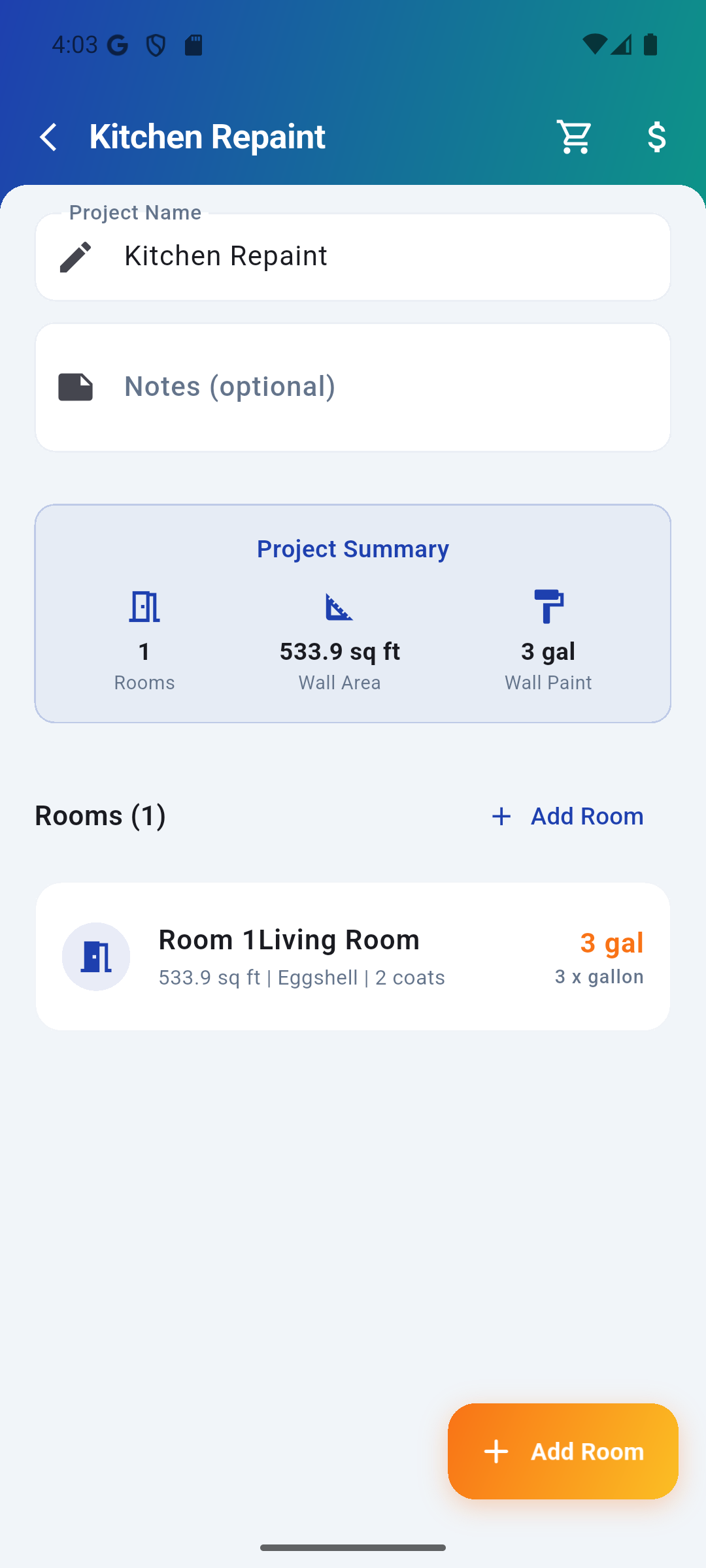
None of this is hard, but it gets fiddly once a job is several rooms with different ceiling heights, two colours, and doors and windows to deduct in each. That’s the arithmetic PaintCalc handles, adding it up room by room and turning it into a single shopping list so you buy once.
For a single room, though, the tape measure and the steps above will get you there. Perimeter times height, take out the openings, divide by 350, double it for two coats. Everything else is a refinement on that.
Common questions
How much wall does a gallon of paint cover?
Around 350 to 400 square feet for one coat, or about 10 square metres per litre. Rough, porous or thirsty surfaces come in lower, so plan on 350 if you want to be safe.
One coat or two?
Two, almost always. A single coat rarely covers evenly, especially over filler or a colour change, and the leftover from buying for two coats becomes your touch-up tin. One-coat paints exist but they still tend to want a second pass over anything patchy.
Do I really need to subtract the doors and windows?
For a single room it barely moves the number. Across a whole house it can save you a tin or two, so it's worth doing once you're painting more than one room. Knock off about 21 square feet per door and 15 per window.
Should I buy all my paint at once?
Yes, if it's a mixed colour. Tinted paint is matched per batch and two tins mixed weeks apart can differ enough to show on a long wall. Buy the whole job together, and if you do end up mixing tins, box them by pouring them into one bucket and stirring before you start.