




























































































How to Fix a Green Pool, Step by Step
A green pool is an algae bloom, and the fix is chlorine held high for days rather than one big dump. Here is the sequence that actually clears it.
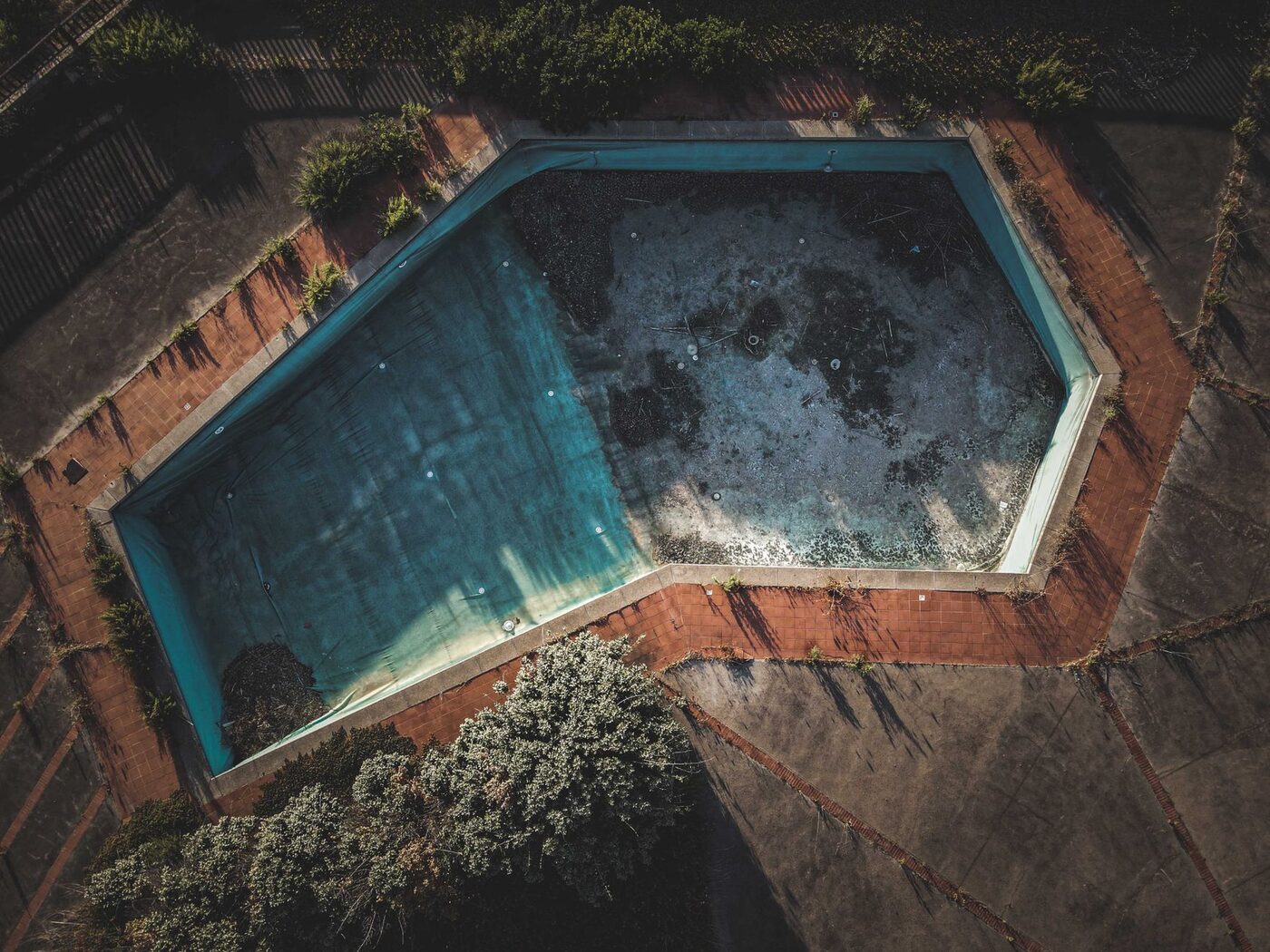
Green water is not a mystery, and it is not really a cleaning problem. It is algae, and algae only shows up when the free chlorine in your pool has run out for long enough to let it take hold. Once you understand that, the fix stops being a guessing game with random bottles from the pool shop and turns into a fairly boring sequence you follow until the water gives up.
The single biggest mistake is treating this as a one-off event. People dump a bag of shock in on Saturday, look at the pool on Sunday, and conclude it did not work. What actually happened is that the chlorine killed some algae, got consumed doing it, and dropped back to zero by the evening, at which point the survivors carried on. Clearing a green pool is about holding chlorine high for days, not spiking it once.
Test before you add anything
You need two numbers before you touch a bottle: your free chlorine, and your cyanuric acid, sometimes labelled stabiliser or conditioner.
That second one matters more than most people realise. Cyanuric acid protects chlorine from sunlight, which is useful, but it also holds chlorine back from working. The more stabiliser in the water, the more chlorine you need to get the same effect. This is the usual reason a pool goes green while the owner insists they have been adding chlorine all along. They have. It just has not been enough for the water they actually have.
The relationship is roughly proportional, and it is why there is no single “shock level” that works for every pool:
| Cyanuric acid | Normal free chlorine | Roughly what shocking needs |
|---|---|---|
| 30 ppm | 2-4 ppm | around 12 ppm |
| 50 ppm | 4-6 ppm | around 20 ppm |
| 80 ppm | 6-8 ppm | around 31 ppm |
| 100 ppm | 8-10 ppm | around 39 ppm |
Read that table twice if your pool has gone green while you were adding chlorine every week. A pool at 100 ppm stabiliser needs more than triple the chlorine of a pool at 30 to do the same job, and if you have been dosing to 3 ppm because that is what the strip says is fine, you have effectively had no protection at all.
If your stabiliser has climbed very high, no realistic amount of chlorine will clear the pool, and the honest answer is a partial drain and refill to dilute it first. Stabiliser does not evaporate or burn off. The only way out is dilution.
Get the pH down first
Bring pH to around 7.2 before you start shocking. Chlorine is more effective at the lower end of the range, and shocking tends to push pH up anyway, so starting low gives you room. It is a five minute job that makes everything after it work better.
Do not chase pH obsessively while you are shocking, though. At high chlorine levels most test kits read pH unreliably, so set it once at the start and leave it until the water is clear.
Then hold the chlorine up
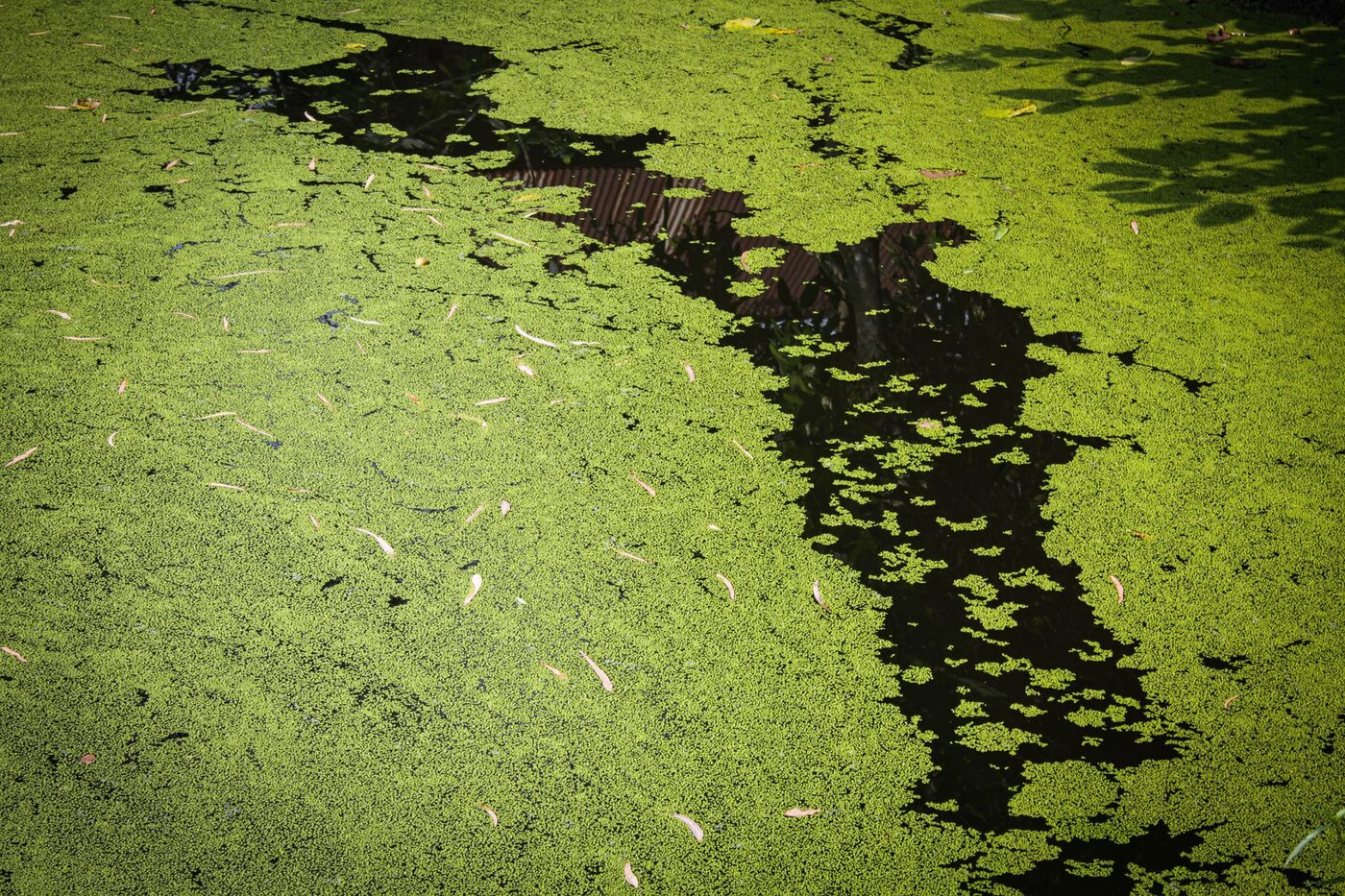
Raise free chlorine to shock level for your stabiliser reading and, this is the part that matters, keep it there. Test in the morning and again in the evening, and top the chlorine back up every time it falls.
Liquid chlorine is the right tool here. It is the only common product that adds chlorine and nothing else. The alternatives quietly sabotage you when used in the quantities a bloom demands: dichlor and trichlor tablets add more stabiliser every time, which raises the bar you are trying to clear, and cal-hypo adds calcium that you cannot remove later. Since you are about to dose repeatedly over several days, those extras stack up fast.
Expect to do this for several days. The water will usually turn from green to a cloudy grey or milky white before it turns clear, and that colour change is a good sign rather than a new problem. It means you are looking at dead algae rather than living algae.
Keep the water moving and the filter clean
Run the pump around the clock while you are doing this. Brush the walls and floor daily, paying attention to steps, corners and behind the ladder where algae hides from both the brush and the chlorine.
Your filter is doing the actual removal work, so watch its pressure and clean or backwash it whenever it climbs. On a bad bloom you may be cleaning the filter more than once a day. If the water stays stubbornly cloudy after the green has gone, the filter is usually the bottleneck.
What that means in practice depends on what you have. A sand filter gets backwashed when pressure rises about 8 to 10 psi over its clean baseline, and dead algae will send it there quickly. A cartridge filter has to come out and get hosed, and during a bad bloom that can be a daily job. A DE filter backwashes and then needs recharging with fresh DE. Whichever you have, the pattern is the same: pressure up means flow down means the water stops clearing.
Know when you are finished
The water going clear is not the finish line. The real test is overnight: take your free chlorine reading at dusk and again first thing in the morning, before the sun gets on the water. If it has barely moved, nothing is left eating your chlorine and the bloom is over. If you have lost a chunk of it, there is still algae in there and you keep going.
The reason this works is that sunlight is what normally burns off chlorine, so testing overnight removes that variable. Anything you lose in the dark was consumed by something living. Once you pass that test, drop back to your normal chlorine level and the pool behaves itself again.
What not to waste money on
Clarifiers and flocculants do not kill algae. They clump fine particles so the filter can catch them, which is useful at the tail end of a clear-up when the water is cloudy but the chlorine is holding. Used at the start, they just clog your filter with living algae.
Algaecide is prevention, not treatment. Most of the copper-based ones can also stain a plaster pool if you get enthusiastic with them.
Phosphate removers get sold hard as a way to starve algae. Chlorine that is actually held at the right level for your stabiliser makes the phosphate question academic.
Then stop it happening again
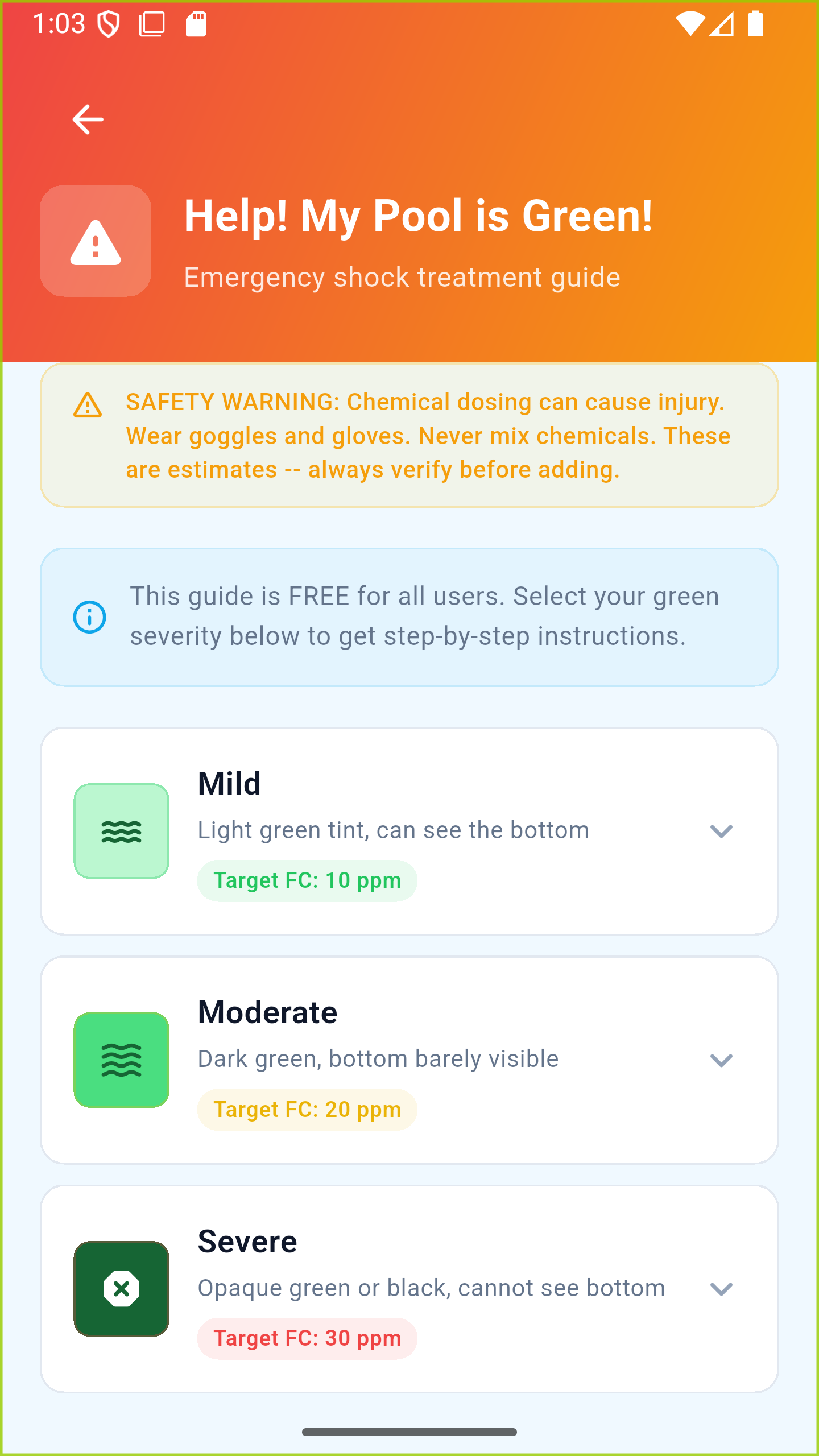
Almost every green pool traces back to the same root cause, which is chlorine drifting to zero without anyone noticing. Test regularly, watch your stabiliser so you know what chlorine level actually protects your water, and pay extra attention after storms and heatwaves.
Keeping a simple log of your readings is what turns this from a recurring emergency into a boring routine, because you can see the chlorine trending down a week before the water turns. That is the job ClearPool does, working out your dose from your actual readings and keeping the history so the pattern is visible.
But the principle stands on its own: green water means the chlorine ran out, and the fix is to put it back and keep it there until the pool stops eating it.
Common questions
How long does it take to clear a green pool?
Anywhere from two days to a week. A pool that has just turned faintly green often clears in 48 hours. A swamp that has been sitting all winter can take a week of holding chlorine and cleaning the filter, and the water usually goes cloudy grey before it goes clear.
Why did my pool go green overnight?
The free chlorine ran out. That happens fastest after heavy rain, a heatwave, a big pool party, or when stabiliser has crept high enough that your normal chlorine level no longer does anything. Algae only needs a few hours of unprotected water to take hold.
Can I just use algaecide?
Not to clear an existing bloom. Algaecide is designed to stop algae getting started, not to kill a pool full of it. Chlorine is what does the work. Save the algaecide for prevention once the water is clear again.
Is it cheaper to just drain the pool?
Almost never, and it can be risky. A drained pool can lift out of the ground if the water table is high, and a plaster pool does not enjoy drying out. Draining is the right call only when your stabiliser is so high that no sensible amount of chlorine will work, and then a partial drain is usually enough.