


























































































When to Replace Running Shoes: The Mileage Rule
Running shoes wear out from the inside, long before they look worn out. Here is what the 300 to 500 mile guideline really means and how to judge your own pairs.

The problem with running shoes is that they die quietly. The upper still looks fine, the tread has plenty left, the thing looks perfectly serviceable sitting by the door. Meanwhile the foam under your foot, which is the entire reason you bought them, has been quietly compressed into a flatter, harder version of itself over a few hundred miles. Nothing about the outside tells you that.
Which is why the advice you have heard, replace them somewhere between 300 and 500 miles, exists at all. It is not arbitrary. It is roughly where midsole foam in a normal daily trainer stops rebounding the way it did when it was new. But it is a range, not a number, and treating it as gospel is how you end up either running on dead shoes or binning perfectly good ones.
What is actually wearing out
The midsole is the part that dies, and it is worth knowing how.
Foam cushions by compressing and springing back, thousands of times per run. Every one of those cycles costs it a tiny amount of its ability to spring back. The cells break down, the foam takes a set, and what was a shock absorber slowly becomes a slab. That process is invisible from the outside, which is the whole trap.
The outsole rubber, meanwhile, is chosen to survive far longer than the foam. So is the upper. By the time either of those looks finished, the midsole died a long way back. Judging a shoe by its tread is like judging an engine by its paint.
Foam type changes the timeline a lot. Traditional EVA is the workhorse and wears predictably. The newer supercritical foams that make modern shoes feel bouncy are lighter and livelier, and some of them give up sooner, because the qualities that make a shoe feel fast are not the qualities that make it last.
Why the range is so wide
Two hundred miles is a big spread, and where you land in it depends on things nobody can guess for you.
Your weight matters, because foam compresses under load and more load compresses it faster. Your surface matters, since asphalt and concrete are less forgiving than a trail or a track. Your gait matters, which is why one person wears through the outer heel and another barely marks it.
The shoe itself matters most of all:
| Shoe type | Realistic lifespan |
|---|---|
| Firm daily trainer | 400-600 miles |
| Soft, max-cushion trainer | 300-450 miles |
| Lightweight tempo shoe | 250-350 miles |
| Carbon-plated racer | 150-250 miles |
| Trail shoe | usually outsole-limited, 350-500 |
A chunky daily trainer built for exactly this job can push past 500 miles without complaint. A featherweight racer with a carbon plate and soft racing foam might be noticeably flat by 200, because that foam was tuned for feel rather than longevity. If you are rotating a race shoe through easy runs, you are burning it fast for no benefit. Trail shoes flip the usual rule, because you tend to shred the lugs before the foam gives up.
The signs worth trusting
Mileage is a prompt to check, not a verdict. These are the things that actually tell you.
Aches that arrive with no other explanation are the loudest signal. If your shins, knees or hips start grumbling and your training has not changed, suspect the shoes before you blame yourself. Cushioning that stopped absorbing impact hands that job to your legs.
Look at the midsole from the side. Fresh foam has smooth, even sidewalls. Old foam develops deep creases and wrinkles that stay compressed rather than springing back. Press your thumb into it and compare against a newer pair if you have one, and the difference is usually obvious.
Put the shoes on a flat table and look at them from behind. If the heel tilts noticeably to one side, the foam has collapsed unevenly and the shoe is now actively steering your foot somewhere it does not want to go. That one is worth acting on quickly.
Check the outsole for wear patterns rather than overall wear. A patch worn smooth through to the foam, or wear that is clearly heavier on one side, means the shoe is no longer sitting the way it was designed to.
And then there is the honest test, which is putting on a new pair. If your old shoes suddenly feel like planks by comparison, they were finished a while ago and you had simply adjusted to them without noticing. That adjustment is the whole trap.
Rotating pairs buys you time
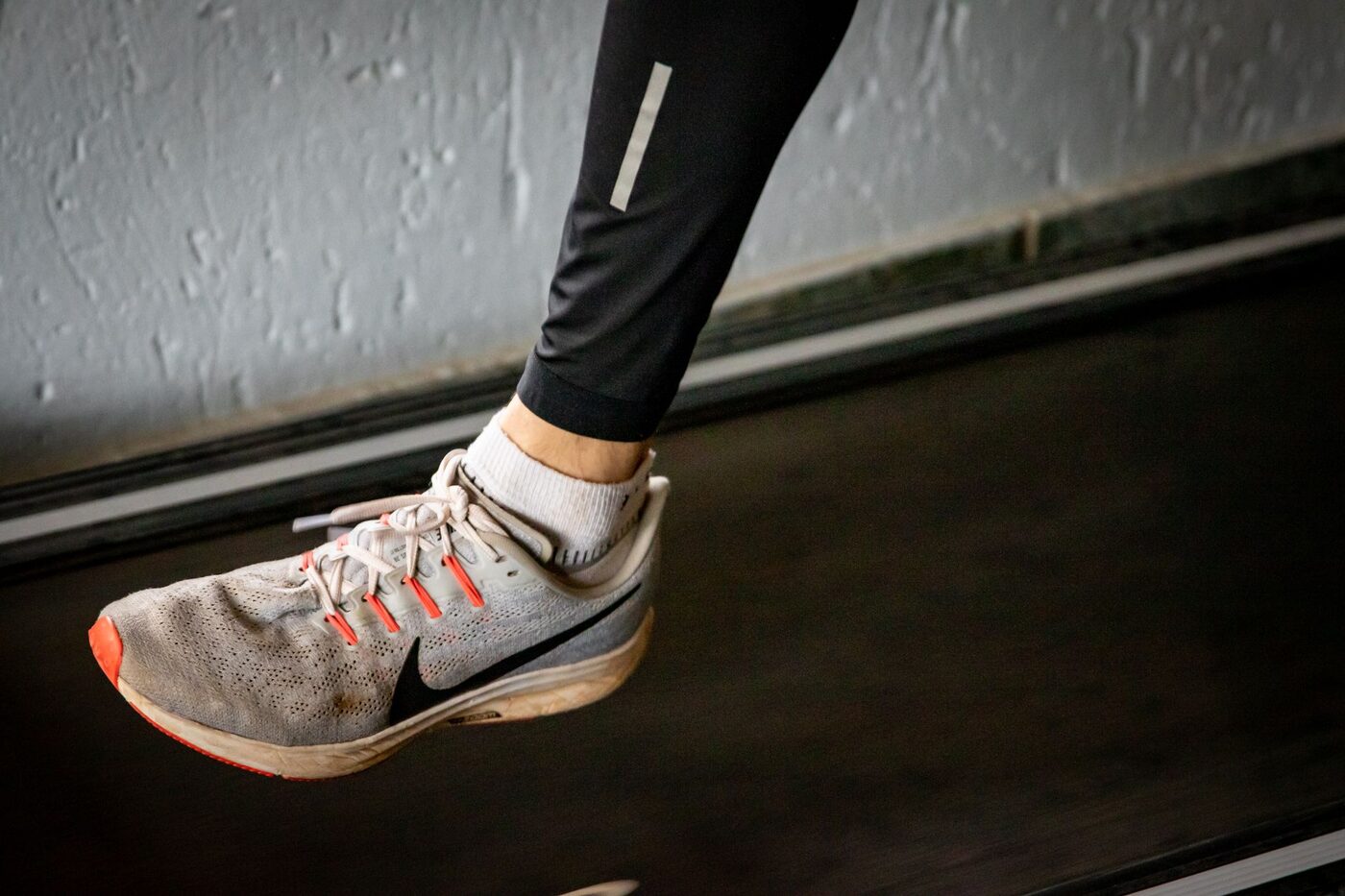
If you run often, two pairs on the go beats one pair run into the ground. Midsole foam wants roughly a day to decompress after a hard run, and giving it that seems to help it live longer. You also get a permanent reference point, because when one pair starts to feel dead next to the other, you have your answer without any guessing.
The tidy side effect is that both pairs age at half the rate, so you are not hit with a sudden replacement in the middle of a training block. If you can stagger their purchase by a couple of months, better still, since you always have one relatively fresh shoe to compare against.
When not to replace them
The rule cuts both ways, and 500 miles is not a bin instruction.
A shoe that still feels good, shows no heel lean and is not giving you aches is not finished just because a number says so. Plenty of firm trainers run happily past 600. And a retired running shoe is not rubbish, it is just no longer a running shoe. It has years left as a gym, walking or gardening shoe, where nobody is asking the foam to absorb a few hundred impacts a mile.
Just write the miles down

All of this only works if you actually know the number, and almost nobody does. Shoes get swapped around, a pair gets used for a couple of months of easy runs, and by the time you wonder whether they are done you are guessing between 200 miles and 600. That guess is the reason people either run on dead foam or throw away half a shoe.
Logging mileage per pair fixes it, whether that is a note on your phone or something built for it. ShoeMile tracks each pair against its own target and tells you when one is getting close, which is handy if you are rotating several.
The useful habit, though, is just knowing the number. Once you can see that a pair is at 430 miles and your knees have started talking to you, the decision makes itself.
Common questions
How many miles should running shoes last?
Most daily trainers are done somewhere between 300 and 500 miles. Treat that as a range to test against your own experience rather than a rule. Lighter runners on soft surfaces often get more, heavier runners on pavement often get less, and carbon plated racers can be finished by 200.
How do I know if my running shoes are worn out?
The midsole is the tell. Press the foam with your thumb and compare it to a fresh pair, and look at the sidewall for deep compressed wrinkles that stay put. New aches in your shins or knees with no other change in your training is the other big signal.
Does rotating two pairs make them last longer?
It seems to help. Midsole foam needs a day or so to spring back after a run, so alternating pairs gives each one time to recover instead of getting compressed again while it is still flat. You also get to feel the difference between them, which makes a dead shoe much easier to spot.
Do running shoes expire if I don't run in them?
Slowly, yes. Midsole foams oxidise and glues get brittle over years whether you run or not, so a pair that sat in a cupboard for five years is not really new. It is not a reason to panic about last season's shoes, but a decade-old deadstock pair is a nostalgia purchase, not a training one.