
CraftCost
Candle, Soap & Resin Pricing Calculator
SAP, lye, fragrance load, resin mix ratios — plus Etsy-fee-aware pricing, inventory, and a batch log built for handmade sellers.
How It Works
Pick the craft
Candle, soap, or resin — every calculator lives on one screen with the SAP, fragrance, and ratio math built in.
Enter recipe + costs
Materials, labor minutes, packaging. Imperial or metric, USD/GBP/EUR/CAD/AUD — your numbers, your units.
Price + log
Wholesale and retail prices after Etsy fees, plus a one-tap batch log so next month's pricing isn't a guess.
CraftCost in Action
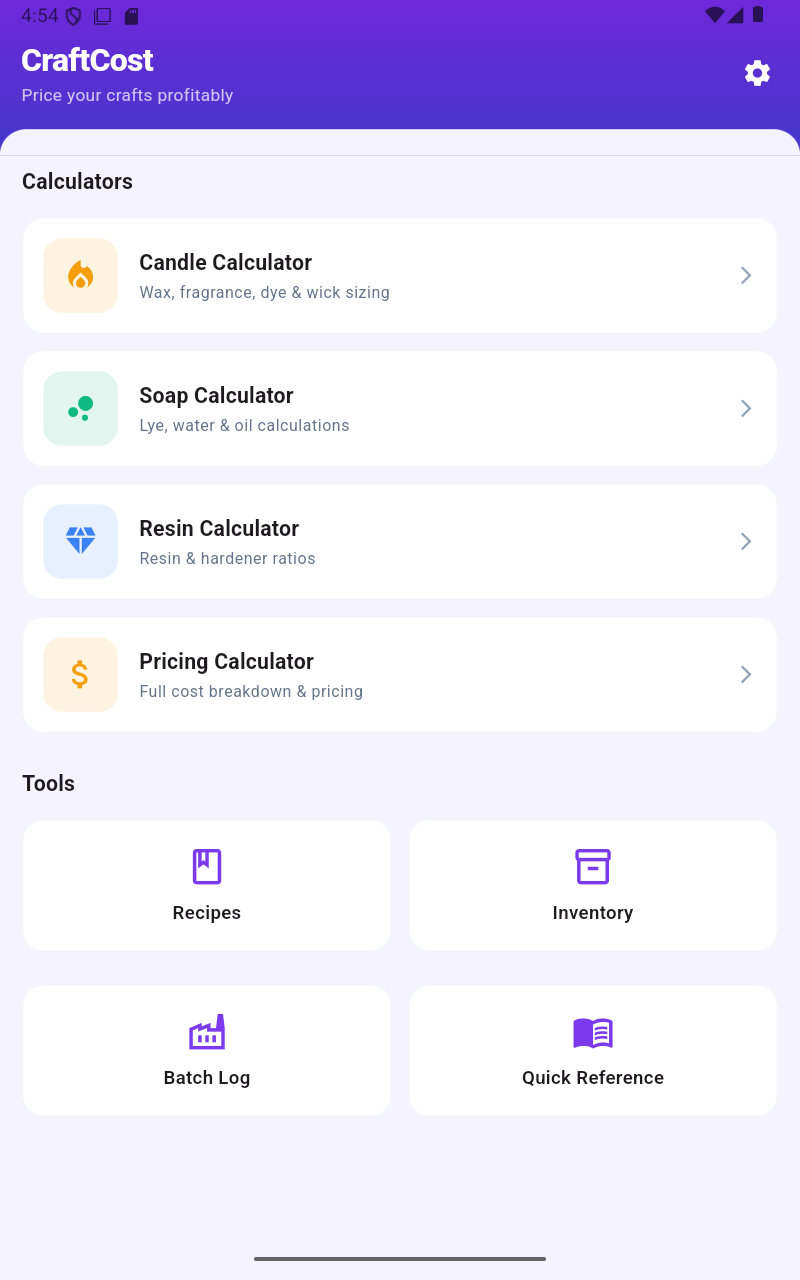
Home — three calculators, one tap
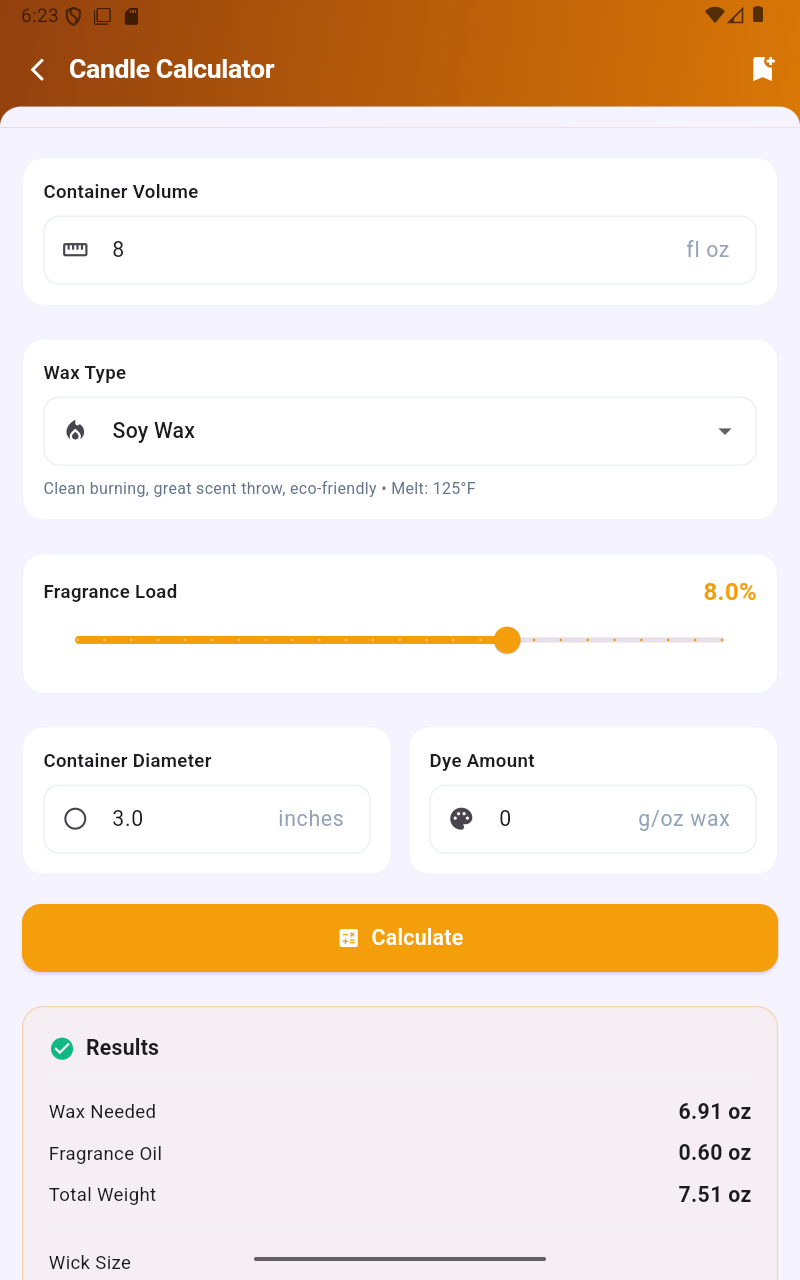
Candle — wax, fragrance, wick
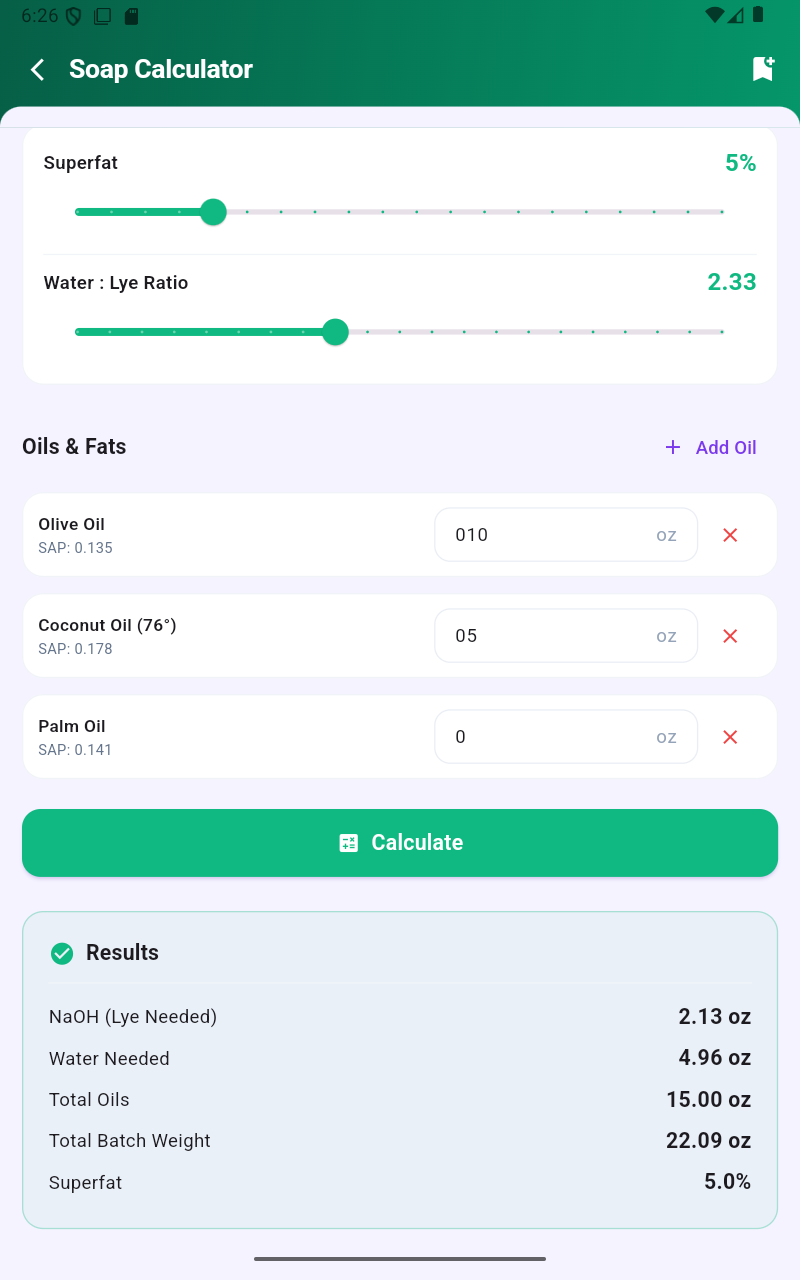
Soap — SAP, lye, superfat
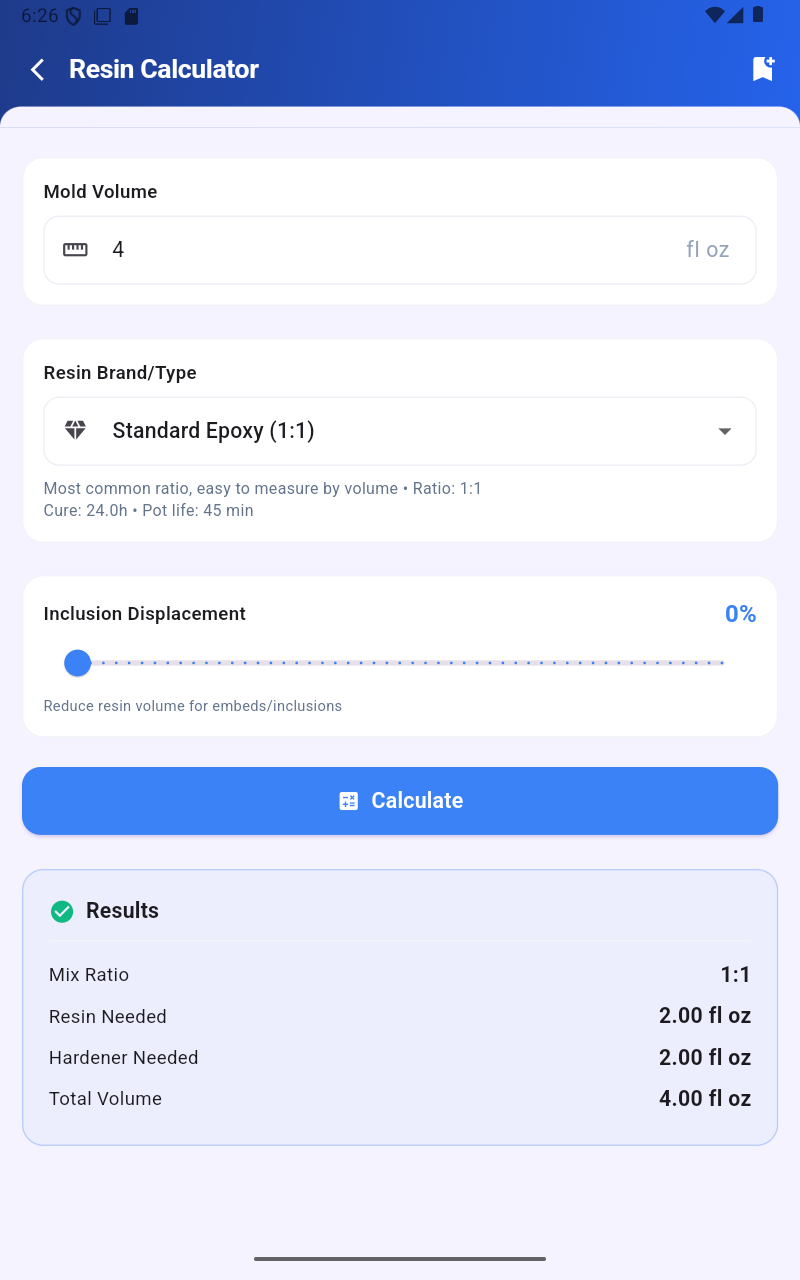
Resin — mix ratio + mold volume
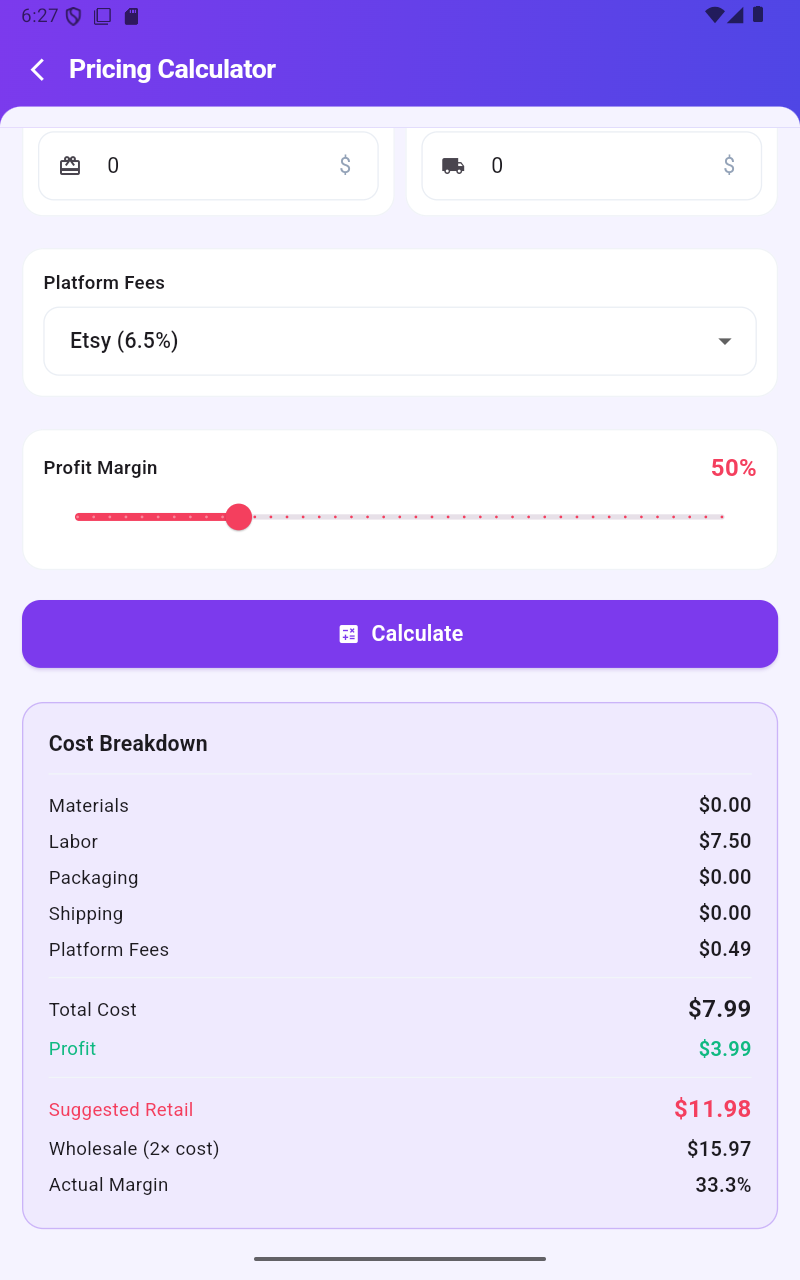
Pricing — Etsy fees + margin
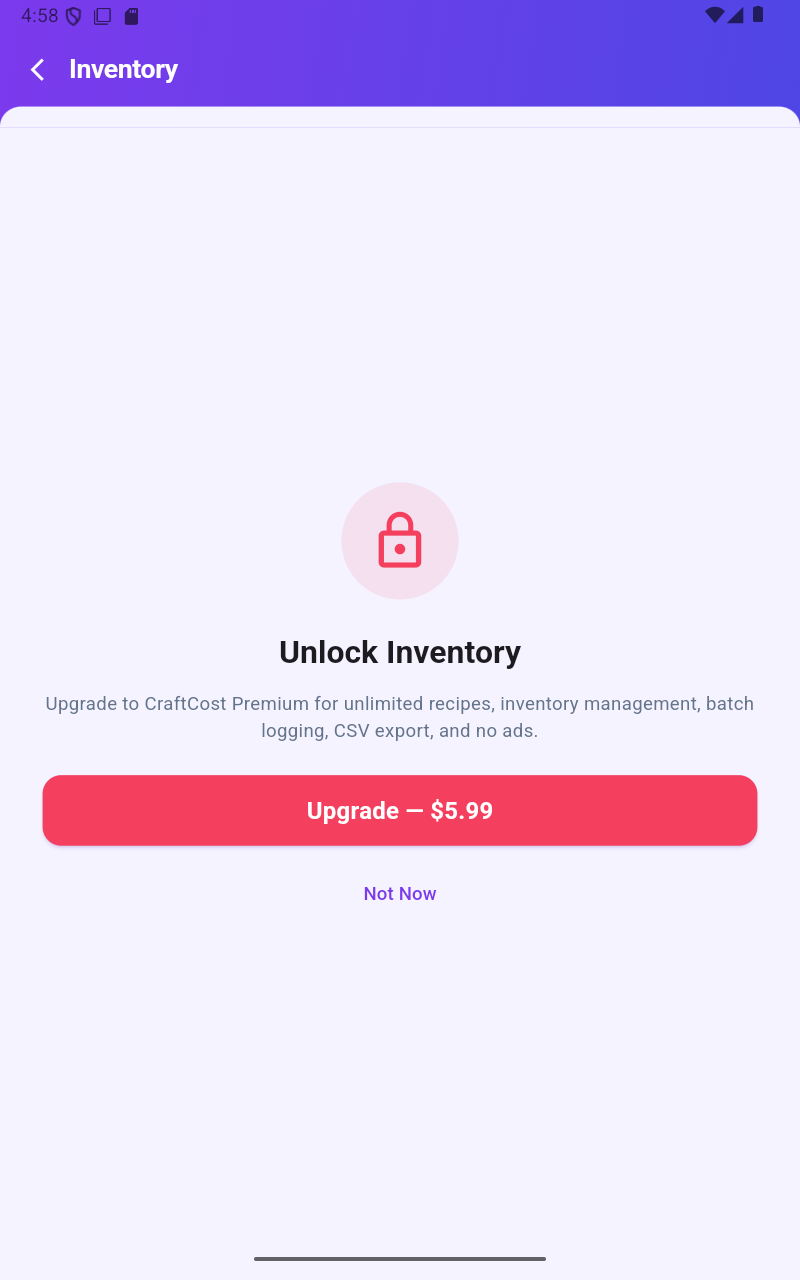
Inventory — low-stock alerts
Every Calculation, Every Recipe, On One Screen
Candle Calculator
Wax weight, fragrance load (6–12%), dye, and wick size from your container size. Soy, paraffin, coconut, beeswax, and custom blends.
Cold-Process Soap Calculator
Built-in SAP database for 40+ oils and fats. NaOH or KOH, water, and superfat percentage handled. Custom SAP values saved per oil.
Resin Calculator
Mold dimensions or direct volume in. 1:1, 2:1, 3:1 or any custom ratio out — with inclusion displacement so you mix exactly what you need.
Etsy-Fee Pricing
Materials + labor + packaging + platform fees + margin. Returns retail price after Etsy fees AND a wholesale price for boutiques.
Ingredient Inventory
Track quantities, unit costs, suppliers. Low-stock alerts before you run out mid-batch. Materials consumed auto-deducted from each logged batch.
Batch Log & History
Every production run logged: date, recipe, materials consumed, quality rating, notes. Search past batches to find your best sellers.
Quick Reference
Wax melting points, fragrance load guidelines, full SAP table, resin mix ratios, wick sizing charts — the reference card on your phone.
10 Languages, Offline
Works completely offline — perfect for craft fairs. Imperial and metric units, USD/GBP/EUR/CAD/AUD currencies, 10 languages, light and dark themes.
Simple, Honest Pricing
No subscription. Pay once, own it forever.
Free
Full calculators with ads
- Candle, soap, resin calculators
- Single-item pricing with Etsy fees
- Quick-reference cards
- Imperial & metric units
- Multi-currency (USD/GBP/EUR/CAD/AUD)
- Up to 5 saved recipes
- Banner + interstitial ads
CraftCost Premium
One-time purchase — yours forever
- Everything in Free, plus:
- Unlimited saved recipes
- Full inventory with low-stock alerts
- Complete batch log + statistics
- CSV export for bookkeeping
- Pricing templates for quotes
- Ad-free
One mispriced batch of candles costs more than Premium. CraftCost pays for itself the first time you'd otherwise undercharge your labor or forget the Etsy 6.5%.
Common Questions
Frequently Asked Questions
What does the candle calculator actually compute?
Enter your container volume (or pick a common jar size) and CraftCost returns the wax weight you need, the fragrance oil amount at your chosen load (6–12%), an estimated dye amount, and a wick size suggestion. Choose your wax type — soy, paraffin, coconut, beeswax, or a custom blend — and the density math is handled automatically. Scale a single jar or a 50-jar batch and the totals stay in sync.
Does the soap calculator support cold process and hot process?
Both. CraftCost ships with a built-in SAP value database of 40+ oils and fats — olive, coconut, palm, shea, cocoa butter, castor, and many more — and computes lye (NaOH or KOH) and water for the recipe you build. Set your superfat percentage to leave skin-conditioning oils unsaponified. For specialty oils not in the database, enter a custom SAP value once and it's saved for next time.
How does the resin calculator handle different brands?
Enter mold dimensions (length × width × depth) or paste a volume directly, then pick a mix ratio. Standard 1:1, 2:1, and 3:1 by volume or by weight are presets; any other ratio is a custom entry. If you're embedding inclusions — flowers, glitter, wood — there's a displacement slider so you don't mix more than you need. The output gives you Part A and Part B amounts and a total mixed volume.
How does the pricing calculator handle Etsy fees?
Enter your materials, labor minutes, and packaging cost. Set your target margin. CraftCost adds Etsy's listing fee, transaction fee, payment processing, and your shipping markup, then returns a retail price that actually hits your margin after fees — plus a wholesale price at the same margin without platform fees. Shopify, Faire, or a custom platform fee can be substituted in seconds.
Can I track ingredient inventory and batch history?
Yes — both are core features. Add each raw material with quantity on hand, unit cost, and supplier; set a low-stock threshold and get an alert when you're running out mid-batch (Premium). Every recipe you make can be logged as a batch with date, quantities produced, materials consumed, quality rating, and free-text notes. Search past batches to find which recipe sold best at last year's craft fair.
Does CraftCost work offline at craft fairs?
Completely. Every calculation, every recipe, every inventory entry, every batch log lives on your device. No account, no cloud sync, no signal required. The only thing that needs internet is the AdMob banner on the free tier — and Premium removes that anyway. Calculate prices at a craft fair booth, in a workshop with no Wi-Fi, or on a flight to a wholesale buyer.
Is there a subscription?
No. Premium is a single $5.99 in-app purchase. It unlocks unlimited saved recipes, full inventory with low-stock alerts, the complete batch log with history and statistics, CSV export for bookkeeping, pricing templates, and removes all ads. One payment, lifetime access — and the free tier remains fully functional forever if you'd rather not upgrade.
What about units and currencies?
Both unit systems are supported — grams, ounces, pounds, kilograms, milliliters, fluid ounces — with a one-tap toggle in settings. Currency selection covers USD, GBP, EUR, CAD, and AUD, applied to every cost field and pricing output. Switch any time and existing recipes are converted on the fly. The app ships in 10 languages including English, Spanish, French, German, Portuguese, Hindi, Arabic, Japanese, Korean, and Simplified Chinese.
Stop Underpricing Your Craft
Download CraftCost and price every candle, soap, and resin piece with confidence.
Have questions? Get in touch
Pricing Handmade Properly, From the SAP Value to the Etsy Receipt
Most candle, soap, and resin sellers don't lose money because their craft is bad — they lose money because the math between "I made a thing" and "I sold a thing" is genuinely hard. Fragrance oil at 9% by wax weight, SAP values multiplied by oil weight, resin Part A plus Part B with inclusion displacement subtracted, labor at $20/hr converted to per-unit cost, Etsy taking 6.5% transaction plus 3% payment processing plus $0.20 listing — every step has its own gotcha, and a single missed number turns a $24 candle into a $4 candle once you back the cost out. CraftCost is the one screen where every one of those numbers gets handled, in the order a real maker would handle them.
Why Hobbyists Almost Always Underprice
The single most common pricing mistake among new craft sellers is forgetting labor — not because they're being noble about it, but because labor doesn't show up on a receipt. The wax cost $14, the wicks were $2, the jars were $8, the fragrance was $6, the labels were $2 — that's $32 in materials for a 12-jar pour and a tempting "$3 per jar" cost basis. But the pour, the cure, the labeling, the photographing, the listing, and the shipping took six hours of your time. At even $15/hr that's $90 of labor, or $7.50 per jar — more than double the materials. A retail price built on materials-only is a retail price that's actually paying you nothing per hour. CraftCost forces labor as a required field for exactly this reason.
Etsy Fees Are Worse Than They Look
Etsy's published fees sound mild: $0.20 to list, 6.5% transaction, 3% + $0.25 payment processing in the US (higher in some countries). On a $25 candle that's $0.20 + $1.63 + $1.00 = $2.83, or about 11.3% of revenue. But Etsy also applies the transaction fee to your shipping charge, and offsite ads (which most sellers don't realize are opt-in by default once you hit $10K) add another 12-15% on those orders. CraftCost models every one of these so the retail number it gives you is a retail number you actually keep — not a sticker price you watch erode into a tip. Shopify, Faire wholesale, and direct sales each get their own fee profile.
SAP Values, Lye Math, and Why You Should Always Run the Numbers
Cold-process soap is unforgiving. Olive oil's SAP is 0.135 for NaOH; coconut's is 0.190; shea butter's is 0.128. Get the SAP table wrong and your bar is either lye-heavy (skin burn) or fat-heavy (soft, won't cure). Superfat is the percentage of oils you intentionally leave un-saponified for skin feel — typically 3-7%. CraftCost ships with 40+ oil SAP values from published reference sources, multiplies them by your oil weights, sums the lye, applies the superfat reduction, calculates water at your chosen water-to-lye ratio, and tells you the lye discount in grams. For specialty oils not in the database, enter a custom SAP value once and the app saves it per-oil for every future recipe.
Wholesale vs Retail Markup Is Not One Number
A standard wholesale price is roughly 2× the COGS (cost of goods sold including labor); standard retail is 2× wholesale, or 4× COGS. Boutiques and craft fair organizers expect the wholesale number to leave room for their own retail markup — if you sell to them at retail, they have nothing left to make. CraftCost outputs both the wholesale and retail price for the same recipe with the same target margin, so when a boutique buyer asks "what's your wholesale on these," you have an answer ready that won't bankrupt either of you. The math also adapts to platform: Etsy retail bakes in the platform fees; direct retail doesn't.
Batch Costing Beats Per-Unit Costing for Candles
A 12-jar candle pour has fixed costs (the wick centering jig you bought once) and per-unit costs (one jar, one wick, one label per candle), and trying to track those as a single per-unit number is fragile. CraftCost handles this as batch costing — the entire pour is logged as one batch with materials consumed deducted from inventory, then divided by jars produced to get accurate per-jar COGS. When you change wax suppliers or your fragrance oil price moves, you re-run the calculator on the new costs and you can see exactly what that did to your margin. The batch log keeps a history so "remember that lemongrass batch from last spring" isn't a memory exercise.
Fragrance Oil Load, Wick Size, and the Numbers That Aren't on the Bottle
Fragrance oil load is the percentage of fragrance to wax by weight. Most soy waxes hold 6-9% safely; some specialty waxes hold up to 12%. Go over the wax's flash point and your candle throws weakly, tunnels, or refuses to fully solidify. Wick size depends on container diameter, wax type, and fragrance load — a 3-inch soy candle with 8% fragrance generally wants a CD-12 or ECO-10, but every wax and wick brand publishes its own chart. CraftCost's quick reference includes these tables alongside the calculators, so the moment a recipe is computed you have the sanity check one tap away. Get the wick wrong and the candle either tunnels (too small) or smokes (too big) — neither is a returning-customer outcome.
Inventory and Low-Stock Alerts for Working Makers
Running out of fragrance oil mid-pour is the kind of mistake you only make once before you start tracking inventory. CraftCost's inventory module logs every raw material with quantity on hand, supplier, and unit cost. Every batch you log automatically deducts materials consumed from inventory. Set a reorder threshold per material (Premium) and you get a notification when wax, lye, or any other supply drops below the threshold — early enough to order before your next batch is blocked. Supplier links go in the notes field so you don't have to remember whether the cocoa butter came from Bramble Berry or Wholesale Supplies Plus.
Privacy, Offline, and Why the Free Tier Actually Works
Every calculation, every recipe, every inventory entry, every batch log lives on your phone. No account, no cloud sync, no analytics on your batch data. The app works completely offline — important when you're calculating a quote at a craft fair booth with no Wi-Fi, or in a workshop where the router is on the other side of the building. The free tier is the full calculator: candle, soap, resin, pricing with Etsy fees, quick reference cards. The five-recipe save limit is the only meaningful cap; everything else is just ads and the convenience features (full inventory, batch log, CSV export, pricing templates) that turn the app from a calculator into a tiny back office for your craft business.
For Estimation — Always Verify Against Your Suppliers
CraftCost is a calculator, not a substitute for reading the safety data sheet on your lye, the flash point on your fragrance oil, or the cure schedule on your resin. SAP values vary slightly between published references and supplier batches; fragrance load limits depend on the specific wax formulation; resin mix ratios shift between brands and even between batches of the same brand. Every result screen reminds you to verify against your supplier's published guidance before you mix at scale. Treat the numbers as well-researched defaults that get you to a recipe ready for a small test pour, not as a license to skip the supplier's documentation. For estimation only.