



























































































Backyard Chicken Care for Beginners: A Straight Answer to Every First-Year Question
Coop space, predator-proofing, what to feed at which age, why hens stop laying in autumn, and the mite problem nobody warns you about before you buy the birds.
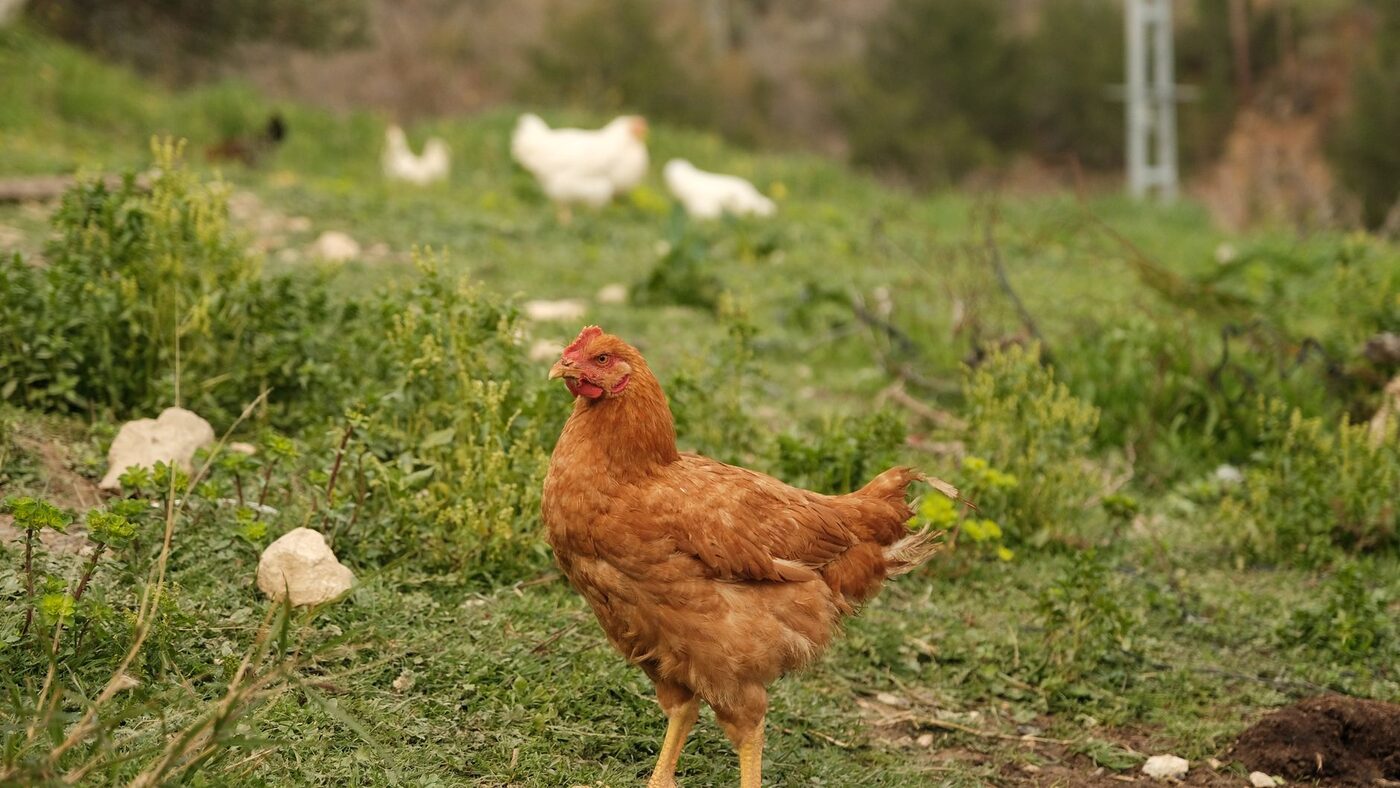
The first mistake nearly everyone makes is buying the coop before the birds. You find one online described as suitable for six hens, it arrives, and it is a garden ornament with a nest box glued to the side. Six hens will not fit in it. Four will not fit in it comfortably. The people who sell them are counting on you never having stood in a run at seven on a wet February morning watching four birds try to get past each other.
So work out the birds first, then the space, then buy the house that fits.
How many, and how much room they need
Three or four is the right number to start with. Chickens are flock animals and a hen kept alone is genuinely unhappy, but a pair is worse in a different way: the day one dies, and one will, you are left with a lone bird and a rushed decision about introducing a stranger. Three gives you room to lose one without a crisis.
The space figures worth holding onto are four square feet per bird inside the coop and eight to ten in the run, for standard-sized breeds. Bantams need less, big breeds like Orpingtons need more, and every number goes up if the birds are shut in for days at a stretch through winter or during a housing order. More space solves problems you would otherwise be trying to solve with medication. Feather pecking and bullying are, most of the time, a crowding problem wearing a disguise.
Perch space gets forgotten and it is the one that causes daily aggravation. Allow eight to twelve inches of roosting bar per bird. Then make sure every perch sits higher than the nest boxes. Chickens instinctively roost at the highest point available, so if the boxes are level with or above the bar, they will sleep in the boxes, and you will spend the next two years scraping droppings off eggs every morning. It is a ten minute fix at build time and a permanent nuisance afterwards.
Ventilation is not the same thing as a draught
Here is the thing most beginners get backwards. Chickens cope with cold far better than you expect and far worse with damp. They arrive wearing a duvet. What ruins them is moisture, which comes off their breath and their droppings overnight and condenses in a sealed coop, and that damp air is what gives you respiratory disease and, ironically, frostbitten combs.
The answer is generous ventilation up high, above the birds’ heads when they are on the perch, with no air moving at roosting height. Vents under the eaves, open all year, even in January. Sealing the coop up for winter out of kindness is one of the most common ways of making birds ill.
Fencing that actually stops a fox
Chicken wire keeps chickens in. It does not keep anything out. A fox can tear it, and a determined raccoon or rat will go through it or between the strands. If the run is your only barrier at night, the material you want is half-inch welded mesh, sometimes sold as hardware cloth, on the lower portion at minimum.
Diggers are handled with an apron rather than a trench. Lay a metre-wide strip of mesh flat on the ground all around the outside of the run and peg it down, and let the grass grow through it. Anything that starts digging at the base hits mesh, and predators dig at the fence line rather than backing off a metre to start.
The other thing to accept early is that in the UK a fox will take birds in broad daylight, quite happily at three in the afternoon with people in the house. Automatic pop-hole doors that close at dusk are excellent and I would fit one, but they solve the night problem only. If your birds free range unsupervised in an area with foxes, you will lose some. That is the trade you are making for the better eggs and the happier birds, and it is a reasonable trade, but make it knowingly.
Feed, and the two things people mix up
Feed changes with age, and the ages matter more than the brands.
| Stage | Age | Feed | Protein |
|---|---|---|---|
| Chicks | 0 to 6 weeks | Starter, usually crumb | around 20% |
| Growers | 6 to 16-18 weeks | Grower | 16 to 18% |
| Laying hens | From point of lay | Layer pellets | around 16%, plus added calcium |
The one rule not to break is giving layer feed to birds that are not laying yet. The added calcium that a laying hen needs to build shells does real damage to the kidneys of a growing pullet. Keep them on grower until they lay their first egg or hit about eighteen weeks, whichever comes first.
Grit and oyster shell are two different products doing two unrelated jobs, and half of new keepers buy one thinking it is the other. Insoluble grit is small stones that sit in the gizzard and grind food, because a chicken has no teeth. Any bird eating anything other than processed pellets needs it. Oyster shell is soluble calcium for eggshells. Offer both in separate dishes and let the hens self-select. Do not mix calcium into the feed, because then the birds who do not need it cannot avoid it.
Treats are where good intentions go wrong. Scratch corn is the equivalent of chips. Birds adore it, and if you feed enough of it they will fill up on it and skip the balanced ration that has the protein and calcium in it. Ten percent of daily intake is the usual ceiling, thrown in the afternoon rather than the morning.
Water matters more than any of it. A hen drinks around half a litre a day and considerably more in heat. A single day without water will knock laying back for weeks. In freezing weather you are either swapping the drinker twice a day or heating it; there is no third option that works.
What the daily routine actually looks like
Less than people fear. Let them out, check the water, glance at the feeder, collect eggs, look at the birds. Shut them in at dusk if you have no automatic door. Five minutes at each end of the day.
The looking is the part with the value in it. Chickens are prey animals and conceal illness until they cannot, so by the time a bird is visibly unwell it has usually been unwell for a while. What you are watching for is a hen standing apart from the others, tail down, not shoving in when treats appear. A chicken that ignores food is a chicken in trouble.
Weekly there is bedding to deal with. A droppings board under the perch catches most of the night’s output and can be scraped in thirty seconds, which cuts the coop clean down to something manageable. Beyond that it is a fortnightly or monthly job depending on your system and how wet the season has been.
Eggs, and why they stop
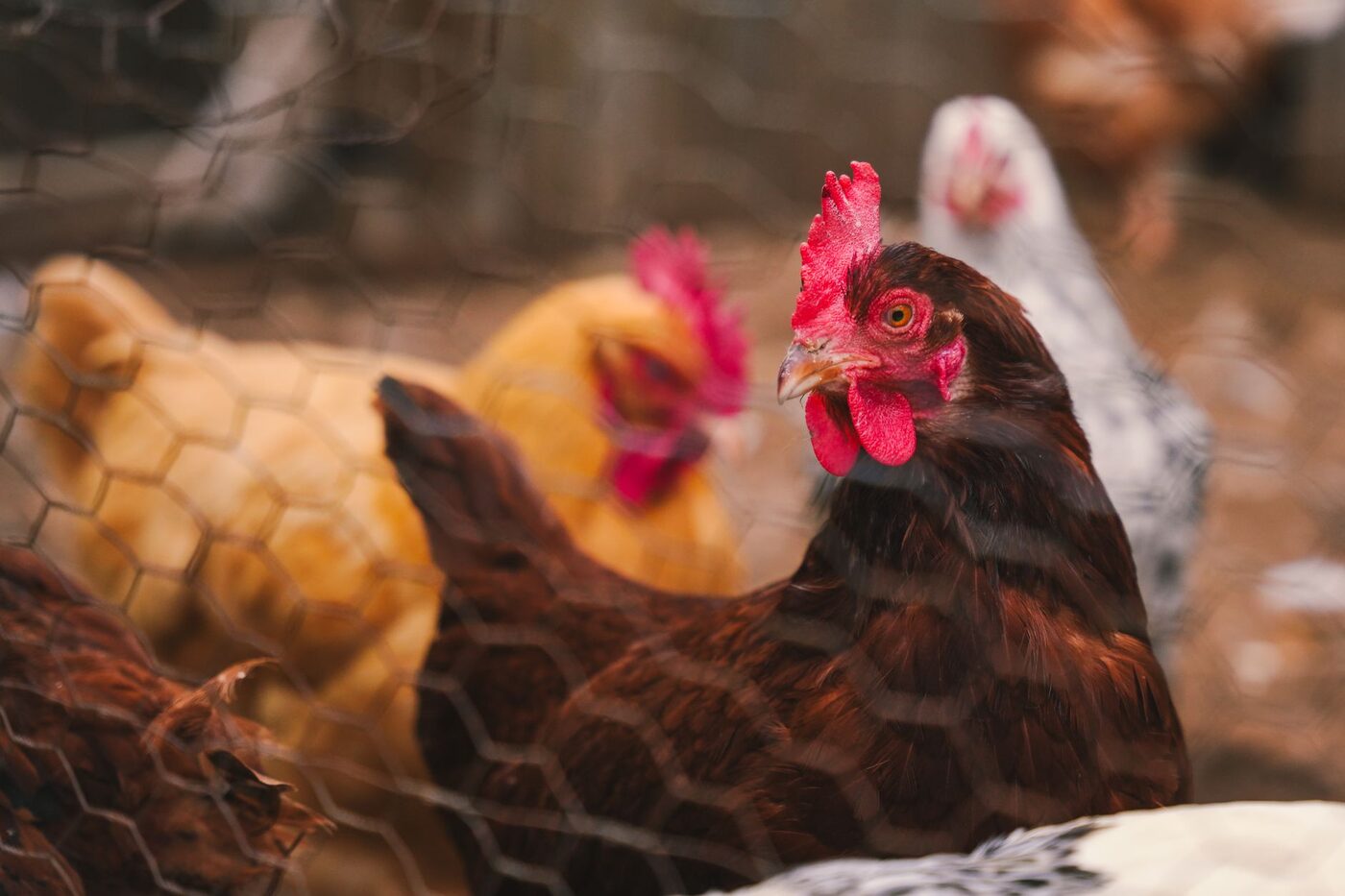
Hybrids start laying somewhere around eighteen to twenty-two weeks, heritage breeds later, occasionally as late as thirty. The first few eggs are small and odd. You may get a shell-less one that arrives like a water balloon, or a tiny yolkless “wind egg”. Both are normal teething problems in a new reproductive system and not a sign of anything.
A good first-year hybrid gives you somewhere in the region of 250 to 300 eggs. Then production falls by roughly fifteen to twenty percent a year after that, which is the arithmetic behind commercial flocks being replaced at eighteen months. Your birds are not commercial flocks, and a four-year-old hen laying twice a week is a perfectly good animal, but it is worth knowing the curve before you plan on eggs for the family indefinitely.
Two things stop laying entirely and both alarm first-year keepers.
Daylight is the first. Hens need something like fourteen hours of light to sustain a laying cycle, so from autumn through midwinter they simply stop in most of the UK and the northern US. You can add artificial light on a timer in the morning to keep them going, and plenty of people do. I would let them have the winter off. The birds have a finite number of ova and a rest is not a bad thing for a bird you intend to keep for years rather than months.
The moult is the second, and it is the one that produces panicked posts every October. From their second autumn, hens drop their feathers and regrow them, and for the eight to twelve weeks that takes they look genuinely dreadful and lay nothing at all. Feathers are mostly protein, so the useful intervention is more protein rather than more calcium during those weeks. It passes, and they come back through winter looking better than they have all year.
Red mite, and the rest of the trouble
If you keep chickens in a warm climate or through a warm summer, you will meet red mite eventually. The reason it catches people out is that it does not live on the bird. It lives in the coop, in the joints and crevices and under the ends of the perches, and comes out at night to feed.
So looking at your hens tells you nothing. Go out after dark with a torch and wipe a white tissue along the underside of the perch and into the corners. Red smears mean you have them. The tell during the day is birds that hesitate to go in at dusk, hang about outside, and start looking pale in the comb, and a laying drop that has no other explanation. A heavy infestation kills birds through blood loss. Treat the housing, not the chickens, and treat it repeatedly, because eggs hatch after the first pass.
Beyond that the routine list is worming, scaly leg mite, which shows up as raised crusty scales on the legs and responds well to treatment, and the reproductive problems that hybrids get in their second and third year. Egg yolk peritonitis and internal laying are common in birds bred hard for output. Sudden unexplained deaths in an otherwise healthy-looking three-year-old hybrid are, sadly, not unusual.
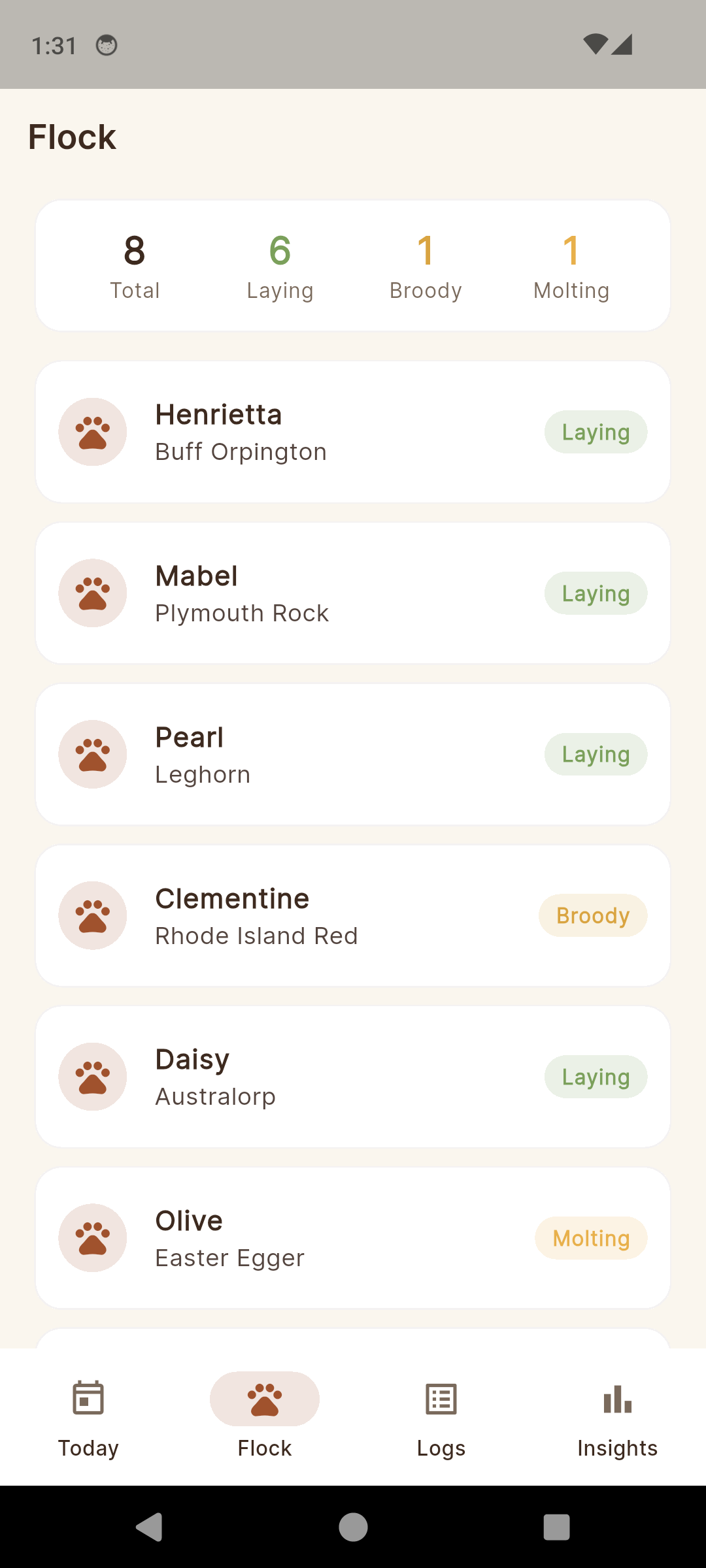
Most of this is patterns over time rather than any single observation. When a hen stopped laying, when the mites appeared, which bird was treated for what. Six hens is enough that memory quietly rewrites it, and a written record is what turns “she’s been off lately” into “she stopped three weeks ago, right after the moult started”. ChickKeep does that job on a phone, with the flock, the daily egg count and the health and vaccine notes in one place, but a notebook in the feed bin does the same work if you actually write in it.
One piece of admin before you buy
In Great Britain, registering your birds with the Animal and Plant Health Agency is now a legal requirement no matter how few you keep. The old fifty-bird threshold was dropped, and registration became mandatory from 1 October 2024 in England and Wales and December 2024 in Scotland. It costs nothing and exists so that keepers inside a control zone can be contacted during an avian influenza outbreak, which is a good enough reason on its own.
Everywhere else, check your local rules before the birds arrive rather than after. Cockerel bans, flock size limits and coop siting distances are all common, and are much less painful to discover at the planning stage.
This is general guidance rather than veterinary advice. For a sick bird, or anything you are unsure about, talk to a vet who sees poultry, and check current requirements with your own authority.
Common questions
How many chickens should I start with?
Three or four. Chickens are flock birds and a single hen is a miserable one, while a pair leaves you with a lone bird the first time something goes wrong. Three gives the group enough slack to absorb a loss without you having to rush out and buy a stranger to keep the survivor company.
How much space does a chicken need?
About four square feet each inside the coop and eight to ten each in the run, as a working minimum for standard-sized breeds. Perch space matters just as much: allow eight to twelve inches of roosting bar per bird, and set every perch higher than the nest boxes or they will sleep in the boxes and foul the eggs.
Why have my chickens stopped laying?
In autumn it is almost always daylight or moulting. Hens need roughly fourteen hours of light to keep a laying cycle going, and from their second autumn they drop their feathers and regrow them, which takes eight to twelve weeks and stops eggs completely. Outside those two, look at water first, then stress, then mites.
Do I need to register my chickens?
In Great Britain, yes. Since October 2024 in England and Wales and December 2024 in Scotland, anyone keeping poultry or captive birds must register with the Animal and Plant Health Agency, and the old threshold of fifty birds no longer applies. It is free, takes minutes, and exists so keepers can be warned during an avian flu outbreak. Elsewhere, check your local ordinances before you buy, particularly on cockerels and flock limits.
Photos: Rahime Gül / Pexels , Emma Cate / Pexels