




























































































Sourdough Starter: How to Feed It and Keep It Alive
Feeding ratios, why the float test misleads people, fridge storage that actually works, and how to bring a neglected starter back in about three days.
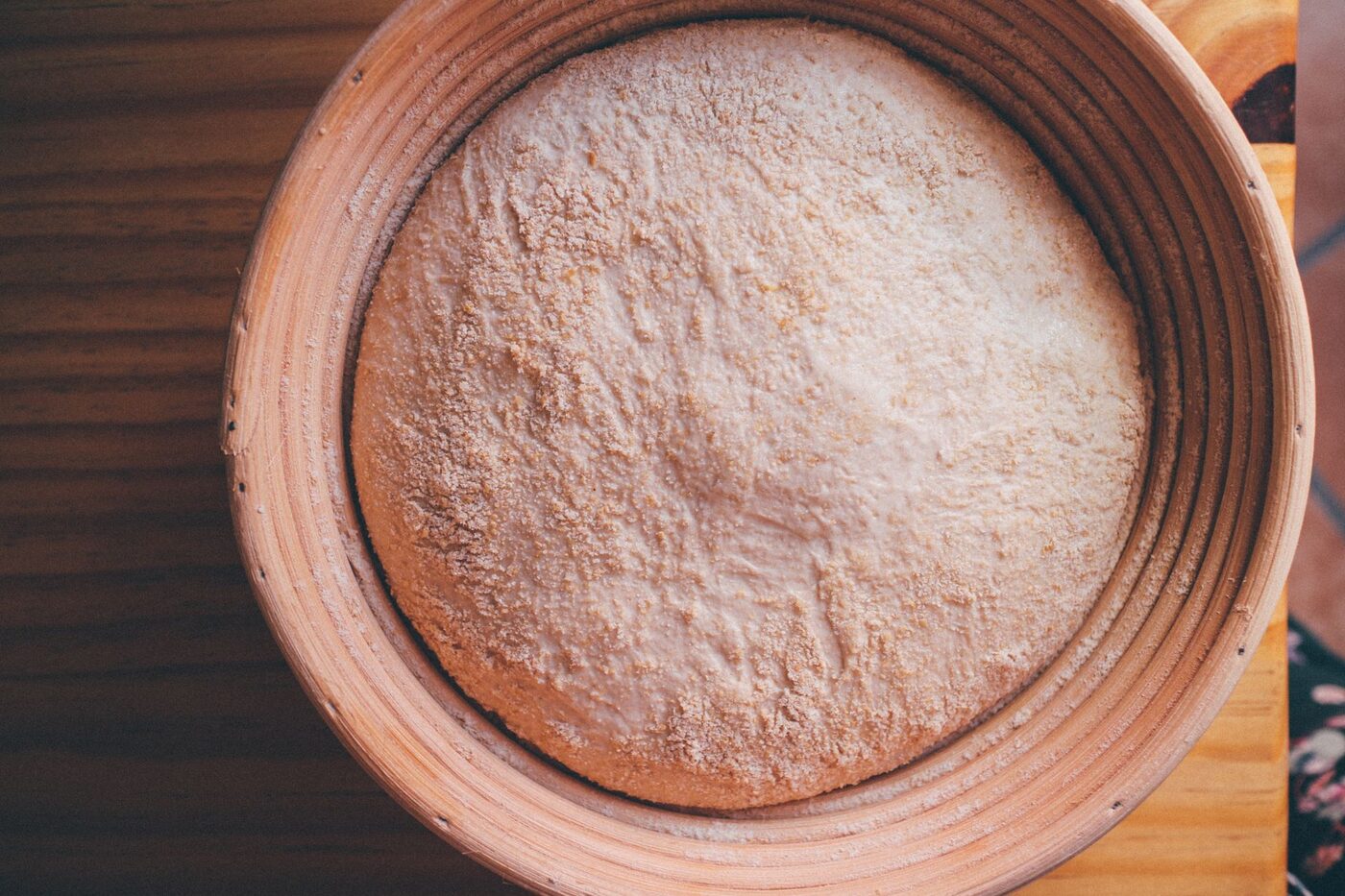
A sourdough starter is much harder to kill than the internet leads you to believe. It is a competitive culture of wild yeast and lactic acid bacteria that has spent its whole existence acidifying its own environment specifically so nothing else can move in. Neglect makes it sluggish and sour. It very rarely makes it dead.
Which means the problem most bakers actually have is not keeping the starter alive. It is timing. The starter is ready at eleven at night, or it is flat and hungry at the moment the recipe says to use it, and the loaf comes out dense with a flavour that leans sharp. Almost all of that traces back to two things nobody explains properly at the start: what the feeding ratio is really controlling, and how much of the outcome is decided by temperature rather than anything you do.
What the numbers mean
A feeding ratio is written as starter to flour to water, by weight. A 1:1:1 feed means 50 grams of old starter, 50 grams of flour and 50 grams of water. A 1:5:5 feed means 20 grams of starter, 100 grams of flour and 100 grams of water.
The ratio is not a quality setting. It is a timer. Feeding at 1:1:1 leaves a large population of yeast in a small amount of new food, so they burn through it quickly and the starter peaks in a few hours. Feeding at 1:5:5 drops a small population into a lot of food, so the same peak takes much longer to arrive.
That is genuinely useful once you see it as scheduling rather than nutrition:
| Ratio | Rough time to peak at 21°C | What it suits |
|---|---|---|
| 1:1:1 | 4 to 6 hours | Baking the same day, or reviving |
| 1:2:2 | 6 to 8 hours | A morning feed for an evening mix |
| 1:3:3 | 8 to 10 hours | Feed after breakfast, use after work |
| 1:5:5 | 10 to 12 hours | Feed at night, ripe by morning |
Treat those times as a starting point rather than a specification, because your kitchen matters more than the table does. Temperature is the dominant variable in the whole process. As a working rule, fermentation roughly doubles in speed for every 8°C or so you go up. A starter that peaks in six hours on a 21°C kitchen counter can get there in about four at 27°C, and take most of the day at 16°C. This is the real reason a routine that worked perfectly all summer falls apart in November, and why so many people conclude their starter is failing when the only thing that changed was the heating.
If you want to lock in a schedule, adjust the ratio to fit the temperature you actually have rather than fighting for a temperature you do not.
Reading the starter instead of testing it
The float test gets recommended constantly and it is not very good. A stiffer, lower hydration starter can sink while being thoroughly active, because it holds less gas relative to its density. A starter that peaked two hours ago and has begun to collapse can still float on the gas trapped in it. So the test produces both false negatives and false positives, which is about the worst thing a test can do.
Watching the jar is more reliable. Put an elastic band or a mark at the level of the starter right after feeding, then look at three things.
Volume tells you where it is in the cycle. Most starters roughly double or better. The number is less important than the pattern, because the same starter should reach a similar height each time it is fed the same way.
The surface tells you whether you have missed the peak. A rising starter domes upward. At peak the dome sits flat for a while. Once it starts to sink in the middle and the sides look like they are pulling away, you are past it.
Smell tells you how acidic it has become. Ripe starter smells yogurty, faintly sweet, a bit like ripe fruit. Sharp acetone or nail varnish means it is very hungry and the alcohol has built up.
Using a starter slightly before peak rather than after gives a better rise, because you are catching it while the yeast population is still climbing rather than after it has exhausted the available sugars. A collapsed starter still raises bread. It just takes longer and pushes the flavour further towards sour.

Keeping it in the fridge without ruining it
Daily feeding suits someone who bakes several times a week. Everyone else should use the fridge, and the way you put it away matters more than how long you leave it.
Feed the starter, leave it at room temperature for an hour or two so fermentation gets properly underway, then chill it. Refrigerating immediately after a feed means the culture goes cold before it has really started and comes out weaker.
Once cold, a weekly feed is plenty and two or three weeks between feeds is survivable. What you should expect after a long cold spell is a sourness that keeps increasing. Cold suppresses the yeast more than it suppresses the lactic acid bacteria, so the balance shifts towards acid the longer it sits. A starter pulled out after a month is not damaged, it is just very acidic, and acidity is what slows the yeast down.
That is why one feed is rarely enough to bring it back. Two or three feeds at room temperature over a day or two dilute the accumulated acid and let the yeast population climb again. If you plan to bake on a Saturday, take the jar out on Thursday.
Bringing back a neglected one
The recovery routine is mostly about dilution, not about feeding it something special.
Start by dealing with the liquid. Dark grey or brownish fluid on top is hooch, which is alcohol from yeast that ran out of food. Pour it off for a milder result or stir it back in for a sharper one. Either is fine.
Then discard hard. Keep 10 or 20 grams and throw the rest away. This feels wasteful and it is the actual mechanism of the fix, because what is holding the culture back is the acid it is sitting in, and the only way to reduce that is to dilute it with fresh flour and water.
Feed at 1:5:5 twice a day, roughly twelve hours apart, at the warmest sensible spot in the kitchen. Adding 10 to 20 percent wholemeal or rye to the feed helps noticeably, since the bran carries more wild yeast and more of the minerals the culture uses. Most neglected starters are back to a predictable rise within three days. If nothing at all is happening after five days of that, the flour or the water is the more likely culprit than the culture.
The one situation where you throw it out is visible mould. Fuzzy growth in pink, orange, black or green is not recoverable and should not be scraped off and ignored. Hooch and a strong acetone smell are normal hunger. Fuzz is not.
Stop keeping so much of it
The most common waste in home sourdough is maintaining a jar far bigger than any recipe needs. Keeping 100 grams of starter and feeding it 1:1:1 daily produces 300 grams a day, of which perhaps a third gets used and the rest goes in the bin. Over a month that is several kilos of flour.
Keep 20 grams. A 1:5:5 feed turns that into 220 grams, which covers a standard loaf with enough left to carry the culture forward. Feed the small amount, use what you need, and the discard problem mostly disappears rather than needing a discard-recipe rota to justify it.
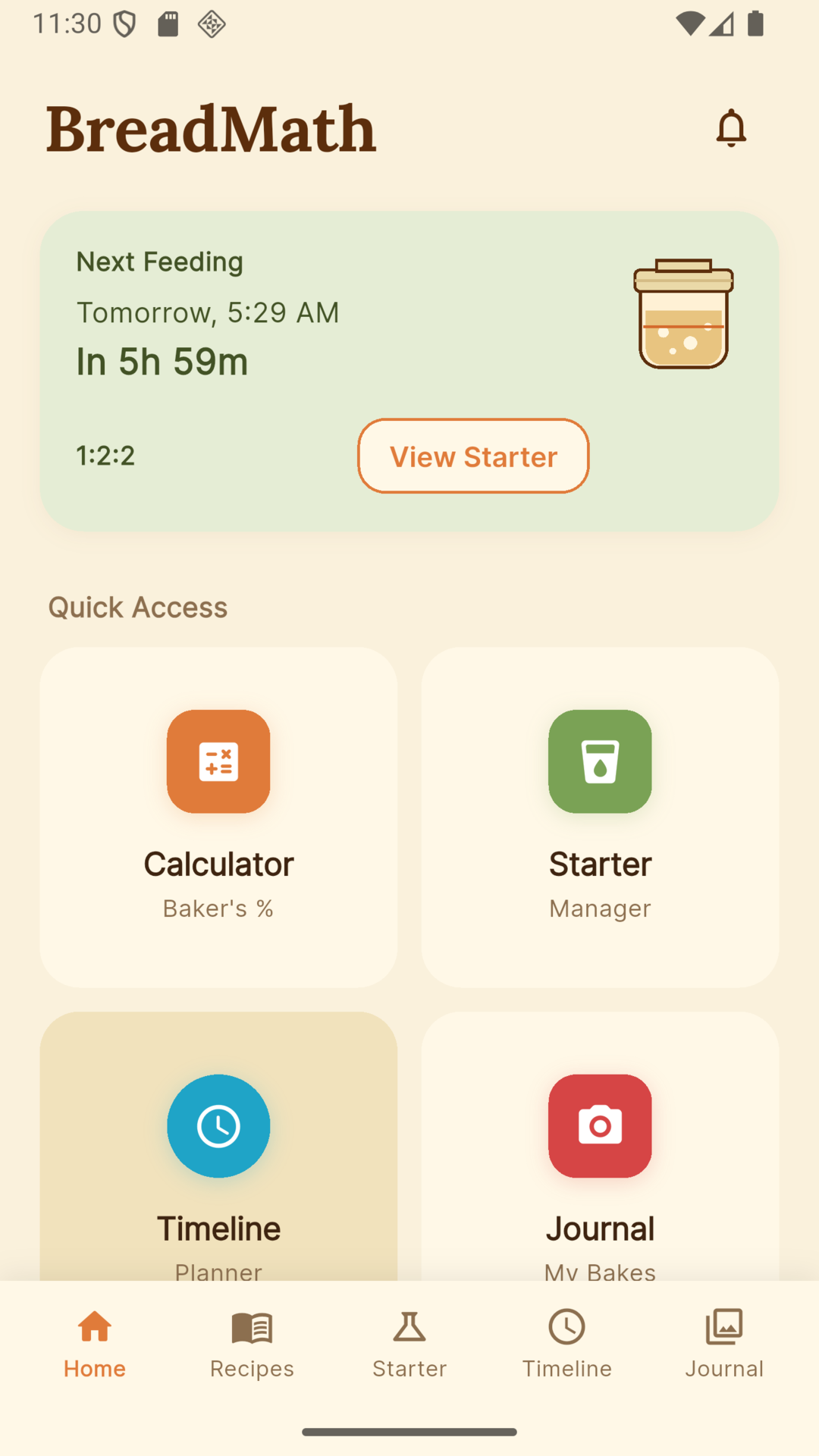
The other thing worth doing is writing it down, because a starter that misbehaves is nearly always responding to something you changed and forgot. BreadMath keeps the starter’s hydration and ratio, works out the flour and water in grams for the feed, logs each one and can remind you when the next is due, which is mainly useful for spotting that your reliable six hour peak has quietly become nine as the weather turned. If you want the background on why hydration is expressed as a percentage in the first place, the guide on baker’s percentages covers it.
One last note on water, since it comes up constantly. Chlorinated tap water is very rarely the reason a starter is struggling, and leaving water out overnight removes chlorine but does nothing about chloramine, which is what many suppliers now use. If your starter is stubborn and you have ruled out temperature and acidity, filtered water is worth a try. Try it third, not first.
Common questions
How often should I feed my starter?
Once or twice a day if you keep it on the counter, once a week if you keep it in the fridge. Neither number is sacred. What matters is that it gets fed before it has been sitting collapsed and acidic for days on end, because that is what gradually weakens it.
My starter has dark liquid on top. Is it dead?
No, that is hooch, and it is alcohol produced by yeast that has run out of food. It is a hunger signal. Pour it off if you want a milder starter or stir it in if you want a sharper one, then feed. Fuzzy growth in pink, orange or green is a different matter and means throwing the whole jar out.
Does the float test actually work?
It is a rough guide at best. A stiff starter can fail the test while being perfectly active, and a starter well past its peak can still float on trapped gas. Watching how far it rises and when it starts to dome and flatten tells you far more than dropping a spoonful in water.
How much starter should I keep?
Far less than most people do. Twenty or thirty grams is plenty. Feed that at a 1:5:5 ratio and you get over 200 grams of ripe starter, which covers a standard loaf with some left to carry on. Keeping 100 grams and feeding it 1:1:1 every day means discarding around 200 grams daily for no benefit.
Photos: Monserrat Soldú / Pexels , Doğukan Melik Sevindik / Pexels