




























































































Bonsai Care for Beginners: Watering, Light and Pruning
Most first bonsai die from one of two causes. Here is how to judge watering properly, which species can live indoors, and what to leave alone in year one.
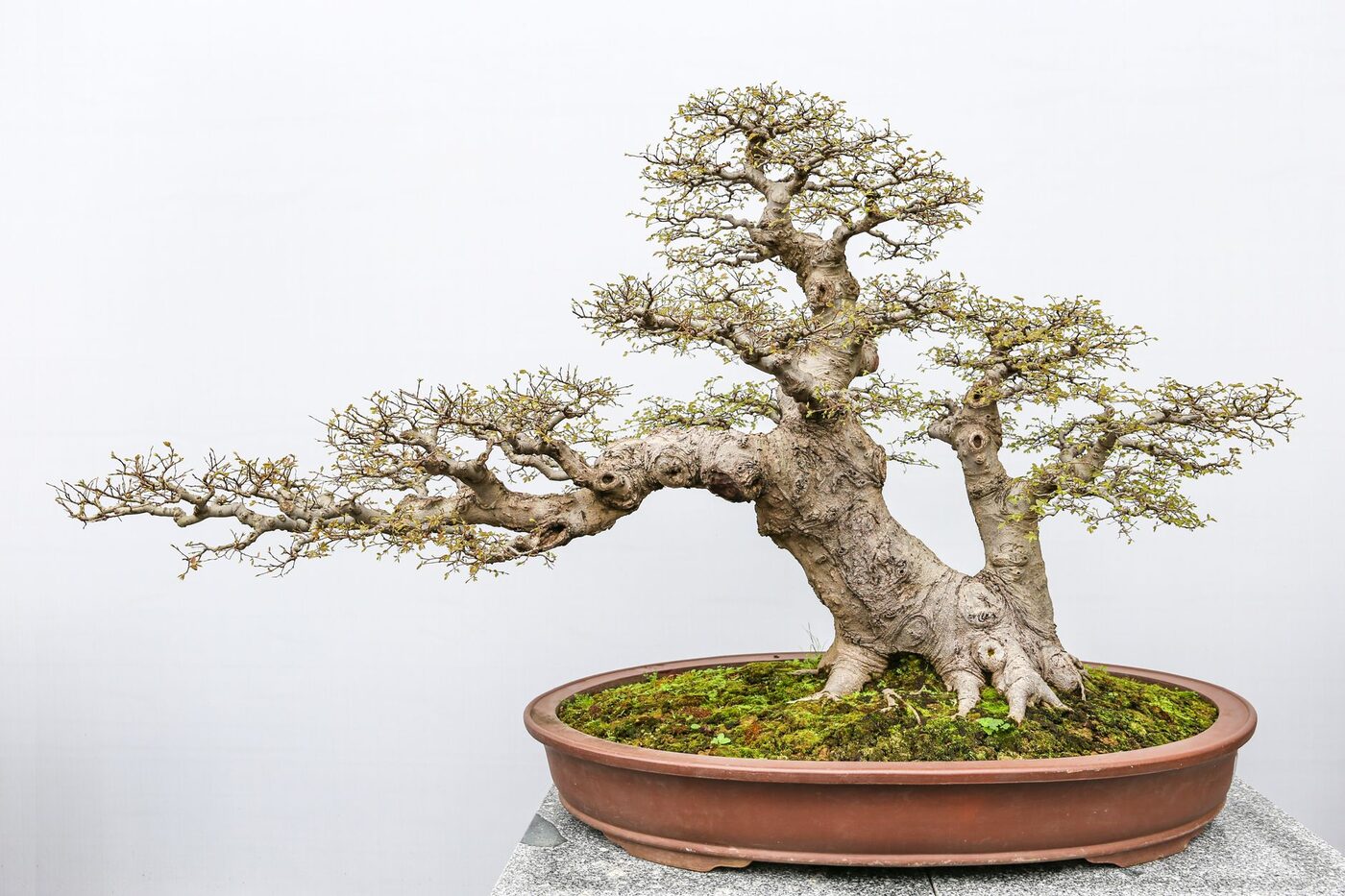
A juniper comes home from a garden centre in a small glazed pot, sits on a windowsill above a radiator, gets a splash of water every few days, and is dead within four months. It stays green for most of the fifth month, which is why it usually gets watered for weeks after there is anything alive to water.
Almost every failed first bonsai comes down to one of two things. The tree was an outdoor species being kept indoors, or it was watered on a routine instead of by looking at it. Fix those two and the rest of bonsai care is comfortably learnable.
Which trees can actually live in a room
Bonsai is a technique, not a species. Any tree that can be grown in a pot can be a bonsai, which means the label tells you nothing about where it wants to live. The species does.
Tropical and subtropical trees will tolerate a house because they never evolved a winter. Ficus is the forgiving one and the sensible first tree. Chinese elm is nearly as tolerant and happier still if it can go outside for the summer. Jade, portulacaria and schefflera all cope. Fukien tea sells well because it flowers, and then punishes the buyer for a lack of humidity.
Temperate trees will not. Juniper, pine, spruce, larch, Japanese maple, cotoneaster, zelkova: these need a real winter. Dormancy is not the tree resting because it is cold, it is a required part of the annual cycle, and a warm room simply never lets it happen. They also need a great deal more light than a window delivers. A juniper indoors declines slowly and invisibly, and because conifer foliage keeps its colour long after the tree has died, the owner rarely learns anything from it.
That is worth knowing as a diagnostic. If you suspect a conifer has gone, scratch a sliver of bark with a fingernail. Green tissue underneath means there is still life. Dry brown all the way means the tree died some weeks ago, probably during a hot spell, and nothing you do now changes it.
Watering is a judgement call, every day
The advice to water twice a week is the single most damaging thing a beginner gets told. It ignores the weather, the season, the species, the pot and the soil, all of which change how fast a tree uses water. A pot that needs watering twice on a windy July afternoon might not need it for a week in November.
Bonsai soil is part of why. A proper mix is mostly inorganic: baked clay such as akadama, plus pumice, lava rock or grit, in coarse particles. Water runs through it in seconds. That sounds like a design flaw and it is the opposite. Roots need air as much as water, and a coarse mix holds air between the particles while still keeping a film of moisture on each one. It also drains predictably, which is what makes daily judgement possible.
The check takes five seconds. Push a finger a centimetre into the surface, or leave a wooden chopstick pushed into the soil near the edge of the pot and pull it out like a dipstick. Dark and damp, leave it. Dry and pale, water.
When you water, water properly. Cover the whole surface with a fine rose until it runs freely from the drainage holes, wait a moment for it to settle, then do it again. A splash from a mug wets the top centimetre and leaves the core of the root ball dry, and a tree can die of drought in a pot that looks watered every day. If the root ball has dried hard and water runs straight down the sides without soaking in, stand the whole pot in a tray of water up to the rim until the bubbling stops.
What about overwatering? In a proper mix it is genuinely difficult. In the dense compost most shop-bought trees arrive in, it is easy, because the mix holds water, excludes air and suffocates the roots. If your tree came in black muck, the answer is not to water less. It is to change the soil at the next correct repotting window, and to be careful in the meantime.
Light, and being honest about how much you have
Outdoor species want the open sky. Junipers and pines take full sun all day and thin out badly without it. Japanese maples prefer shade in the hottest part of a summer afternoon, mostly to stop the leaf edges scorching.
Indoor trees need the brightest spot in the house, up against the glass rather than a metre back, because light falls away much faster with distance than your eyes suggest. A south-facing window in the northern hemisphere, or north-facing in the southern, is worth several times a shaded one. If the room cannot provide it, a small grow light is a legitimate and unglamorous fix, and it is what many people with healthy indoor ficus are quietly using.
Give the pot a quarter turn every week or so, otherwise the side facing the window thickens and the back thins out.
Feeding, because the soil holds almost nothing
An inorganic mix carries very few nutrients, so in bonsai the fertiliser is the food rather than a supplement. Feed regularly through the growing season with a balanced fertiliser at the strength on the label. Outdoor deciduous and coniferous trees get little or nothing in deep winter while dormant. Indoor tropicals keep growing and keep eating, though at a reduced rate through the darker months.
Two exceptions worth remembering. Do not feed a tree that is visibly sick, and do not feed one that has just been repotted, since cut roots want a few weeks to recover before they are pushed.
What to prune, and what to leave alone
There are two different activities under the word pruning, and beginners tend to attempt the wrong one first.
Maintenance pruning is trimming back new growth to keep the shape the tree already has. Light, frequent, low risk, and appropriate at almost any point in the growing season.
Structural pruning is removing branches and wiring trunks to change what the tree is. It is season-dependent and species-dependent, and it takes a lot out of the tree.
The useful beginner rule is to keep the tree alive and healthy for a full year before styling it. A vigorous tree tolerates work; a struggling one does not, and enthusiasm applied to a weak tree is the second most common way a first bonsai dies. When you do cut, take no more than about a third of the foliage in one go.
If you wire, put a reminder somewhere you will see it. On a tree growing well, wire can bite into the bark within a single season, and the spiral scar takes years to grow out. Check every few weeks and take it off the moment it starts to mark.
Repotting is a calendar job, not a rescue
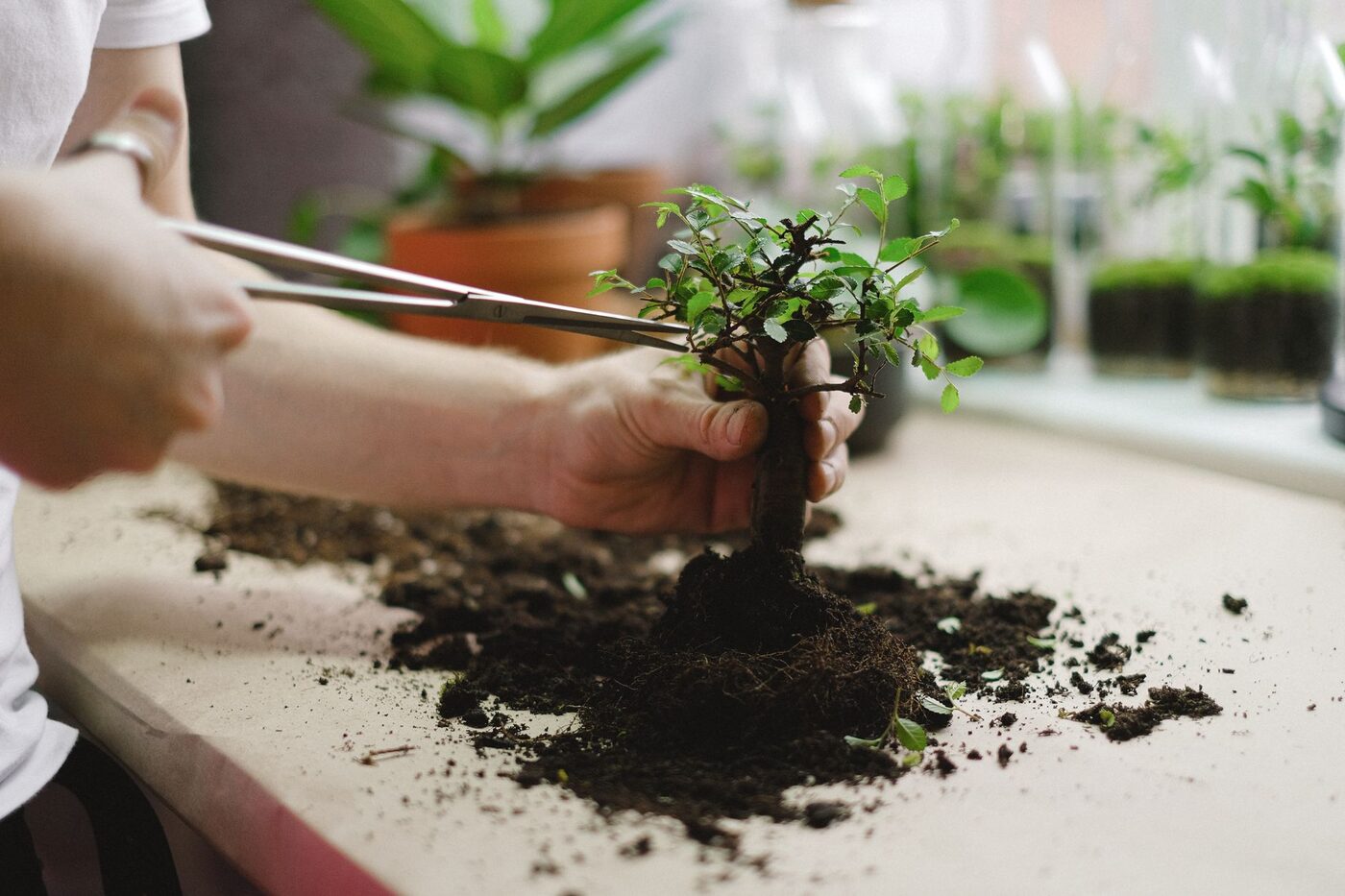
Repotting happens in early spring, as the buds swell but before they open, when the tree has the energy to push new roots straight away. Depending on species and age, that is every two to five years. Young, fast-growing trees fill a pot quickly; old collected conifers may go far longer.
The work is to lift the tree out, comb the roots free, cut back around a third of the root mass, put it back into fresh mix and tie it in through the drainage holes so it cannot rock. Movement is what stops new roots taking hold.
The mistake is repotting a tree because it looks unhappy. Poor colour and weak growth are not signs it needs a new pot. Cutting the roots of an already stressed tree in the wrong season is close to a guaranteed loss.
Keep a record, because bonsai runs on years
Everything above happens on timescales you cannot hold in your head. When did this one last get repotted? Was it two springs ago or three? When did the wire go on the lower branch? Has the maple been fed since the leaves hardened off?
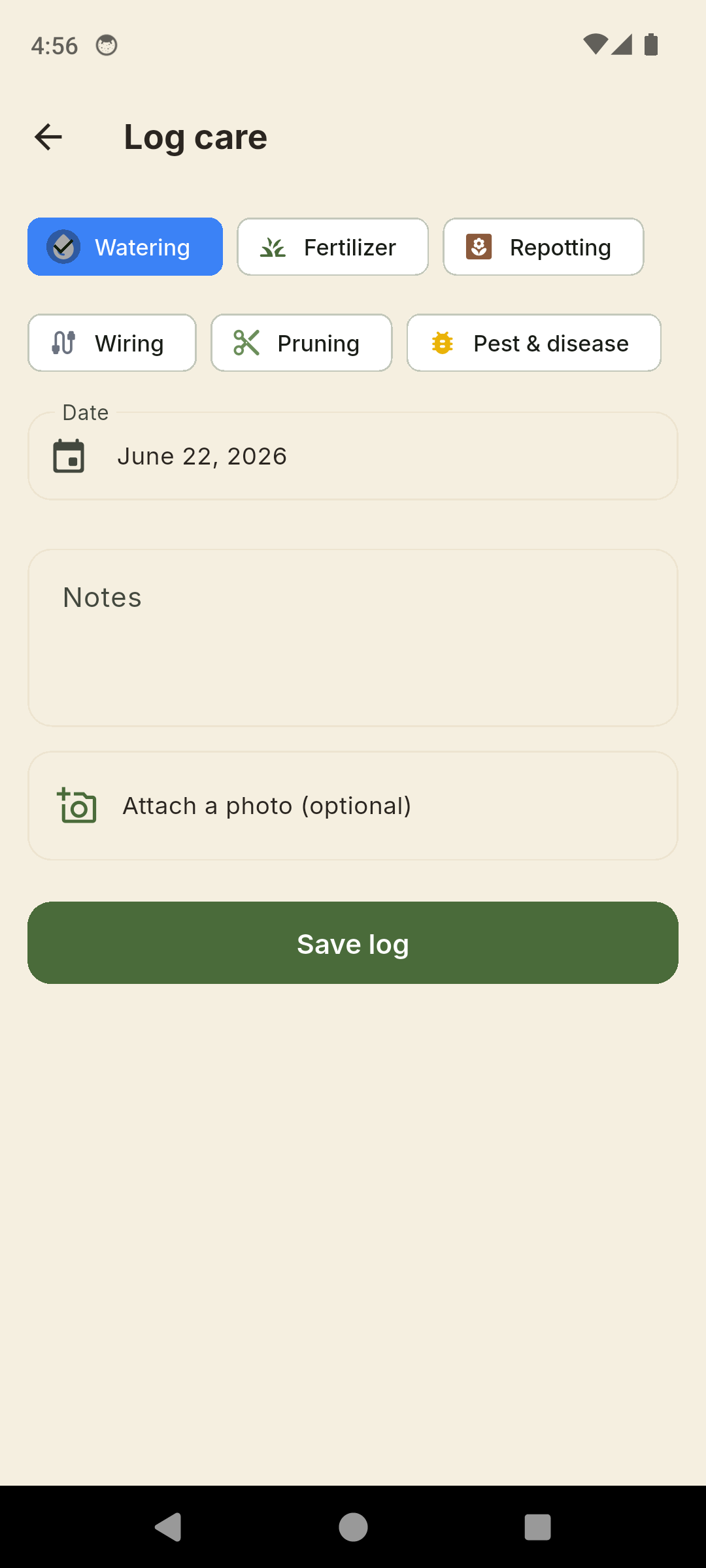
A notebook works. So does anything that timestamps itself. BonsaiLog keeps a log per tree for watering, feeding, pruning, wiring, repotting and pests, with reminders for the jobs that come round seasonally and a photo timeline that lets you scrub through the same tree across years. Growth is invisible week to week and obvious across three springs, which is the whole appeal of the hobby and the thing a record makes visible.
Start with a ficus or a Chinese elm, keep it where the light is, check the soil every morning, and leave the scissors alone until next year. That is most of it.
Common questions
Can a bonsai live indoors?
Some can. Tropical and subtropical species such as ficus, Chinese elm, jade and schefflera cope with indoor conditions given a bright window. Temperate trees like juniper, pine, maple and larch cannot, because they need a cold winter dormancy and far more light than a room provides. A juniper indoors is on a countdown from the day it arrives.
How often should I water a bonsai?
There is no interval. Check the pot every day and water when the surface of the soil has just started to dry, which might be daily in summer and once a week in cool weather. When you do water, soak the whole pot until it runs out of the drainage holes, then do it again a minute later.
Why has my bonsai gone brown and brittle?
Usually the root ball dried out completely at some point, even if only once. Conifers hold their green colour for weeks after they die, so the browning you are seeing now often traces back to a hot week a month ago. Scratch a small patch of bark with a fingernail: green underneath means it is alive, dry brown means it is not.
When should a bonsai be repotted?
In early spring as the buds begin to swell but before they open, every two to five years depending on species, age and how fast it fills the pot. Repot because the roots have filled the container, not because the tree looks unwell. A struggling tree is the worst possible candidate for having a third of its roots cut off.
Photos: fei wang / Pexels , Anna Shvets / Pexels