




























































































How to Price Handmade Candles (Cost + Margin)
Work out what a candle really costs you, including the fees and the labour most makers leave out, then set a retail price that survives wholesale.
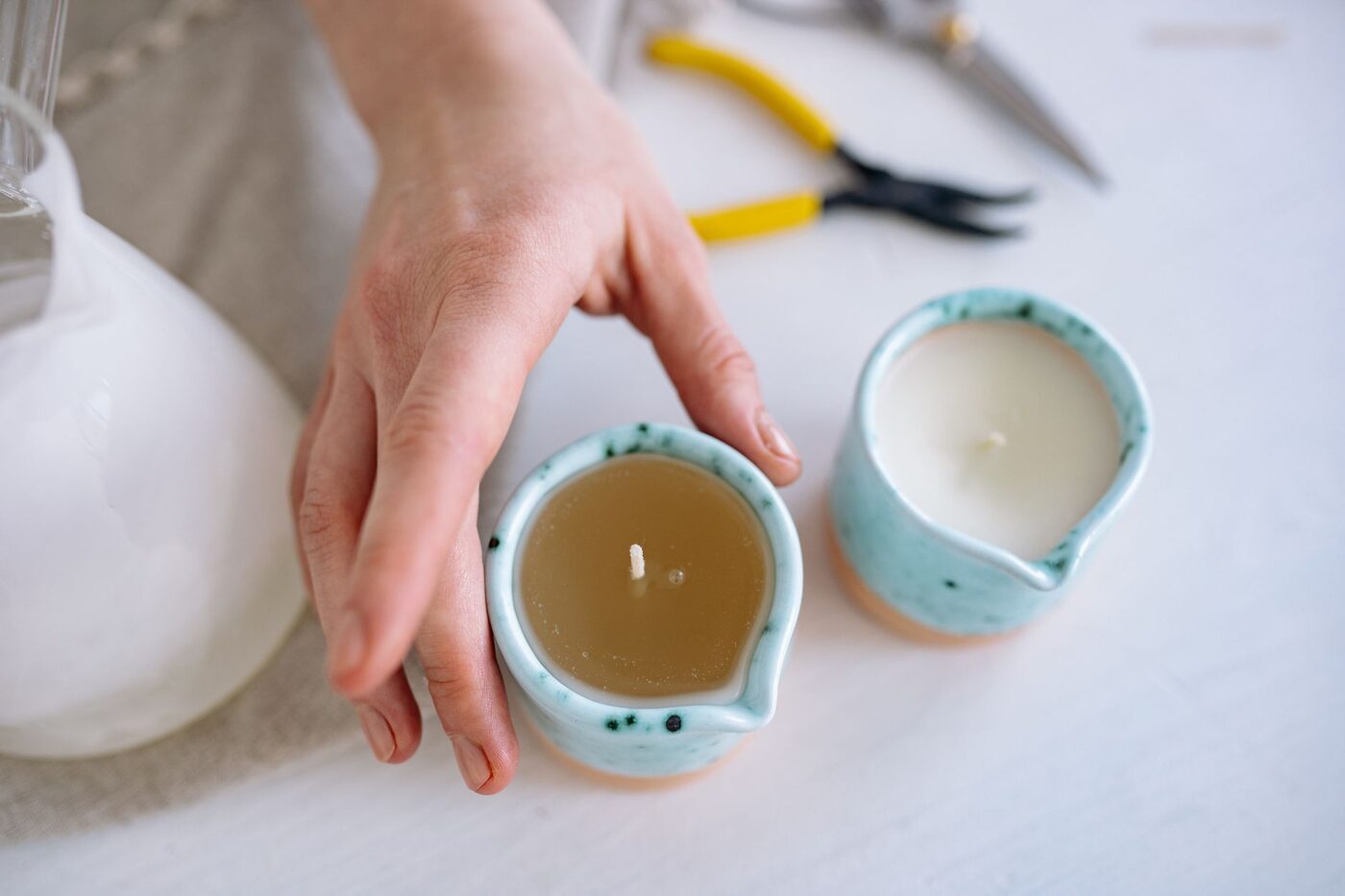
A maker I know sold out at a craft fair with 30cl soy candles at £12 each. Twenty-eight candles gone in six hours, the best day she’d had. She got home, added up the month, and was down about forty pounds.
Her costing was not sloppy in the way you’d expect. She knew the wax price per kilo and the fragrance price per 100ml, and she had worked out both accurately. What she had not counted was the jar bought in packs of six, the mailing boxes for the online orders, the £40 pitch fee, the card reader percentage, the two candles that arrived broken, and the eleven hours she spent pouring and labelling. Every one of those is a real cost, and none of them show up if you cost a candle by its recipe.
Cost the batch, then divide
Nobody buys wax by the candle. You buy it by the kilo, fragrance by the 100ml, wicks in bags of a hundred. So cost a batch, then divide, and you stop guessing.
Work out the fill first. A 220ml vessel filled to a sensible level takes roughly 200ml of wax blend, and soy wax runs around 0.9 g/ml, so call it 180g of total fill. At an 8% fragrance load that is about 14g of fragrance oil and 166g of wax.
| Line | Cost |
|---|---|
| Soy wax, 166g at £3.50/kg | £0.58 |
| Fragrance oil, 14g at £30/kg | £0.43 |
| Wick and sustainer | £0.08 |
| Vessel and lid, bought in sixes | £1.40 |
| Printed label | £0.12 |
| Safety and warning label | £0.03 |
| Mailing box, tissue, tape | £0.85 |
| Materials subtotal | £3.49 |
| Labour, 10 min at £15/hr | £2.50 |
| Unit cost | £5.99 |
Those supplier prices are illustrative and yours will differ, sometimes by a lot. The structure is what matters: just under six pounds a candle before a single fee, and more than half of that is not wax or fragrance. The vessel alone costs more than twice the wax.
The labour figure comes from timing a real batch. Twelve candles took two hours of actual work, including melting, weighing, pouring, wicking, cleaning the pour pot and labelling once they had cured. Ten minutes a candle sounds high until you time yourself. Almost everyone is slower than they think, and the tidying up is where the time goes.
The fees nobody puts in the spreadsheet
On a marketplace, a sale carries a listing fee, a transaction fee of around 6.5% of the item price plus postage, and payment processing of roughly 3% to 4% plus a fixed sum per order. Some countries add a regulatory operating fee. If the buyer arrived through an ad the platform placed, an offsite ads charge can take a further 12% to 15% of that order. Rates change, so check the current schedule rather than a blog post, including this one. As a planning figure, assume about a fifth of the sale price goes before you have paid for anything, and closer to a third on the orders an ad touched.
A craft fair swaps that for a pitch fee, which feels different because you pay it up front and then forget it. A £40 pitch and 28 candles sold is £1.43 a candle off the top. A £40 pitch and 9 candles sold on a wet Sunday is £4.44 a candle, which at a £12 price is most of your margin gone. Add roughly 1.7% for the card reader.
Postage deserves its own line because glass in a box is heavy. A boxed 220ml candle is around 700g, and if you absorb the postage rather than charging it, that is another £3 to £4 an order straight out of margin. Budget for breakage too: one or two candles in a hundred will arrive in pieces, you will replace them without arguing, and that is a real percentage.
Why the multiplier rules exist
The usual advice is to double your cost for wholesale and double again for retail. Materials times four, roughly. It gets dismissed as greed by people pricing their first batch, which is exactly backwards. The doubling is what absorbs the fees, the breakages, the scent that nobody bought, the pitch fee on the bad Sunday, and the stock sitting in your spare room. Price at cost plus 20% and you have built a business with no tolerance for anything going wrong.
Here is what different retail prices actually leave on that £5.99 candle, assuming a fifth goes in marketplace fees.
| Retail price | Fees at 20% | Left after fees | Unit cost | Profit | Margin on price |
|---|---|---|---|---|---|
| £12 | £2.40 | £9.60 | £5.99 | £3.61 | 30% |
| £15 | £3.00 | £12.00 | £5.99 | £6.01 | 40% |
| £18 | £3.60 | £14.40 | £5.99 | £8.41 | 47% |
| £22 | £4.40 | £17.60 | £5.99 | £11.61 | 53% |
The £12 row is the one worth staring at. It feels like a 50% margin because the candle cost six pounds to make, and it is actually 30%. Let an offsite ad fire on that order and it drops nearer 15%, at which point you are working for the platform. This is the entire reason a candle that costs six pounds cannot sell for twelve.
Wholesale is a different price, not a discount
A shop needs to roughly double what it pays you to reach its own shelf price. So your wholesale is about half your retail, and that arithmetic runs in one direction only: your retail has to be high enough that half of it still works for you.
Wholesale is viable because volume changes your cost. Pouring 60 candles instead of 12 cuts the handling time to about six minutes each, and buying vessels by the case rather than in sixes might take £1.40 down to £0.95. On those numbers the unit cost drops to roughly £4.54.
At £18 retail your wholesale is £9, which against £4.54 leaves £4.46 a candle and a healthy order. At £12 retail your wholesale is £6, which leaves £1.46 a candle, or about £88 for a day of pouring, boxing and invoicing. Not a loss, but not a business either. The maker who anchors retail at £12 has not just chosen a low price, they have closed the wholesale door before knocking on it, and reopening it means putting retail up on customers who already know the old number.
Charge for your time even though you enjoy it
The most common self-sabotage in candle making is leaving labour out because the pouring is the fun part. It holds until the first order for 40 units arrives, and then you discover you have priced yourself into working a weekend for materials money.
Price the time at what you would pay someone else to melt, pour and label. Twelve to fifteen pounds an hour is a fair UK figure for that work. It is deliberately not what you think your creative judgement is worth, because the scent design and the photography are separate from the pouring, and they belong in your margin rather than your unit cost. Nothing stops you pocketing the labour money while you are the only person in the workshop. It just has to be in the price, so that the day you hire someone the number still holds.
The three levers that actually move the cost
Vessels first, every time. For most makers the container and lid are the largest single line, and buying them in retail packs is the difference between £2.20 and £0.90 a unit. If you only fix one thing, fix this.
Fragrance load second. Fragrance oil is usually the most expensive thing per gram, and pushing the load past what your wax will hold does not make a stronger candle. It makes one that sweats, throws unevenly and burns badly. Dropping a well-tested scent from 10% to 8% can take real money out of the unit cost with no perceived difference in the room, so test it before assuming more is better.
Test burns third, and this one is a cost you should not try to remove. Every new scent and vessel combination needs two or three candles burnt properly to check the wick size and the melt pool. Makers who skip it save four pounds and then sell a hundred candles that tunnel.
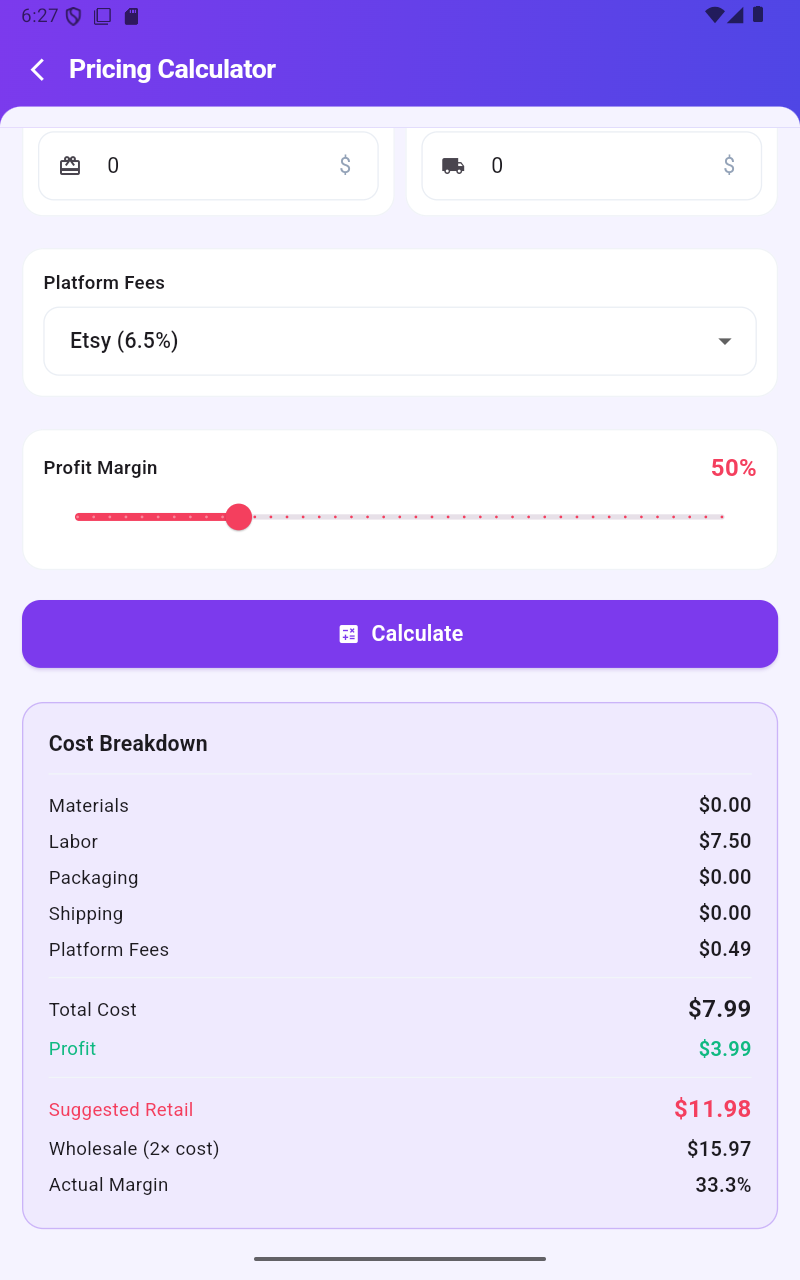
Doing this once on paper is educational. Doing it for every scent, vessel and batch size, and redoing it when your wax supplier raises prices, is the bit that gets abandoned. That is the job CraftCost does, working out the fill for a given vessel and carrying the cost through fees to a retail and wholesale price.
Whatever you use, the discipline is the same. Cost the batch you will actually pour, put your own hours in it, subtract the fees before you admire the margin, and set retail high enough that half of it is still a price you would accept.
Common questions
What multiple should I use to price handmade candles?
A common approach is to double your full unit cost to get a wholesale price and double that again for retail, so roughly four times cost. The multiple is not the point. It exists to cover marketplace fees, breakages, unsold stock and the stalls that go badly, so check what your chosen price actually leaves after fees rather than trusting the multiplier.
Should I charge for my labour if candle making is a hobby?
Yes, from the first candle. If your price does not include labour you cannot fulfil a wholesale order without working for nothing, and you will not notice until an order arrives. You are free to treat the labour money as profit while you are the only maker, but it has to be in the price.
Why does my candle cost more to make than the ones in the shop?
Mostly vessels and volume. A high-street candle is poured by the ten thousand into a jar bought by the pallet, and its fragrance is blended at industrial prices. Buying jars in packs of six is usually the single biggest reason a small maker's unit cost is double what it needs to be.
How do I price for wholesale without losing money?
Work backwards from retail. A shop generally doubles what it pays you, so your wholesale is about half your retail, and your retail therefore has to be high enough that half of it still covers cost with a margin. Wholesale only works because a larger batch cuts your labour and unit material costs, so cost the batch size you will actually pour.
Photos: Yan Krukau / Pexels , Eugenia Remark / Pexels