




























































































Car Detailing Steps: A Professional Sequence
Every detailing stage exists to set up the next one. Get the order wrong and you grind grit into paint or seal a coating over polish oil. Here is the sequence.
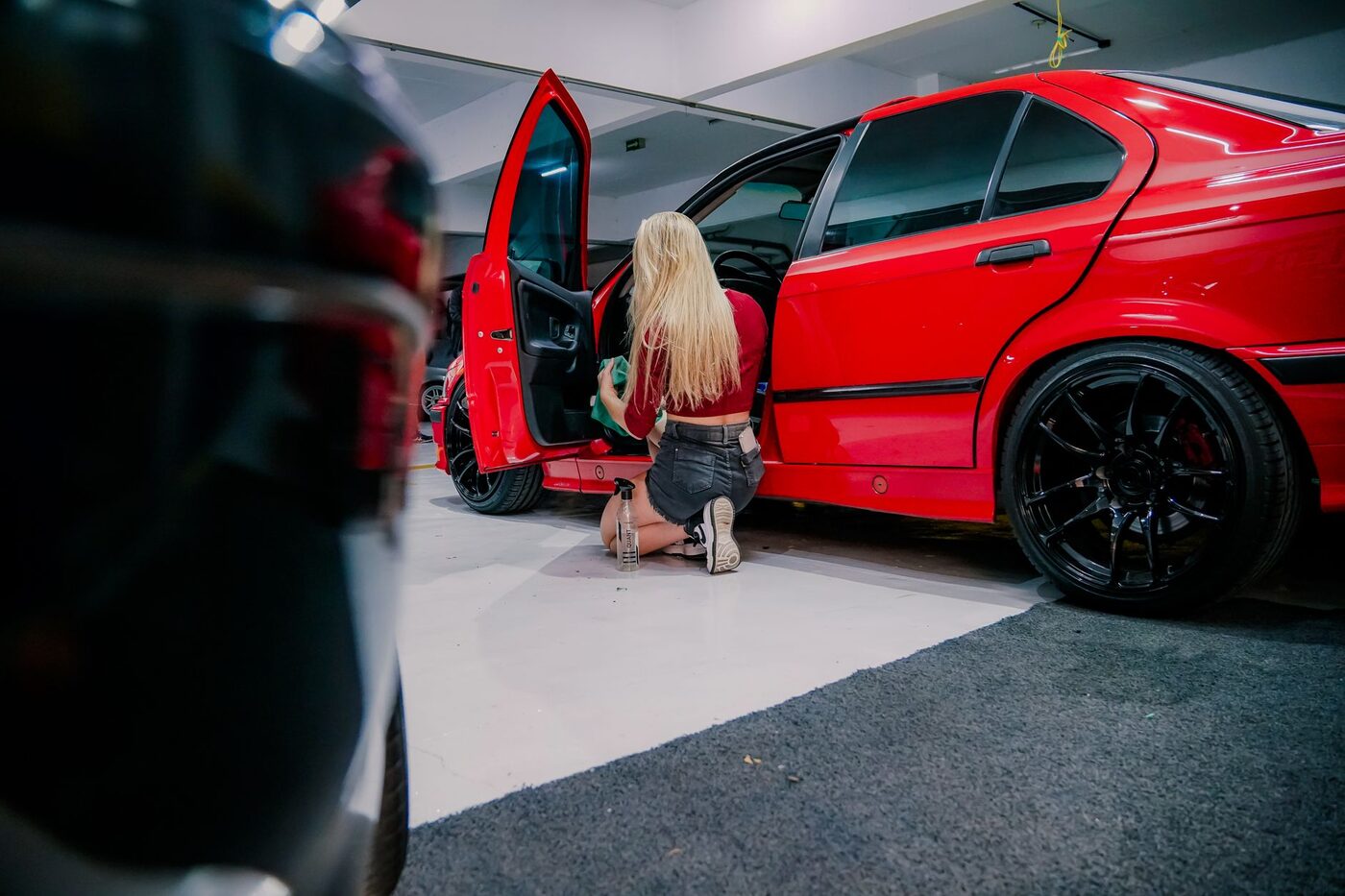
There is a specific look to a car that has been detailed in the wrong order. The paint is glossy in the shade and full of fine circular scratches the moment sunlight hits it, the tyre dressing has flung a black arc up the rear quarter, and the coating that was supposed to last two years is patchy by autumn. Nothing in that job was done badly. It was done out of sequence.
Detailing is four stages, and each one exists to prepare the surface for the next. Wash removes loose dirt. Decontamination removes what the wash cannot. Correction removes damage in the paint itself. Protection seals the result. Take any stage out of position and it either undoes the one before it or sabotages the one after. That is the whole logic, and once you hold it, the individual product choices matter much less than people think.
Wash: the stage where most damage happens
Almost every swirl mark on a car was put there during washing, not during driving. A wash is a controlled way of dragging abrasive particles across a soft surface, and everything in a good wash routine exists to reduce how much dragging happens.
Start with the wheels, arches and tyres, before the body gets touched. They carry the heaviest contamination, brake dust is metallic and abrasive, and you do not want that splashing onto panels you have already cleaned. Separate buckets, separate brushes, separate mitt. Nothing that touches a wheel should ever touch paint again.
Then rinse the body thoroughly and give it a pre-wash before any contact. Snow foam or a pre-wash spray, left to dwell for a few minutes, lifts the grit that would otherwise be caught under your mitt. This dwell time is not optional in the way people treat it. It is the difference between washing a car and sanding it.
The contact wash itself is two buckets: one with shampoo, one with plain water and a grit guard for rinsing the mitt. Top to bottom, straight lines rather than circles, rinsing the mitt after every panel. Use a microfibre mitt, never a sponge, because a sponge holds grit against the paint instead of letting it fall into the pile.
Two conditions ruin a wash regardless of technique. Direct sunlight on hot panels means everything dries into spots before you can rinse it. And a wheel cleaner left to dry on paint can etch it, which is why the wheels come first and get rinsed properly.
Decontamination: chemical, then mechanical
After a wash the paint looks clean and still is not. Embedded in the clear coat are iron particles from brake dust and railway lines, tar spots, and mineral deposits. Run a hand over a dry panel inside a thin plastic bag and you will feel them as roughness the fingertips alone cannot detect.
Chemical decontamination comes first because it removes what it can without touching the surface. An iron remover sprayed on and left for a few minutes dissolves ferrous particles, bleeding purple as it reacts. Tar remover, a solvent, handles the black flecks along the lower panels. Both go on a cool, dry car and get rinsed off.
Only then reach for clay. A clay bar or clay mitt shears off whatever is still bonded and standing proud of the surface, using a lubricant so it glides rather than grabs. The order matters because clay is mildly abrasive and every particle it picks up is a particle that could be dragged. Doing the chemical stage first means the clay has far less to remove and marrs the paint less.
That marring is exactly why decontamination sits before correction rather than after. Claying leaves fine haze on soft paint. If you clay after polishing, you have just put light damage back into a finish you spent hours perfecting.
Correction: the stage you cannot undo
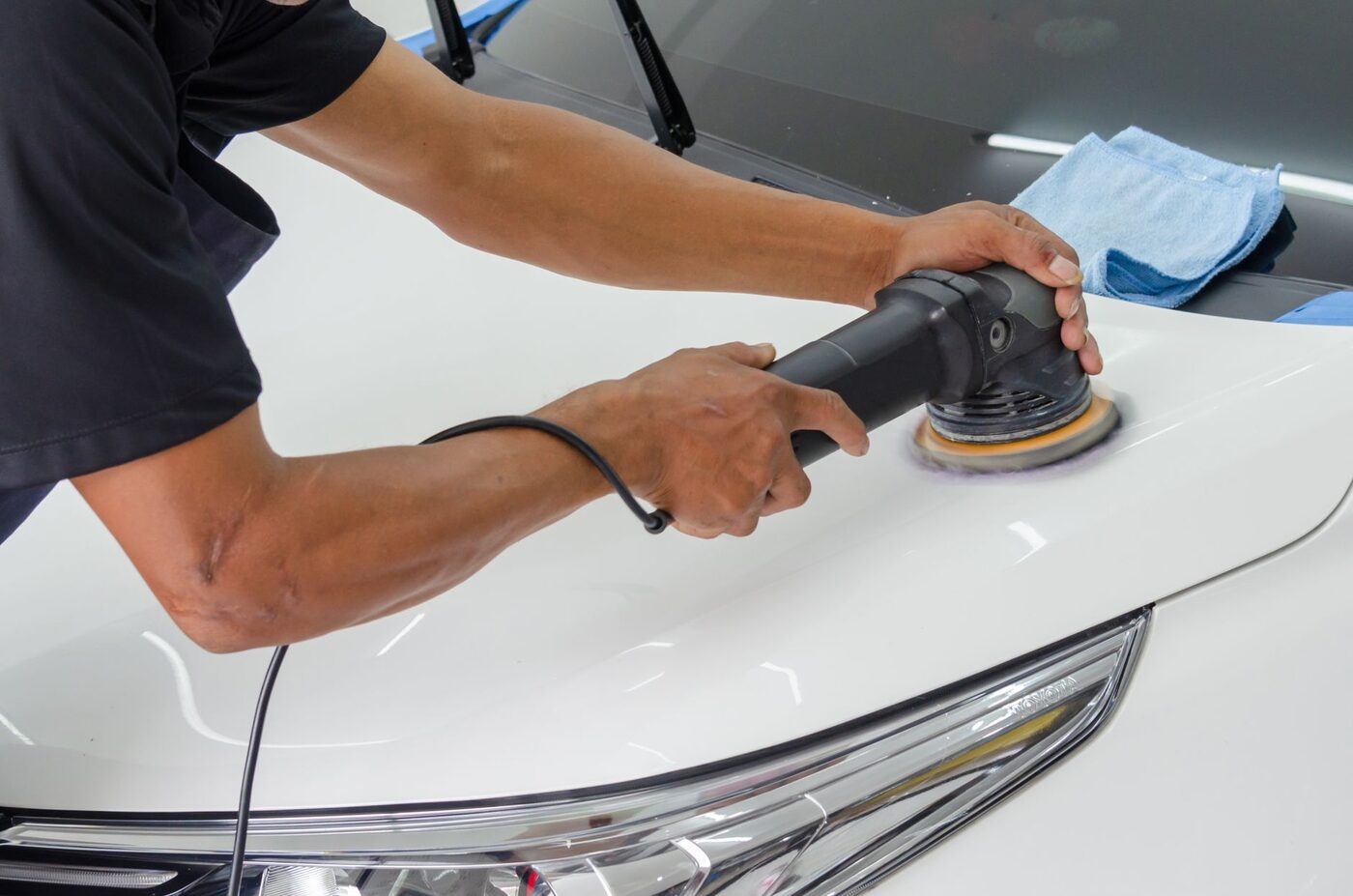
Polishing removes a thin layer of clear coat to level out the scratches sitting in it. That is the mechanism, and it explains the one rule that matters: clear coat is a finite resource. On most modern cars it is somewhere around 40 to 50 microns thick, and a heavy correction can take several microns at a time. A car has perhaps three or four serious corrections in it across its whole life. Spend them carefully.
Which is why the professional habit is to start with the least aggressive combination that works, not the one that works fastest. Do a test spot on a single panel: try a fine polish with a soft pad first, inspect under proper light, and only step up to a compound and a firmer pad if the defects survive. Once you know the mildest combination that clears the test spot, use it on the rest of the car.
Inspect under light that shows the truth. A single bright LED held at an angle, or direct sun, will reveal swirls that garage strip lights hide completely.
And before you judge any result, wipe the panel with a dedicated panel prep or diluted isopropyl alcohol. Polishes contain oils and fillers that temporarily mask fine scratches, so an unwiped panel always looks better than it is. Skipping this step is how people discover, three weeks later, that the swirls they removed were only ever hidden.
Protection: matching durability to preparation
| Protection | Rough durability | Preparation demanded |
|---|---|---|
| Carnauba wax | Weeks to a couple of months | Clean paint, forgiving |
| Synthetic sealant | Four to six months | Clean, ideally decontaminated |
| Ceramic coating | One to three years plus | Corrected, panel-wiped, oil free |
The pattern in that table is the whole point. The longer a product lasts, the more unforgiving it is about what sits underneath it, because it bonds to the surface rather than resting on it.
A wax over slightly contaminated paint is a minor waste. A ceramic coating over polish oils is a real problem: it cures into a patchy film that fails within weeks and has to be machine polished off, which costs you clear coat you did not intend to spend. Coatings also need curing time out of the rain, typically at least 24 hours, sometimes longer in cold weather.
There is also no point in a two-year coating over paint you never corrected. You have sealed the swirls in for two years.
Where the interior and glass fit
Do the interior first, before any paint work. Vacuuming and dressing throw dust and overspray around, and you would rather that landed on unwashed paint than on a finished coating. It also means you are not opening doors and leaning across panels that are curing.
Glass goes last, inside and out. It picks up residue from everything else, so cleaning it early guarantees doing it twice.
Tyre dressing is the classic timing mistake. Applied before the final rinse, or applied too heavily, it slings off the tread at the first drive and lands in a fine arc up the side of a car you just spent a day on. Dress at the end, thinly, and wipe back the excess.
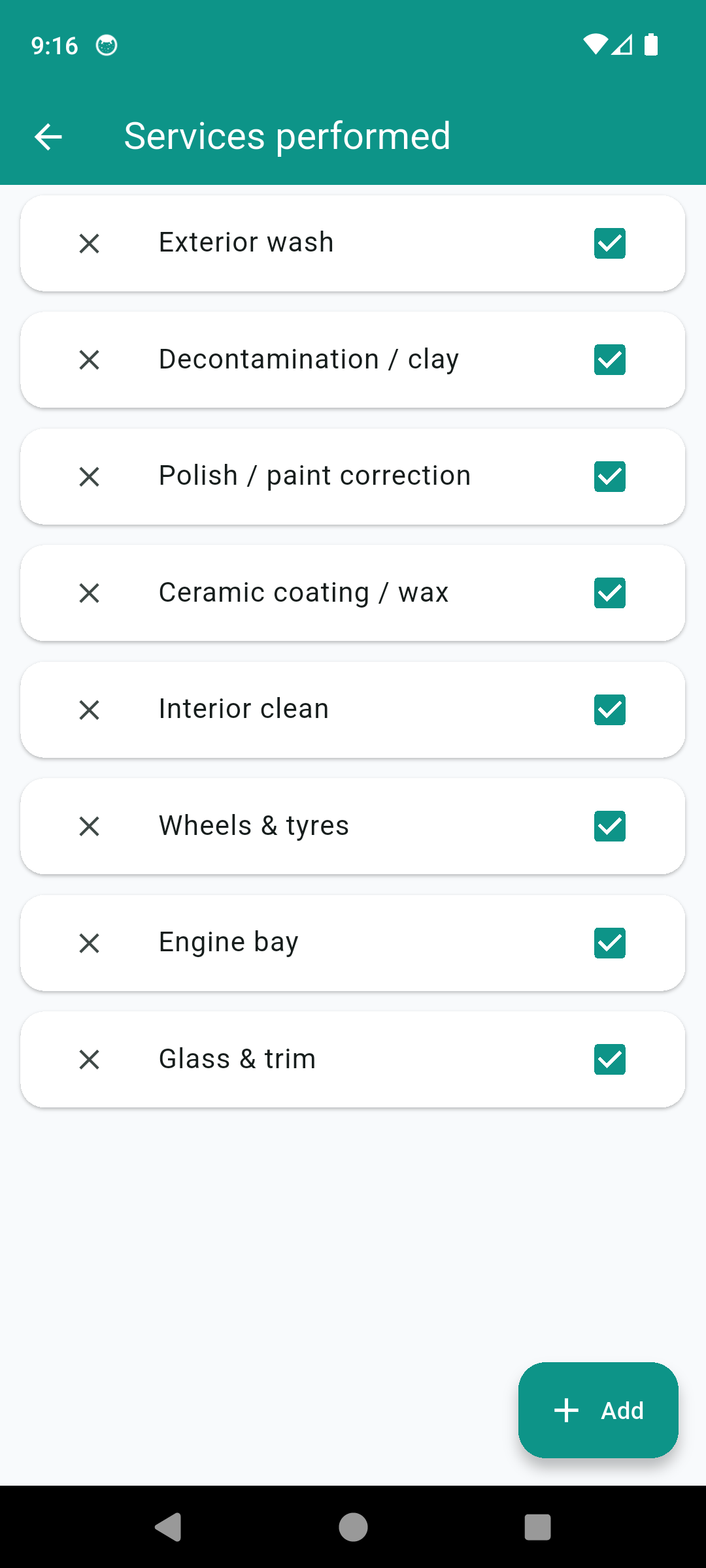
If you detail for money rather than for your own driveway, the sequence has a second life as a record. Knowing that a customer’s car was decontaminated and single-stage corrected in March tells you what it needs in September, and it settles the awkward conversation about whether a mark was there when the car arrived. Photographing the intake condition before you touch anything is the cheapest insurance in the trade, which is the job DetailProof does: what was done, in what order, with before and after shots attached to the vehicle rather than lost in a camera roll.
The one thing worth repeating to anyone paying for correction: a machine polish is not maintenance. It is a repair, and it is the automatic car wash on the way home that spends it. Protect the work with a sane wash routine and a good detail lasts years. Take the same car through a brush wash twice and you have paid for a finish that survived a fortnight.
Common questions
How long does a full detail take?
A wash, decontamination and protection with no machine work runs three to five hours. Add single-stage machine polishing and you are at eight to twelve. A multi-stage correction with a ceramic coating is a two or three day job for one person, most of it spent on the polishing.
Do I need to clay bar every time?
No. Decontaminate when the paint feels rough through a plastic bag, which for a daily driver is usually twice a year. Claying is mildly abrasive, so doing it monthly wears the finish for no benefit.
Can I apply a ceramic coating over polish?
Not over the oils polish leaves behind. A coating needs to bond to bare clear coat, so the panels must be wiped with a dedicated panel prep or diluted isopropyl alcohol first. Skip that and the coating sits on a film that fails within weeks.
Should I do the interior before or after the paint?
Interior first. You avoid dropping dust and dressing overspray onto finished paint, and you are not opening and closing doors over freshly coated panels. Glass goes last, inside and out, once everything else has stopped throwing residue at it.
Photos: Caio Renato de Campos / Pexels , Khunkorn Laowisit / Pexels