




























































































Documenting a Car Restoration So It Survives the Sale
A finished restoration hides its own quality. What to photograph before the paint goes on, how to log receipts and parts, and why the honest list of what you skipped sells the car.
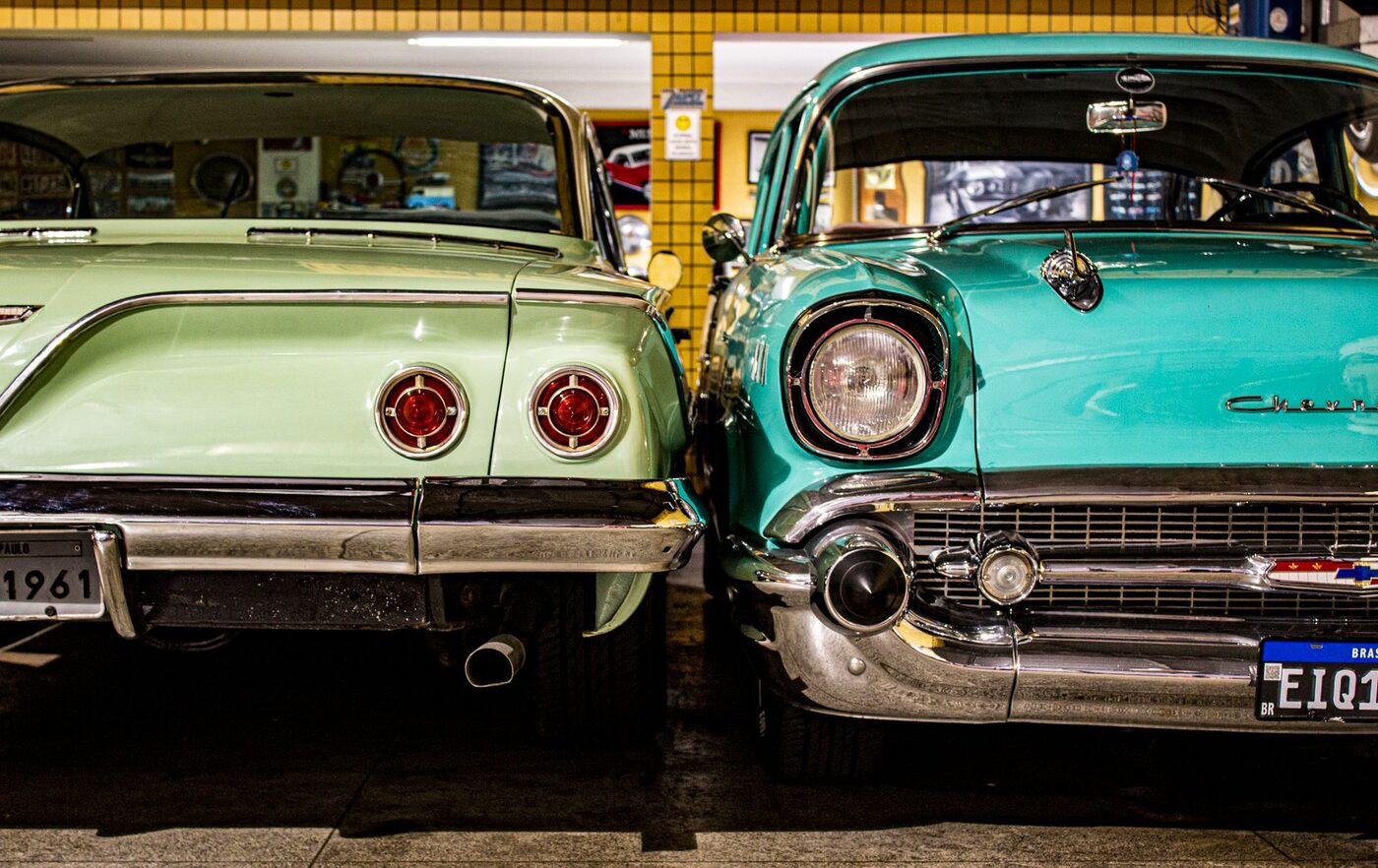
A car that has been restored properly and a car that has been made to look restored are, from ten feet away in good light, the same car. That is the problem you are documenting your way out of.
Filler sands beautifully. Fresh underseal covers everything. A respray hides the difference between a floor pan replaced with a proper repair panel and one patched with a bit of steel and a mig welder that was borrowed for the weekend. By the time the car is finished and shiny, the quality of the work has become undetectable, and the buyer standing in your garage knows it. What they are pricing in is not doubt about you. It is doubt about a car they cannot see inside.
Everything below is aimed at removing that doubt, and the honest headline is that it will not make a losing restoration profitable. It will stop a good one being valued as if it might be a bad one.
What the folder is actually doing
There is a fantasy that runs through restoration forums where a shoebox of receipts adds up to a sale price. It does not work like that. If you spend forty thousand on a car with a thirty thousand ceiling, the receipts prove you spent forty thousand and the car still sells for thirty. Money spent is not value, and a buyer who has restored anything themselves knows exactly how quickly it disappears.
What the record does is different and more useful. A cautious buyer applies a discount to unknowns, and the size of that discount is proportional to how much of the car they cannot inspect. Every question you answer in advance shrinks it. Two comparable cars at the same asking price, one with a photographic build record and one with an enthusiastic description, do not sell for the same money and usually do not sell in the same month.
It also does something for you personally that people underestimate until they are three years in. You will not remember whether the wheel cylinders were replaced or just honed. You will not remember which supplier the springs came from when one sags in 2029. The record is for the person who owns the car next, and that person might be you with a worse memory.
Photograph the parts that are about to disappear
If you take one thing from this: the most valuable photography in a restoration happens on the worst days, before anything looks good.
The bare shell after the rust is cut out and before any filler, primer or seam sealer touches it. Inner sills. Floor pans from underneath and from inside. Chassis rails. The boot floor and spare wheel well. The bottoms of the A-posts and the base of the screen surround, which is where the rot always is on anything old and where a cheap restoration always cheats. Suspension mounting points. Every weld you would be happy to have inspected.
This is exactly the moment when nobody wants to be holding a phone. You are covered in grinding dust, the shell is on a rotisserie or a pair of axle stands, the job is going badly, and taking twenty photographs feels like an interruption. Take them anyway. Once primer goes on, that information leaves the world permanently, and no amount of later photography brings it back.
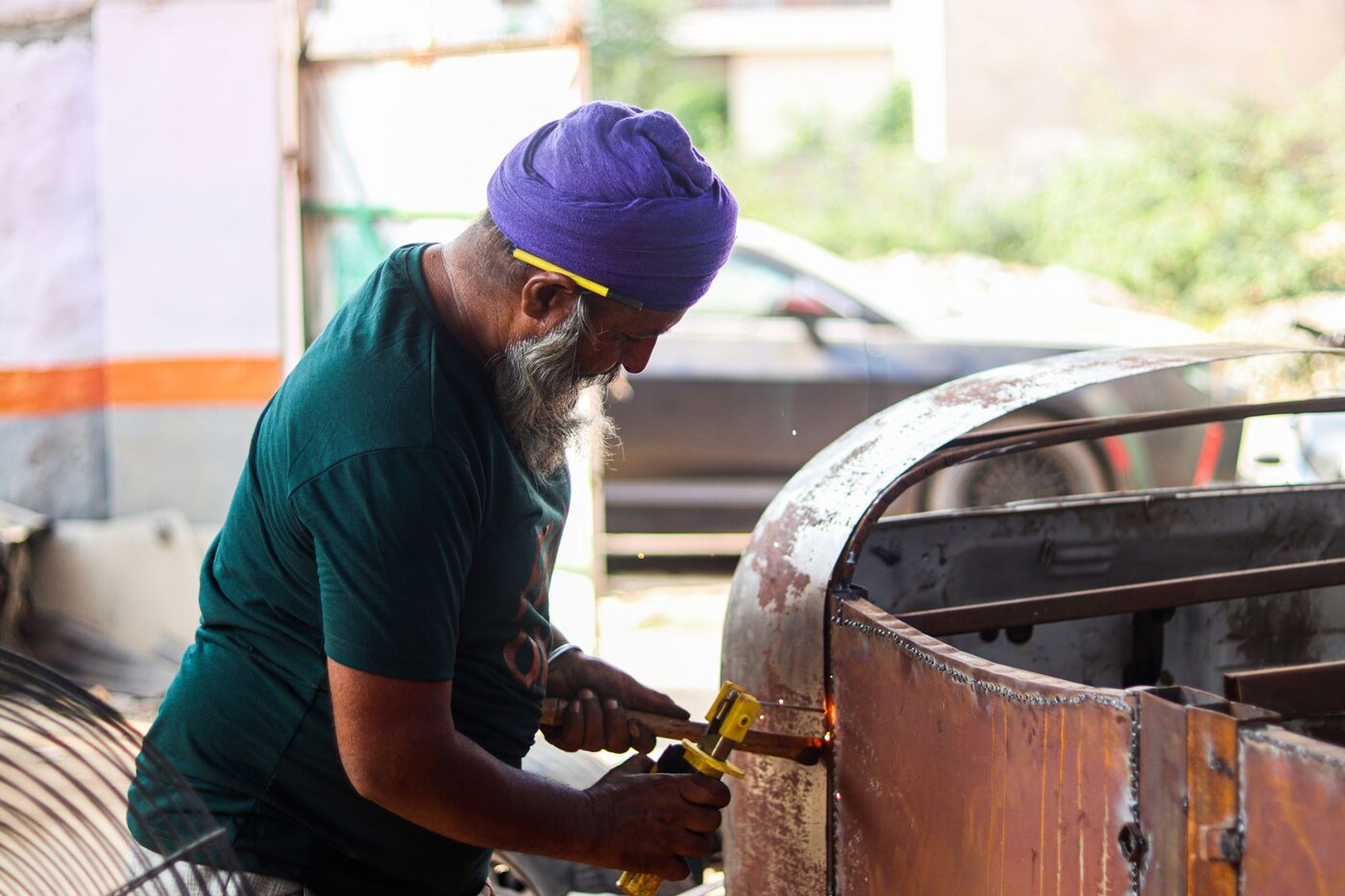
The rest is easier. Shoot the state of the car on the day you bought it, including the parts you were unhappy about, because a genuine before is what makes the after mean anything. Shoot each major assembly stripped, then rebuilt. Engine internals before the head goes on. The gearbox open. Wiring loom in place before the dash goes back. And keep the bad photos, the ones showing rot you found halfway through that was worse than you expected. A record that contains only triumphs reads like a sales pitch. One that includes the horrors reads like a record.
Receipts are only half a receipt
Everyone keeps receipts. Far fewer keep them in a form that does anything.
An invoice for 314 dollars from a supplier whose name means nothing to the reader tells a buyer that money left your account. What makes it evidence is context: what the part was, what it belongs to, and when it went on the car. “Front leaf springs, Eaton Detroit, fitted March 2026” turns a bank statement into a history. Do that at the time, because doing it retrospectively from a carrier bag of thermal paper three years later is a job nobody has ever finished.
Thermal paper, incidentally, fades to blank within a few years, sometimes within one if it has sat somewhere warm. Photograph every receipt the day it arrives. The physical copy is a backup for the photograph, not the other way round.
There is also a distinction that matters enormously to collectors and barely at all to anyone else, so it is worth recording even if you do not care: whether a part is original refurbished, new old stock, or reproduction. Re-plated original bumpers and repro bumpers are not the same object and do not carry the same value, and in ten years nobody will be able to tell from looking. Note it when you buy it.
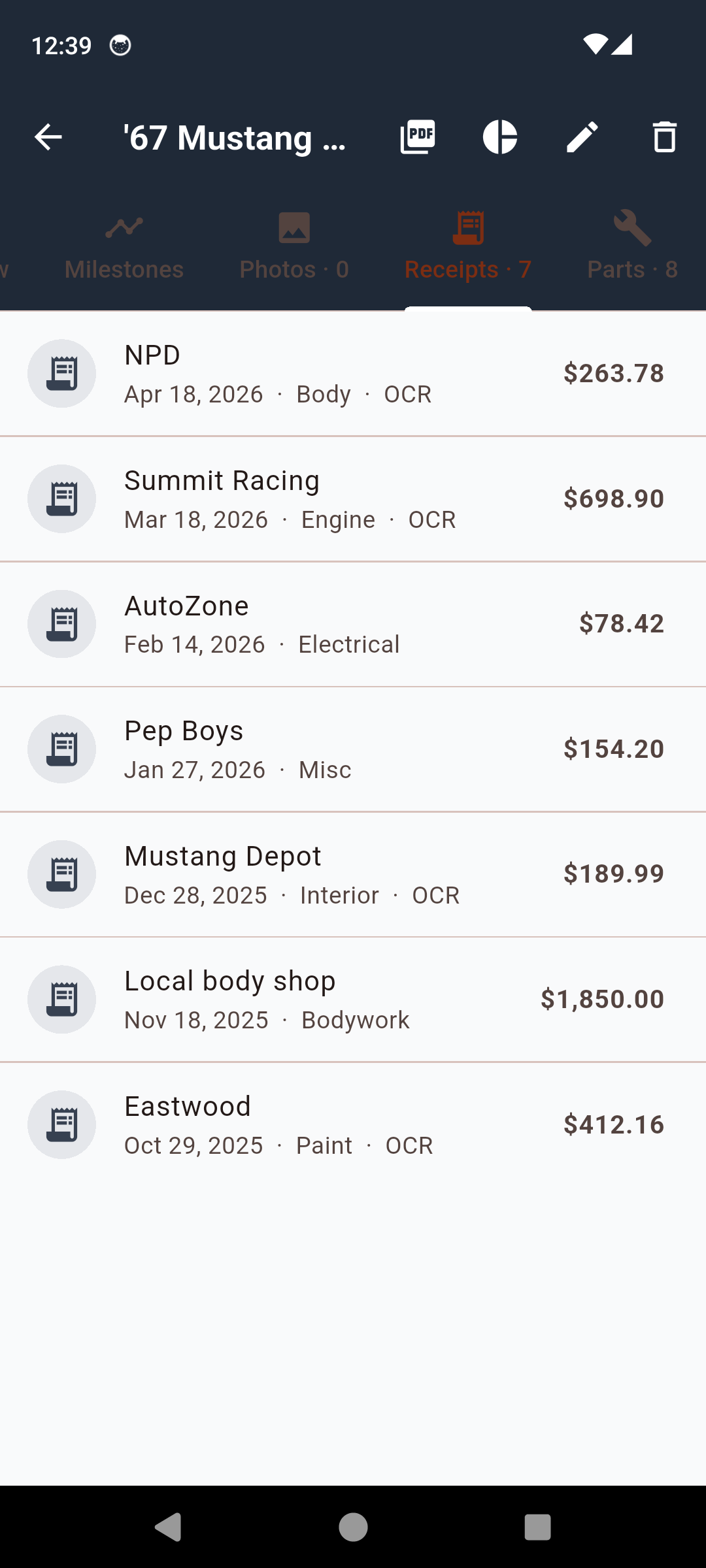
Keeping this straight is mostly a filing problem rather than a hard one, and it is why a build log beats a phone camera roll. Three years of photographs in chronological order, mixed in with holidays and screenshots, is not a record of anything. CarRestore exists to attach the photos, receipts and parts to the project and the stage they belong to, so the boot floor pictures sit with the bodywork and the springs invoice sits with the part it paid for. A ring binder and a labelled folder structure does the same job. What does not work is leaving it in the phone and intending to sort it out later.
The identity paperwork, which people leave until it is urgent
Numbers first. Photograph the VIN or chassis plate, the engine number stamping, and any body tags or build plates, clearly enough to read. Do it early, because if the plate is on a panel that is about to be replaced you need to have thought about it before the panel comes off, and in many places moving or replacing an identity plate has rules attached.
Then the provenance documents, which vary by car and country. British cars can have a Heritage Certificate from the British Motor Industry Heritage Trust confirming the factory build details. Fords of the right era have Marti reports. Various American marques have equivalent build sheet services. These are not expensive and they answer the question a buyer would otherwise have to take your word on, which is whether the car left the factory as the thing you are selling it as.
In the UK, remember that the MOT history is public and any buyer can look it up for nothing on gov.uk. Mileage readings, advisories and failures going back years are all sitting there. Read your own car’s history before you write the advert, because a buyer who finds a mileage discrepancy you have not mentioned will assume the worst about everything else in the folder.
Write down what you did not do
This is the part almost nobody does and it is the one that moves a sale.
Somewhere in the folder, put a plain list of what was left alone. The gearbox was never opened. The rear axle is original and untouched. The wiring is the factory loom, tidied but not replaced. The paint is a respray in the original colour, not a bare-metal job. Whatever the truth is.
It feels like arguing against yourself. It does the opposite. A buyer arrives braced for a seller who will claim everything was rebuilt, and instead finds someone who has volunteered the gaps. It reframes the entire folder from marketing material into a technical record, and every claim in it becomes more believable because of the claims that are absent. It also saves you the conversation where a buyer discovers the untouched gearbox on the test drive and starts wondering what else you were vague about.
What to actually hand over
At sale, the buyer should get one organised set, not a box.
The identity documents and registration paperwork. The receipts, grouped by system rather than by date, because nobody wants to reconstruct the brake job by scrolling through chronology. The photographic record in stages, with the pre-paint structural shots given their own section, because those are the ones the knowledgeable buyer will go straight to. A parts list showing what is original, refurbished, new old stock or reproduction. The list of what was not done. Any certificates or build records. Manuals and spare keys.
A cold start video is worth adding if the car is selling online, more than most sellers expect. Anyone buying at distance is worrying about the engine, and thirty seconds of it firing from cold and settling answers a question that no photograph can.
Keep a copy of everything for yourself and keep it somewhere that is not one phone. Restorations outlive devices, and the record is only worth what it is worth if it still exists at handover.
The car in the garage is the result. The folder is the only part of the work that stays visible.
Common questions
Does documenting a restoration increase what the car is worth?
It protects value rather than creating it. Two comparable cars advertised at the same money will not sell for the same money if one comes with a photographic record and a receipt file and the other comes with a story. The folder does not add a premium so much as remove the discount a cautious buyer applies to an unknown car.
What is the single most valuable thing to photograph?
The bare metal before anything covers it. Inner sills, floor pans, chassis rails, boot floor and the bottoms of the A-posts, photographed after the rust is cut out and before seam sealer, primer or underseal goes near them. Once it is painted, that work is invisible forever and your photos are the only evidence it was done properly.
Do I need to keep every receipt?
Keep them, but the receipt alone is close to worthless. An invoice for 314 dollars from a supplier means nothing to a buyer in five years. Note what the part was, which system it belongs to, and when it went on the car, and the same receipt becomes a line in a verifiable history.
Should I tell a buyer what I did not do?
Yes, and it is the most underrated move in the whole process. A written list of what was left alone reads as confidence, and it makes everything else in the folder more credible. A seller who volunteers that the gearbox was never touched has told you something no chancer would, and the rest of the claims land differently after that.