



























































































The Month-by-Month Home Maintenance Checklist
Most home maintenance lists fail because they are sorted by season. Sort by which clock each job runs on instead, then work through the twelve months.

The most expensive thing that has ever happened to a house I looked after was a garden hose. It stayed screwed onto the outside tap through a cold snap, which meant the frost-proof tap could not drain the way it was designed to. Water sat in the barrel inside the wall, froze, and split the copper. Nobody knew until April, when someone turned the tap on and water came through the kitchen ceiling instead of out of the spout.
That job takes forty seconds and appears on almost every home maintenance checklist on the internet, buried between “clean the gutters” and “check the roof”. Which is the actual problem with those lists. They present thirty tasks as if they carry equal weight and equal urgency, so people either do all of them once and never again, or skim the list and do none.
Two clocks, not four seasons
Nearly every home maintenance task runs on one of two clocks, and they behave completely differently.
Some jobs run on a wear clock. A filter loads up, an anode rod dissolves, a rubber hose goes hard, a belt stretches. These degrade at their own pace regardless of the weather. If you are a month late, nothing happens. If you are three years late, something expensive happens.
Other jobs run on a weather deadline. There is a date after which doing the job is pointless or impossible: hoses off before the first freeze, gutters clear before the autumn rain, air conditioning checked before the first hot week when every engineer in the county is booked solid. Miss the deadline and the task does not just slip, it fails.
Sort your list that way and it stops feeling like thirty chores. It becomes maybe six real deadlines a year, plus a handful of wear items you can do whenever you happen to be in the loft.
The four that account for most of the big bills
If you only ever do four things, do these. Three of them are about water arriving somewhere it should not, which is the failure mode that turns a hundred-pound part into a five-figure claim.
Disconnect outside hoses before the first hard freeze, as above. Also drain and isolate any irrigation line.
Replace washing machine supply hoses. The braided rubber ones that come in the box are the ones that let go, usually while the house is empty because that is when nobody hears the noise. Five years is a sensible replacement interval, or fit braided stainless and inspect rather than replace. They cost less than a takeaway.
Look at the water heater. The anode rod is a sacrificial lump of metal whose entire job is to corrode so the tank does not. On a tank fed with softened water it can be gone in three or four years rather than the usual six-plus, which is why softener owners are quietly over-represented among people replacing a nine-year-old cylinder. Flushing sediment out annually matters too. On a gas tank, sediment on the bottom acts as insulation and the burner ends up overheating the steel it is sitting under.
Clean the dryer vent duct once a year, more if the run is long or has bends. This one is a fire risk rather than a water one. The tell is clothes needing two cycles to dry, which people usually blame on the machine.
The twelve-month version
Here is the calendar I actually work to. It assumes a northern-hemisphere climate with a real winter. If you are in the southern hemisphere, shift it six months. If you are somewhere with no freeze, the October and November rows mostly disappear and the air conditioning rows get more important.
| Month | Jobs |
|---|---|
| January | Test every smoke and CO alarm. Check the loft for damp patches and condensation, which show up worst in cold weather. |
| February | HVAC filter. Open and close the main water shut-off valve fully, so it still turns the day you need it in a hurry. |
| March | Clean the dishwasher filter and the fridge condenser coils. Look over the roof from the ground with binoculars for anything winter loosened. |
| April | Bring the outside taps back into service and watch for a split. Start up the irrigation system. Press the test button on every RCD or GFCI. |
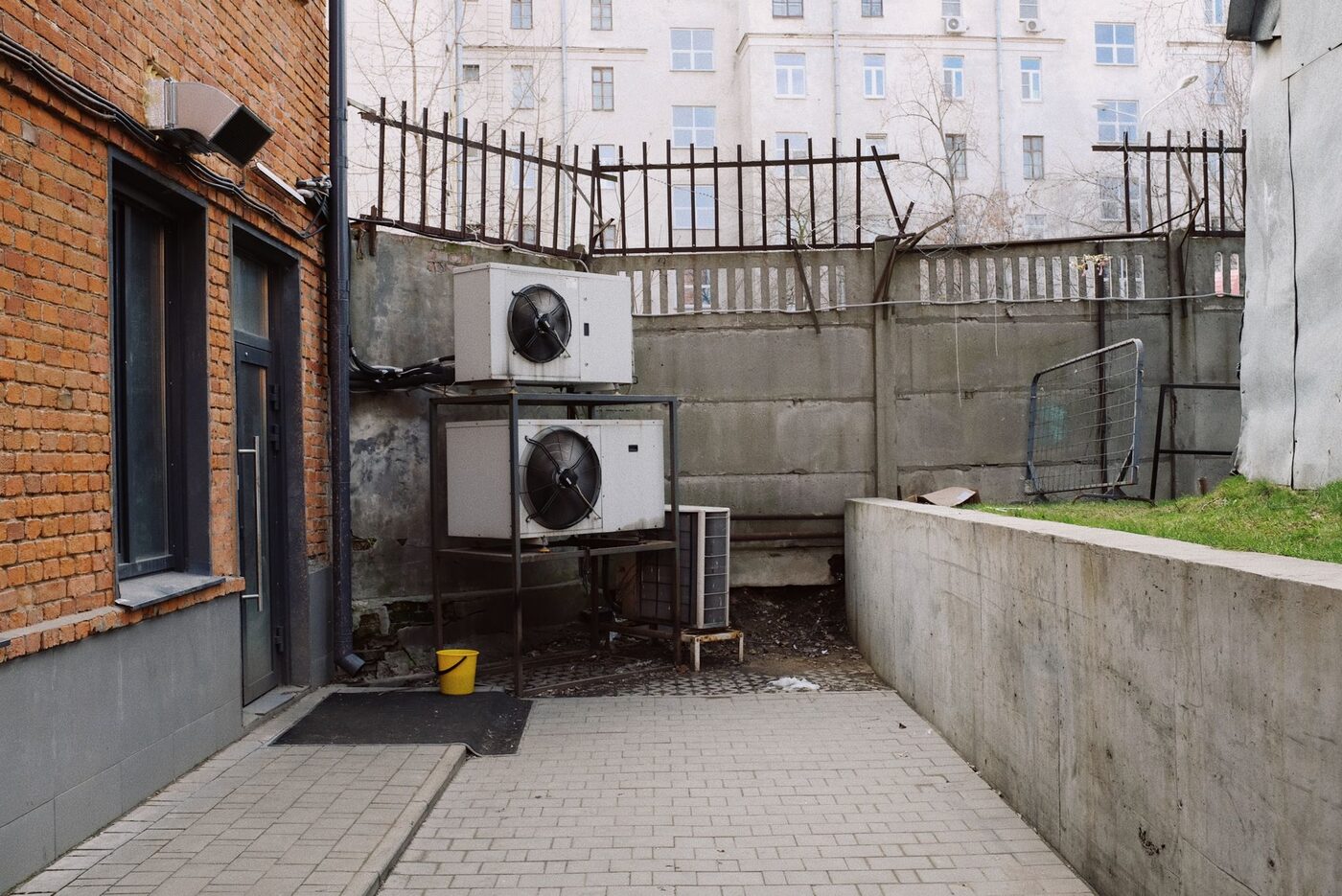
| May | Service the air conditioning or heat pump before the first hot week. Clear leaves and growth back from the outdoor unit. |
| June | Dryer vent duct. Inspect washing machine and dishwasher supply hoses for bulges, rust at the crimp, or a date stamp older than five years. |
| July | HVAC filter again. Test the garage door auto-reverse against an object on the floor and check the photo eyes line up. |
| August | Flush the water heater. Every few years, pull and inspect the anode rod while you are there. |
| September | Get the heating serviced and the chimney or flue inspected before the first cold snap, not during it. |
| October | Clear the gutters and downpipes once the leaves are mostly down. Test the sump pump with a bucket of water. Disconnect hoses and drain the irrigation before the first hard freeze. |
| November | Test alarms again. Check the printed end-of-life date on the CO alarms. Lag any exposed pipework in unheated spaces. |
| December | Nothing scheduled. Walk the outside of the house after any big storm and look at where water is running. |
The spacing is deliberate. Two things sit at the front of a season rather than in the middle of it, because contractor availability collapses the moment the weather turns. Booking a heating service in September costs the same as booking one in December and takes about a tenth of the phone calls.
Numbers worth writing down somewhere
Smoke alarms get replaced at ten years, and the NFPA is specific that the clock runs from the manufacture date printed on the back, not the installation date. An alarm that sat in a warehouse for two years is a two-year-old alarm the day you fit it. Carbon monoxide alarms are shorter-lived, commonly five to seven years depending on the sensor, and most units state their own expiry.
Chimneys, fireplaces and vents should be inspected at least once a year under NFPA 211, whether or not you used them much. That surprises people with a wood burner they light twice a winter. The inspection is not really about soot volume, it is about the liner and the flue path.
Septic tanks are usually pumped every three to five years, but the honest answer is that it depends on tank size and how many people live in the house, and your installer’s number beats a generic one. Water heater tanks tend to be a ten to twelve year proposition, and the anode rod is the main lever you have on that.
Things people do too often
Not everything needs an annual visit from a professional. Duct cleaning gets sold hard and, absent a known problem like a rodent, a renovation, or visible mould, it rarely earns its price. Gutter guards are similar: they reduce the frequency of the job rather than removing it, and they make the eventual clean more awkward.
Gutters themselves are the clearest case of a calendar rule being worse than an observation rule. Twice a year is the standard advice, and it is either overkill or wildly insufficient depending entirely on what is growing above your roof. A house with nothing overhanging might genuinely manage once a year. A house under mature limes needs three passes in six weeks each autumn. The reliable trigger is watching what happens in heavy rain: if water sheets over the front edge of the gutter instead of running to the downpipe, it is overdue, whatever the calendar says.
Keeping it running once the enthusiasm wears off
The reason these lists fail is never that the tasks are hard. It is that home maintenance has no natural reminder. Nothing prompts you. The dryer vent does not ping. You remember the water heater when it is cold.
Whatever you use to solve that, the thing that matters is recording the date you actually did each job, because otherwise you lose the interval and go back to guessing. Knowing you last flushed the tank in August 2024 is what tells you whether this year’s job is due or not, and it is also what you hand over when you sell the place.
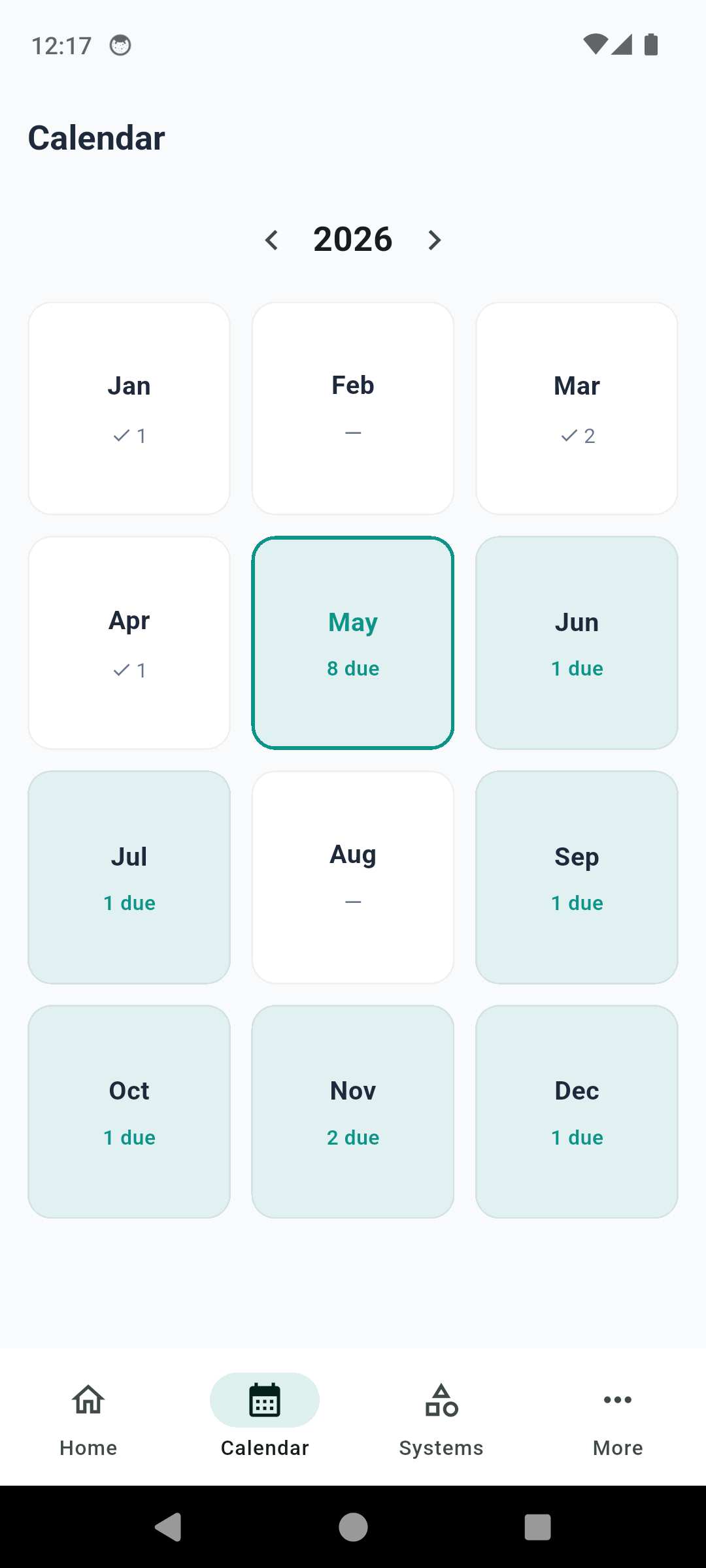
That is the job HomeKeep does: a pre-loaded schedule for the standard tasks, adjusted for what your house actually has, with the completion history kept so the intervals stay honest.
The principle survives without any app, though. Split the list into wear items and weather deadlines, protect the six real deadlines, and let everything else happen when you are already in the right part of the house with the right tools out.
Common questions
How often should I change my HVAC filter?
A one-inch pleated filter usually wants changing every one to three months. A four or five inch media cabinet typically runs six to twelve months. Pull yours out monthly for the first year and hold it up to a light. Once you know how fast it actually loads up in your house, you can stop checking and just book the interval.
What is the one job most people skip that costs the most?
Disconnecting garden hoses from outside taps before the first hard freeze. A frost-proof tap can only drain if nothing is attached to the spout. With a hose on, water sits in the barrel inside the wall, freezes, splits the tube, and you find out the following spring when you open the tap and water pours into the house.
How long do smoke alarms last?
The NFPA puts it at ten years from the manufacture date printed on the back of the unit, not from the day you installed it. Carbon monoxide alarms are shorter, commonly five to seven years, and most modern ones state their own end-of-life date. Test both monthly.
Do I really need an annual boiler or furnace service?
For a gas appliance, yes, and in many rented properties it is a legal requirement rather than a suggestion. For an electric system the case is weaker and a competent visual check plus filter changes covers most of it. The annual chimney or flue inspection is the one worth being strict about, because a blocked flue is a carbon monoxide problem, not an efficiency problem.
Photos: Jan van der Wolf / Pexels , ready made / Pexels