




















































































































EMT vs IMC vs Rigid Conduit: When to Use Each
What actually separates the three common metal conduits: wall thickness, where the code allows each, how the wire fill differs, and why IMC gets overlooked.
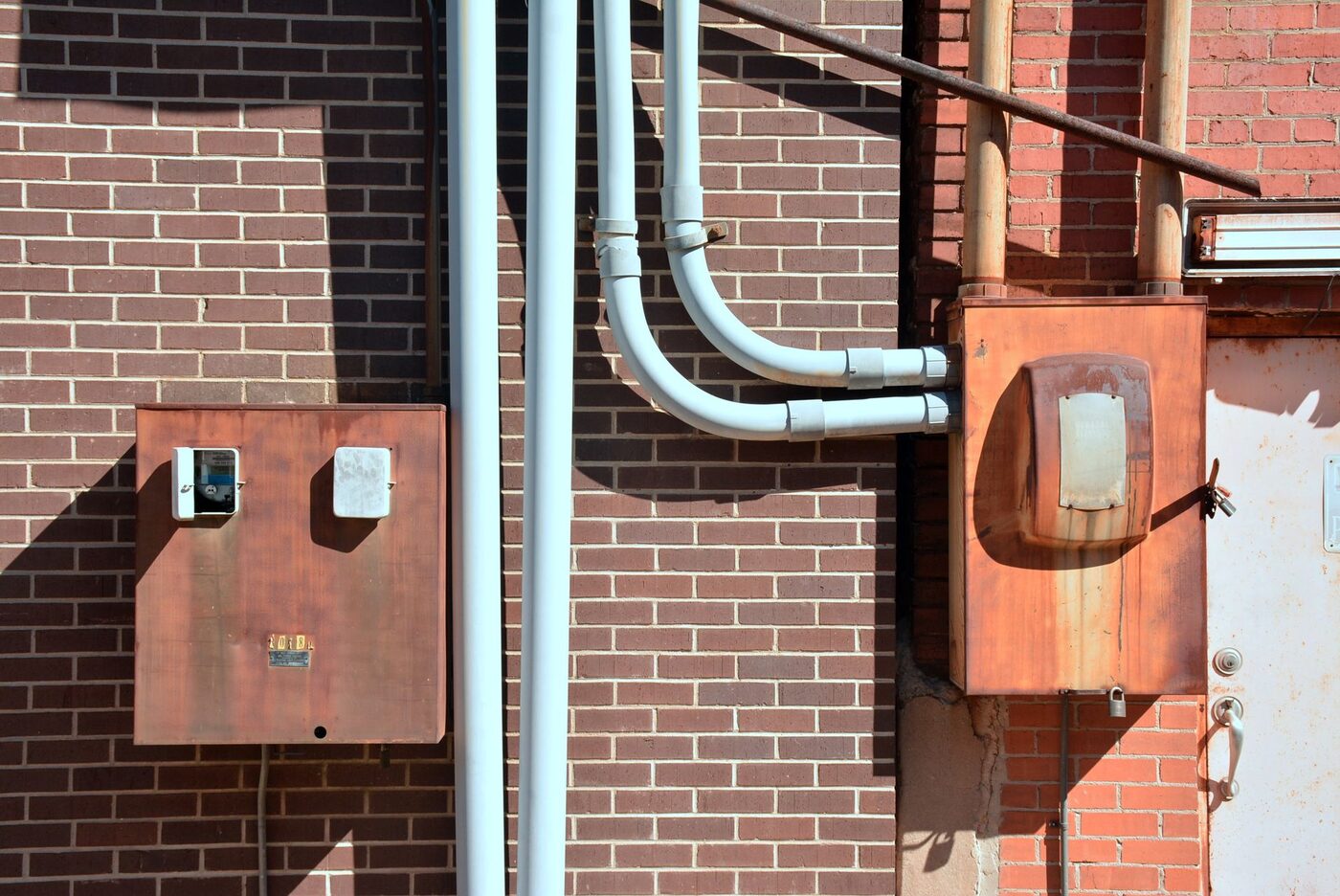
A run leaves the panel, climbs the outside of the building and lands on a rooftop unit. All three of the common metal conduits will physically do that job. One of them is right, one costs you an hour of extra labour for nothing, and one might not pass inspection at all.
The choice usually gets made out of habit. EMT because that is what is on the van, or rigid because the spec said rigid and nobody questioned it. It is worth knowing what genuinely separates them, because the differences are not only about toughness.
The three pipes, side by side
| EMT | IMC | RMC | |
|---|---|---|---|
| NEC article | 358 | 342 | 344 |
| Joined by | setscrew or compression fittings | threads | threads |
| Wall | thinnest | middle | thickest |
| Weight, 1” over 10 ft | about 3 lb | about 5 lb | about 7.5 lb |
| Field cuts need | a reamer | a threader | a threader |
The weights are the part people underestimate. IMC comes in around a third lighter than rigid for the same trade size, and EMT is lighter again by a wide margin. On a ten foot stick that is a shrug. On a hundred feet of two inch pipe going up a ladder, it is the difference between a two-person day and a one-person day.
Here is the detail that makes IMC useful and that a lot of people never learn: IMC and RMC share the same outside diameter. Same OD means the same threads, the same dies, the same hubs, the same couplings. IMC threads straight into a rigid fitting because from the outside it is a rigid pipe. EMT is a different animal, with a smaller outside diameter for the same trade size, which is why its connectors will not swap with anything.
The wire fill runs the other way to your intuition
Because IMC keeps rigid’s outside diameter but uses a thinner wall, the space inside it is larger. Chapter 9, Table 4 puts numbers on it:
| Trade size | EMT | RMC | IMC |
|---|---|---|---|
| 1/2” | 0.304 sq in | 0.314 sq in | 0.342 sq in |
| 3/4” | 0.533 sq in | 0.549 sq in | 0.586 sq in |
| 1” | 0.864 sq in | 0.887 sq in | 0.959 sq in |
So substituting IMC for rigid never loses you fill, it gains a little. Substituting IMC or rigid for EMT gains you more still. That matters when a run is close to the forty percent limit for three or more conductors and you would otherwise be upsizing the pipe.
The trap is doing the fill sum in your head from memory of one type and then installing another. The percentage limit is the same across all of them, but the area you divide into changes, and those tables are the reason the same four conductors can be legal in one pipe and over the line in another of the same trade size.
Where each one is allowed
RMC is the permissive one. Article 344 lets it go essentially anywhere: all atmospheric conditions and occupancies, exposed, concealed, in concrete, in direct earth, in hazardous locations. IMC gets the same broad permission under Article 342. For minimum cover, Table 300.5 puts RMC and IMC at six inches, which is the shallowest burial any wiring method gets. Anything crossing under a public street, alley or parking lot goes to twenty four inches regardless of what it is made of.
EMT is where the limits live. Section 358.12 says it may not be used where subject to severe physical damage, and it may not support a luminaire or other equipment, beyond a conduit body no larger than the tubing itself. That second clause catches people out on retrofits, where hanging a fixture off the pipe looks harmless.
Severe is doing a lot of work in that sentence and the code does not define it, so your inspector does. The 2020 edition added 358.10(E), which says in positive terms that steel and stainless EMT is permitted where subject to physical damage. Read those two together and the line is roughly: knocks, yes; a forklift or a snowplough, no.
EMT underground has moved as well. The 2023 NEC added it to Table 300.5, so direct burial is on the table when the fittings are listed for burial and the corrosion protection in 300.6 is satisfied. Whether your jurisdiction has adopted that cycle is a different question, and it is worth a phone call rather than an assumption.

Supports, and the allowance nobody uses
Both families want a support within three feet of every box, cabinet or termination, then no more than ten feet apart after that. Identical rule, 358.30 for EMT and 344.30 for rigid.
The difference sits in Table 344.30(B)(2). A straight run of RMC or IMC made up with threaded couplings can go further between supports as the trade size climbs, out to twenty feet on the larger pipe. On a long riser up the side of a building, that is several fewer struts to fabricate and fix. EMT has no equivalent, so ten feet is ten feet.
Bending is where the day gets long
EMT bends with a hand bender and body weight. That is most of why it dominates commercial interiors.
IMC and rigid do not. Small trade sizes will go over a hickey if you are patient and take it in short bites, but anything of size wants a mechanical or hydraulic bender, and that means getting the tool to the work. Plan the bends before you plan the route.
Two practical points that cost pipe. Benders are marked for EMT or for rigid, and the take-up numbers are not the same, so a stub laid out with EMT figures and bent in IMC comes up short. And field-cut threads need cutting, reaming and then coating, because the galvanising you just cut through is the corrosion protection. A tin of cold galvanising compound in the van is cheaper than a callback on an exterior riser.
The layout maths, though, does not change at all. An offset is an offset. Multiplier and shrink come from the angle and the depth, not from the material, so the offset method works identically in all three. Only the tool and the effort change.
Which one I would actually put up
Inside a commercial building, dry, above a ceiling or down a plant room wall where nothing is going to hit it, EMT. It is faster, lighter and cheaper, and every hour saved on a repetitive run is real money.
Exposed outdoors, on a riser, in a loading bay, anywhere a vehicle lives, or in a classified area, go threaded. Start at IMC. It does everything rigid does under the code, threads into the same fittings, gives you marginally more room inside and is meaningfully lighter to handle. IMC is the most under-specified product in the aisle, largely because the drawings say rigid out of habit.
Reach for full RMC when the specification insists, when you want the extra wall thickness for threads in a wet or corrosive spot, or where the physical abuse is genuinely severe. Aluminium rigid is the answer for marine and chemically aggressive environments where weight also matters, but keep it out of concrete and direct earth contact unless it is protected, because aluminium and lime do not get along.
One more thing on wet locations, since it is the most common exterior failure I see: setscrew EMT couplings are not raintight. If EMT goes outside, the fittings have to be listed for it, and a compression fitting that is listed raintight is not the same as one that is merely compression. Read the box.

If you are switching between types on the same job, the fill sums are the thing most likely to catch you out, because the habit of one type follows you into the next. BendPro keeps the Table 4 areas for EMT, IMC and rigid separate and shows the fill percentage against the limit as you add conductors, alongside the bender take-up figures for the common hand benders.
Code references here follow the National Electrical Code, but adoption cycles and local amendments vary. Confirm current requirements with your authority having jurisdiction before you rely on any interval or dimension above.
Common questions
Can I use IMC where the drawings call for rigid conduit?
Often yes, and it is worth asking. IMC shares the same outside diameter and the same threads as RMC, and Article 342 permits it in the same places, so the fittings and hubs are interchangeable. The catch is that a specification is a contract document, not a code minimum, so get the substitution approved in writing before you buy a pallet of it.
Which conduit gives you the most room for conductors?
IMC, slightly. At three quarter inch trade size the interior areas in Chapter 9, Table 4 are 0.533 square inches for EMT, 0.549 for RMC and 0.586 for IMC. IMC wins because it has a thinner wall inside the same outside diameter as rigid, so going from RMC to IMC never costs you fill.
Is EMT allowed outdoors?
Yes, in wet locations, provided the fittings are listed as raintight and the assembly is protected against corrosion. Setscrew couplings do not qualify outdoors. What EMT cannot do is sit anywhere subject to severe physical damage, and it cannot be used to support a luminaire.
Do EMT and rigid use the same hand bender?
No. Benders are marked for one or the other and their take-up figures differ, so using an EMT take-up while bending IMC leaves the stub short. Anything above the small trade sizes in IMC or RMC wants a mechanical or hydraulic bender anyway.
Photos: John Robertson / Pexels , panumas nikhomkhai / Pexels