







































































































































































How Much Does a Dozen Backyard Eggs Cost to Produce?
A line-by-line budget for backyard eggs: feed, coop, chicks and power, what six hens cost per dozen, and how that sits against store prices this fall.
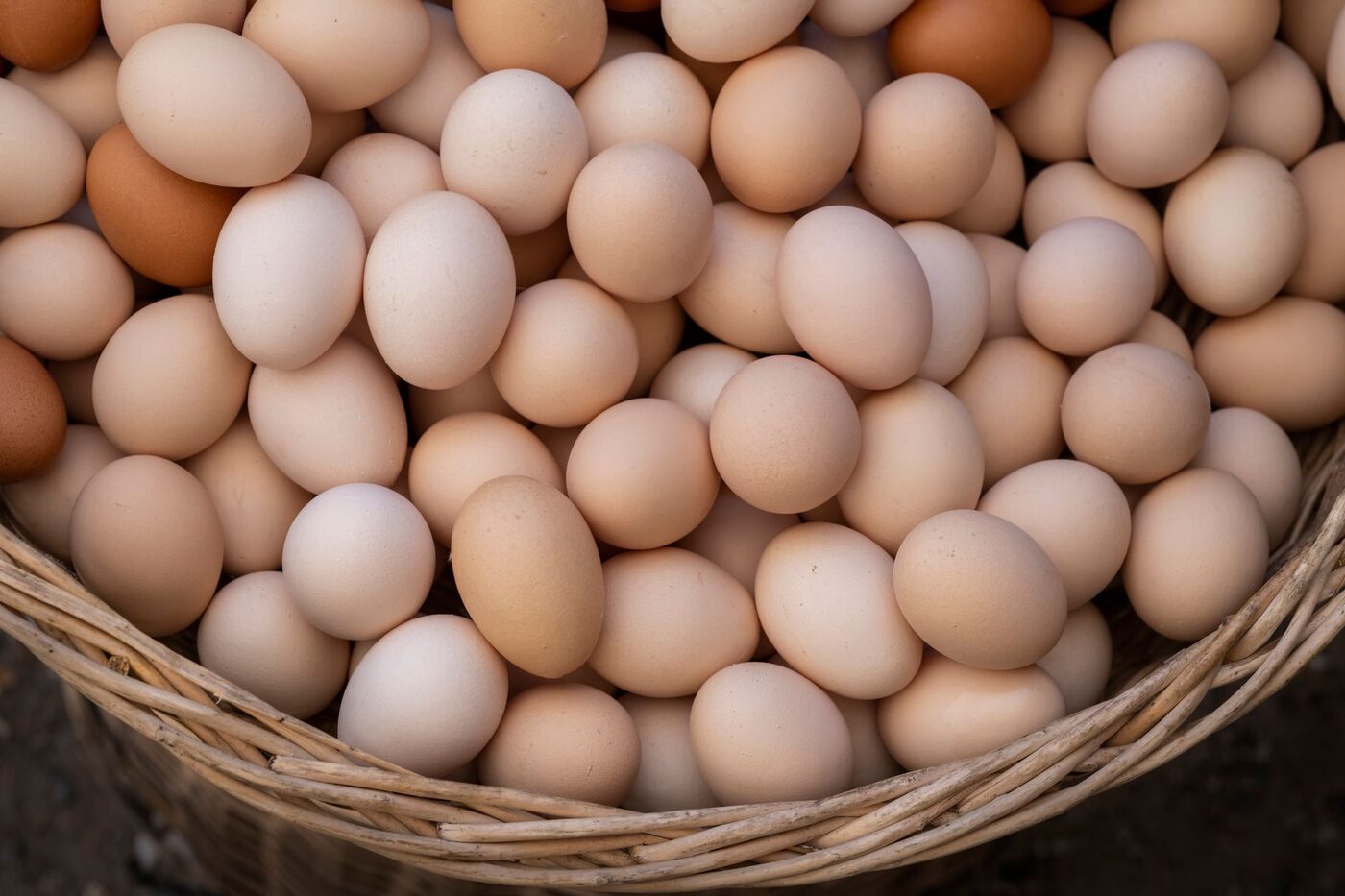
In March 2025 a dozen large eggs averaged $6.23 in US cities, and university poultry specialists kept getting one question: would a backyard flock pay for itself? Chicks bought that month would have started laying around July or August. By August the average was $3.59. In September 2026 it was $2.27, according to the Bureau of Labor Statistics egg price series.
Against that, University of Maryland Extension’s 2026 flock budget puts a dozen backyard eggs at $3.37. That covers feed, chicks, a modest coop and the power bill for ten hens over three years. Your time is not in it.
Your number will land somewhere else, and you can predict which way. So here is the budget, then that budget cut down to six hens.
Maryland’s ten hens, line by line
The fact sheet starts ten chicks and counts 895 laying days across three years, with about 200 days lost to growing and molting. It assumes a 70 percent lay, seven eggs a day from ten birds, with 20 percent mortality and winter lighting already folded in. That makes 522 dozen.
The six-hen columns are my rework, illustrative and not published by the extension. Feed, chicks, bedding and cartons shrink with the flock. I left the coop, the kit and the electricity alone, because six hens want a coop, a brooder heater and a bulb on a timer too.
| Line | Ten hens, 3 years | Per dozen | Six hens (illustrative) | Per dozen |
|---|---|---|---|---|
| Layer feed ($15 per 50 lb bag) | $705 | $1.35 | $423 | $1.35 |
| Chick starter and grower | $49 | $0.09 | $29 | $0.09 |
| Chicks at $6 | $60 | $0.11 | $36 | $0.11 |
| Bedding | $45 | $0.09 | $27 | $0.09 |
| Egg cartons | $25 | $0.05 | $15 | $0.05 |
| Electricity | $200 | $0.38 | $200 | $0.64 |
| Coop and run | $500 | $0.96 | $500 | $1.60 |
| Heater, feeder, waterer, bins | $175 | $0.34 | $175 | $0.56 |
| Total | $1,759 | $3.37 | $1,405 | $4.49 |
| Dozen eggs | 522 | 313 |
Look at the bottom half of the table first. Feed per dozen doesn’t care how many birds you keep, but the coop does: 96 cents a dozen at ten hens, $1.60 at six. Hold the fixed costs steady in my rework and four hens come to $5.88 a dozen, eight to $3.79.
Feed comes down to the price of a pound
Forty-seven bags sounds like a lot until you check it. That’s 2,350 pounds over 8,950 hen-days, or 0.26 pounds a day, and Oklahoma State’s backyard hen budgeting fact sheet uses 0.25. The appetite isn’t in dispute. What you pay for it is.
Maryland’s feed line gives you a formula you can run in the feed store parking lot: bag price, divided by 50, times 4.5. A $15 bag is $1.35 a dozen. A $20 bag is $1.80. A $25 bag, which is my example and not a quote, is $2.25, and it takes the six hens to $5.39.
Then there’s the outlier. Meg Brew’s 2023 feed calculation for UF/IFAS Extension in Lake County reached $6.11 a dozen on feed alone, using the average of five popular brands and a generous 20 dozen eggs per hen. The post doesn’t print a pound price, but at a quarter pound a day it implies about $1.34 a pound, roughly four and a half times Maryland’s 30 cents.
Two extension services, same bird. My guess is that the gap is mostly retail brands against 50-pound sacks from a farm supply, and Maryland does note that buying in quantity lowers the cost. Price a 50-pound bag within driving distance before you buy a single chick.
Lay rate is hiding inside the feed bill
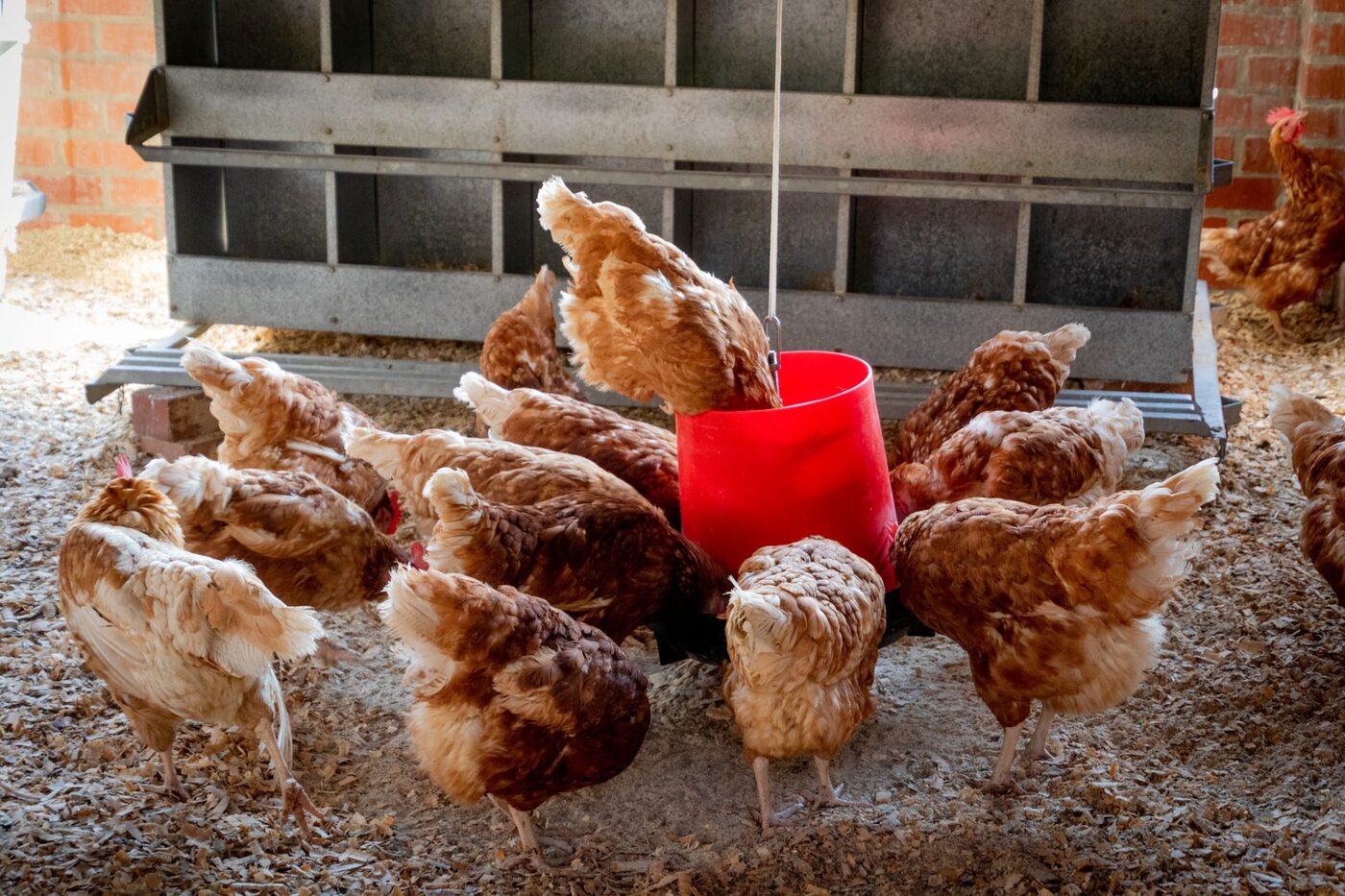
Hens eat on the days they don’t lay. A bird on a quarter pound a day eats three pounds in twelve days, so if she laid every one of those days, a dozen would take three pounds of feed. At a 90 percent lay it takes 3.3. At 70 percent, 4.3, which is close to Maryland’s 4.5. At 50 percent, six.
And 50 percent is no pessimist’s number. Oklahoma State’s budget assumes an egg every other day, while Maryland’s 70 depends on lights through winter. Put my six hens on Oklahoma’s rate and that $1,405 buys 224 dozen, or $6.28 a dozen by my arithmetic, since Oklahoma publishes no dollar result. Switching the lights off would hand back some of the $200 for electricity, nowhere near enough to close that.
Lighting has its own small trap. University of New Hampshire Extension says you can provide at least 14 hours of total light from September 1 to May 1, at some cost to the natural molt, and Oregon State warns that even one missed day can dent production, so use a timer and don’t rely on memory. Plenty of keepers skip all this and let the flock rest. That is a decision about the birds as much as the money, and our first-year chicken care guide goes through what daylight and the molt do to a hen.
Breed is the other lever, and it’s one you only pull once. University of New Hampshire’s yearly egg estimates by breed put White Leghorns at 250 to 300 eggs, Rhode Island Reds at 250 to 280, Buff Orpingtons at 200 to 280 and Standard Cochins at 100 to 160. Take a Cochin at 130 eggs, call it eleven dozen, and she costs about $2.50 a dozen in feed even on a $15 bag. Oregon State also calls Cochins champions at going broody, and a broody hen stops laying. A pretty flock is a fine reason to keep hens. Keep it out of the savings column.
The coop is the one cost you can outlast
Startup is where budgets get rewritten. Maryland’s $500 buys a simple chicken tractor, and the fact sheet warns of several hundred to over a thousand dollars up front. Put a $1,500 build under the six hens, again my example, and the three-year cost jumps to $7.68 a dozen.
It works the other way too. A coop outlives its hens. Spread the $675 of coop and kit across a second flock of six and my six-hen number falls to $3.41, about a dollar less for not buying another coop. Oklahoma State’s advice for flocks past their payback is blunt: set the fixed costs to zero.
So the buyer who loses worst is the one who builds big, keeps birds for two years and gives up.
Why keeping old hens doesn’t rescue the sum
UC Cooperative Extension in Sonoma says egg production falls about 10 to 20 percent a year, and Wisconsin’s extension tells owners to add pullets every two to three years. Take 15 percent and a hen who starts at 20 dozen, both illustrative. She gives about 14.5 dozen in year three and 10.4 in year five, while eating her 91 pounds regardless. On a $15 bag her feed cost per dozen goes from $1.37 to $1.89 to $2.62.
I’d keep her anyway, and you probably will too. But that’s a pension and it belongs in the hobby column.
What to compare it with at the store
The $2.27 is the average for a carton of grade A large. It may not be what you’d buy. USDA’s weekly Egg Markets Overview, which that link replaces with each new edition, had caged eggs on October 30, 2026 advertised at an average $1.42 a dozen and barn or aviary cage-free at $2.98. USDA’s monthly cage-free report for September has large white cage-free cartons advertised at an average $2.10 and large brown at $3.88. Those are ad prices, so shelf prices differ, but the ladder is the point.
If $3.88 is your usual carton, Maryland’s $3.37 wins. Six hens at $4.49 don’t. At $2.10, neither does.
Add it up as a total and the picture gets kinder. My six hens lay 313 dozen, which is $711 of eggs at today’s $2.27, for a flock that costs $1,405. The gap is about $694 over three years, or $4.45 a week.
One low month is a thin basis for a three-year flock, though. The BLS average over the 35 months reported from October 2023 to September 2026 is about $3.21. At that price Maryland’s ten hens lay about $1,675 of eggs against their $1,759, so the three-year average still falls short of $3.37, but only just. My six hens’ gap shrinks to about $400.
Tom Tabler at the University of Tennessee answers the savings question with a plain no. On these numbers I agree with him, though at ten hens it’s close. And at today’s price, four and a half dollars a week for six chickens and a basket of eggs is a cheap hobby, as hobbies go.
What the budget leaves out
Labor, on purpose. The authors estimate 20 minutes a day, 361 hours over the three years, and say that pricing it would put backyard producers off. Their table stops there. Price those hours at the $7.25 federal minimum wage, which is my sum and not theirs, and you get $2,617, or $5.01 a dozen, taking Maryland’s $3.37 to $8.38. I’d leave it out too if you like the chore. If you don’t like it, there’s your answer.
There is no vet line either. Florida’s post says those bills vary considerably, and Oklahoma State tells you to add any medicine or vet costs you incur. Oklahoma’s template also carries water, which Maryland’s doesn’t. And while the 20 percent mortality is inside the lay rate, the replacement birds are not. One fox visit changes your year in a way no spreadsheet line will.
What selling the surplus does to the number
Six hens at 70 percent make about two dozen a week. On my six-hen numbers, eating one and selling the other at $6, the value Maryland itself uses, brings back roughly $940 over three years. Your half then costs about $2.97 a dozen in that example.
There are two catches. Would your neighbors pay $6 when the store average is $2.27? And is it allowed? The fact sheet tells you to check with state and local authorities first, since rules can cover licensing, labeling, packaging, storage and sanitation. Many states, Maryland and Delaware among them, also require backyard flocks to be registered.
Finding your flock’s number
All of the above is somebody else’s flock. Yours needs two running totals: what went into feed, and how many eggs came out. A notebook in the feed bin does that if you write in it. So does a flock and egg tracker that logs feed bags beside the daily count. ChickKeep’s feed log takes each bag’s brand, type, weight, price and the date you opened it, and eggs go in with a plus button on the Today screen. The Insights tab shows your average per day over 7 or 30 days, and dividing that by your hen count gives you the lay rate. For example, 5.4 eggs a day from eight hens is 67.5 percent, right around what Maryland assumes.

The paid tier does the feed half of this for you. Its year-in-review card adds up the last twelve months and prints Feed spent and Cost / egg. Multiply that by twelve and set it beside Maryland’s $1.35. Three things to know when you read it. Every bag counts on the day you open it, grit and oyster shell included, so it reads a little high right after a fresh sack. Eggs you forgot to log count as eggs never laid. And it is feed only, with no field for the coop, the chicks or the power bill and no spreadsheet export, so the rest of the table stays on paper.
For the whole-flock number, Oklahoma State’s formula is as simple as it gets: total cost divided by eggs laid.
These are worked examples and general information, not financial or veterinary advice. Feed, chick and egg prices move, so check your numbers and any rules on selling eggs with your state’s extension office or department of agriculture.
Tonight, dig out the receipt for your last feed bag and run the formula on it. Then start counting tomorrow, on paper or in ChickKeep, and next November the number you quote will come from your flock.
Common questions
Is it cheaper to keep chickens than to buy eggs?
At fall 2026 prices, usually not. University of Maryland Extension's budget comes to $3.37 a dozen before any labor, and the US city average for grade A large eggs was $2.27 in September 2026. The gap closes only if your usual carton is something like cage-free large brown, advertised at an average $3.88 in September, and not cage-free large white at $2.10. It narrows to about $2.72, on my arithmetic, if the same coop serves a second flock of ten.
How much does it cost to feed a chicken for a year?
A laying hen eats about a quarter pound a day, roughly 91 pounds a year. At $15 for a 50-pound bag, the price in Maryland's budget, that is about $27 a hen. A $25 bag makes it about $46.
How many eggs does a backyard hen lay in a year?
University of Florida Extension expects 17 to 20 dozen from a hen in a well-managed backyard flock. Breed changes that a lot: University of New Hampshire Extension lists White Leghorns at 250 to 300 eggs a year and Standard Cochins at 100 to 160. Output then falls about 10 to 20 percent a year.
How long does a backyard flock take to pay for itself?
Compare the total spend with what the same eggs would cost you in a store. Maryland's ten hens cost $1,759 and lay 522 dozen over three years, which is about $1,185 of eggs at today's $2.27 a dozen, so at that price the flock does not pay back in its lifetime. At the three-year average of about $3.21 it falls roughly $84 short. It only pays back if the eggs you replace cost more than $3.37 a dozen.
Photos: Engin Akyurt / Pexels , Magda Ehlers / Pexels