
















































































































































































Why Is My Bonsai Dropping Leaves? Read the Pattern
Autumn, a move indoors, soggy roots or spider mites: how to tell why your bonsai is losing leaves from which ones fall, and what to check first.
Which leaves are falling tells you more than how many. A bonsai that drops its leaves is nearly always doing one of four things: going dormant for winter, adjusting to a move (new light, new temperature), reacting to roots that are too wet, too dry or recently cut, or carrying sap-sucking pests such as spider mites or scale. The first is normal. The second tends to settle within four to six weeks if you leave the tree alone. The last two need a check this week, starting with the soil and the undersides of the leaves.
The trick is reading the pattern. Old leaves near the trunk going yellow in October say something quite different from fresh leaves at the branch tips dropping green in January.
Is it just autumn?
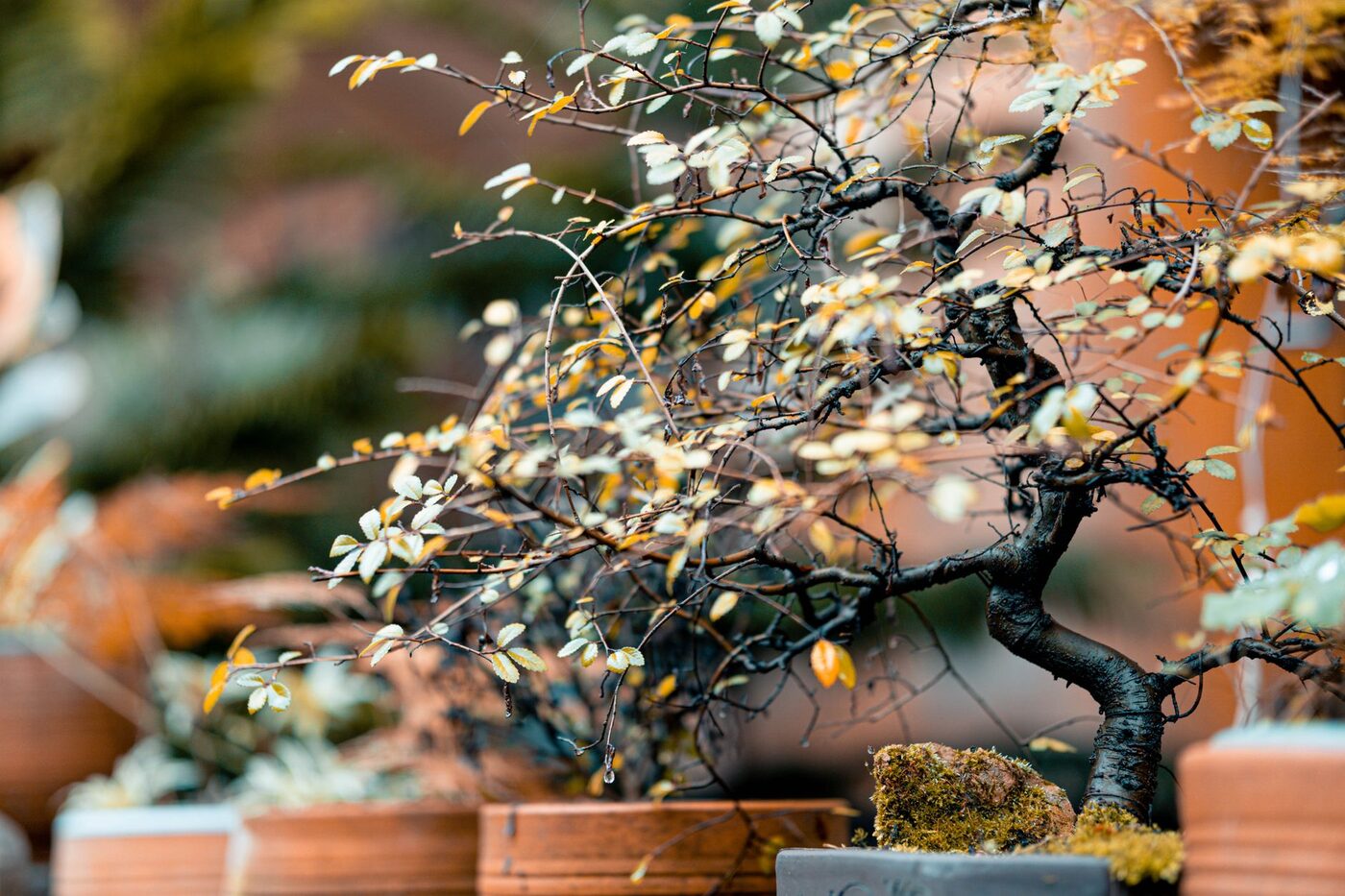
Maples, hornbeams, elms, beech, zelkova and larch are deciduous. In the words of the RHS guide to growing bonsai, leaf fall in these trees “is a natural process triggered by the season’s shorter days and lower temperatures.” A Japanese maple on an outdoor bench in late October should be turning colour and letting go. If it held every leaf into December, that would be the odd thing.
Chinese elm muddies this, because it is grown both indoors and out and its habit depends on where it lives. The RHS plant entry calls it “deciduous or semi-evergreen”, with leaves that turn yellow or red in autumn and then “remain on the branches until midwinter”. A partial drop in a warm room and a full one outside are both normal.
Indoor tropical species have their own small version. The RHS notes that some of them “will lose a few old leaves in the spring to make way for some new ones.” A handful of older leaves in April, with new growth showing, is replacement rather than decline.
Conifers shed too, from the inside out
Evergreen does not mean every needle stays forever. Pines, spruce and fir drop their oldest needles, and they do it in autumn. Wisconsin Horticulture Extension’s note on seasonal needle drop describes the tell: the yellow needles sit toward the centre of the tree, and there is “an abrupt change from innermost yellow to green further out on branches.” That sharp boundary is the good sign.
How much falls depends on the tree. Iowa State Extension notes that Scots and Austrian pines keep their needles for three years, so their autumn shed is less noticeable than a white pine’s, which loses all of last year’s needles at once. It also says the drop is “often especially noticeable after stressful summers or falls”, so a pine that went short of water in August can look alarming in October and still be fine.
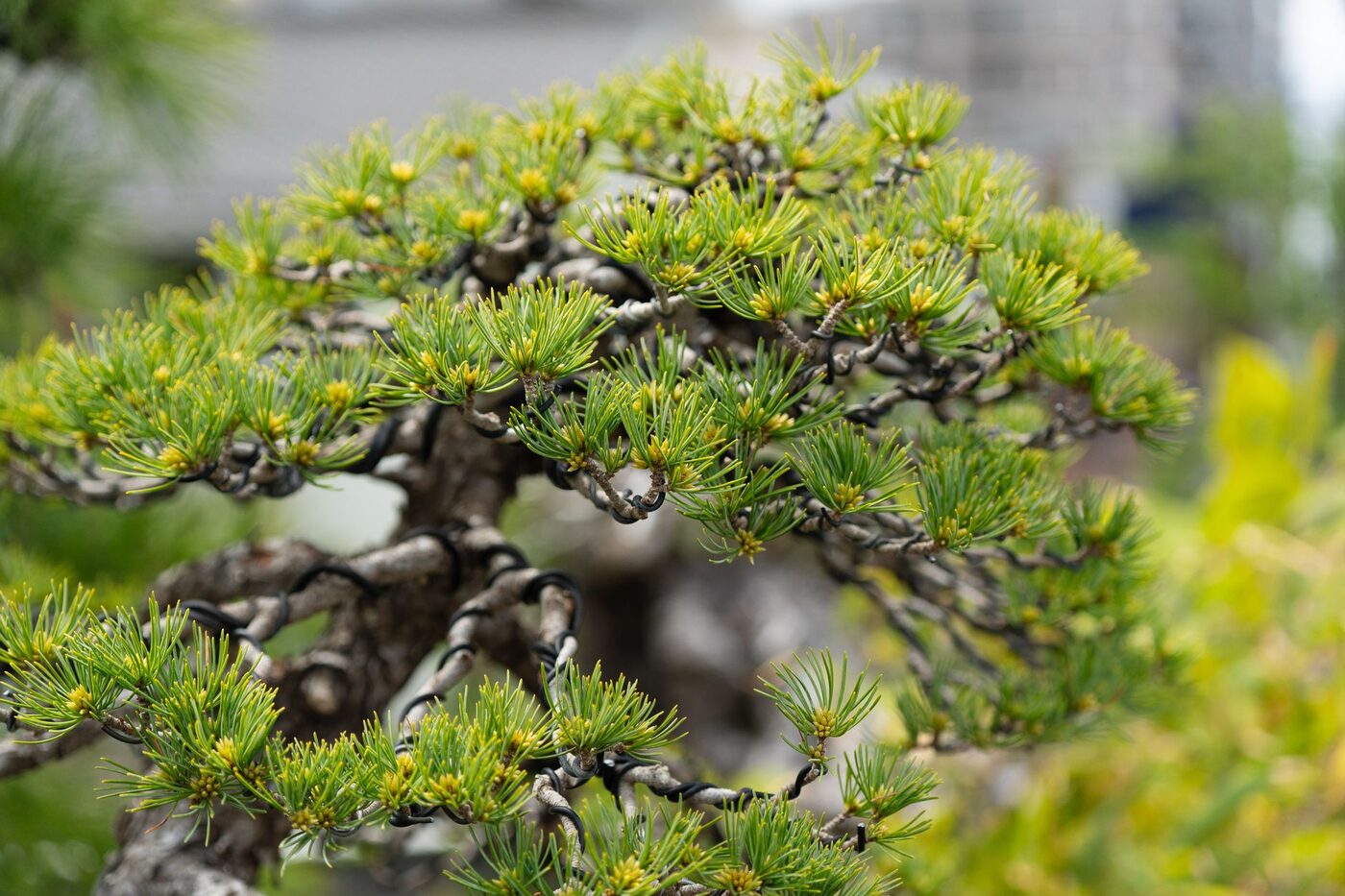
Larch is the exception that catches people out. It is a conifer that loses every needle in autumn and stands bare all winter, and a larch in November is easy to mistake for a dead tree.
What is not seasonal: browning that starts at the newest growth, whole branches dying back, or needles going off-colour in spring or summer. Both extension services list those as signs of disease or an environmental problem, and they are worth a closer look.
Read which leaves are falling
Before changing anything, look at where the dropped leaves came from and what they looked like on the way down.
| What you see | Most likely cause | First thing to check |
|---|---|---|
| Whole canopy colours, then falls, in autumn | Deciduous dormancy | The species and the season |
| Oldest needles near the trunk yellow, tips stay green, in autumn | Seasonal needle drop | A sharp yellow-to-green line along each branch |
| Leaves falling within a few weeks of a move | Change in light | When the tree last moved, and where from |
| Lower leaves wilting while the soil is wet | Root rot from overwatering | Whether the roots are firm and white or soft and brown |
| Leaves drying and falling after hot or windy days | Root ball dried out | How dry the pot got, and when you last watered |
| Fine pale speckling, then bronze or yellow, then drop | Spider mites | Tap a branch over white paper |
| Sticky leaves, black film, bumps on stems | Scale insects | The undersides of leaves and the bark |
A tree can have two of these at once. A ficus moved indoors in October goes through a light change and then sits next to a radiator, which dries the air the way spider mites like it.
Did the tree move in the last six weeks?
For an indoor bonsai this is the first thing to rule out, and the weeping fig, Ficus benjamina, is the classic case. It is one of the species the RHS lists for growing indoors, and Clemson Extension’s factsheet on weeping ficus puts the problem bluntly: “Weeping figs seem to react to almost any stress by shedding leaves.”
The worst stress is light. Missouri Botanical Garden’s answer to why a weeping fig drops its leaves says that “abrupt changes in the light environment, especially bright to relatively dim, will often trigger significant leaf drop.” A ficus that spent the summer on a patio and comes in on the first cold night is making that jump.
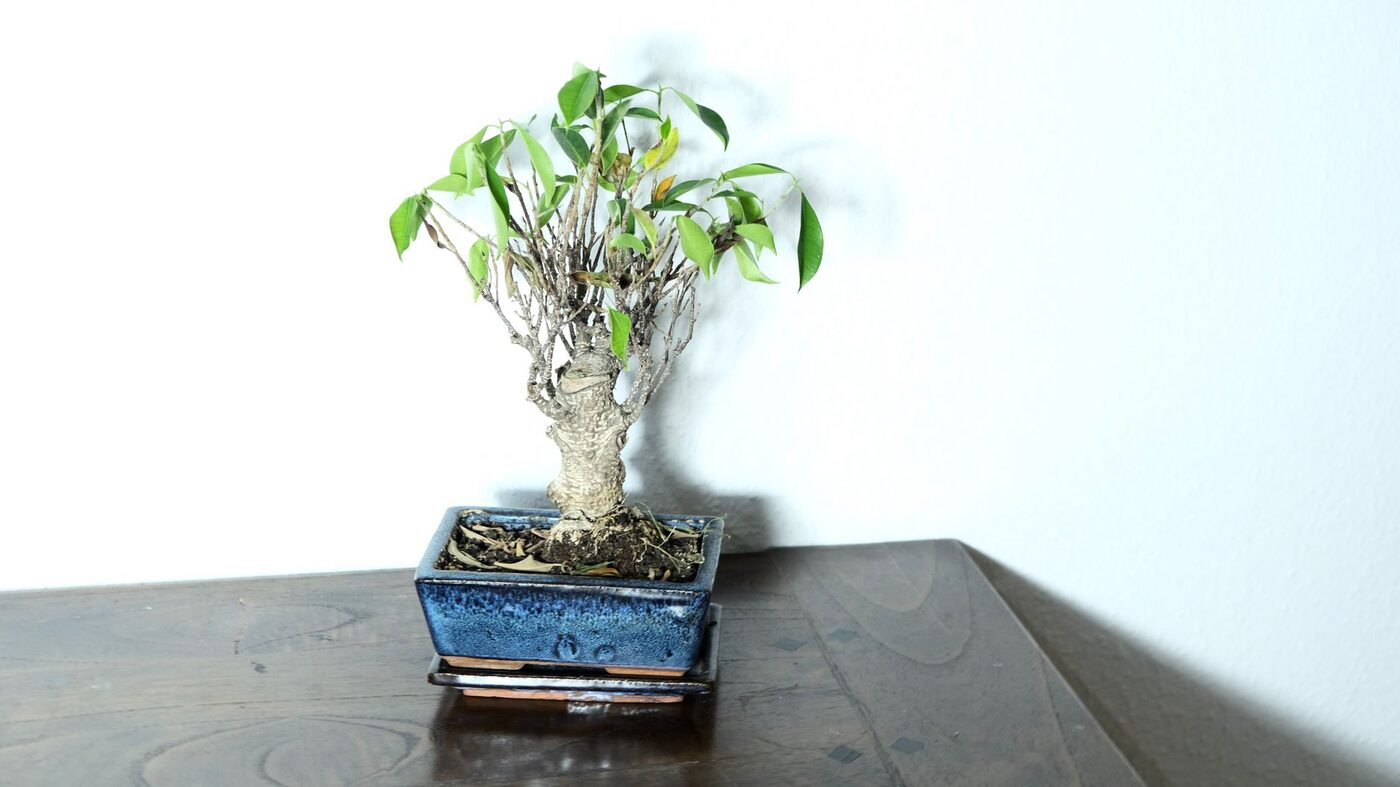
The fix is mostly patience. Oklahoma State Extension’s advice for ficus brought indoors is that “it’ll take the plants four to six weeks to reacclimate to the indoor atmosphere”, after which a new set of leaves suited to lower light appears. Growers have studied this too. A 2001 paper by Bulle and de Jongh in Acta Horticulturae on the shelf life of Ficus benjamina found the species “very sensitive for leaf drop”, that the drop could be reduced by giving plants high light after transport, and that a shaded acclimatization period before sale needed to last “at least three weeks” to help.
The practical version for a bonsai: move it in stages. Missouri Botanical Garden suggests a week or two on a shaded porch before the final move indoors. And once it is inside, stop moving it. Every new window is another adjustment.
How much light is a windowsill, really?
Less than you think. The University of Missouri Extension guide to lighting indoor houseplants puts low-light plants at 50 to 250 foot-candles and medium-light plants at 250 to 1,000. It also warns that “even low-light plants usually do not receive enough light at distances greater than 10 feet from an average window.”
An indoor bonsai is not a low-light plant either: the RHS says indoor species “require lots of light”. On a shelf across the room, a bonsai is living on a fraction of what it had outside. Up against the glass of the brightest window is the place, and if that falls short in a northern winter, a grow light is a reasonable answer rather than a defeat.
Heat vents, cold glass and the 50 °F line
Temperature swings come next. Clemson warns that putting a weeping fig “near a heat vent or draft” will “cause excessive leaf drop”, and gives its ideal as 65 to 70 °F at night and 75 to 85 °F by day (about 18 to 21 °C and 24 to 29 °C).
The cold end matters for timing the move. Oklahoma State says ficus “don’t fare well in temperatures below 50 degrees Fahrenheit”, which is 10 °C. Missouri Botanical Garden sets an earlier mark: bring the plant in before September nights fall below 55 °F, about 13 °C. If your tropical tree sat out through a few cold nights before you remembered it, some of the drop you see now traces back to them.
The windowsill catches people both ways. The glass is cold at night, the radiator underneath it is hot by day, and the tree sits in the middle of the swing.
Too dry and too wet look the same from the top
A bonsai pot holds very little water. The RHS points out that the compost “is also prone to drying out during warm and windy weather”, that summer can mean watering “once or twice daily”, and adds a line every grower learns the hard way: “a dry week in winter can catch you out.”
Overwatering produces drop too, and it is sneakier. Iowa State Extension’s page on root rot in houseplants says the symptoms “begin with wilting of bottom leaves” and are “commonly mistaken for lack of water”. So the wilting tree gets watered, and the rot gets worse.
The only way to know is to check before you pour. Push a finger into the soil. If it is wet and the tree is wilting anyway, slide the tree out of the pot and look at the roots. Iowa State’s test is simple: healthy roots are “firm, white”, rotted ones “mushy” and “brown or reddish”. The daily soil check in our guide to bonsai care for beginners is the habit that heads off both problems.
Was it repotted or cut back hard?
Root work costs the tree leaves for a while. Clemson notes that weeping figs “often shed leaves when moved to a new location or repotted”, and the RHS’s repotting instructions end with keeping the tree “in a shady, sheltered spot to reduce additional environmental stresses until it has firmly re-established”. A tree repotted in spring that drops some leaves over the following weeks is recovering. One repotted in October, out of season, is under real strain.
Feeding is the instinctive response to a sickly tree and in most cases the wrong one. Cut or damaged roots cannot take up much, and the RHS warns that overfeeding gives “excessive growth prone to pest and disease”. If you fed it heavily, repotted it and pruned it in the same fortnight, you have your answer.
Pale, speckled leaves point to spider mites
When leaves go pale and speckled before they drop, suspect spider mites. The UC IPM pest note on spider mites describes the progression: “damage first appears as a stippling of light dots on the leaves; sometimes leaves turn a bronze color. Heavily infested leaves can turn yellow and drop off.” Bad infestations add fine webbing between leaves and twigs.
You will rarely see the mites at first glance. Adults are under 1/20 inch long. The UC IPM trick is to tap a branch over a white sheet of paper and watch for tiny moving dots.
Heat is what turns a few mites into a crisis. UC IPM says damage “is usually most severe in hot, dusty conditions and on water-stressed plants”, and that in warm weather a generation can be completed in less than a week. The RHS gives figures for the common greenhouse species: about 55 days from egg to adult at 10 °C, and 12 days at 21 °C. UC IPM also notes that outdoor mite numbers can crash as the weather turns cooler. A warm, dry room never gives them that break, which is why a Chinese elm beside a radiator can be overrun in January.
One consolation from UC IPM: “Sometimes the mites will be gone by the time you notice the damage; plants will often recover after mites have left.” Check for live mites before you spray anything.
Scale, and the sticky-leaf test
Scale insects are the other common culprit, and Clemson lists both spider mites and scales as frequent pests of weeping fig. The RHS counts more than 25 species in British gardens. They look like small shell-like bumps on stems and the undersides of leaves, easily taken for part of the bark. Many excrete honeydew, which makes leaves sticky and can grow a black sooty mould on top.
Run a finger over the upper surface of a few leaves. Sticky means something is feeding above them. Then turn a branch over and look along the stems.
Why last month’s notes are the fastest diagnosis
Almost every cause above comes down to a date. When did the tree come indoors? When was it last repotted? Did the watering slip while you were away? Leaf drop shows up days or weeks after the thing that caused it, so the question is never only what is wrong now. It is what changed last month.
Most people cannot answer that from memory, which is the case for writing it down. BonsaiLog, a bonsai care log and photo timeline for Android, keeps a dated record per tree: watering, fertilizer, repotting with the soil mix, wiring, pruning and a Pest & disease entry with fields for the issue you saw and the treatment you used. Moving a tree has no type of its own, so it goes under Other, where the hint text suggests that kind of entry: “moved to the shade bench”. Each entry can carry a photo.

When the leaves start falling, you open the tree’s log and read back. The photo timeline helps too: the Compare view shows any two dated photos of the same tree on one screen, each with its date, so last month’s canopy can sit next to this week’s. The app does not diagnose anything, and it will not tell you to water or repot. It shows you what you did and when, and with the dates in front of you the cause stands out.
Showing someone who can help
Take a struggling tree to a club meeting or a nursery and the first questions will be about what has happened to it lately. BonsaiLog Premium can export a tree’s biography as a PDF: a cover with the species, age estimate, pot and the date it joined your collection, the tree’s photos in date order, and every care entry in a table of date, type and detail. Hand that over with the tree, and whoever is helping can see the repot in May and the move indoors three weeks ago without relying on your memory.
What to do this week
Look at which leaves fell and match them to the table. If it is a deciduous tree in autumn or an old-needle shed on a pine, leave it alone. If it is a ficus or an elm that came inside recently, give it the brightest window you have, keep it away from the radiator and stop moving it. Check the soil before every watering, and tap a branch over white paper once a week until the spring.
Then start a record so the next round of leaf drop takes five minutes to explain. Note today’s date, the tree and what you did to it this month, in a notebook or in BonsaiLog’s care log, and take one photo of the canopy as it looks now.
Common questions
Is it normal for a bonsai to lose its leaves in autumn?
Yes, if it is a deciduous species such as a maple, elm, hornbeam or larch. Shorter days and lower temperatures trigger the drop, and the tree is bare until spring. A Chinese elm is less predictable: the RHS describes it as deciduous or semi-evergreen, with autumn leaves that can hang on until midwinter.
Why is my ficus bonsai dropping leaves after I brought it inside?
Almost certainly the change in light. Weeping figs shed leaves after an abrupt move from bright to dim, and Oklahoma State Extension puts the adjustment at four to six weeks, after which new leaves suited to lower light appear. Put it in the brightest spot you have, away from heating vents and cold glass, and resist moving it again.
Why are the inner needles on my pine turning yellow?
If it is autumn, the yellow needles are the oldest ones nearest the trunk, and there is an abrupt line where they meet green needles further out, it is seasonal needle drop and nothing needs doing. Browning that starts at the newest needles, kills whole branches, or turns up in another season is a different problem.
Can overwatering make a bonsai drop leaves?
Yes. Constantly wet soil lets root rot take hold, and the first symptom is wilting of the lower leaves, which looks like thirst. Before watering a wilting tree, check that the soil is dry. Healthy roots are firm and white; rotted ones are soft and brown.
How do I check a bonsai for spider mites?
Look for fine pale speckling on the leaves, then hold a sheet of white paper under a branch and tap it. Spider mites fall off and show up as tiny moving dots. They breed fastest in warm, dry air, which puts indoor trees near a radiator at risk in winter.
Photos: Chengxin Zhao / Pexels , Skylar Kang / Pexels , Jens F / Pexels