













































































































































































How Many Photos Until Nobody Blinks in a Group Shot?
The divide by three rule for group photos with every eye open, where it came from, why dim light and chatty groups need more frames, and when 50 is hopeless.
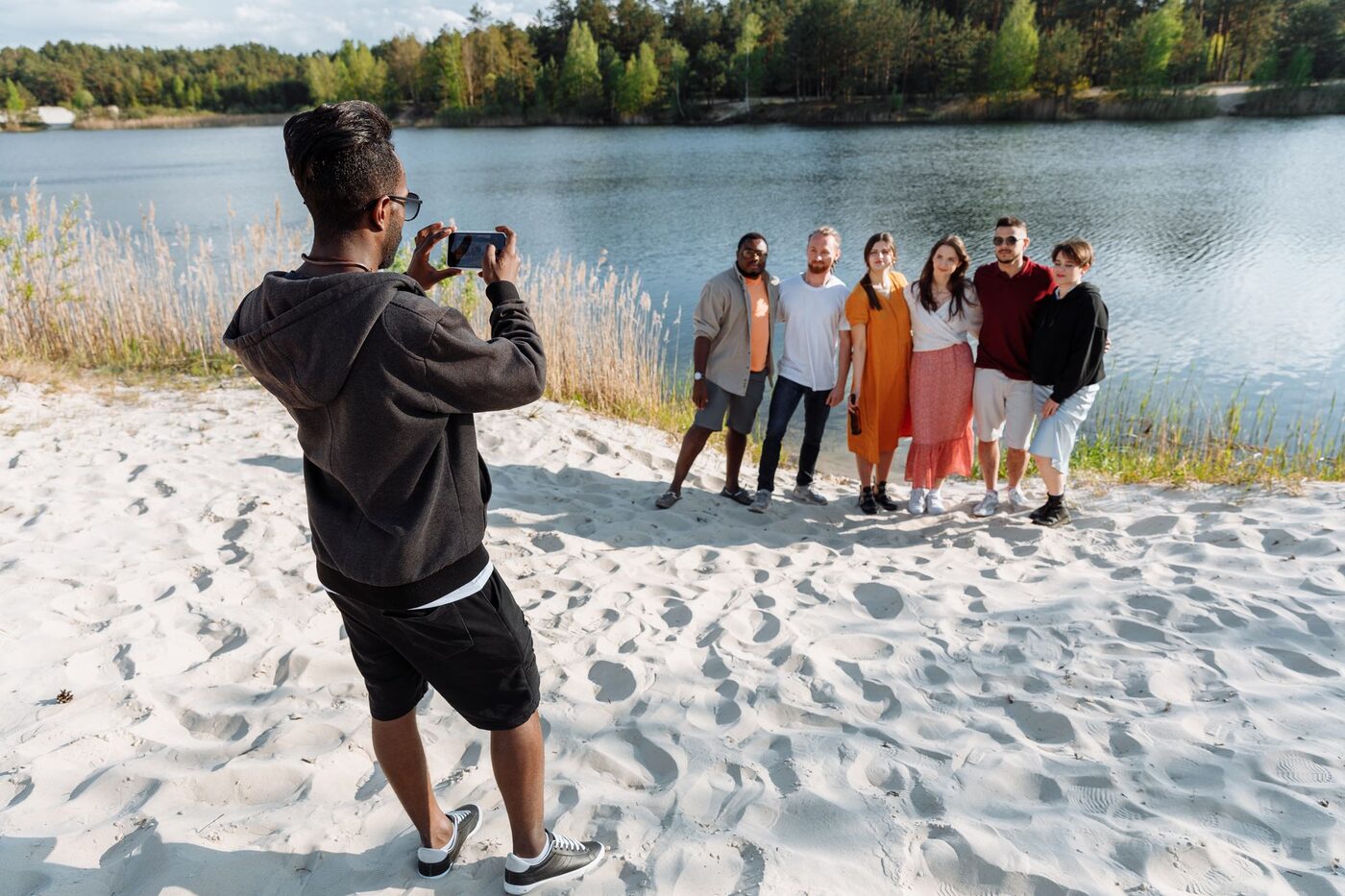
Twelve people on the steps, the phone propped on a wall, and you running back to squeeze in at the end of the row. How many photos should you take before one of them has every pair of eyes open? Four, if the light is good. Six, if it is not. That comes from a rule worked out at Australia’s national science agency, CSIRO: for a group of fewer than 20, divide the number of people by three in good light, and by two in bad light.
The rule won an Ig Nobel Prize, and even the prize citation hedges with an “almost”. The reasons it can be too generous are the useful part.
Where the divide by three rule comes from
Nic Svenson was a communications officer at CSIRO who took a lot of group photos. “The number of people blinking in photographs is driving me nuts,” she told ABC Science in 2006. She gathered three numbers: how long a blink lasts, how many times people blink per minute, and how fast camera shutters go. Piers Barnes, a physicist in the same division, turned them into a probability, working from the assumption that blinks are random and one person’s blinks do not influence another’s.
Then he ran the equation backwards to get a number of photos, which is where the divide by three comes from. Beyond 20 people, Svenson said, the number of shots needed “increases exponentially”, and by about 50 people you can “kiss your hopes of an unspoilt photo goodbye”.
The work was written up in CSIRO’s Velocity magazine in June 2006, and it appears on the Ig Nobel Prize winners list for 2006 under mathematics: “for calculating the number of photographs you must take to (almost) ensure that nobody in a group photo will have their eyes closed”. Both of them went to the ceremony at Harvard.
Why does one blink spoil so many frames?
Because every person in the frame is a separate chance to fail, and the chances multiply.
Start with one person. Harvard’s BioNumbers entry for blink duration puts the average single blink at 0.1 to 0.4 seconds. For blink rate, a 1997 study of 150 healthy volunteers in Movement Disorders measured a mean of 17 blinks a minute at rest. Take a quarter of a second as a middling blink, an illustrative figure inside that range, and one resting person has their eyes shut for 17 times 0.25 seconds out of every 60, which is about 7 percent of the time.
Seven percent sounds harmless for one person. Put ten of them in a row and the chance that all ten have their eyes open at the same instant is 0.93 multiplied by itself ten times: about 48 percent. Every single frame of ten people is close to a coin toss. At 20 people it drops to about 23 percent, and at 50 it is around 3 percent. All of those are illustrative numbers built from the published averages, and real people are not average, but the shape is right. The risk grows with every face you add, and it grows faster than the group does.
That is the case for shooting more than one frame. Each extra frame is one more ticket in the same draw.
What the rule leaves out
The same 1997 study found that blink rate is not fixed. Reading pulled the average down to 4.5 a minute. Conversation pushed it up to 26. The authors concluded that blink rate “is more influenced by cognitive processes than by age, eye color, or local factors”, and found no difference for eye colour or for people wearing glasses.
Think about what a group is doing in the minute before a photo. Talking. Laughing at whoever is directing. Telling the child at the front to stand still. That is conversation, and at 26 blinks a minute the eyes-shut share climbs to about 11 percent (again illustrative, same quarter-second blink).
The two right-hand columns below are illustrative: frames for a 95 percent chance that at least one is clean, using the published blink rates and a 0.25 second blink.
| People | Divide by 3 (good light) | Divide by 2 (bad light) | Illustrative, resting group | Illustrative, chatting group |
|---|---|---|---|---|
| 4 | 2 | 2 | 3 | 3 |
| 6 | 2 | 3 | 3 | 5 |
| 10 | 4 | 5 | 5 | 8 |
| 15 | 5 | 8 | 8 | 16 |
| 18 | 6 | 9 | 10 | 23 |
The CSIRO rule sits at the low end of that range, which is fair: it was built as a quick rule, and Svenson’s own inputs are not in the public write-ups I could open, so I cannot say which blink rate it assumed. Use the rule as a floor. If the group has been chatting right up to the shot, double it for about ten people, and above that go by the chatting column. Frames cost nothing; getting fifteen people back on the steps costs a lot.
Why does bad light make it worse?
The rule’s switch from three to two is about the shutter. Nikon’s explainer on shutter speed defines it as “the length of time the camera’s shutter remains open when taking a photograph” and notes that in low light or at night “a slow shutter speed is often necessary to allow enough light to reach your sensor”. A phone works the same way: in a dim room it keeps the exposure open longer.
A longer exposure widens the window a blink can fall into. A blink that starts a moment before the shutter opens, or a moment before it closes, still ruins the frame. Illustratively, add a 1/15 second exposure to the quarter-second blink and the resting group’s eyes-shut share rises from about 7 percent to about 9. For fifteen people that takes the illustrative frames needed for a 95 percent chance from 8 to 11.
The fix is more light on faces, not more light behind them. Turn the group to face the window. Switch on the lamps. Move the shot outside if it is still daylight.
Flash is the tempting answer and a mixed one. A 1983 study in the Japanese Journal of Ophthalmology measured the blink reflex that a light flash sets off, in 22 people. The flash itself makes people blink, so where you can, steady light beats a burst of it.
Can you time the shot around the blinks?
Partly. The formula assumes blinks land at random, and people do not blink at random when they know something is about to happen.
A 2009 study in Proceedings of the Royal Society B opens with the background in one sentence: blinks “are generally suppressed during a task that requires visual attention and tend to occur immediately before or after the task when the timing of its onset and offset are explicitly given.” The researchers then showed that people watching the same video blinked together, at moments that needed less attention, such as the conclusion of an action.
Nobody has run that experiment on a family lined up for a photo, as far as I can find, but the principle points the right way. A group that knows when the shot happens, and when it is over, has somewhere to put its blinks. A silent self-timer gives them neither. They hold their eyes open for a few seconds, wonder whether it has fired, and blink at the worst moment.
So say the end out loud: “Got it” or “done” tells people they can blink now.
A countdown nobody hears is no countdown
With the rear camera pointed at the group, the screen faces away from everyone in the shot, so a count shown on it helps nobody. A few beeps are not much better from six metres away with a toddler talking.
Spoken numbers work better, and are fiddlier than they look on a phone. Android’s TextToSpeech reference warns that its speak method “is asynchronous, i.e. the method just adds the request to the queue of TTS requests and then returns.” The voice might not have started, let alone finished, when the app moves on. Fire the shutter from a fixed timer and it can go off in the middle of “one”. The shutter has to wait for the voice to finish the last word.
Volume is the other half. If you are tempted to install a booster app for this, read whether volume booster apps are safe for your ears and speakers first. For a countdown, the phone’s own media volume near its maximum is normally plenty, as long as nothing is muffling the speaker.
How a phone can tell whose eyes are shut
You cannot judge twelve pairs of eyes on a phone screen from across a room. This is the job I would hand to the phone.
Google’s ML Kit face detection, which runs on the device, can classify a face as having its eyes open. ML Kit’s face detection concepts page describes the result as “a certainty value”, the confidence that the characteristic is present, given per eye. An app then picks a threshold and decides what counts as closed.
GroupCam is a self-timer camera that checks each photo for closed eyes using that reading. It runs ML Kit in its accurate mode on the full-resolution photo, straight after the shutter, with focus and exposure locked for the capture. A face counts as a blink only when both eyes score below 0.4, so a wink passes. In a Group Shot, if it finds a blink, the phone says “Someone blinked, one more!” and takes one more photo. Once, never in a loop, so nobody is left holding a smile while it chases perfection.
The countdown follows the reasoning above. It announces “Take your places!” at the start of a get-in-position delay you set between 5 and 30 seconds (10 by default), then a chime, “Get ready!”, a spoken three, two, one with large numerals on screen, and “Hold… smile!”. The photo is taken when that last line has finished, and “Got it!” tells everyone they can move. During a session it sets the media volume to 85 percent by default, and puts it back afterwards. On a phone with no speech engine it falls back to a chime and the on-screen count.
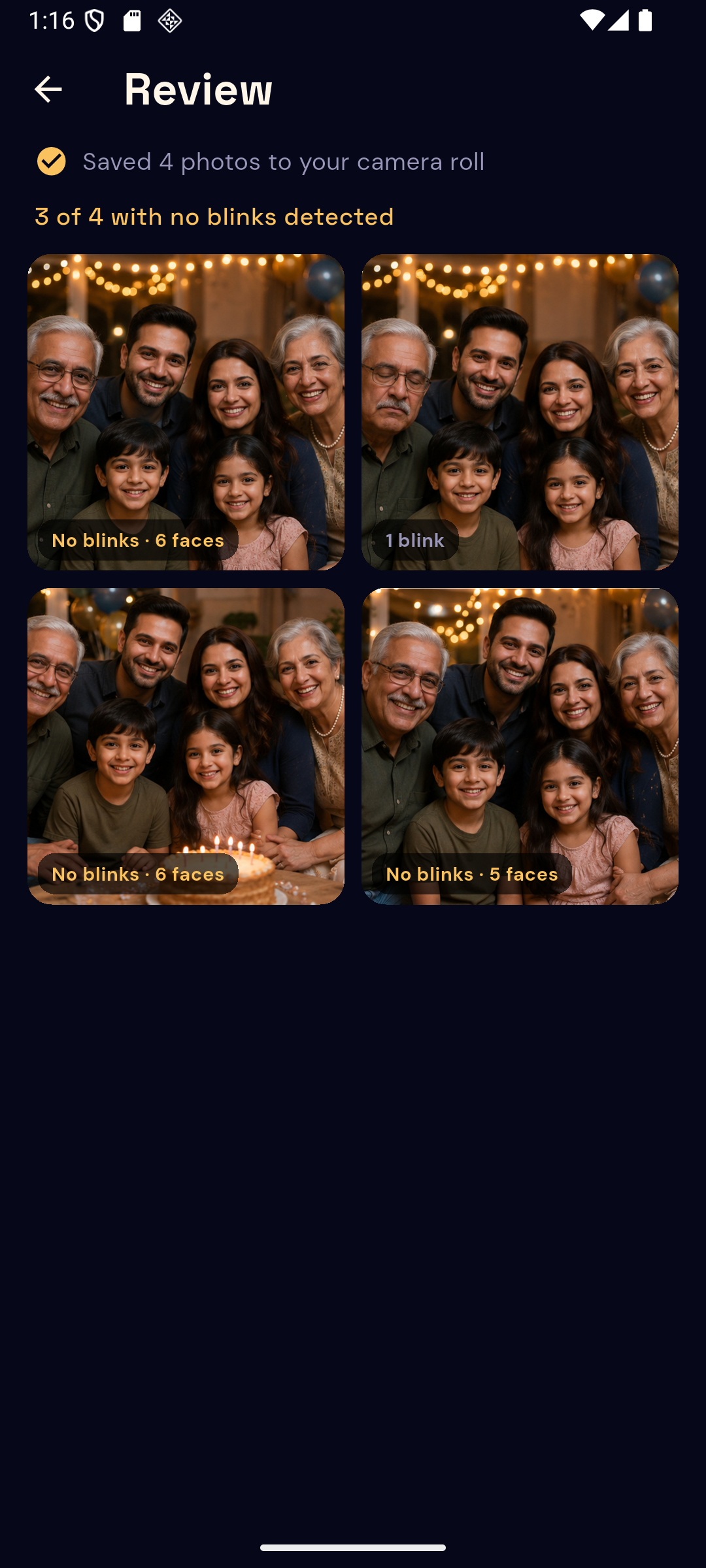
Every photo saves itself to a GroupCam album in your gallery, badged with what was found, such as “No blinks · 6 faces” or “1 blink”. The wording matters. It says no blinks were detected, not that the photo is perfect, because of the limits in the next section.
What a blink check cannot see
Google’s own documentation sets the limits, and they apply whichever tool you use.
Size. Google’s ML Kit face detection guidelines say that in general “each face you want to detect in an image should be at least 100x100 pixels”. On a photo 4,000 pixels wide, an illustrative figure, that is a face one fortieth of the frame across. A big group shot from far enough back to fit everyone in can easily have faces smaller than that in the back row. GroupCam skips any face narrower than 100 pixels rather than guess, so it will not reshoot over a face it cannot read, and it will not vouch for one either.
Angle. ML Kit’s eyes-open classification is one of two that “only work for frontal faces”, with the head turned no more than 18 degrees either way. The cousin laughing at the person beside him is not being checked.
Focus. The same guidelines warn that “poor image focus can also impact accuracy”. A soft frame is a weak frame for the check and for you.
So the badge counts the faces it judged. If it says six faces and you have twelve people, six went unchecked. Zoom in on those before you send the photo to the family group.
Big groups need a run of frames, not one
For four to six people, a guided shot with a retake when a blink is found lines up with the rule’s answer of two frames, and it only spends the second frame when the first one failed. Past ten people, the table says you want a run.
Shoot that run at a steady interval and let the group relax between frames. That is how GroupCam’s Timed Session works. You choose how many photos and how far apart: 2, 3, 5, 10 seconds and so on up to two minutes. Below 5 seconds it skips the spoken countdown so a 2 second interval means 2 seconds, and checks each photo for blinks in the background so the shutter does not wait. Timed photos are badged but not reshot, because the next frame is the retake.
The standard tier runs five photos per session, which is the divide by three answer for fifteen people. GroupCam Pro lifts that to as many as 500. Here is what that buys you, with illustrative numbers. Fifteen cousins who have been talking all through lunch need about 16 frames for a 95 percent chance, by the illustrative chatting column above. Set 16 photos, 10 seconds apart, and the last frame is taken about two and a half minutes after the first. When it ends, the review screen shows how many came back with no blinks detected, and you pick from those.
Is fifty people really hopeless?
Not hopeless. Expensive in frames.
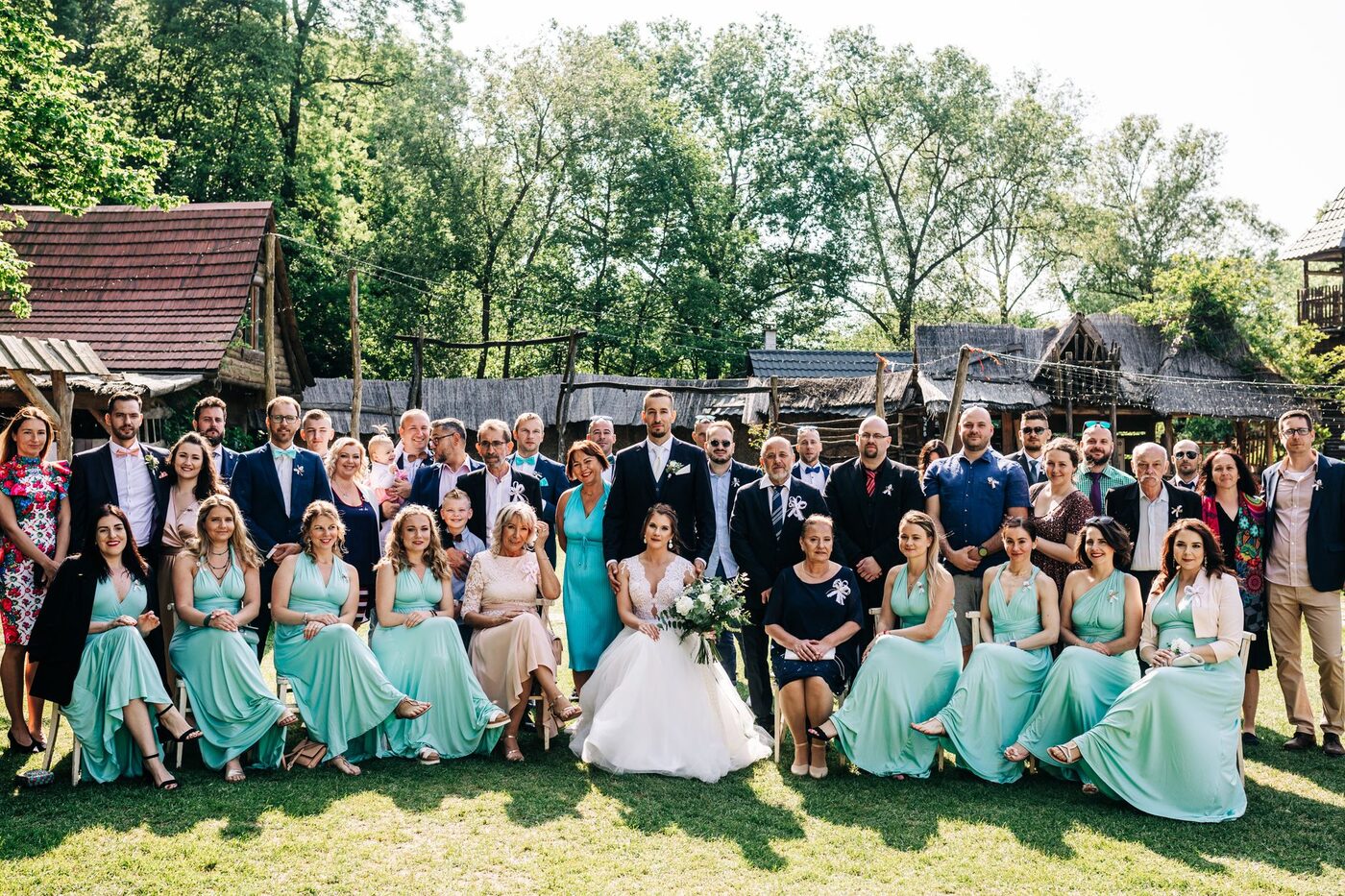
Using the illustrative resting figure, a single frame of 50 people has about a 3 percent chance of being clean, and you would need around 117 frames for a 95 percent chance of one. With a chatting crowd it is far worse. That is what Svenson meant by kissing your hopes goodbye.
What moves the odds most:
- Splitting the group. Two shots of 25 need far fewer frames between them than one shot of 50, because the risk multiplies with every face. By the illustrative resting figures, 25 people need about 18 frames for the same 95 percent, so two halves cost around 36 frames against 117 for the whole crowd, and each half is easier to direct.
- A long run you choose from afterwards. At a 3 percent hit rate, 117 frames 2 seconds apart is about four minutes, not an afternoon.
- Tighter rows closer to the lens, so back-row faces are big enough for you, and any checker, to read.
Set up GroupCam for the next family photo with a 15 second get-in-position delay, so you can reach the far end of the back row without jogging. When the run is over, compare each badge’s face count with the number of people in the shot, and zoom in on every face it did not count before you fold the tripod away.
Common questions
How many pictures should I take of a group so nobody blinks?
For a group of fewer than 20, the rule of thumb from CSIRO's Nic Svenson and Piers Barnes is the number of people divided by three in good light, and divided by two in bad light. Twelve people in daylight means four frames, six indoors at night. Treat it as a minimum: a group that has been chatting blinks more than a resting one.
Why does everyone seem to blink in group photos?
Because the odds multiply. One person blinking 17 times a minute, with each blink lasting about a quarter of a second, has their eyes shut roughly 7 percent of the time. The chance that ten such people all have their eyes open at once is about 48 percent, so a single frame of ten people fails about half the time. Those are illustrative figures built from published averages, and talking pushes the blink rate higher.
Does a countdown help people stop blinking?
It helps with timing rather than stopping blinks altogether. A 2009 study in Proceedings of the Royal Society B found that blinks are held back during tasks that need visual attention and tend to happen right before or right after, when the start and end of the task are clearly signalled. A countdown that people can hear, with a clear word when it is over, gives them that signal.
Can a phone tell if someone's eyes are closed in a photo?
Yes, with limits. Google's ML Kit face detection can return a certainty value for each eye being open, but only for faces turned less than about 18 degrees from the camera, and it recommends faces at least 100 by 100 pixels. A small face at the back of a big group, or someone looking sideways, may not get a reading at all.
Why do I get more closed eyes in photos taken indoors at night?
In dim light the camera keeps its shutter open longer to gather enough light, and every extra fraction of a second is more time for a blink to land inside the exposure. That is why the CSIRO rule switches from dividing by three to dividing by two in bad light. More light on the faces is the cheapest fix.
Can you get a photo of 50 people with nobody blinking?
It is possible but unlikely by chance. Nic Svenson told ABC Science that at around 50 people you can kiss your hopes of an unspoilt photo goodbye. With illustrative figures of 7 percent eyes-shut time per person, a single frame of 50 has about a 3 percent chance of being clean, so you either shoot a long run of frames or split the group.
Photos: Thirdman / Pexels , Matheus Bertelli / Pexels , Helena Jankovičová Kováčová / Pexels