
















































































































































































Roofing Photo Documentation Mistakes That Sink Claims
Roof photos fail when the deck, the nails and the bundle label were never shot. Thirteen mistakes crews make, and what insurers and shingle makers ask to see.
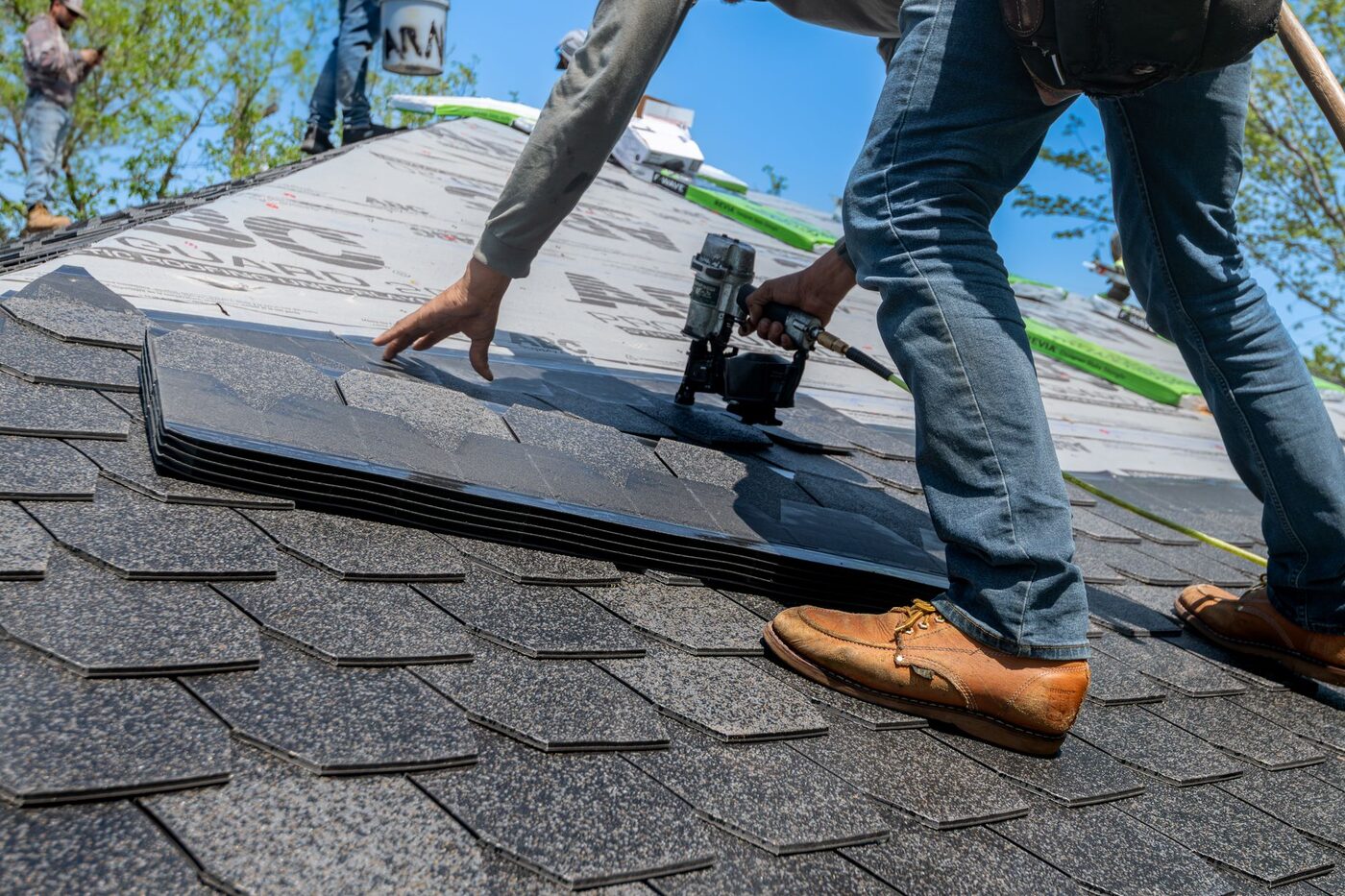
To earn a FORTIFIED Roof designation, the inspector has to send IBHS photographs of the re-nailed deck in four separate locations, at least one of them at a gable, with the nail spacing visible. Nobody can take those photos once the shingles go down. That single line explains most of what goes wrong with roofing photo documentation: the shots that settle an insurance claim, a warranty claim or a callback argument are of work that is buried by lunchtime, and crews keep photographing the part that is still visible on Friday.
What follows are the thirteen mistakes that cost roofers money.
Photographing the finished roof and almost nothing under it
A finished roof photographs well. It proves very little, because each layer that decides whether water gets in sits under the shingles.
The FORTIFIED Home high wind and hail roofing checklist from IBHS is the clearest published list of which buried stages deserve a photo, because a designation fails without them. It asks for the fastener package and the deck nail spacing in four locations, the seam tape, the underlayment showing its fastener spacing, the drip edge fastening, the starter strip, and the part of the shingle packaging that shows the wind rating. You do not need to be chasing a designation to borrow the list.
FEMA has its own reason to care about the deck. Its overview of the 2023 wind retrofit guide shows a house where a sealed roof deck kept out wind-driven rain during Hurricane Michael after flying debris punctured the metal roof covering. When that kind of argument comes up with an insurer, the deck photo is the only witness.
Close-ups with nothing in the frame for scale
A photo of six nails proves six nails. It does not prove six inches.
The FORTIFIED checklist specifies button cap nails at 6 inches on centre along the underlayment laps and 12 inches between them, and drip edge fastened at 12 inches on centre, staggered. Each of those numbers is meaningless in a photo unless a tape measure is lying across the work. Run the tape, hold it flat, and shoot square to the deck so the spacing reads without anyone having to trust your angle.
There is one check you can photograph from inside. Owens Corning says roofing nails should penetrate the wood deck by at least three quarters of an inch, or go completely through it by at least an eighth of an inch. On a re-roof over open rafters, a photo of the nail tips showing through the sheathing from the attic answers the penetration question better than anything you can shoot from above.
Letting the bundle wrapper go in the dumpster
The wrapper is the cheapest evidence on site, and it ends up in the dumpster by mid-morning.
It carries three things a claim may turn on. The wind rating: the FORTIFIED checklist requires shingles rated ASTM D3161 Class F or ASTM D7158 Class H and wants a photo of that part of the package. The product identity: IKO’s warranty booklet says proof of purchase has to identify the shingle model, the quantity bought and the purchase date. And the installation instructions themselves, which IKO’s wind warranty depends on being followed “in strict accordance with the instructions on the wrapper.”
For the optional hail supplement, IBHS goes a step further and wants the shingle packaging photographed “with specific jobsite in view.” That is a sensible habit on any job. A label shot against a recognisable bit of the house ties that product to that roof, which a close-up of a bundle on the back of a truck never will.
Not showing the nails, or showing staples
Nail count is where a lot of wind warranties die without anyone noticing. Owens Corning’s nailing guidance says a four-nail pattern per shingle is required for the maximum wind warranty on its Duration shingles, and six nails on slopes steeper than 60 degrees or 21 inches per foot. The FORTIFIED high-wind method asks for six nails per shingle. Different products, different numbers, which is why a photo of an open course with the nails in it is worth taking on every elevation.
Staples are a separate trap. IKO’s wind warranty applies only when the shingles went on with roofing nails, not staples, and the FORTIFIED checklist adds “(nails, not staples!)” to its underlayment photo note, exclamation mark included.
One more frame belongs here: the fix. Owens Corning says crooked or overdriven nails have to come out and the holes be filled with asphalt roofing cement. If you corrected a run of overdriven nails, photograph the cemented holes before the next course covers them.
Hand-sealing in the cold with no record of it
Short one, but it bites in autumn. IKO’s wind warranty for installations “during the fall, winter or in cool weather” depends on the shingles being manually sealed at the time of installation. If a failure turns up the following spring, the question is whether anyone sealed them. A couple of timestamped photos of the dabs of cement going down on each slope answer it in seconds. Without them, it is your word.
Shooting flashing and penetrations from the ladder
A wide shot of a chimney tells an adjuster there is a chimney.
Flashing is detail work, and the photos have to be detail shots. The FORTIFIED checklist calls for proper flashing at all penetrations, roof to wall intersections, valleys, gables and eaves, with the drip edge over the underlayment at rakes and eaves. FEMA puts “improving underlayment details at eaves (drip edge)” into the basic package of its retrofit guide, a sign of how much weight it puts on that one strip of metal.
Take each penetration twice: once with the step flashing or boot exposed, once finished. Pipe boots, vents, skylights, the chimney cricket if there is one. On a coastal job, add the fastener box. The FORTIFIED checklist requires hot-dip galvanized or stainless steel fasteners on homes within 3,000 feet of saltwater, and a label photo is the only practical proof of which nails went in.
Never going into the attic
Ventilation sits in the exclusions, the part of a warranty few homeowners read. IKO’s booklet excludes damage or distortion caused by inadequate ventilation and says ventilation “must also be distributed evenly between the rooftop and the eaves of the building.” The same booklet reserves the right to photograph the attic space itself when investigating a claim.
So get there first. A handful of photos at handover covers it: clear soffit vents from inside with no insulation packed against them, the ridge or roof vents, and the underside of the deck. If the vent layout was already there when you arrived and you advised changing it, photograph that too, and put the advice in writing.
Trusting the phone to prove which house it was
On a row of near-identical houses, location data is weaker than people assume. The US government’s GPS accuracy page says GPS-enabled smartphones are typically accurate to within 4.9 metres (16 feet) under open sky, and that accuracy worsens near buildings, bridges and trees. In a tight subdivision, 16 feet can put the pin on the neighbour’s driveway.
The coordinates matter. They need help. Start every job with a wide shot that shows the house number, the mailbox or a feature no other house on the street has, then let each later photo carry its own time and position.
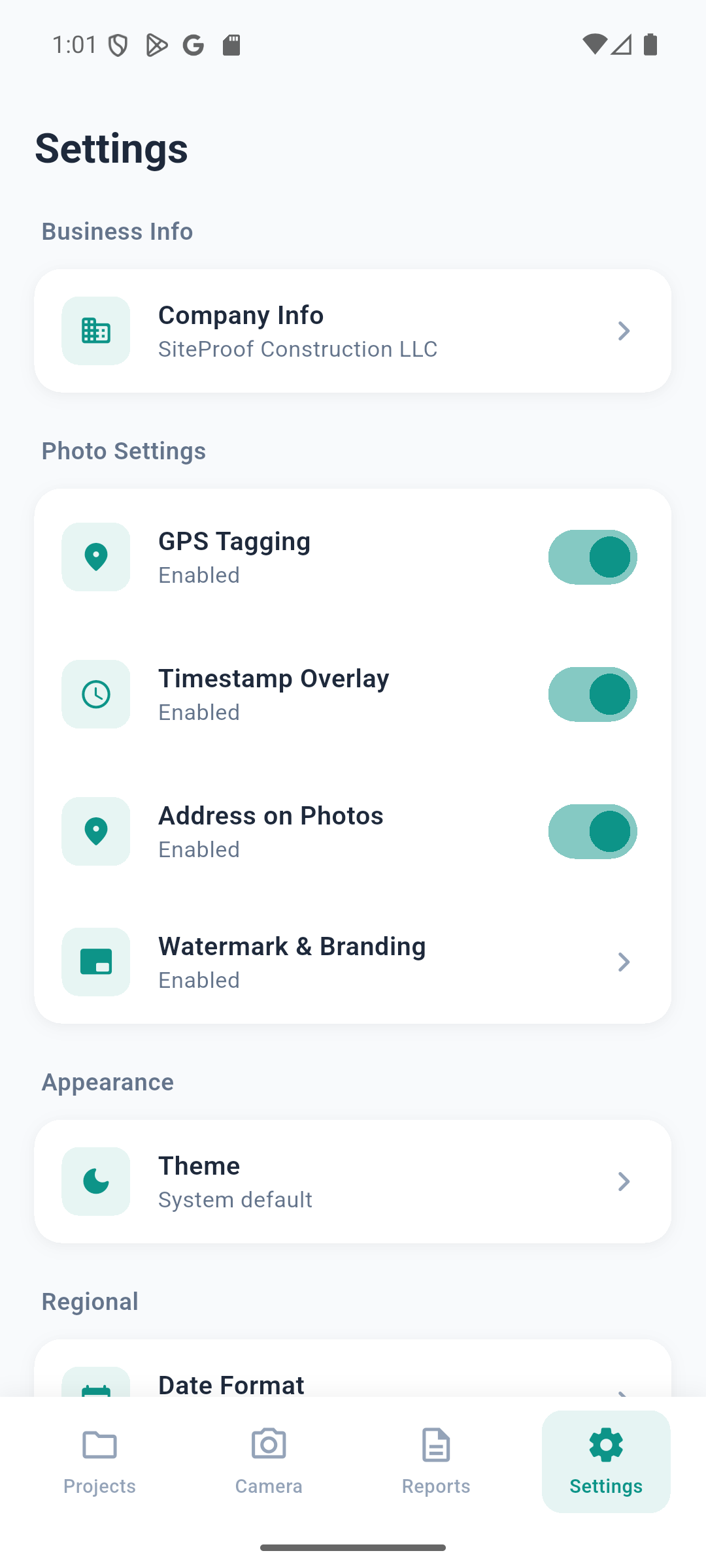
That second part is where GPS timestamp photos earn their keep, because the record is written when the shutter fires rather than reconstructed later. SiteProof stores the capture time, the latitude and longitude, and the street address looked up from those coordinates with each photo, and files it under the job you picked before shooting. The photo details screen shows the coordinates to six decimal places, and the report rounds them to four. Treat the six as display precision, not a claim that the phone knew your position to the centimetre; the 16-foot figure above applies. How the stamp is written and what survives into a report is covered on the page about GPS timestamp photos for contractors.
Repairing or tearing off before the before set exists
Storm work has a rhythm: tarp it, call the insurer, start tearing off. The photos often come third.
The Texas Department of Insurance’s hail claim tips put it in plain terms for homeowners: file quickly, take photos or video of the damage, and do not throw away damaged items until the insurer gives permission. The NAIC adds that it can help to have the contractor meet the homeowner and the adjuster. If you are that contractor, arrive with a before set already shot: every slope, every elevation, gutters and soft metals, and the ceiling stains inside.
Keep physical evidence as well as pictures. IKO’s warranty process asks for two complete sample shingles from the roof that show the problem, which means two whole shingles bagged and labelled before the dumpster arrives, not two fragments found later. For the general version of this habit across any trade, see the four moments worth photographing on any job.
Sitting on a defect until the photos are tidy
Warranty clocks are short. IKO’s limited warranty booklet asks the owner to contact its warranty service within 30 days of becoming aware of the concern, then send the requested material within 30 days of discovery, after which IKO says it will respond within roughly 60 days of having everything. It adds that if the owner fails to send the requested information, IKO is entitled to conclude the claim is not valid.
That booklet is IKO’s Canadian edition, and other makers and other years word it differently. The point holds. Thirty days goes quickly when the photos you need are spread across three crew phones and one of them is in somebody’s glovebox. Insurance is no more forgiving: the NAIC notes that the time you have to report a claim varies by state.
Climbing up for a photo the job did not need
Documentation is not worth a fall. OSHA’s fall protection rule, 29 CFR 1926.501, requires guardrails, safety nets or personal fall arrest for workers in residential construction 6 feet or more above a lower level, and for anyone on a steep roof with unprotected edges at that height. In Great Britain the HSE says almost one in five deaths in construction work involve roof work, and that every roof should be treated as fragile until a competent person confirms otherwise.
That applies to the estimator with a phone as much as to the crew with nail guns. Much of the before set can be shot from the eaves on a tied ladder or from the ground with a zoom. When the photo needs someone on the slope, the person taking it needs the same protection as everyone else up there.
Spreading one job across four phones
This one undoes all the others. Good photos that nobody can find on the day a claim lands are not documentation. They are a camera roll.
The fix is one file per job, and a way to hand the whole thing over. In SiteProof, a report pulls the photos you select into a PDF with a cover page, and you choose whether the report shows the timestamp, coordinates, address and note under each photo, at one, two, four or six photos to a page. The paid version puts every selected photo in the report and adds your company name and logo to the cover. As an illustrative example, a tear-off and re-roof shot as eight deck photos, a dozen flashing details, the wrapper labels, the attic and a finished set goes to the adjuster or the manufacturer as one document rather than forty attachments. A short note on each photo prints under it and does the explaining you would otherwise do on the phone.
If the paperwork side is what usually goes wrong for you, the piece on documenting a job so a subcontractor gets paid covers sign-off and approvals.
Stopping at handover
The roof’s documentation does not end when the crew leaves. NRCA’s associate executive director of technical services has advised owners to inspect roofs at least twice a year, in spring and autumn, with extra inspections after a hurricane, tornado or hailstorm.
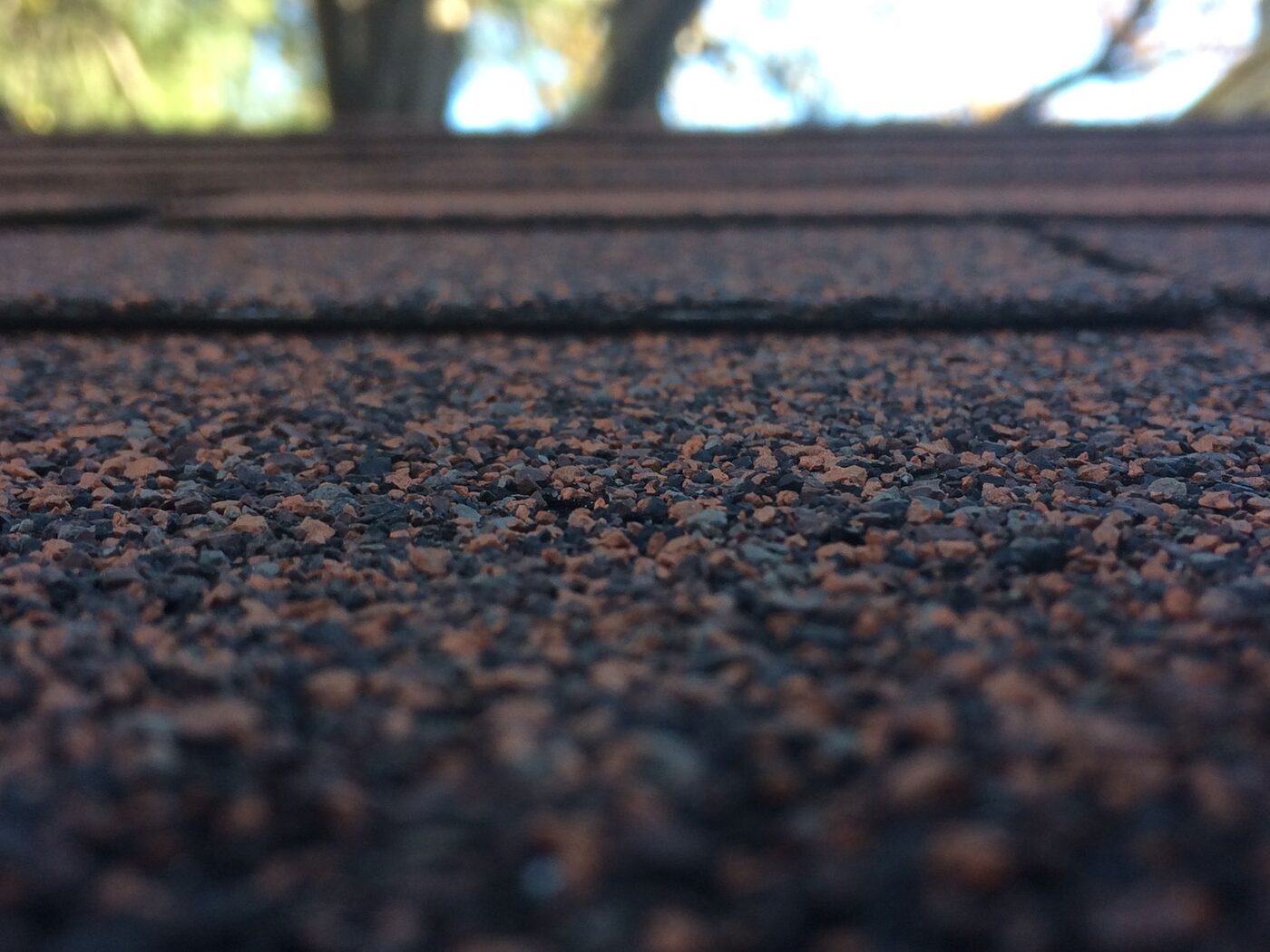
Those visits are worth photographing the same way as the install, from the same spots. A spring set that shows clean granules and tight flashing is the baseline the adjuster compares against after the June hailstorm, and it is far easier to argue “this was fine in April” with a dated photo than with a memory.
This is general information, not legal or insurance advice. Warranty terms change by product and year and claim rules change by state, so check the specifics with the insurer, the shingle manufacturer’s current warranty document or your state’s insurance regulator.
On your next tear-off, shoot the deck nailing in four places with a tape across it before the underlayment goes on, and photograph the wrapper with the house behind it. If you would rather those shots arrived already filed under the job with its time and place, SiteProof, the job site photo log, is built for that.
Common questions
What photos does an insurer want for a roof claim?
Clear photos or video of the damage, taken before anything is repaired or thrown away, plus a list of what was damaged inside and outside the house. The Texas Department of Insurance tells homeowners not to discard damaged items until the insurer says so. Wide shots that identify the house, close-ups with something for scale, and interior shots of any ceiling staining all help the adjuster.
Do shingle manufacturers ask for photos on a warranty claim?
Yes. IKO's limited warranty booklet lists clear colour photos alongside proof of purchase and two complete sample shingles from the roof. The manufacturer may inspect and photograph the roof surface and the attic itself. A claim that arrives without the requested material can be declined.
How many photos should a roofing crew take on a re-roof?
There is no single number, but the FORTIFIED Roof checklist gives a useful floor for the buried stages: deck nailing in four locations including a gable, the underlayment fastening, the drip edge fastening, the starter strip and the wind rating on the shingle packaging. Add a before set, the flashing at every penetration, the attic ventilation and a finished set.
Is phone GPS accurate enough to prove which house a photo shows?
Not on its own when houses are close together. GPS.gov puts typical smartphone accuracy at about 4.9 metres (16 feet) under open sky, and worse near buildings and trees. Pair the coordinates with a wide shot showing the house number or a feature nobody else on the street has.
How quickly do I need to report a shingle defect?
It depends on the manufacturer and the policy, so read the warranty that came with the product. IKO's booklet, for example, asks owners to contact its warranty service within 30 days of becoming aware of the problem and to send the requested materials within 30 days of discovery. Insurance reporting deadlines vary by state.
Photos: Ryan Stephens / Pexels , morgan / Pexels