







































































































































































How to Do the Weekly Fire Alarm Test, Step by Step
The weekly fire alarm test for UK premises: which call point to use, who to ring first, how long the sounders run, and what to write in the log afterwards.
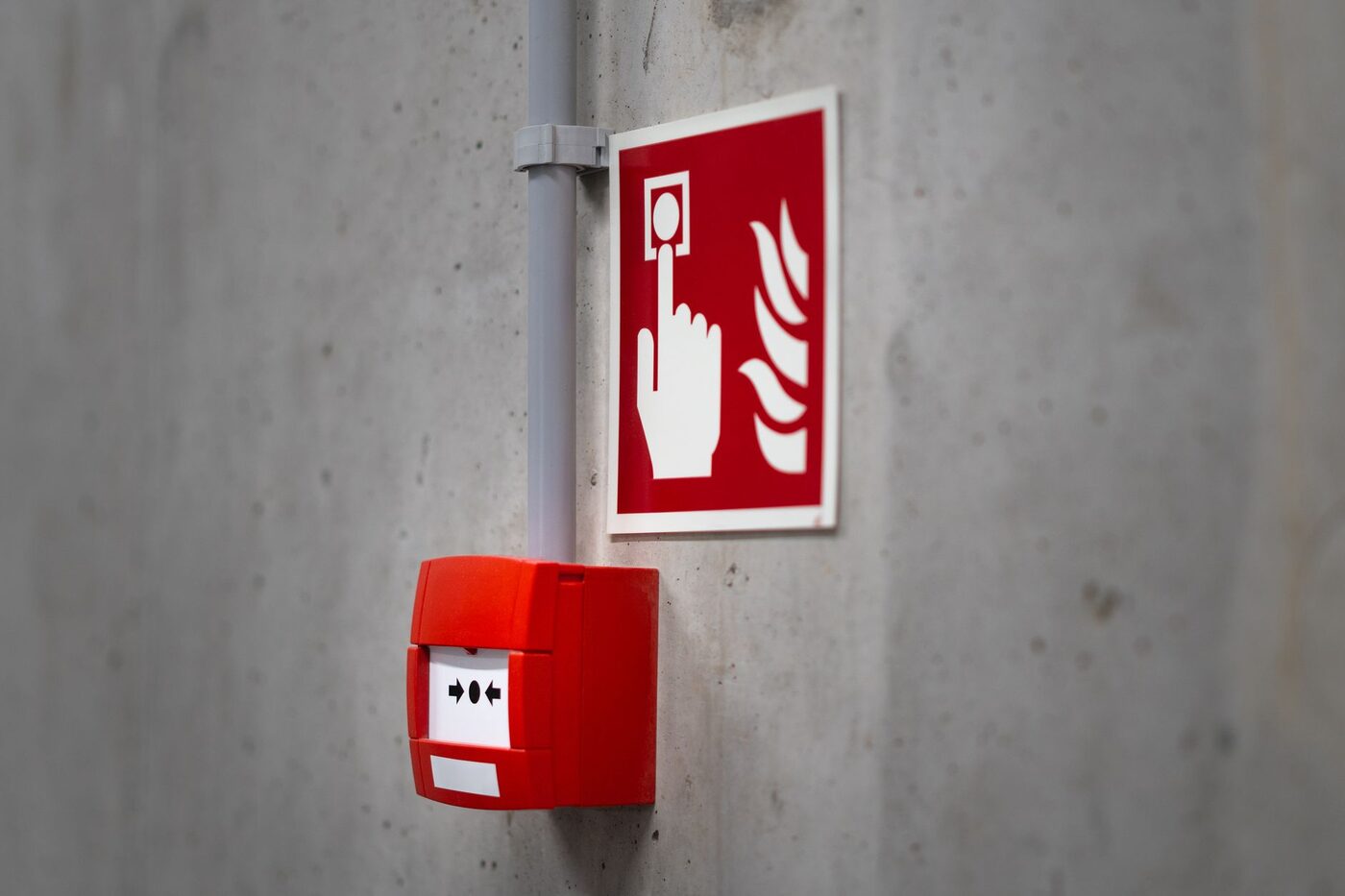
Two years of weekly ticks in a fire logbook can still hide a building where only one call point has ever been tested: the one by the front desk, pressed every Monday, while the one in the plant room was never touched.
Here is the weekly fire alarm test done properly. Once a week, at roughly the same time and during working hours, you set off a different manual call point with its test key, let the sounders run for no more than one minute, reset the panel, and write down which call point you used and what happened. The writing down is the step people skip. It’s also the only part an inspector ever sees.
The steps below are for the responsible person in a shop, office, surgery, small block or church hall in England and Wales.
What one press of a call point proves
A weekly test is not a service. It proves one thing: that a fire signal from one device reaches the panel and the panel sets the sounders off across the whole building. The government’s guide to making small non-domestic premises safe from fire says fire alarm systems should be tested “using a different manual alarm call point each week, to make sure the system is operating, and that the alarm is audible throughout the premises”.
The rest of the system is the service engineer’s job.
So why a different call point each time? Each one is a separate device on its own run of cable. Pressing the same one every week proves that one works and tells you nothing about the others. Rotate, and after a full cycle every point in the building has been shown to work. Dorset and Wiltshire Fire and Rescue’s routine maintenance page puts it as a different call point each week “until all call points have been tested”.
Step 1: Give every call point a number and a place
Walk the building with a floor plan before the first test. Give each call point a reference, CP-1, CP-2 and so on, and write its location in words a stranger could follow. “CP-4, first floor landing beside the lift” works. “CP-4, upstairs” leaves whoever covers your holiday standing on the wrong landing.
Cambridgeshire Fire and Rescue’s example logbook gives every weekly line a column for the call point number or location. You can’t fill it in if the points have no names.
Essex Fire and Rescue’s logbook asks that call points are unobstructed and conspicuous, and one behind a stack of folding chairs fails both. Before fitting a flip lid over one that keeps getting knocked, ask your alarm company: Apollo’s AlarmSense guide warns that a call point with such a lid no longer complies with EN 54-11.
Step 2: Pick a fixed day and time
Dorset and Wiltshire’s guidance says the test should happen “at about the same time each week” and should last no more than one minute.
There’s a reason for both. People learn that the bell at, say, ten on a Tuesday is the test. A bell at any other time, or one that keeps ringing past a minute, then means something, and they move.
Shift workers break this. A cleaner who starts at, for example, six in the evening may never hear the alarm at all. Essex’s logbook covers it: where employees work outside the test hours, carry out an additional test at least once a month so they know the sound.
Step 3: Tell the monitoring centre, then the building
If your alarm is monitored, it sends signals to an alarm receiving centre. Ring them before you touch anything. Essex Fire and Rescue’s fire safety logbook says the centre must be contacted immediately before and immediately after any test, both to stop the fire service being called out and to check that alarm signals are received correctly.
BS 5839-1:2025, published by BSI on 30 April 2025, recommends a label on or beside the control panel reminding whoever manages the premises that the system is connected to the fire service through the monitoring centre. The Fire Industry Association’s guide to the changes in BS 5839-1:2025 says the label is there to cut false alarms from tests nobody told the centre about.
Brigades are also less willing to come out for an alarm on its own. From 29 October 2024 the London Fire Brigade stopped attending most automatic fire alarms at non-residential premises between 7am and 8.30pm unless the caller confirms signs of fire, with residential buildings, schools, nurseries, hospitals, care homes and listed heritage sites still attended. Its reason: between April 2023 and March 2024 it attended around 52,000 false alarms generated by automatic fire alarms. Other brigades set their own policies, so check yours.
Then tell the people inside.
Step 4: Operate this week’s call point with the test key
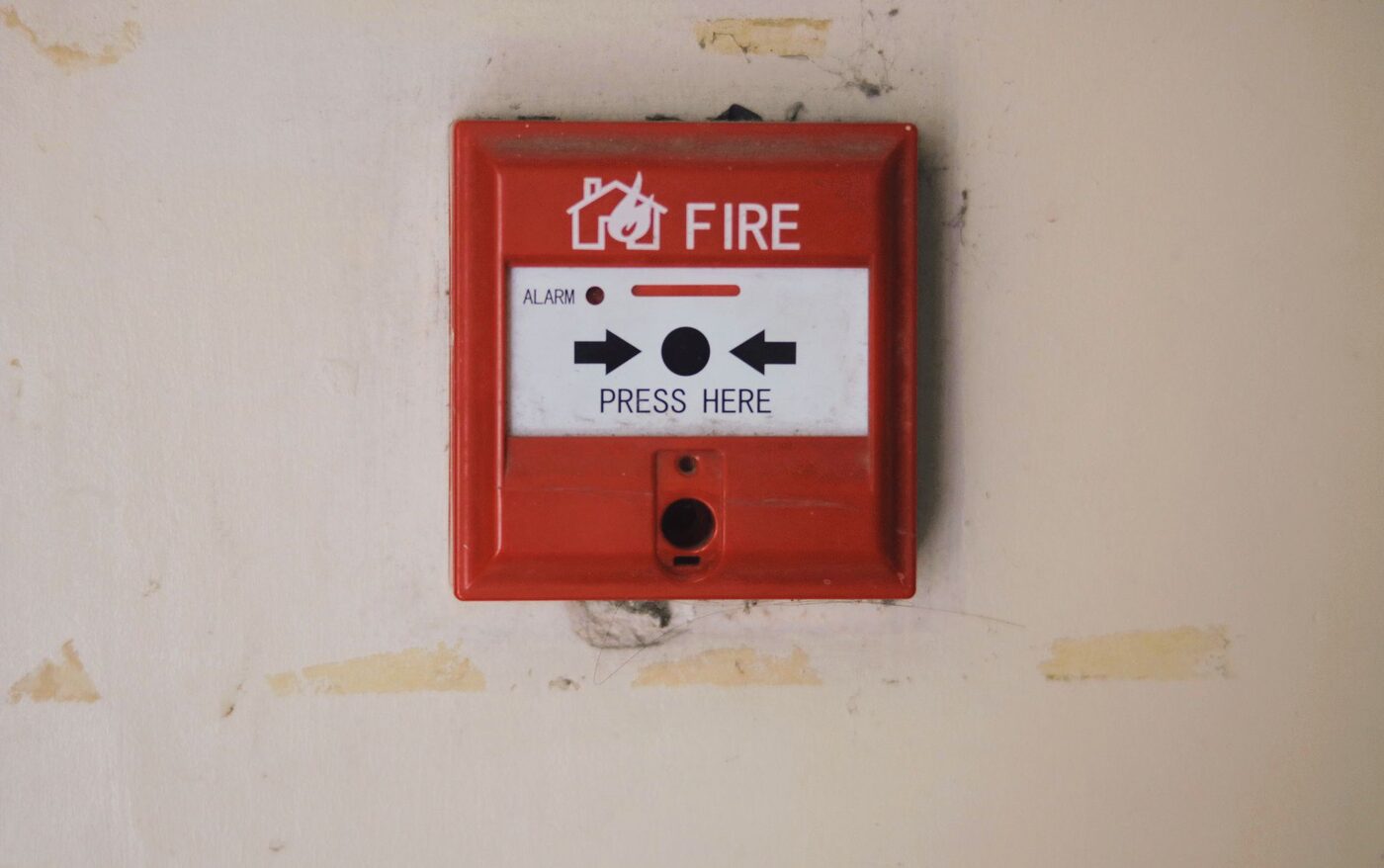
The test key is the small key supplied with the system, usually kept with the panel keys. On many call points it goes into a slot on the underside or the front and puts the call point into alarm without breaking anything. The exact movement varies by maker, so keep the manufacturer’s sheet with the keys.
Apollo’s installation guide for its AlarmSense manual call point gives the check in one line: test each call point with the test key provided and make sure the control panel enters the alarm state and the LED lights. The LED says the device operated. The panel in alarm says the signal arrived. You want both.
If you can’t find the key, don’t smash the glass to keep to the schedule. Order a replacement and record that the test was not done that week, with the reason.
Step 5: Walk and listen while the sounders run
You’ve got a minute. Stand where you can hear more than one area, or put a colleague at the far end. Check the toilets, store rooms and plant rooms, because a sounder you hear from the corridor can be lost behind a closed door and an extractor fan.
Watch the doors too. Essex’s logbook says automatic door releases connected to the alarm should be tested weekly with it, checking that the doors release and close fully onto their rebates. Avon Fire and Rescue’s logbook adds that any connected automatic opening vents should open, and that a panel printer should have enough paper to last until the next service visit.
One person can’t cover a big building in sixty seconds. Don’t stretch the test; move where you listen from week to week instead.
Step 6: Silence, reset, and check the panel reads normal
Use the panel’s key or access code to silence the sounders. Reset the call point with the test key, then reset the panel and wait until it shows normal with no fault lights. A panel that won’t clear is your first defect of the day.
Ring the monitoring centre back and ask them to confirm they received the alarm. Bells ringing in the building and a signal reaching the centre are two separate facts, and only one of them gets the fire service out at three in the morning.
Step 7: Write it down before you walk away
Do it at the panel, not at your desk after lunch. Bucks Fire and Rescue Service says the result of the weekly test should be recorded, and the government guide says the record can be a logbook or an electronic one.
A useful entry has six parts:
| What to record | Why it matters |
|---|---|
| Date and time | Shows the test ran at the regular time, in working hours |
| Call point reference and location | Proves the rotation is moving round the building |
| Sounders heard in all areas | The point of the test, in the government guide’s words |
| Door releases, vents and monitoring signal | The linked equipment nobody looks at otherwise |
| Who carried out the test | The name an inspector can ask about |
| Any fault, who it was reported to, and the date it was put right | The trail from failure to repair |
The law behind this has tightened. Article 17 of the Regulatory Reform (Fire Safety) Order 2005 requires fire safety equipment to be kept under a suitable system of maintenance and “in efficient working order and in good repair”. Since 1 October 2023 every responsible person must also record their fire safety arrangements. The government’s factsheet on section 156 of the Building Safety Act 2022 says this removes the old limits, such as only having to write things down with five or more employees. It also raises the fine for failing an inspector’s requirements, such as not producing your fire risk assessment when asked, from Level 3 (£1,000) to Level 5, which is unlimited.
When the test fails
The panel doesn’t go into alarm, one wing stays silent, a hold-open magnet keeps its door open, or the monitoring centre says nothing arrived.
Log it as a failed test, and don’t press a different call point to get a pass for the week. Report the fault to your alarm company the same day. Essex’s logbook asks for faults and remedial action to be recorded along with the date each fault was put right.
False alarms go in the log too. Avon’s logbook says you are obliged to record any false alarm with its cause, so patterns show up: the detector above the toaster, the call point by the trolley bay. Under BS 5839-1:2025 the user is now expected to investigate every false alarm, according to the FIA’s summary.
Keeping the rotation honest when weeks go missing
A paper logbook is bad at one thing. The weekly page has a date and a call point number, so working out which point is due means reading back until you’ve found every point and spotted the one done longest ago. Nobody does that on a Tuesday morning. They press the one by the door.
The pressure to catch up is mostly imaginary. Essex’s logbook says there is no maximum limit on how long the rotation takes, so twelve call points, to take an example, make a twelve week cycle. A missed week pushes the cycle back a week. What breaks the rotation is losing track: a holiday, a new call point that never makes it into the book, a cover who starts again at CP-1.
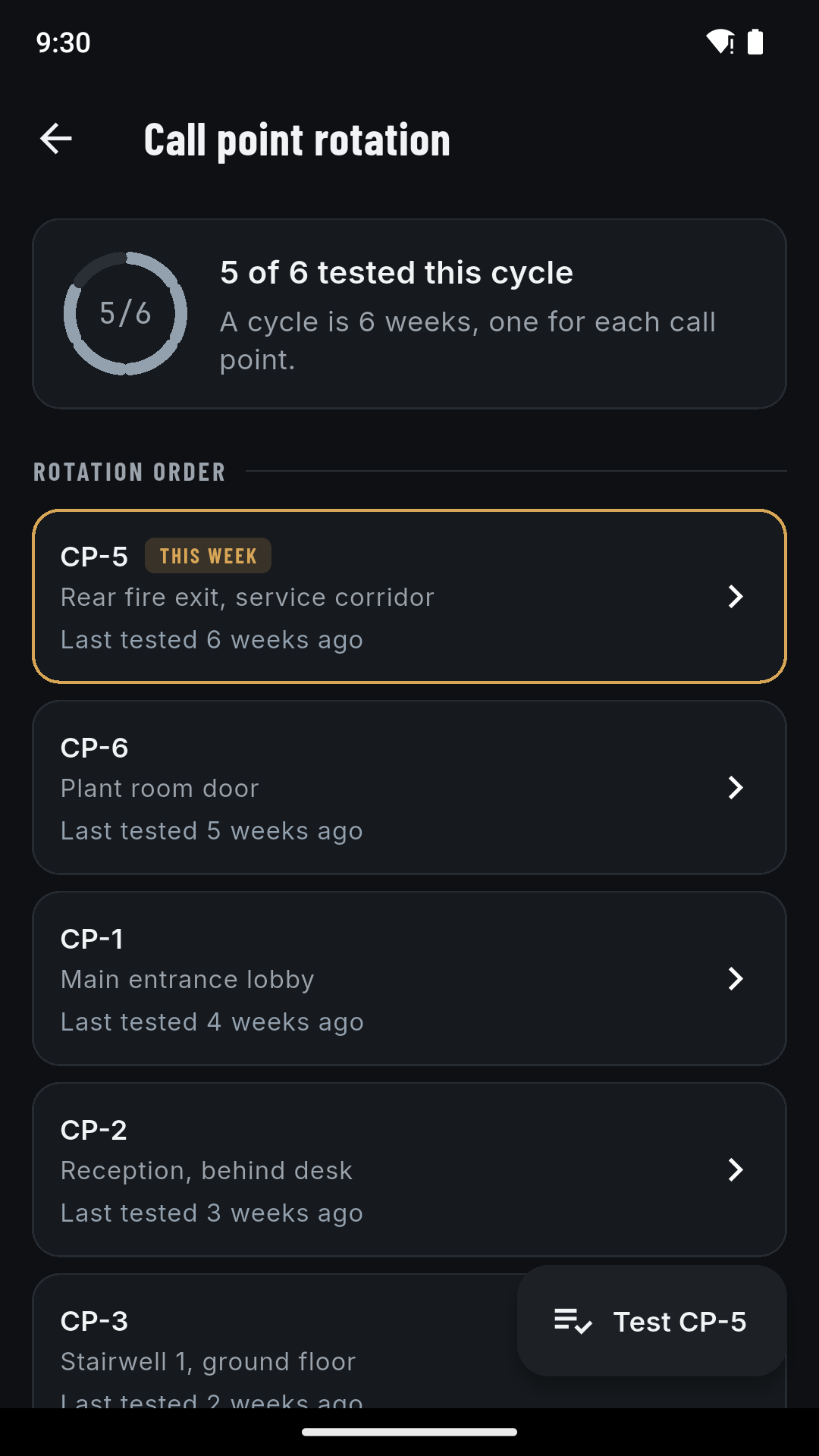
The fix is to pick the call point that has gone longest without a test, and to treat a never-tested point as the oldest of all. That is the rule a fire safety logbook that keeps the call point rotation for you follows. FireBook keeps a register of the call points, works out which one is due each week from the date each was last tested, puts any newly added point at the front of the queue, and shows how many points have been covered in the current cycle. A week with no test stays blank on its year ledger and is counted as a week with no test recorded.
The part of the app that needs a plan is what you hand a fire officer who asks for the log book. The Inspector Pack is one PDF: a cover naming the premises, the address, the responsible person and the period covered, the duty history with date, item, result, who did it and notes, and a call point rotation record listing each point’s reference, location, the date it was last tested and how many tests are recorded against it. The asset registers and the defect log follow, with the action taken on each closed defect.
Where the weekly test sits among the other checks
Daily, someone glances at the panel to see that it shows normal operation; Essex’s logbook says that check needn’t be recorded unless it finds a fault. Weekly, the call point test. Monthly, the extra test for out-of-hours staff, if you have any.
Then the service. The 2017 edition of BS 5839-1 said the gap between service visits should not exceed six months, and plenty of fire service logbooks still print that line. The FIA’s guide says the 2025 edition asks for visits at intervals of approximately six months and accepts one anywhere between five and seven months after the last. Bucks Fire and Rescue Service puts it simply: your alarm must be tested twice a year by a competent alarm engineer. Keep that certificate in the same log as your weekly entries.
This is general information, not professional advice. The right intervals and procedure for your building come from its fire risk assessment, so check them with your fire risk assessor, your alarm maintenance company or your local fire and rescue service.
Start with this week’s test. Walk the building, number the call points, and log CP-1 with the time, the result and your name. If you’d rather not carry the rotation in your head, set the premises up in FireBook, the fire safety logbook for the responsible person, add the call points as you walk, and it will tell you next week which one is up.
Common questions
Is the weekly fire alarm test a legal requirement?
The law itself says the responsible person must keep fire safety equipment in efficient working order and record their fire safety arrangements. It does not say how often to test. The weekly test with a different call point each time is what government guidance and fire and rescue services expect, and it comes from BS 5839-1, so an inspector can ask to see it.
How long should the weekly fire alarm test last?
No more than one minute, according to Dorset and Wiltshire Fire and Rescue Service. A short test at a regular time means a bell that keeps ringing, or rings at any other time, is treated as real.
Do I have to ring the monitoring company before testing?
Yes, if the alarm is connected to an alarm receiving centre. Fire and rescue service guidance says to contact the centre immediately before the test, so nobody is sent out, and immediately after, to confirm the signal arrived.
What if we missed a week of the fire alarm test?
Record the gap honestly and carry on with the call point that has gone longest without a test. Essex Fire and Rescue's logbook says there is no maximum time for working through every call point in rotation, so a missed week delays the cycle without breaking it. Never fill in a test that did not happen.