













































































































































































What Goes in a Notary Journal, State by State
The fields a notary journal entry needs, where California, Texas and Pennsylvania disagree on ID numbers, and how long each state says to keep the book.

A Texas notary who copies a signer’s driver’s license number into the record book has broken a state rule. A California notary who leaves that same number out has broken one too. Both are filling in a notary journal, and both learned “write down how you identified the signer” in training. The difference sits in the detail, and the detail is what a complaint or a subpoena looks at.
So what goes in a notary journal is a short list that almost every state shares, and then a few fields where your state decides. This page covers both, using the rules as California, Texas, Pennsylvania and Florida publish them. If you work somewhere else, the shape will be familiar, but read your own state’s handbook before trusting any one field.
The entries nearly every state wants
Strip away the wording and a journal entry answers five questions. When did it happen, what kind of act was it, what was the document, who signed, and how did you know who they were. Most states add a sixth: what you charged.
Pennsylvania’s statute, 57 Pa.C.S. section 319, is a clean example. Each entry is made at the time of the act and holds the date and time, a description of the record and the type of act, the full name and address of each person, how their identity was established, and the fee. Florida’s list for remote online notarization, in Florida Statutes section 117.245, reads almost the same. There is a field-by-field walk through a complete entry in this guide to notary journal requirements. California asks for the date, time and type of act, the “character” of the instrument (a deed of trust, an affidavit), the signature of each person whose signature is notarized, and a statement that identity rested on satisfactory evidence.
Write the entry before you hand the documents back. Pennsylvania says “contemporaneously” in so many words. Once the signer has left, the missing signature or address is gone for good.
Where the states split
| Field | California | Texas | Pennsylvania |
|---|---|---|---|
| Signer’s signature in the book | Required | Recommended, not required | Allowed |
| ID serial number | Required for paper ID | Not allowed | Last four digits only |
| ID issue or expiry date | Required | Not listed | Required |
| Thumbprint | Real property documents and powers of attorney (foreclosure trustee’s deeds and reconveyances excepted) | Not listed | Not listed |
| Date of the document itself | Not listed | Required | Not listed |
| Grantee name for land transfers | Not listed | Required, with the county | Not listed |
| Fee charged | Required, even when zero | Not in the FAQ’s list | Required |
The table is a summary. The wording that binds you is in the California notary handbook, the Texas Secretary of State’s notary FAQ the Pennsylvania regulation changes page and the Pennsylvania statute, 57 Pa.C.S. section 319.
The ID number problem
This is the field that catches people who move states or train from a national course.
California, under Government Code section 8206, wants the type of identifying document, the agency that issued it, its serial or identifying number, and the date of issue or expiration. The same detail applies to a single credible witness’s ID unless that witness signs the journal.
Texas goes the other way. The Secretary of State’s FAQ says a notary cannot record identifying numbers from the signer’s identification card, including driver’s license and passport numbers. You record how the signer was identified and leave the number off. Street numbers in an address are fine; the FAQ allows those.
Pennsylvania landed in the middle on March 28, 2026, when its new regulations took effect. The journal may not hold any part of a Social Security number or a full driver’s license or nondriver ID number. It may hold the last four digits of a license or passport. Notaries who kept the old habit of writing the full number need to stop.
A photo of the ID follows the same logic. If your state will not let you write the number down, a picture of the card with the number on it is the same record by another route.
Thumbprints and when California asks for one
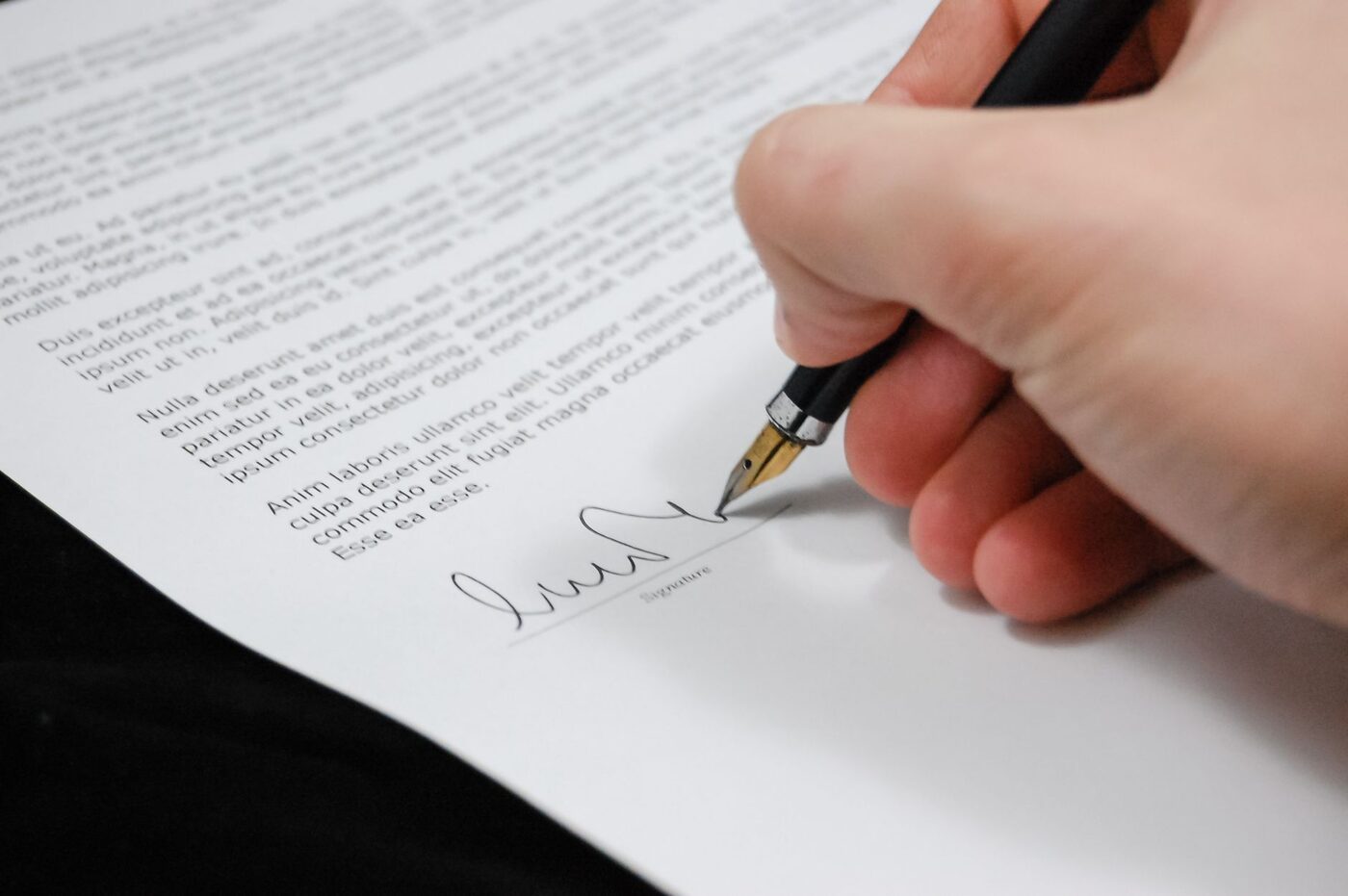
California requires the signer’s right thumbprint in the journal when the document is a deed, quitclaim deed, deed of trust or other document affecting real property, or a power of attorney. If the right thumb is not available, the left thumb or any available finger will do, and you note which. If the signer cannot give any print, you write that down with an explanation of the physical condition.
Two documents are carved out: a trustee’s deed resulting from a foreclosure, and a deed of reconveyance. Everything else touching real property gets a print. Neither the Texas FAQ nor the Pennsylvania statute lists a thumbprint as an entry.
Small entries that still count
California is specific about a few cases people skip.
A free notarization still gets a full entry. The handbook says to write “no fee” or “0” rather than leave the column empty, and a travel fee is identified separately from the notarial fee.
A document you cannot read still gets described. If you cannot identify the type, the entry says so, and the handbook’s own example is “a document in a foreign language”.
A mistake found later is not fixed by editing the old line. The handbook says to notarize the signature again, with a new certificate and a new journal entry. A paper journal shows its corrections anyway, which is part of why it is trusted.
Texas land transfers
Texas has one field the other three do not. When land is being conveyed or transferred, the record also carries the name and mailing address of the original grantee and the county where the land sits. A loan signing in Texas therefore takes a little longer to log than the same package in Pennsylvania.
Who can see your journal
A notary journal is less private than most people assume.
In Texas, record book entries are public information. Anyone who asks in writing and pays the fee gets certified copies, and the FAQ gives you ten business days from receipt of the fees.
In California, a member of the public who supplies the parties’ names, the type of document and the month and year gets a copy of that line item, or a note that no such line exists. The charge is capped at thirty cents a page.
Pennsylvania’s 2026 rules let anyone ask to view the journal, orally or in writing, with the inspection done in the notary’s presence. A certified copy of a specific entry or period is due within 15 days of the request.
California adds a duty on security: one active journal at a time, kept in a locked and secured place under the notary’s direct and exclusive control. Failing to secure it is a ground for action against the commission.
How long to keep it, and where it goes
Texas asks for the longer of the commission term or three years after the notarization, and the FAQ suggests keeping records permanently as best practice. Online notarizations in Texas are kept five years. Florida’s remote online journals and their recordings are kept at least ten years after the act.
California and Pennsylvania settle it differently. A California notary who resigns or lets the commission lapse delivers every journal to the county clerk where the oath was filed within 30 days. A Pennsylvania notary delivers the journal to the recorder of deeds within 30 days, unless they apply for a new commission in that window.
In both California and Texas the journal belongs to the notary, not the employer who bought it.
Keeping the book on a phone
Most states say what goes in the journal and leave the format to you, though some are strict. Pennsylvania wants a paper journal to be a bound register with numbered pages and an electronic one to be tamper-evident under the department’s rules. Whether a phone record meets your state’s standard is a question for your commissioning office, and it is worth asking before you retire the paper book.
For notaries who do keep an electronic copy, NotaryLog is built around the fields above. An entry holds the signer’s name, address and phone, the ID type, issuer and expiry, the document type and date, the fee, any travel fee and how they paid, plus the signature drawn on the screen. The ID number field is optional, so a Texas notary can leave it empty, and the signer ID photo has its own switch in the profile settings for states that restrict ID copies. A thumbprint photo is optional too.
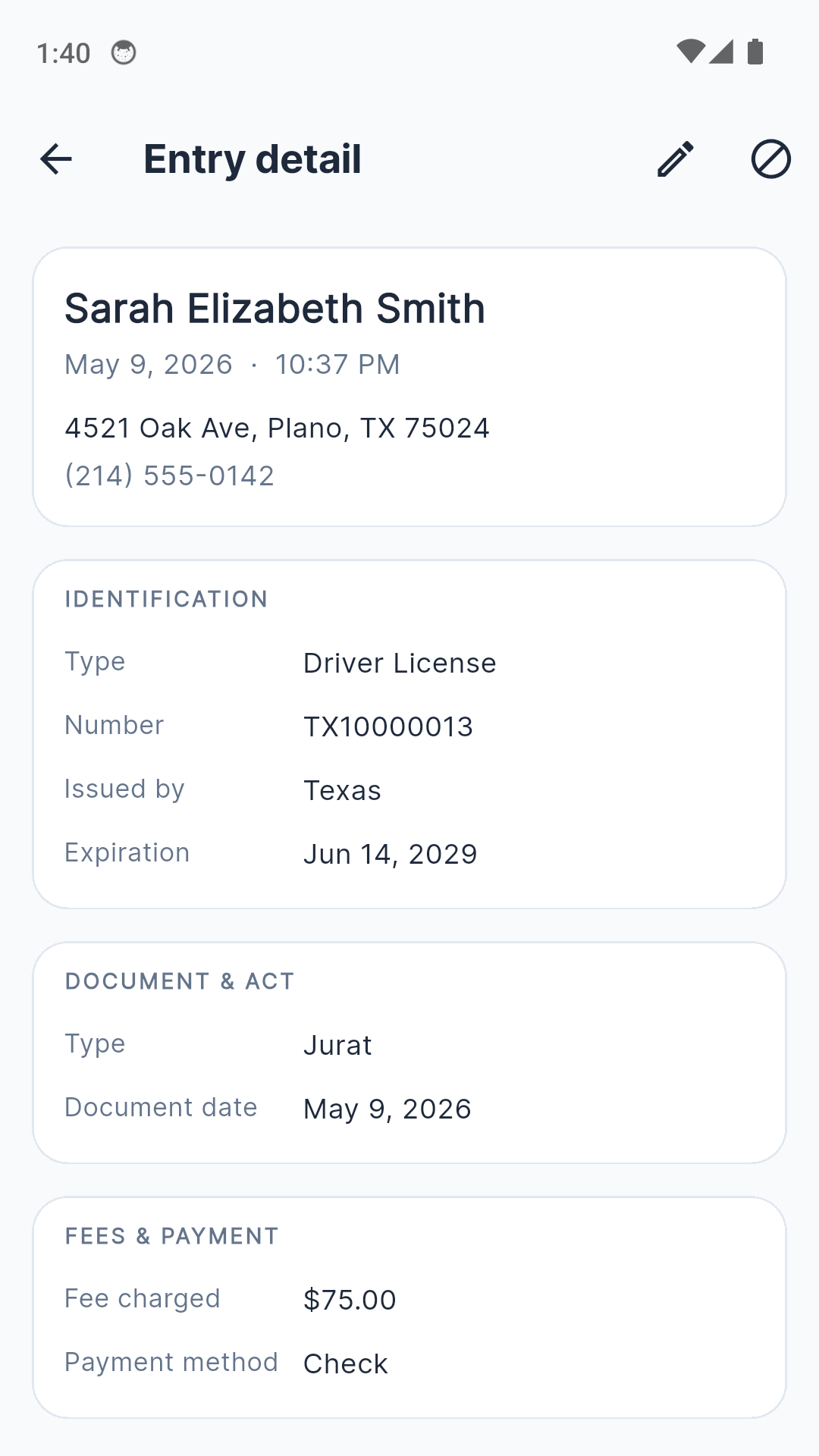
A voided entry stays in the journal with a visible mark and its own filter, and an edited one shows when it was last changed. The journal exports as a PDF journal or a CSV file.
This page is general information about notary recordkeeping, not legal advice. Rules change, as Pennsylvania showed this year, so confirm each field with your state’s commissioning authority.
Common questions
Do I record the signer's driver's license number in my notary journal?
It depends on the state. California requires the ID's serial number for each signer identified by paper identification. Texas says a notary cannot record identifying numbers from the ID at all, and Pennsylvania's regulations from March 28, 2026 bar the full license number but allow the last four digits. Check your own commissioning office before you write the number down.
Do I need a journal entry if I did not charge a fee?
In California, yes. The Secretary of State's handbook says the entry is still made, with 'no fee' or '0' in the fee column. Pennsylvania and Florida's remote online rules list the fee as a field too, so leaving it blank is the habit to avoid.
How long do I have to keep my notary journal?
Texas asks for the longer of your commission term or three years after the notarization, and five years for online notarizations. Florida keeps remote online journals for at least ten years. California and Pennsylvania have you hand the journal to a county office when the commission ends, so retention there is about delivery, not a number of years.
Does my employer own my notary journal if they paid for it?
No, in California and Texas. California calls the journal the notary's exclusive property and says it is not surrendered to an employer, even if the employer paid for it. The Texas Secretary of State says the same about the record book and the seal.
Photos: Artem Podrez / Pexels , Pixabay / Pexels